Start with Some Prefer Nettles. It is short, it is mid-career Tanizaki working at full strength, and it holds the argument that runs under everything else he wrote: a man drifting out of a modern, Westernised marriage and toward an older, stylised Japan he is half inventing as he goes. The obvious alternative is Makioka Sisters, The, and that is the greater book — but it is also five hundred-odd pages of weather, illness, kimono fabric and failed marriage negotiations. Readers who begin there often conclude that Tanizaki is dull and stop. Readers who begin with the shorter novel arrive at the long one knowing what to look at.
That is the second thing worth saying before you open anything. Tanizaki does not generate momentum the way a nineteenth-century European novel does. Scenes do not escalate toward a decision; they circle. What moves is attention. Watch what a character cannot stop looking at — a foot, a puppet theatre, a face behind a screen, a younger woman's indifference — and the books stop feeling static almost immediately.
The entry point: two short novels and one essay
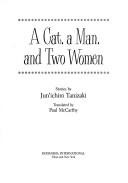
Some Prefer Nettles first. Then Cat, a Man, and Two Women, a comic novella in which a marriage collapses and the real custody battle is over the cat. It is funny, domestic and light, which surprises anyone who knows Tanizaki only by his reputation for perversity, and it usefully complicates the picture early.
Read In Praise of Shadows third — thirty-odd pages on lacquer, candlelight, gold leaf and, notoriously, toilets. It is an essay rather than fiction and it is the closest thing he wrote to a lighting manual for his own novels. Taking it early changes how you read every interior scene that follows.
The major work
Makioka Sisters, The is the book to graduate to, written largely during the war when its subject — four sisters in Osaka trying to marry off the third — was politically unwelcome. Edward Seidensticker's translation is the standard English text. Nothing much happens for long stretches, and that is the design: it is a chronicle of a class and a season, and the tension is that the world it describes is being destroyed while nobody in it says so.
The obsession novels
This is the strand Tanizaki is best known for and the reason some readers bounce off him. Naomi has a salaryman raise a girl into his ideal modern woman and then be ruined by how well it works. Quicksand is a four-way spiral of deception delivered as a confession. The Key runs two diaries in parallel, husband and wife, each written to be discovered by the other. Diary of a Mad Old Man gives a stroke-diminished patriarch, his daughter-in-law, and a fixation that is genuinely uncomfortable to sit with.
A plain content note: these turn on coercion, fetish and humiliation, and they are explicit. Tanizaki is not endorsing anything so much as refusing to look away, but readers who want that kept at a distance should stay with the first group.
The historical and late work
Seven Japanese tales is the best short-fiction sampler and a good place to see the range compressed. Secret History of the Lord of Musashi / Arrowroot pairs two historical novellas and shows how far he could push a period setting. Childhood Years is memoir — Tokyo before the 1923 earthquake, by a writer who spent his career mourning it.
Where to stop
Most readers are well served by the entry group plus Makioka Sisters, The and one or two of the obsession novels. If you want a single further book, make it Seven Japanese tales. The full sequence is laid out in order on our reading path, and it is worth reading in translation with the understanding that Tanizaki's Japanese is famously supple in ways no English version fully carries.
Follow the full ordered path here: Junichiro Tanizaki Reading Order: Where to Start.