Julian Barnes Reading Order: Where to Start
Barnes writes two kinds of book: tightly controlled short novels about memory and self-deception, and formally restless hybrids that mix fiction, essay and biography until the seams show. Both are worth having, but they need to be met in the right order — the hybrids look like games until you have seen the straight novels work. This path opens with the most accessible of the short novels, moves to Flaubert's Parrot and the experiments around it, then to the mature historical fiction, and closes with the non-fiction about death and grief that is arguably his best writing.
The way in
BeginnerRead the two short, conventionally shaped novels that show Barnes's core subject — how unreliably people narrate their own past — before the formal experiments complicate it
▸ Study plan for this stage
Pace: 2 weeks. The Sense of an Ending is 154 pages and Metroland 176 - just over 300 pages total, the shortest stage on the path. Read The Sense of an Ending in two or three sittings, then immediately reread its first fifty pages before starting Metroland; the reread is not optional, it is where the book
- Barnes's core subject: not memory as loss but memory as self-flattering editing, performed by a narrator who does not know he is doing it
- Tony Webster as an ordinary man rather than a monster - the book's quiet claim is that this is how most people handle their own past
- The document that arrives from outside and cannot be argued with, and what a novel gains from letting evidence contradict narration
- Retrospective structure: the first half is a memoir, the second half is its correction, and the join is the design
- Metroland's three-part shape - adolescent posturing in the suburbs, Paris, and ordinary adult life - as a comedy about the same self-deception, told forwards
- Time between the two books: thirty years separate a debut and a Booker winner working the same seam, and the difference is compression
- Barnes's sentence economy - the short novels are short because everything decorative has been removed
- What exactly does Tony get wrong, and which of his errors are honest and which are convenient?
- Reread the opening pages after finishing. Which sentence was the first clear signal you missed?
- Metroland's narrator ends up living the life his younger self despised. Does the novel treat that as failure?
- Both books use a friend as a mirror. What does Adrian do for Tony that Toni does for Chris in Metroland?
- Which is the better book, and which is the better introduction? They may not be the same answer.
- Write down your own account of what happened in The Sense of an Ending before the last twenty pages. Compare it afterwards - you have just performed the novel's subject on yourself.
- Mark every hedge in Tony's narration: 'I seem to remember', 'as far as I recall'. The density is the tell.
- Note where Metroland's comedy is at the narrator's expense and where he is in on the joke. The proportion changes across the three parts.
- Summarise in one sentence what Barnes seems to think memory is for. Keep it; you will test it against Levels of Life.
Next up: Having seen the straight novel do this work cleanly, you can read the experiments as a different route to the same question rather than as clever games with no stakes.
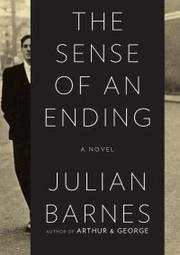
A retired man receives a bequest that dismantles his version of his own youth. The Booker winner, under 200 pages, and the single best place to start: everything Barnes cares about is here in its clearest form.
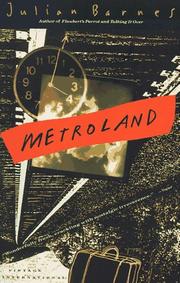
The debut: two suburban boys posture about art in Paris and then grow up into ordinary lives. Read it second as the origin of the same theme, written thirty years earlier and with far more comedy in it.
The experiments
IntermediateMeet the Barnes who refuses to write a novel that looks like a novel, and learn to read a book assembled from essays, fragments and false histories
▸ Study plan for this stage
Pace: 4 weeks. Flaubert's Parrot is 227 pages and A History of the World in 10 1/2 Chapters is 330. Neither is difficult sentence by sentence, but both are discontinuous, so read by section rather than by page count - one chapter or chronology per sitting, and expect to flip backwards. Two weeks each is c
- The book assembled rather than narrated: chronologies, a bestiary, an exam paper, a dictionary of received ideas - fiction built out of non-fiction forms
- Geoffrey Braithwaite's parrot hunt as displacement activity - the scholarly obsession is a way of not talking about his wife
- Three chronologies of Flaubert's life, each true and each contradicting the others, as a compact demonstration of what biography cannot do
- The deferred grief that surfaces late in Flaubert's Parrot, which retroactively converts a literary game into a novel about a marriage
- A History of the World's method: ten and a half discontinuous pieces where the connective tissue is imagery - woodworm, arks, survival, and who gets left off the boat
- The half chapter as the book's centre, an essay on love placed where a novel would put its climax
- History as narrative selection rather than record, argued by a book that keeps retelling the same story with different survivors
- Why these hybrids need the straight novels first: without them they look like cleverness with nothing at stake
- What is Braithwaite avoiding, and at what point did you realise the parrot was not the subject?
- Why does Barnes give us three chronologies rather than one? What does the reader do with the contradiction?
- Which chapters of A History of the World actually connect, and by what - plot, image, or argument?
- Is the half chapter a cheat or the point? Argue from its position in the book.
- Does the collage method reveal something a conventional novel could not, or does it evade something a conventional novel would have had to face?
- Read the three chronologies of Flaubert's life consecutively, ignoring the rest of the book. The effect is immediate and is Barnes's whole argument about biography.
- List every ark, boat or vessel in A History of the World. The recurrence is the structure.
- Take one chapter of A History of the World and write the two-line synopsis. Then ask why Barnes needed the borrowed form instead.
- Reread the closing pages of Flaubert's Parrot with Braithwaite's marriage in mind. Almost every earlier digression changes weight.
- Compare the exam-paper chapter's tone with the grief chapters. That range inside one book is what the hybrids are for.
Next up: You can now recognise Barnes's formal invention when it is buried rather than displayed, which is exactly what the mature novels do with it.

A retired doctor's obsessive quest to identify a stuffed parrot Flaubert kept on his desk, told through chronologies, a bestiary, an exam paper and a grief he keeps deferring. The book that made his name, and it lands far harder once you have read a straight Barnes novel first.
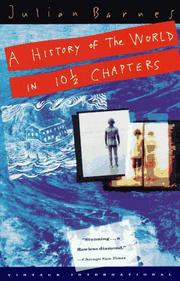
Ten and a half loosely linked pieces running from a woodworm's account of Noah's Ark to an essay on love. The most extreme of the hybrids — read it after Flaubert's Parrot, which teaches you how his collage method rewards patience.
The mature novels
IntermediateFollow Barnes into longer, more populated books where the formal invention is buried inside a real story, and see how he handles history and real historical people
▸ Study plan for this stage
Pace: 5-6 weeks. England, England 287, Arthur and George 445, The Noise of Time 183 - about 900 pages. Arthur and George dominates the stage and reads like a Victorian novel, so give it three weeks at ~25 a night. The Noise of Time is short and best taken in three sittings, one per encounter.
- Formal invention hidden inside story: these books have the same preoccupations as the experiments but keep the seams out of sight
- England, England as satire on authenticity - a replica England on the Isle of Wight that outperforms the original, which raises the question of what the original was
- Martha Cochrane's private plot running under the national satire, so the book is about one person's manufactured memories as much as a country's
- Arthur and George's dual structure: Conan Doyle the professional believer in evidence, George Edalji the man evidence failed, told in alternating close third
- Race and Englishness handled without anachronism - the novel lets Edwardian assumptions speak in their own idiom
- The Noise of Time's three encounters with power, each separated by twelve years, compressing a life into three moments of moral compromise
- Shostakovich as the ideal Barnes subject: a real man whose survival required constant self-justification, narrated in free indirect style so we cannot tell whose excuses these are
- Proof that the experiments were a choice - Barnes can write conventionally superbly, and does, when the material calls for it
- In England, England, what is the difference between the replica and the original, and does the novel think there is one?
- Arthur and George is built on real events. Where does Barnes let the novelist override the record, and is he right to?
- Whose voice are we in during The Noise of Time - Shostakovich's, or a narrator quoting him? What does the ambiguity buy?
- All three books involve a person justifying a life to themselves. Which of the three justifications do you find most sympathetic?
- Has Barnes abandoned the collage method here, or only concealed it? Find evidence in the chapter structure.
- Read the three sections of The Noise of Time on three consecutive nights, one per sitting, as the twelve-year gaps intend.
- In Arthur and George, track how each man's chapters differ in sentence rhythm. Barnes gives them measurably different prose.
- List what the England, England theme park includes. The selection is the satire, and it is funnier written out.
- Compare Shostakovich's self-justifications with Tony Webster's from stage one. The same machinery, at very different stakes.
Next up: You have now watched Barnes circle death, survival and self-justification through three fictional disguises, which is the necessary run-up to the non-fiction where he drops the disguise entirely.
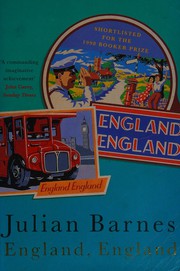
A tycoon builds a replica England on the Isle of Wight and it outcompetes the original. His funniest novel and his sharpest satire on authenticity and national myth.
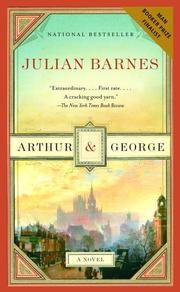
Arthur Conan Doyle investigates a real miscarriage of justice against a half-Indian solicitor in Edwardian England. The most conventional storytelling in this path, and proof that the experiments were a choice rather than an inability.
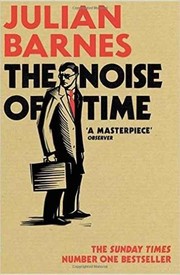
Shostakovich in three encounters with Soviet power, compressed and merciless about the cost of survival. Placed last: short, late, and the finest example of Barnes turning a real life into a novel about self-justification.
The memoir and essays
IntermediateRead the non-fiction on death and bereavement that the fiction has been rehearsing all along, and understand why the novels keep circling the same wound
▸ Study plan for this stage
Pace: 3 weeks. Nothing to Be Frightened Of is 247 pages of loops and digressions - two weeks, taken in twenty-page stretches, since it is not built for momentum. Levels of Life is 128 pages in three parts; read the first two parts in one sitting and the third alone, with nothing planned afterwards.
- Nothing to Be Frightened Of as a book-length argument with his own fear of death, conducted partly against his philosopher brother, who keeps winning on logic and losing on feeling
- Family memoir used as evidence: two brothers remembering the same parents differently, which is The Sense of an Ending restated as fact
- Barnes's atheism without consolation - he does not believe and he does not think unbelief helps, which is a rarer position than either
- Levels of Life's three-part structure: ballooning, photography, grief - two apparently unrelated essays whose purpose only appears in the third
- The governing metaphor - you put together two things that have not been put together before, and sometimes the world is changed, and sometimes someone falls
- Grief written without the usual consolations of the memoir form: no arc, no recovery, no lesson
- How the non-fiction reframes the fiction - the wound the novels keep circling is named here, and the circling stops looking like technique
- The essayist's voice as the same instrument as the novelist's, minus the character to hide behind
- Which brother do you find more persuasive about memory, and does Barnes stack the deck?
- Why does Levels of Life spend two thirds of its length on balloons and photographs before arriving at his wife's death?
- What does the ballooning metaphor claim about love, and does the third section earn it?
- Now that you have read the non-fiction, which novel on this path reads most differently, and how?
- Is Barnes at his best in fiction or non-fiction? The path is arranged so this is a live question rather than a rhetorical one.
- Read the final section of Levels of Life in one sitting with nothing scheduled after it. This is the one instruction in the path that matters most.
- Go back to the one-sentence definition of memory you wrote in stage one and revise it now. The revision is what the path was for.
- Find one passage in Nothing to Be Frightened Of that could be dialogue from The Sense of an Ending. Barnes reuses himself deliberately.
- Write 300 words on why grief and self-deception are the same subject for this writer. You now have eight books of evidence.
Next up: This closes the path - the novels rehearsed the loss and the last two books state it, which is why the non-fiction has to come last rather than first.

A book-length meditation on his own fear of death, mixed with family memoir and arguments with his philosopher brother. Openly funny about a subject the novels only approach sideways.

Three essays — ballooning, photography, and the death of his wife — that only reveal in the last section what the first two were for. Read it last in the path; it is the book everything else has been building toward, and it is devastating.
Discussion
Keep reading
Paths that share books, cover the same subject, or open a related topic.