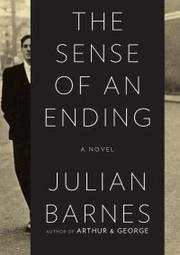
Start with The Sense of an Ending. The obvious alternative is Flaubert's Parrot, which is the book that made Barnes's name and the one most likely to be recommended, but it presumes an interest in Barnes's mind that you do not yet have. It is a hybrid of novel, biography and essay, organised around a retired doctor chasing a stuffed bird, and it is delightful if you already care. As a first encounter it can read as clever for its own sake.
The Sense of an Ending is 150 pages, it won the Booker Prize, and it has an actual plot with an actual reversal in the last twenty pages. A man in his sixties receives an unexpected bequest and is forced to revisit what he thinks happened at school and university forty years earlier. Every Barnes preoccupation is in it — memory as an unreliable narrator, the stories we tell to keep ourselves decent, remorse arriving too late to be useful — compressed to the point where none of it can feel like a digression.
The formal experiments
Now read Flaubert's Parrot, which will land properly. Then A History of the World in 10 1/2 Chapters, which is the most ambitious thing he attempted: ten chapters and a half-chapter, spanning from a woodworm's account of the Ark to a modern hijacking to a vision of heaven, connected by recurring images rather than by plot.
Be warned that it is uneven, and openly so. The half-chapter is a personal essay on love that interrupts everything, and readers split hard on whether it is the heart of the book or a lapse in nerve. Most agree that the standout is the chapter on the raft of the Medusa and the painting made from it. If you want the good parts without the commitment, that chapter reads perfectly well alone.
The English satires
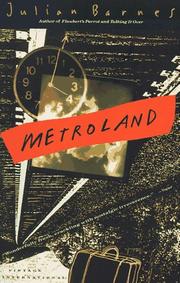
Metroland, his 1980 debut, is a quiet three-part novel about a boy who wants to be a French aesthete and grows into a settled suburban adult. It is minor and charming and much better read fifth than first. England, England takes the same national self-consciousness and turns it into farce: a billionaire builds a replica England on the Isle of Wight and it starts outcompeting the original. The satire is broad and the ideas outrun the characters, which is why it is generally reckoned the weakest of the novels here — but it is also the funniest, and it has aged into relevance.
The historical novels
Arthur and George is the one people underrate. It braids the life of Arthur Conan Doyle with that of George Edalji, a half-Indian solicitor wrongly convicted in Edwardian England, and it is patient, unshowy and genuinely moving. At 500 pages it is his longest, and the pace is deliberate.
The noise of time is the counterweight: a short, cold novel about Shostakovich negotiating survival under Stalin, told in three episodes across three decades. It is about the compromises an artist makes to keep working, and it is the best thing Barnes has written in the last twenty years.
The books about death
Nothing to be frightened of is a memoir-essay about the fear of dying, written before his wife's death, and it is funnier than that description allows. Levels of Life was written after, and it is a different order of book: two short historical essays on ballooning and photography, then a third section about grief that gives them their reason for existing. Read them in that order. The second is one of the most exact accounts of bereavement in English, and it is not a book to open casually.
Where to stop
The Sense of an Ending, Flaubert's Parrot and The noise of time are a complete Barnes — the plotted one, the experimental one and the late one. Add Arthur and George if you want a long novel to live in, and Levels of Life when you are ready for it. Everything else is for people who have decided they like him. More reading paths are on Discover.
Follow the full reading path →