Business writing that works: a clear-communication reading path
This curriculum takes a beginner from the core principles of clear, plain writing all the way through advanced persuasion, strategic communication, and high-stakes business documents. Each stage builds on the last: you first internalize the rules of clear prose, then apply them to everyday business formats, and finally master the art of persuading decision-makers through polished proposals and executive-level writing.
Foundations: Writing Clearly and Simply
BeginnerInternalize the core principles of plain, concise, and reader-focused writing — the bedrock every business document depends on.
▸ Study plan for this stage
Pace: 4–5 weeks, ~40–50 pages/day (approximately 2 weeks for "On Writing Well," 1–2 weeks for "The Elements of Style," plus 1 week for review and exercises)
- Clarity through simplicity: eliminating clutter, jargon, and unnecessary words to make meaning unmistakable
- The importance of voice and personality in writing while maintaining professionalism and reader focus
- Active voice, strong verbs, and concrete nouns as tools for directness and impact
- Sentence and paragraph structure: rhythm, flow, and how to organize thoughts logically
- The writer's responsibility to the reader: anticipating needs, removing friction, and respecting attention
- Grammar and mechanics as servants of clarity, not arbitrary rules—knowing when and why conventions matter
- Revision and self-editing as essential disciplines: cutting ruthlessly and testing every word for necessity
- What does Zinsser mean by 'clutter,' and how does identifying it differ from simply following grammar rules?
- How do active voice and strong verbs improve business writing, and when might passive voice be acceptable?
- What is the relationship between the writer's voice and reader trust in business contexts?
- According to Strunk and Zinsser, what makes a sentence or paragraph 'good'—and how do you test it?
- Why is revision presented as a core discipline rather than an optional step, and what should you look for when editing?
- How do the principles in these books apply specifically to business documents (emails, reports, proposals) versus other writing?
- Rewrite 5–10 cluttered business sentences (from emails, reports, or websites) using Zinsser's principles: eliminate redundancy, choose active voice, and cut every unnecessary word. Track how many words you remove.
- Select a paragraph from 'On Writing Well' or 'The Elements of Style' and annotate it, identifying examples of the principles discussed (active voice, concrete nouns, rhythm, etc.). Explain why each choice works.
- Write a 200-word business email or memo on a topic of your choice, then ruthlessly edit it down to 150 words without losing meaning. Repeat the process to reach 100 words. Reflect on what you learned.
- Collect 3–5 examples of 'bad' business writing (overly formal, cluttered, passive) from real sources. Rewrite each one applying Zinsser's and Strunk's principles, then compare your versions to the originals.
- Practice writing 10 sentences using only active voice, strong verbs, and concrete nouns. Then rewrite the same sentences in passive voice or with weak verbs, and feel the difference in clarity and impact.
- Read a business article or report, then write a one-page critique identifying where it succeeds and fails according to the principles from these books. Suggest specific revisions.
Next up: By mastering clarity, simplicity, and reader focus, you're now equipped to apply these foundations to the specific structures and conventions of professional documents—emails, reports, proposals, and presentations—where format and audience expectations add new layers of complexity.

The single best starting point for anyone learning to write non-fiction; it teaches you to strip clutter, find your voice, and respect the reader — habits that carry directly into business writing.

A compact, authoritative guide to grammar, style, and brevity that gives beginners a shared vocabulary of good writing rules to reference throughout the curriculum.
Core Business Writing: Emails, Memos, and Everyday Documents
BeginnerApply plain-writing principles to the most common workplace formats — emails, memos, and short reports — so every daily communication is clear and action-oriented.
▸ Study plan for this stage
Pace: 4–5 weeks, ~40–50 pages/day (approximately 280–350 pages total across both books)
- Plain language principles: using active voice, short sentences, and everyday words to eliminate jargon and complexity
- Email structure and etiquette: subject lines that prompt action, concise body paragraphs, and appropriate tone for different audiences
- Memo formatting and purpose: clear headers, logical organization, and distinguishing between informational and action-oriented memos
- The reader-centered approach: analyzing audience needs, context, and desired outcomes before drafting
- Revision and editing techniques: cutting unnecessary words, improving clarity, and proofreading for professionalism
- Short report formats: executive summaries, findings, and recommendations structured for busy readers
- Tone and voice in workplace writing: maintaining professionalism while remaining conversational and approachable
- What are the core principles of plain language, and how do they differ from traditional formal business writing?
- How should you structure an email to ensure the reader understands the action required and the context immediately?
- What are the key differences between an informational memo and an action memo, and when would you use each?
- How do you analyze your audience and adjust your writing style, tone, and content accordingly?
- What are the most common editing mistakes in workplace writing, and what revision strategies eliminate them?
- How should you organize and present information in a short report so a busy executive can grasp key points in under 2 minutes?
- Write 5 sample emails (request, status update, problem-solving, announcement, follow-up) and revise each for clarity, subject line effectiveness, and appropriate tone
- Draft 3 memos (one informational, two action-oriented) on realistic workplace scenarios, then peer-review or self-edit for structure and directness
- Take a piece of dense, jargon-heavy business writing and rewrite it using plain language principles, cutting word count by at least 25%
- Analyze 3 real workplace emails or memos (from your own inbox or provided examples) and identify what works well and what could be clearer
- Create a short report (2–3 pages) with an executive summary, findings, and recommendations on a business topic of your choice, then revise for conciseness
- Practice the 'reader's perspective' exercise: write an email or memo, then rewrite it as if you were the recipient—what questions would you have? What action would you take?
Next up: This stage equips you with the fundamentals of clear, action-oriented writing in the formats you'll use daily, preparing you to tackle more complex documents—proposals, reports, and persuasive writing—where these principles scale to longer, higher-stakes communications.

A practical, modern guide specifically designed for workplace communication; it bridges the gap between general writing principles and real business contexts like emails and memos.

A comprehensive reference covering formats, conventions, and style for virtually every business document type — read after Canavor to solidify and expand your toolkit.
Persuasion and Influence: Writing That Moves People to Act
IntermediateUnderstand the psychology of persuasion and learn how to structure arguments, frame messages, and write with strategic intent to influence colleagues and clients.
▸ Study plan for this stage
Pace: 8–10 weeks, ~25–30 pages/day (approximately 2 weeks per book with time for reflection and exercises)
- The SUCCESs framework (Simplicity, Unexpectedness, Concreteness, Credibility, Emotional appeal, Stories) for making ideas stick
- The role of core messages and how to strip ideas down to their essential truth
- Pattern interruption and surprise as tools to capture and hold attention
- Concrete language and sensory details over abstract concepts
- The psychology of credibility: authority, trustworthiness, and likability
- Storytelling as a vehicle for persuasion and memory retention
- The writer's voice and tone as instruments of influence
- Audience-first thinking: understanding reader needs, context, and emotional state before writing
- What are the six principles of the SUCCESs framework, and how would you apply each one to make a business proposal more persuasive?
- Why do stories stick in memory better than statistics or abstract arguments, and how can you use this in persuasive business writing?
- How do you identify and communicate the core message of an idea, and what happens when you fail to do so?
- What is the relationship between credibility and influence, and what are the three dimensions of credibility that Handley emphasizes?
- How does understanding your audience's emotional state and context change the way you structure and frame a persuasive message?
- What is your authentic writer's voice, and why does it matter more in business writing than many people assume?
- Take a recent business email or proposal you've written and apply the SUCCESs framework to each section—identify which principles are present and which are missing, then rewrite one section to include at least three principles.
- Extract the core message from a complex business concept (e.g., a new product feature, a policy change) in a single sentence, then build a short persuasive paragraph around it using concrete language.
- Find a business article or email that fails to persuade you, analyze it against the SUCCESs framework, and rewrite it to be more effective.
- Write three different versions of the same persuasive message (e.g., pitching an idea to your boss) using different emotional appeals, tones, and story structures—then test which resonates most with a peer.
- Collect three examples of business writing you find credible and persuasive (from companies, leaders, or colleagues), analyze what makes them credible, and identify which credibility dimensions (authority, trustworthiness, likability) each one leverages.
- Write a short case study or story (300–400 words) that illustrates a business principle or benefit you want to persuade someone about, then use it in an actual email or proposal to a colleague or client.
Next up: This stage equips you with the psychology and structure of persuasion, preparing you to move into the next level where you'll apply these principles to specific high-stakes contexts—such as sales writing, executive communication, and crisis messaging—with even greater precision and strategic depth.

Explains why some ideas are remembered and acted upon while others are forgotten — essential for learning how to frame business messages so they actually land and persuade.
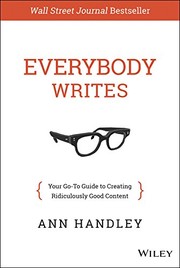
Bridges persuasion theory with practical business writing, offering a content-first mindset and concrete techniques for writing that engages and motivates real audiences.
Advanced Documents: Reports, Proposals, and Executive Communication
IntermediateProduce polished, high-stakes business documents — formal reports, winning proposals, and executive summaries — that drive decisions at the highest levels.
▸ Study plan for this stage
Pace: 8–10 weeks, ~25–30 pages/day (approximately 4–5 hours/week of reading plus exercises)
- The Pyramid Principle: organizing ideas top-down with a clear main message, supported by logical groupings and evidence
- Deductive vs. inductive reasoning: when to lead with conclusions versus building toward them
- Situation-Complication-Resolution (SCR) framework: structuring narratives and arguments for executive clarity
- The MECE principle (Mutually Exclusive, Collectively Exhaustive): grouping supporting ideas without overlap or gaps
- Executive summaries and abstracts: distilling complex information into 1–2 pages for decision-makers
- Proposal architecture: winning structure that addresses client needs, demonstrates value, and calls to action
- Tone and voice in formal business writing: maintaining professionalism while building credibility and persuasion
- Visual hierarchy and formatting: using structure, white space, and emphasis to guide reader attention in high-stakes documents
- What is the Pyramid Principle, and why does leading with your main message matter in executive communication?
- How do you apply the Situation-Complication-Resolution framework to structure a business report or proposal?
- What is the MECE principle, and how do you use it to organize supporting arguments without redundancy?
- When should you use deductive reasoning versus inductive reasoning in a formal business document, and why?
- What are the essential components of a winning proposal, and how do you structure them to maximize persuasion?
- How do you write an executive summary that gives decision-makers everything they need to know in minimal time?
- Read a real business report or proposal and map its structure against the Pyramid Principle—identify the main message, supporting groups, and evidence. Rewrite the introduction to lead with the conclusion instead.
- Write a 2–3 page executive summary for a complex business scenario (e.g., a market entry strategy or operational improvement initiative) using the SCR framework.
- Draft a formal business report (8–12 pages) on a topic relevant to your industry or role. Apply MECE grouping to organize findings and recommendations without overlap.
- Create a winning proposal outline (5–7 pages) for a hypothetical client need: include situation analysis, your solution, value proposition, implementation timeline, and call to action.
- Take a poorly structured business document (or write one intentionally weak) and restructure it using Pyramid Principle logic. Document the before/after and explain your changes.
- Write three versions of the same executive summary: one deductive (conclusion first), one inductive (evidence first), and one using SCR. Compare which is most persuasive for different audiences.
Next up: This stage equips you with the structural and persuasive frameworks to command attention at the executive level; the next stage will likely deepen your ability to tailor these documents to specific audiences, industries, and crisis scenarios—or expand into strategic communication and stakeholder management.

The gold-standard framework for structuring complex business arguments logically; mastering this transforms how you organize reports, proposals, and any document aimed at decision-makers.
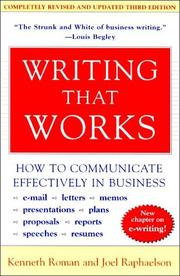
A concise, battle-tested guide from a Madison Avenue veteran covering memos, reports, and proposals with a sharp focus on getting results — the perfect complement to Minto's structure.
Mastery: Strategic Communication and Executive Presence
ExpertDevelop a strategic, audience-first communication mindset and refine your writing to reflect executive-level clarity, credibility, and influence across all business contexts.
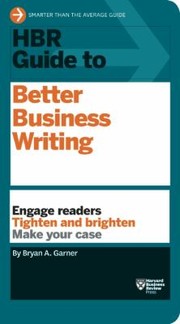
Written by America's foremost authority on legal and business prose, this Harvard Business Review guide synthesizes everything into a sharp, executive-focused framework for high-impact writing.
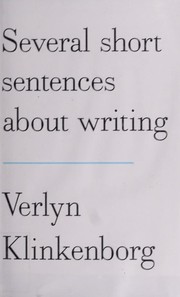
A challenging, meditative masterclass on sentence-level precision and intentionality — read last to push your writing from competent to genuinely compelling and authoritative.
Discussion
Keep reading
Paths that share books, cover the same subject, or open a related topic.