John Banville Reading Order: Where to Start
Banville publishes under two names, and the split is not a gimmick: as John Banville he writes slow, sentence-obsessed literary novels narrated by unreliable men, and as Benjamin Black he writes fast, plot-driven crime fiction set in 1950s Dublin. He has said the Black books are written straight through at speed while the Banville novels take years a page at a time, and the crime novels are best read as the same intelligence working with the brakes off. This path starts with the two most approachable literary novels, doubles back to the science tetralogy that made his name, then goes into the late work before finishing with Benjamin Black.
The way in
IntermediateMeet Banville's central instrument — a guilty, self-justifying first-person narrator whose prose is far more beautiful than he deserves — in the two novels where it works best
▸ Study plan for this stage
Pace: 3-4 weeks. The Book of Evidence is 219 pages and The Sea 233, so under 500 pages total - but Banville is the slowest prose on this path and 15-20 pages a night is a realistic honest pace. Read The Book of Evidence first and quickly, since the crime plot pulls; then slow deliberately for The Sea, whi
- The Banville narrator: a guilty, self-justifying, highly articulate man whose prose is far more beautiful than his conduct deserves
- Freddie Montgomery's confession as performance - he is addressing a court, and the aesthetic display is part of his defence
- The famous indictment of his own crime, that he failed to imagine the victim vividly enough - the closest thing Banville has to a moral position
- Painting and looking as recurring machinery: the stolen picture in The Book of Evidence is about a way of seeing, not about art theft
- The Sea removing the crime and leaving the voice, so the question becomes whether the sentences alone can carry a book
- Memory as reconstruction rather than retrieval - Max Morden is not remembering his childhood, he is composing it
- Banville's vocabulary as a deliberate irritant: the archaic and technical words are a claim about what prose is allowed to be
- What does Freddie mean when he says his real failure was one of imagination, and does the novel endorse him?
- How much of Freddie's account do you believe, and which specific details made you stop believing it?
- The Sea has almost no plot. What is doing the work of suspense instead?
- Both narrators return to a scene they cannot let go of. What is each of them actually protecting himself from?
- After these two, do you want the sentences without the crime? Your honest answer determines how the rest of this path will go.
- Copy out three sentences from The Book of Evidence that are beautiful about something ugly. That collision is the entire effect.
- Mark every place Freddie addresses the court directly. The distribution shows you where he feels most exposed.
- Read the first and last pages of The Sea consecutively. Banville's endings are structural returns, not resolutions.
- Note where in The Sea you lost patience, if you did, and what you were waiting for. That expectation is what he is refusing to satisfy.
Next up: You now know the voice at its most seductive and its most exposed, which is the equipment needed for the early novels, where the same instrument is being assembled in public.

A man murders a servant girl over a stolen painting and narrates his own confession with appalling elegance. The single best entry point: short, gripping in a way his reputation does not advertise, and the first appearance of the voice he has used ever since.
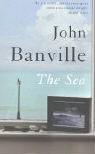
The Booker winner: a widower returns to the seaside village of his childhood and circles two deaths. Read it second because it is the same narrator type without a crime to carry the plot, which is the real test of whether Banville's sentences are enough for you.
The science tetralogy
IntermediateRead the four early novels about scientists and knowledge, and see Banville build the themes — imagination against fact, the unreliable reconstruction of a life — that the later fiction inherits
▸ Study plan for this stage
Pace: 6 weeks. Doctor Copernicus 241, Kepler 192, The Newton Letter 82, Mefisto 233 - about 750 pages, but wildly uneven in density. Copernicus and Kepler run at ~20 pages a night; The Newton Letter is a single sustained evening or two and should be read in as few sittings as possible; leave two weeks for
- The tetralogy's shared subject: not science but the imagination's attempt to impose order on facts that do not want it
- Copernicus as the most conventionally novelistic of the four - a life, in sequence - and the deliberate departure from that shape in each successor
- Kepler's domestic chaos set against celestial order, structured so the two never resolve into each other
- The Newton Letter as the tetralogy's argument in miniature: a historian misreads the family he lives among and abandons his book, and misreading is the point
- Mefisto abandoning the historical scaffolding entirely - numbers, fire, a Faustian bargain - and what is lost and gained
- The turn from third person to first across the sequence, arriving at the narrator The Book of Evidence will inherit
- Historical fiction that refuses the usual pleasures of historical fiction: no period cosiness, very little scene-setting
- Failure as the recurring plot - every one of these men falls short of the pattern he was chasing
- What does Copernicus want that his theory cannot give him?
- Kepler and Copernicus are usually read as a diptych. What does the pairing show that either book alone does not?
- The Newton Letter's narrator gets the family completely wrong. What is Banville saying about the biographer's project - and about his own?
- Why does Mefisto go last in the sequence, and what would be lost by reading it first?
- Where in these four books does the narrator of The Book of Evidence audibly arrive?
- Read The Newton Letter in one or two sittings. It is 82 pages and its effect is entirely dependent on compression.
- For each of the four, write one sentence naming what the protagonist misreads. The list is the tetralogy's argument.
- Compare the opening paragraph of Doctor Copernicus with the opening of Mefisto. Ten years of stylistic development are visible in two hundred words.
- Keep a running note of every image of pattern, symmetry or order. Mefisto is saturated with them and the earlier books seed them.
- If Mefisto defeats you, record where. The point at which the scaffolding falls away is worth knowing precisely.
Next up: Having watched Banville build the themes - imagination against fact, the unreliable reconstruction of a life - you can see the late novels inherit them wholesale and dispense with almost everything else.
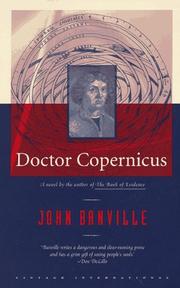
The astronomer's life told as a study of a man whose theory outgrows him. First in the sequence and the most conventionally novelistic of the four, so it carries you into the harder ones.
Kepler's chaotic domestic life set against the discovery of planetary motion. Read after Copernicus: the pair work as a diptych on how order gets wrenched out of a disorderly life.
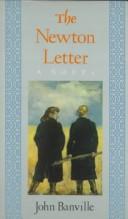
A short novel about a historian who abandons his book on Newton after misreading the family he is lodging with. The most compressed thing Banville has written, and the clearest statement of the tetralogy's argument about failed interpretation.
A mathematical prodigy, a fire, and a Faustian bargain — the strangest and most difficult of the four. Placed last in the stage because it abandons the historical scaffolding the others lean on.
The late literary novels
IntermediateFollow the mature Banville into espionage, myth and memory, where the prose is at its densest and the plots at their thinnest
▸ Study plan for this stage
Pace: 6-7 weeks. The Untouchable is 413 pages and the most readable of the three - three weeks at ~20 a night. The Infinities is 329 and lighter than it looks. Ancient Light is 256 but slow; give it two weeks and reread the closing section, where the connection to The Book of Evidence lands.
- The Untouchable as the plot-richest late novel: espionage supplies the forward motion that the tetralogy withheld
- Victor Maskell, closely modelled on Anthony Blunt, as the fullest version of the self-justifying narrator - art historian, spy, and connoisseur of his own duplicity
- Concealment as the shared structure of espionage, closeted sexuality and aesthetic connoisseurship, which is why the material suits Banville exactly
- The Infinities letting the Greek gods narrate - the one late book where he permits himself comedy, and the licence that mythological framing gives him
- Ancient Light's memory plot: an ageing actor recalling an affair at fifteen, with the reliability of every detail quietly in doubt
- The return of characters from The Book of Evidence in Ancient Light, and how the payoff depends entirely on stage one of this path
- Prose at its densest and plots at their thinnest - the late trade Banville makes on purpose
- The recurring shape of the confession addressed to someone who cannot answer
- What does Maskell think he is confessing to, and what is he actually confessing to?
- How does the gods' narration change what The Infinities can say about the dying man at its centre?
- In Ancient Light, which memories does the narrator get demonstrably wrong, and how does Banville let you know?
- What does Ancient Light gain by revisiting the world of The Book of Evidence rather than inventing new characters?
- Are the late novels a deepening or a narrowing? Argue it from the density of a specific page.
- Read Maskell's account of a single painting and ask what he is avoiding while he describes it. This is his method throughout.
- Mark every joke in The Infinities. The count is higher than the rest of Banville combined and tells you what the mythological frame is for.
- Reread the last twenty pages of Ancient Light directly after skimming the opening of The Book of Evidence. The circuit only closes if you do this deliberately.
- Pick one long sentence from each of the three books and diagram its clauses. The late style is measurable, not just felt.
Next up: You have now read the slow work at full strength, which is the only way to feel what changes in the crime novels - the same intelligence, the same eye, running at four times the speed.
An art historian and Soviet spy, closely modelled on Anthony Blunt, narrates his own exposure. The most plot-rich of the late novels and the best bridge from the tetralogy to the harder late work.

A dying mathematician's household observed by the Greek gods, who are bored and interfering. Read it here for the one late book where Banville lets himself be funny.
An ageing actor recalls an affair with his friend's mother at fifteen, and returns to characters from The Book of Evidence. Placed last because the payoff depends on having read the opening stage of this path.
Benjamin Black: the crime novels
IntermediateRead the pseudonymous crime fiction and see what changes when the same writer works to a genre deadline — faster, plottier, and set in a 1950s Dublin the literary novels never visit
▸ Study plan for this stage
Pace: 2 weeks. Christine Falls is 365 pages and The Silver Swan 304 - almost as long as the previous stage and roughly a third of the time, which is itself the lesson. Read them at genre pace, 50-70 pages a sitting, and let the plots pull. Slowing down for the sentences here is reading them against their
- The pen name is not a disguise but a working mode: these were written straight through at speed, where the literary novels took years a page at a time
- Both books are catalogued and published under Benjamin Black, so search under that name in libraries and shops even though the author is the same man
- Quirke, the Dublin pathologist, as a Banville narrator with a job - the same guilt and self-deception, now attached to a plot that requires him to act
- 1950s Dublin as a setting the literary novels never visit: institutional Catholicism, class deference, and secrets held by organisations rather than individuals
- What speed does to the prose - clean, functional, sharply visual, with the vocabulary flourishes almost entirely absent
- Series mechanics: Quirke's private history accumulates across the books, so these two are read in order even though the cases are separate
- Nothing in the literary novels depends on these - they are an addition to the path, not a key to it, and a reader who stops after Ancient Light has missed nothing required
- The Silver Swan as the point where the series stops imitating a genre and settles into being one
- What survives from the Banville voice when the prose is written at speed, and what is the first thing to go?
- Quirke is a version of the familiar narrator, but in third person and required to investigate. What does that requirement change about him?
- What can 1950s Dublin as a crime setting say about institutional power that the literary novels have no way of saying?
- Is the pen name a genuine distinction or a marketing convenience? Argue from the sentences, not the biography.
- Do these books make you read The Sea differently? Be honest if the answer is no - it is the expected answer.
- Read the first page of Christine Falls and the first page of The Sea one after the other. The difference in clause length and diction is stark and is the whole point of this stage.
- Track how much of Quirke's own history you learn in book one versus book two. The accrual rate is what makes this a series rather than two novels.
- Pick a description of a room in Christine Falls and rewrite it in the manner of The Book of Evidence. The exercise shows you what was deliberately withheld.
- Decide whether you want to continue with the Quirke books beyond these two. The path is designed so that stopping here costs you nothing.
Next up: This closes the path - you have read both names, and the fast books are best understood as the last piece of evidence about the slow ones rather than as a separate career.

The first Quirke novel: a Dublin pathologist finds a body and a falsified file, and pulls at the Church and his own family. Start the crime books here — the series is sequential and Quirke's private history builds across it.
The second Quirke case, and the point at which the series settles into itself. Read it straight after Christine Falls; if the pair do not hold you, the rest of the Black books will not either, and nothing in the literary novels depends on them.
Discussion
Keep reading
Paths that share books, cover the same subject, or open a related topic.