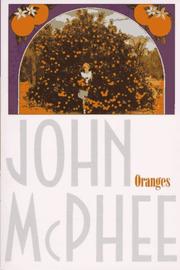
Start with Oranges. The usual advice about John McPhee is to start anywhere, which is unhelpful when the subjects run from citrus to nuclear weapons to plate tectonics. The better rule is to start with a short book on a subject you do not care about, because the subject was never the point — and under two hundred pages on the orange trade is the cleanest test of whether he works on you.
What you are reading him for is structure. McPhee is the most deliberate architect in American non-fiction, and once you start watching how a piece is built rather than what it is about, everything else follows. His method is immersion plus arrangement: enormous reporting, then a shape chosen so that the material explains itself in the right order. The people are almost always specialists talking about their work, the dialogue is reported rather than invented, and the vividness comes entirely from selection.
Start here: the short ones
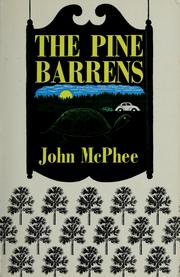
Oranges, then The Pine Barrens, then Encounters with the archdruid. The Pine Barrens takes a million acres of New Jersey wilderness and the people who live in it, and is the first book where the structural gift is fully visible — he assembles a place out of individual voices.
Encounters with the archdruid is the most elegant structure he ever built: three trips taken by one conservationist with three men who alter landscapes for a living, each trip a self-contained essay and the three together an argument. Notice the shape, because it is the move he will spend a career enlarging. No editorialising is needed; the arrangement does the arguing.
The long journalism
Coming Into the Country is Alaska in three parts — wilderness, government, and the bush — and is generally considered his masterpiece. The three parts descend in scale from a river journey to a state capital argument to a single small community, and the descent is the book's argument about what Alaska is.
The control of nature is three essays on people fighting the Mississippi, a lava flow and the San Gabriel Mountains. It is his most quotable book and the natural bridge into the geology. Levels of the Game takes a single tennis match between Arthur Ashe and Clark Graebner and cuts away, point by point, into the two men's lives, class positions and politics — the whole of American race and class opened through one afternoon. It is the most efficient demonstration of his structural discipline available, because the match supplies the chronology and every digression has a fixed point to return to.
The geology quartet, in order
This is the one part of McPhee where order genuinely matters. Four books cross North America along a single line of latitude and took him about twenty years.
Basin and range is first and teaches deep time and plate tectonics from scratch; starting anywhere else means missing the vocabulary the others assume. In Suspect Terrain is deliberately contrarian — its geologist disputes the tectonic explanations of the first book — and reading them in order is what makes the disagreement visible as science rather than as confusion. Rising from the plains is Wyoming, braided with the life of a geologist's father, and is usually named the best of the four. Assembling California is the last, ending in the 1989 earthquake, and it assumes everything the earlier three taught.
The four were later collected with a fifth section as Annals of the Former World, which won the Pulitzer Prize. Either format works; the order within it does not change.
The craft book, and why it goes last
Uncommon Carriers is late McPhee on freight — coal trains, tankers, a chemical truck — and proof the method still worked in his seventies. It is deliberately lighter than the geology and reads as a return to the pleasures of the first stage.
Draft No. 4: On the Writing Process must be read last. Nearly every chapter dissects the structure of a piece you will already have read, complete with diagrams of his own pieces, and reading it first spoils the trick — the analysis of how a structure was chosen only lands if you experienced the structure without knowing it was there. The chapters on the draft process, and the deliberately awful first draft, are the most practically useful writing advice anyone has published.
Where to stop
Nowhere in particular: there is no arc, and after four or five books you can pick titles freely. But do not read Draft No. 4: On the Writing Process until you have at least the short books and one of the long ones behind you.
More writing and non-fiction paths on Discover.
Follow the full ordered path here: John McPhee Reading Order: Where to Start.