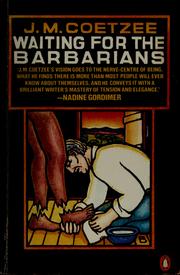
Start with Waiting for the Barbarians. It is 178 pages, it is a fable — no country, no date, no proper nouns for the Empire or its enemies — and learning to read that refusal to name is the first skill everything else here requires. The Magistrate is decent, objects to the torture, and is part of the apparatus anyway; the liberal who deplores the system that feeds him is Coetzee's permanent subject.
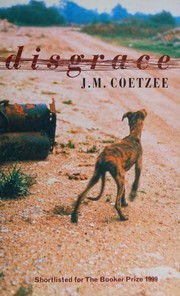
The obvious alternative is Disgrace, which won the Booker and is the book most people have heard of. Read it third, and read this before you decide to read it at all: it contains a rape and is largely about its aftermath, told from the perspective of a father who is not the victim, it offers no consolation, and it does not resolve. If that is not something you want right now, stop after the second book. The first two stand perfectly well without it.
The prose across the whole career is spare to the point of austerity — present tense, plain vocabulary, no ornament, very little interiority granted to anyone but the narrator. Read in this order it stops looking like coldness and starts looking like method. Twenty-five pages a sitting is right, with a day's gap between books.
Start here
Waiting for the Barbarians, Life & Times of Michael K, Disgrace. The second gives you the purest Coetzee protagonist: a man who survives by refusing to be interpreted and slips out of every institution that tries to classify him. Its middle section switches to a medical officer desperate to make Michael K mean something, which is the novel's argument, because the reader has been doing exactly that for 150 pages.
The core: allegory and argument
Foe rewrites Robinson Crusoe with a woman castaway who cannot get her story told and a Friday whose tongue has been cut out; placed here it answers the first stage directly, since three protagonists have now refused or failed to explain themselves. Read a summary of Crusoe's opening first — half the effect requires knowing what it is arguing with. Age of Iron is the opposite technique and his warmest book: a dying classics teacher writing an unsendable letter to her daughter while Cape Town burns in the late 1980s. Elizabeth Costello is eight discrete lectures delivered by a novelist Coetzee invented so that arguments about animals, evil and the humanities can be put into circulation without his owning them; two of the lessons were first delivered as actual academic lectures. It is the one book here to ration deliberately — one lesson at a time, a day between.
The autofiction
Boyhood, Youth, Summertime, in order and close together. All three are written in the third person and the present tense, so Coetzee narrates his own life as though it were happening to someone else in front of him — which denies the memoirist's usual advantages and produces a self-portrait with no warmth in it at all. Summertime is the trapdoor: a biographer researches the late John Coetzee and interviews five people who knew him in the 1970s, none of whom found him impressive, and the interviewees contradict the earlier volumes, each other and themselves. It only detonates if you have read the first two.
The completist tail
The Childhood of Jesus and The schooldays of Jesus, consecutively and with no gap; they are one argument split across volumes. A man and a boy arrive by boat in a Spanish-speaking country with their memories washed, and nobody finds this remarkable. The flatness is the technique rather than a failure. The title is not a claim that the boy is Jesus — it sets an expectation of allegory the novels decline to satisfy, which is itself the joke. One honest gap: the sequence has a third and final volume that closes the argument and it is not in our catalogue, so when you finish The schooldays of Jesus you will want to go and find it.
Where to stop
After the first three is a genuine stopping point and the most common one. After Elizabeth Costello you have the whole method. Go on to the autofiction if you want the writer turned on himself, which is where the career is most unusual. Discover has more routes like this.
Follow the full ordered path here: J.M. Coetzee Reading Order: Where to Start.
Ready to learn something deeply?
Build a reading path — free