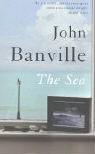
Start with The book of evidence. The obvious recommendation is The sea, because it won the Booker Prize in 2005 and it is the title most likely to be handed to you, but it is a poor first Banville: a slow, memory-drenched book in which almost nothing happens in the present tense, carried entirely by the prose. That is a fine thing to read once you have decided you want to spend time with this writer. It is a bad way to decide.
The book of evidence gives you the same sentences with a body attached. Freddie Montgomery, on remand for killing a servant girl during a botched art theft, narrates his own case in a voice of enormous charm and no remorse whatsoever. It is short, it is propulsive, and it is the only Banville novel that will keep a reader turning pages for plot reasons. Once the voice has you, the slower books become available.
Then the Booker one
Read The sea second. Now that you know what the prose is doing, its method makes sense: an art historian returns to the seaside town where he spent a childhood summer, and the novel moves between three time layers with no signposting at all. It is his most concentrated performance and probably his best single book. It is still a book in which the plot is a rumour.
The science tetralogy
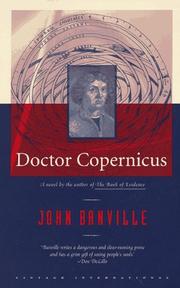
Four early novels take real natural philosophers as their subject: Doctor Copernicus, Kepler, a novel (published simply as Kepler), The Newton letter and Mefisto. Read them in that order or not at all — they share no characters, but they are one long argument about the gap between the elegance of a theory and the mess of the life that produced it.
Doctor Copernicus is the most conventionally novelistic and the safest entry to the four. Kepler, a novel is the warmest thing Banville has written, which is not saying a great deal but is worth knowing. The Newton letter is a novella and can be read in an evening. Mefisto is the wall. It is a Faust story told by a mathematically gifted narrator whose grip on the narrative deteriorates along with everything else, and it is deliberately hard to hold onto. If you are going to abandon Banville, it will probably be here. Skipping it costs you nothing.
The mature novels
The untouchable is the one to read if you only read one more. It fictionalises the Cambridge spy ring through a narrator modelled on Anthony Blunt — art historian, traitor, and the perfect Banville subject, since concealment and connoisseurship turn out to be the same skill. It has more story in it than anything else he wrote and loses none of the style.
The infinities is the strange one: Greek gods loitering around an Irish country house while a dying mathematician lies upstairs. It is playful in a way he rarely allows himself. Ancient light returns to the actor Alexander Cleave, whom he had already used in two earlier novels, Eclipse and Shroud, neither of which is in our catalogue. You can read Ancient light cold — it works as a standalone account of a boy's affair with his friend's mother — but be aware you are joining a conversation partway through.
The crime novels, and why you can stop before them
The last stage is Christine Falls and The Silver Swan, catalogued here under the pen name Benjamin Black. They are 1950s Dublin crime novels featuring a pathologist called Quirke, and they are the same writer working at speed with plot doing the load-bearing. They are good. They are also completely detachable: nothing in the literary novels depends on them, no character crosses over, and no theme is completed there. If you stop after The untouchable, you have read Banville and you have missed nothing.
Read them if you want to see a stylist relax, or if you want Banville sentences in a book you can finish on a flight. Read Christine Falls first — it establishes Quirke's family, and The Silver Swan assumes you know them.
Readers who take to the sentence-level pleasure here often go on to Samuel Beckett.
Follow the full reading path →