Joan Didion Reading Order: Where to Start
This curriculum follows Joan Didion's own creative arc — starting with her most accessible and celebrated essay collections, moving through her fiction, and closing with the raw late memoirs that cemented her legacy. Each stage builds emotional and stylistic familiarity so that by the time you reach the memoirs, you can fully appreciate how her lifelong obsessions with grief, self-narrative, and American mythology converge.
Foundations: The Essayist's Voice
BeginnerGrasp Didion's signature prose style — her fragmented sentences, cool detachment, and cultural diagnosis — through her two most iconic and widely taught essay collections.
▸ Study plan for this stage
Pace: 6–8 weeks total: Weeks 1–3 for *Slouching Towards Bethlehem* (~20–25 pages/day, 3–4 days/week), and Weeks 4–7 for *The White Album* (~20–25 pages/day, 3–4 days/week), with Week 8 reserved for review, re-reading key essays, and completing synthesis exercises.
- Fragmented syntax as meaning: Didion's use of short, broken, or interrupted sentences mirrors the psychological and cultural disintegration she diagnoses — notice how the form enacts the content in essays like 'The Center Cannot Hold' and 'The White Album.'
- Cool detachment and the first-person observer: Didion positions herself as a witness rather than a moralist, using a controlled, ironic 'I' that reports without overtly judging — study how this voice operates in 'Slouching Towards Bethlehem' (the Haight-Ashbury reportage) and 'The White Album' (the
- Cultural diagnosis through the personal: Didion treats her own anxiety, migraines, and disorientation as symptoms of broader social collapse, blurring the line between memoir and cultural criticism — most explicitly in the title essay of *The White Album* ('We tell ourselves stories in order to live
- The essay as mosaic: Both collections are structured as assemblages of short pieces rather than linear arguments; understanding how Didion arranges fragments to build cumulative meaning is essential to reading her at the collection level.
- California as a mythological and failed landscape: Both books use California — its geography, its counterculture, its film industry, its water politics ('Holy Water,' 'The Santa Ana') — as a lens for examining American self-delusion and the collapse of the frontier myth.
- Narrative and the loss of narrative: A central Didion preoccupation is the human need for story and the terror when stories stop making sense — track this theme from the opening of *Slouching* through the breakdown passages of *The White Album*.
- Journalism as literature: Didion's roots in New Journalism mean her essays blend reported fact, scene-setting, dialogue, and lyric prose; identify the specific techniques (in medias res openings, cinematic scene cuts, repetition of key phrases) she borrows from fiction.
- Self-awareness about the writer's role: Didion is consistently reflexive about her own presence, biases, and limitations as a narrator — note moments in both books where she questions her own authority or reliability.
- How does Didion use sentence-level fragmentation in the title essay of *Slouching Towards Bethlehem* to reflect the social fragmentation she observes in Haight-Ashbury, and can you point to three specific passages as evidence?
- What does the opening line of *The White Album* — 'We tell ourselves stories in order to live' — mean in the context of the full essay, and how does Didion both rely on and undermine that idea throughout the collection?
- How does Didion's first-person voice maintain emotional distance even when describing deeply personal experiences (her breakdown, her migraines, her fear), and what effect does that detachment produce in the reader?
- In what ways do both collections use California as more than a setting — as a symbol or argument — and what specifically does California represent for Didion by the end of *The White Album*?
- How does the mosaic or collage structure of each collection (as opposed to a single sustained argument) shape the reader's experience, and what would be lost if the essays were read in isolation rather than as a curated sequence?
- Where in either book does Didion most explicitly reflect on the act of writing or storytelling itself, and what does she suggest about the relationship between narrative and psychological survival?
- Sentence autopsy: Choose one full paragraph from the title essay of *Slouching Towards Bethlehem* and one from the title essay of *The White Album*. Rewrite each paragraph in smooth, conventionally flowing prose, then compare your version to Didion's. Write a short paragraph (150–200 words) explaining what is lost in the translation.
- Voice imitation journal: After finishing each collection, write a 300–400 word personal essay in Didion's style about a place or cultural moment you know well. Deliberately use fragmented sentences, a detached first-person observer stance, and at least one moment of self-questioning. Then annotate your own draft, labeling where you applied each technique.
- Thematic tracking log: As you read, keep a running two-column log — one column for every passage about California's landscape or mythology, one column for every passage about personal anxiety or breakdown. After finishing both books, write a one-page reflection on how these two threads reinforce each other across the collections.
- Structure mapping: Create a visual map or outline of *The White Album* as a whole: list every essay, note its subject in one sentence, and draw arrows showing thematic or imagistic connections between non-adjacent pieces. Use this map to write a short argument (200–300 words) for why you think Didion ordered the collection the way she did.
- Close-reading annotation sprint: Select 'The Year of Magical Thinking' — or, since that is outside this stage, instead select 'The Santa Ana' from *Slouching* and 'Holy Water' from *The White Album* — and annotate both essays in full, marking every instance of: (a) a sentence fragment used for emphasis, (b) a shift between the personal and the cultural, and (c) a moment of narrative self-doubt. Co
- Comparative essay (500–700 words): Argue whether *Slouching Towards Bethlehem* or *The White Album* more successfully achieves Didion's stated goal of making sense of a world that resists coherent narrative. Use at least four specific textual examples drawn from both books, and take a clear, defensible position.
Next up: Mastering Didion's essayistic voice and her use of personal experience as cultural diagnosis in these two collections builds the essential stylistic and thematic baseline needed to follow her as she turns the same fragmented, self-aware lens onto grief, memory, and political power in her later long-form nonfiction works.
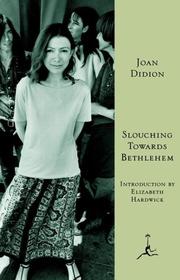
Didion's debut essay collection and the perfect entry point: the title essay on Haight-Ashbury and pieces like 'On Self-Respect' introduce her voice, her California obsessions, and her method of using personal observation to dissect American culture.

Read second, this collection deepens the themes of the first — the opening essay 'We tell ourselves stories in order to live' is one of the most quoted lines in American nonfiction, and the whole book shows her style at its most assured and unsettling.
The Essayist Expands: Politics and Place
IntermediateSee Didion move beyond California and personal culture-watching into sharp political and geographical reportage, expanding your sense of what her essays can do.
▸ Study plan for this stage
Pace: 8–10 weeks total: Week 1–2 — Salvador (~100 pages; read in 2–3 sittings, ~35–50 pages/day); Week 3–5 — After Henry (~300 pages; ~30–40 pages/day, pausing between sections "Here," "California," and "Washington"); Week 6–10 — Political Fictions (~350 pages; ~25–30 pages/day, one essay per sitting to a
- Reportage as witness: how Didion uses first-person presence in Salvador to implicate the reader in political horror without editorializing overtly
- The rhetoric of official language: Didion's technique of quoting and then quietly dismantling government and media euphemisms, especially in Salvador and Political Fictions
- Geography as argument: how physical place — El Salvador's checkpoints, Los Angeles freeways, Washington corridors — becomes evidence in her essays
- The 'narrative' critique: Didion's central thesis in Political Fictions that American electoral politics is a closed story told by a consultant-media complex, insulated from actual voters
- Elegiac journalism: After Henry's mourning of editor Henry Robbins and of a legible Los Angeles, showing how personal grief and cultural diagnosis intertwine
- Fragmentation and white space: the continued use of short sections, abrupt cuts, and strategic repetition to create unease and force the reader to supply connections
- Expansion of scale: tracking Didion's movement from the intimate Californian self of earlier work to the hemispheric and national, and what that shift costs and gains stylistically
- The complicit observer: how Didion positions herself as neither neutral reporter nor activist, and the ethical questions that stance raises
- In Salvador, how does Didion use the physical details of daily life — meals, hotel lobbies, roadblocks — to convey political terror more forcefully than statistics or explicit condemnation would?
- What does Didion mean by 'the narrative' in Political Fictions, and which specific essays most thoroughly demonstrate how that narrative excludes ordinary citizens?
- How does After Henry function as both an elegy and a work of cultural criticism — what is Didion grieving, and what argument does that grief serve?
- Across all three books, how does Didion's treatment of official or media language evolve — what rhetorical moves does she repeat, and where does she push them further?
- Salvador is a single sustained piece of reportage while Political Fictions is a collection of discrete essays — how does the difference in form affect the reader's experience of Didion's political argument?
- By the end of Political Fictions, what is Didion's implicit theory of the American reader or citizen, and do you find it persuasive or limited?
- Close-reading log for Salvador: Each sitting, copy out one passage of official or military language Didion quotes, then write a paragraph analyzing exactly how she frames, positions, or undercuts it — track the accumulation across the whole book.
- Mapping exercise: Draw or annotate a simple map marking every location named in Salvador. Note which details Didion attaches to each place. Write a short reflection on how geography structures her argument about state violence.
- After Henry section comparison: After finishing each of the three sections ('Here,' 'California,' 'Washington'), write a one-page note on whose absence or loss anchors that section and how Didion's tone shifts. Compare all three notes at the end.
- Political Fictions 'narrative' audit: Choose any two essays from the book and list every instance where Didion identifies a media or consultant claim as 'narrative.' Then find a current news cycle and apply her framework — write 300 words on what the dominant narrative is and who it excludes.
- Style imitation: Write a 400–600 word piece of place-based reportage in Didion's mode — visit a public, politically charged space (a city hall, a campaign office, a courthouse) and render it through sensory detail and strategic repetition, withholding explicit judgment.
- Synthesis essay: After completing all three books, write a 600–800 word essay answering: 'How does Didion's definition of political failure change from Salvador (1983) to Political Fictions (2001)?' Use at least one specific passage from each book as evidence.
Next up: Mastering Didion's political and geographical reportage here — especially her critique of narrative and media complicity — equips the reader to engage with the more inward, grief-saturated late work, where those same analytical tools turn on the self with devastating intimacy.

This short, searing work of political reportage on El Salvador in the early 1980s shows Didion applying her fragmented, anxiety-laden style to geopolitical violence — a crucial bridge between her personal essays and her later political writing.

A collection of political and cultural essays — including a landmark piece on the Central Park Five case — that demonstrates her mature journalistic range and prepares you for the full-length political books to come.
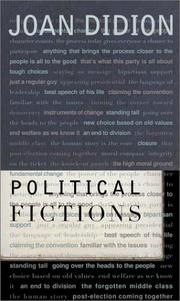
Her most sustained work of political criticism, dissecting the American media-political complex with cold precision; reading it here, after the earlier essays, lets you see how her ideas about narrative and self-deception scale up to national politics.
The Novelist: Fiction as a Different Lens
IntermediateExperience how Didion's obsessions — dislocation, identity, the stories women tell themselves — translate into novel form, with prose that rewards readers already fluent in her essay voice.
▸ Study plan for this stage
Pace: 8–10 weeks total: ~2.5–3 weeks per novel. Play It as It Lays (~180 pp): read in 6 sittings of ~30 pp, lingering on white space and fragmented chapters. A Book of Common Prayer (~270 pp): ~30–35 pp/day over ~9 days, pausing to map narrator reliability. Democracy (~230 pp): ~30 pp/day over ~8 days, tr
- Fragmentation as form: how Play It as It Lays uses white space, one-sentence chapters, and ellipsis to mirror Maria's psychological dissolution rather than merely describe it
- The unreliable/constructed narrator: in A Book of Common Prayer, Grace Strasser-Mendana openly admits the limits of her knowledge, forcing readers to question every 'fact' about Charlotte Douglas
- Female self-mythologizing: all three novels center women who construct sustaining fictions about themselves — Maria's passivity as survival, Charlotte's belief in her daughter's return, Inez Victor's quiet endurance — echoing Didion's essay-era argument that we tell ourselves stories in order to liv
- Political entropy as backdrop: Boca Grande's perpetual coup in A Book of Common Prayer and the Cold War/Southeast Asia machinery in Democracy show Didion using geopolitical instability as an objective correlative for personal disintegration
- The novelist as visible presence: Democracy explicitly names 'Joan Didion' as a character who knew the Victors, collapsing the boundary between journalist, essayist, and fiction-maker — a technique that rewards readers already familiar with her nonfiction voice
- Dislocation and non-place: characters in all three novels inhabit airports, freeways, hotel rooms, and fictional Central American republics — spaces that refuse to anchor identity
- Minimalist syntax as moral stance: Didion's stripped declarative sentences and refusal of interiority (especially in Play It as It Lays) enact a worldview in which explanation is suspect and meaning is not delivered but withheld
- Intertextual echoes of the essays: themes from 'The White Album' (loss of narrative), 'Slouching Towards Bethlehem' (the center not holding), and 'The Year of Magical Thinking' precursors all surface in the novels, deepening for readers who have already done essay-stage work
- In Play It as It Lays, Didion strips the novel to near-silence — what specific formal choices (chapter length, syntax, what is left unsaid) create Maria's sense of nullity, and how does 'nothing' function as both Maria's answer and the novel's structural principle?
- How does Grace's narration in A Book of Common Prayer simultaneously construct and undermine Charlotte Douglas as a character — and what does Didion suggest about the ethics and limits of telling another woman's story?
- All three novels feature women in various states of waiting or stasis (Maria on the freeway, Charlotte in Boca Grande, Inez in Kuala Lumpur). How does Didion distinguish between paralysis and a kind of radical, self-aware endurance across the three protagonists?
- Democracy is the most overtly metafictional of the three: how does Didion's decision to name herself as narrator and to foreground the novel's own construction change the reader's relationship to Inez Victor's story compared to the more 'hidden' narration of the earlier two novels?
- Trace the motif of the absent or lost child across all three books (Maria's institutionalized daughter, Charlotte's missing Marin, Inez's children). What does this recurring figure allow Didion to explore about maternal identity and self-delusion?
- How do the invented or peripheral geographies — the Los Angeles freeway system, Boca Grande, Kuala Lumpur — function as more than setting? What do these non-places reveal about Didion's vision of late-20th-century American identity?
- Close-reading log: For each novel, select one passage of fewer than half a page and write a 300-word annotation focused purely on syntax — sentence length variation, what is omitted, punctuation as pacing. Compare all three annotations at the end to chart Didion's evolving prose style across the three books.
- Narrator reliability map for A Book of Common Prayer: create a two-column document listing (a) things Grace claims to know with certainty and (b) things she admits she is guessing or reconstructing. Write a one-paragraph verdict on how trustworthy a biographer Grace is and what that unreliability costs the reader.
- Rewrite a single scene from Play It as It Lays — Maria driving the freeway, for example — in the style of a conventional third-person omniscient narrator who explains Maria's feelings. Then write a paragraph comparing the two versions: what is gained, what is catastrophically lost?
- Thematic thread tracker: keep a running list as you read all three novels of every airport, hotel, freeway, or 'transit space' mentioned. At the end, write a 400-word essay arguing for or against the claim that Didion's characters are defined by perpetual transit rather than by home.
- Dialogue with the essays: choose one passage from Play It as It Lays or Democracy that feels like it could have appeared in 'The White Album' or 'Slouching Towards Bethlehem.' Write a 250-word comparison explaining what the fictional frame adds — or removes — that the essay form could not achieve.
- Character self-myth inventory: for each of the three protagonists (Maria, Charlotte, Inez), write a bullet-point list of the story each woman tells herself in order to keep functioning. Then write a short paragraph for each identifying the moment in the novel when that self-myth is most severely tested.
Next up: Mastering Didion's fictional techniques — fragmented form, constructed narrators, self-mythologizing women — equips the reader to recognize how these same strategies migrate back into her later nonfiction, making the grief memoirs and political writing feel like a culmination rather than a departure.

Her most celebrated novel and the best starting point for her fiction: the fragmented, white-space-filled structure mirrors her essay style, and the story of Maria's unraveling in Hollywood directly echoes the cultural despair of 'The White Album.'
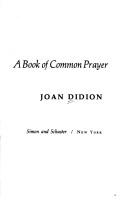
A more complex and novelistically ambitious work than 'Play It As It Lays,' this book rewards the reader who already understands her themes of self-delusion and Central American political instability (set up by 'Salvador').
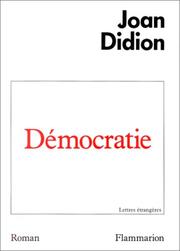
Her most self-referential novel, in which the narrator is named 'Joan Didion' — it weaves together her political reporting and her fiction into a single dazzling, meta-narrative that only fully lands once you've read both strands of her work.
Late Memoirs: Grief and Reckoning
ExpertArrive at Didion's most emotionally devastating and critically acclaimed work — the late memoirs of loss — with the full context of her career, so that their stylistic and thematic payoffs hit with maximum force.
▸ Study plan for this stage
Pace: 4–5 weeks total: Week 1–2 — The Year of Magical Thinking (~240 pages, ~25–30 pages/day, pausing at natural grief-cycle breaks); Week 3–4 — Blue Nights (~190 pages, ~25 pages/day, read slowly to absorb the fragmented, elegiac rhythm); Week 5 — comparative re-reading of selected passages, reflection,
- Magical thinking as a psychological and narrative mechanism: Didion's documentation of the irrational bargaining and cognitive distortions of acute grief in The Year of Magical Thinking, and how she renders private irrationality into universal literary form
- The memoir as self-interrogation: both books use the act of writing not to resolve grief but to enact it — the text itself becomes the grieving process, resisting closure or consolation
- Fragmentation and circularity as formal choices: in Blue Nights especially, Didion's sentences loop back, repeat, and dissolve, mirroring the failing of memory and the approach of her own mortality
- The body in crisis: Blue Nights shifts the lens from the death of a spouse (John Gregory Dunne) to the death of a child (Quintana Roo) and the simultaneous decay of Didion's own body, collapsing the boundary between mourner and the mourned
- Control, its illusion, and its loss: a career-long Didion preoccupation reaches its most personal expression — the woman who built a career on precision and control confronts the absolute uncontrollability of death and aging
- Narrative time and the vortex: both memoirs are structured around 'vortex moments' — ordinary objects, phrases, or images (the blue cashmere sweater, the cannoli, the word 'cool') that collapse past and present and trigger overwhelming grief
- Intertextuality and literary mourning: Didion's dense allusions to W.H. Auden, Gerard Manley Hopkins, and classical elegy situate her personal grief within a long tradition of literary lamentation, giving the work additional resonance for the advanced reader
- The ethics and limits of memoir: Blue Nights raises uncomfortable questions about a parent writing a child's life — what can be known, what is appropriated, and what remains irreducibly private about another person's interiority
- In The Year of Magical Thinking, how does Didion use the clinical language of grief research (Kübler-Ross, Bowlby) alongside her own raw experience — and what is the effect of that juxtaposition on the reader's trust in the narrator?
- Both memoirs are structured non-linearly. How does the specific shape of each book's fragmentation differ, and what does that difference reveal about the distinct nature of each loss (spouse vs. child, sudden death vs. prolonged illness)?
- Blue Nights is as much about Didion's own aging and physical decline as it is about Quintana Roo. How does Didion braid these two subjects together, and what argument — if any — does the book make about the relationship between parenthood and mortality?
- Identify two or three 'vortex' objects or phrases in each book. How does Didion introduce them, return to them, and transform their meaning across the text?
- How do the stylistic signatures you have traced across Didion's career — the declarative sentence, the self-interruption, the use of lists — function differently in these memoirs than they did in her journalism or fiction? What is gained or lost by applying those techniques to autobiographical grief?
- By the end of Blue Nights, has Didion arrived at any form of acceptance, understanding, or meaning — or does the book deliberately refuse those consolations? Use specific textual evidence to defend your reading.
- Vortex mapping: Create a two-column annotated list for each book of every recurring object, phrase, or image Didion returns to. Note the page of first appearance, each recurrence, and any shift in emotional charge. At the end, write a one-paragraph analysis of how one vortex item functions as a structural device.
- Sentence surgery: Select one page from The Year of Magical Thinking and one from Blue Nights that feel stylistically distinct from each other. Rewrite each passage in a conventional, linear, emotionally explicit prose style. Then write a short reflection (300–400 words) on what Didion's original choices preserve that your rewrite destroys.
- Elegiac tradition close-read: Look up the full texts of W.H. Auden's 'Stop All the Clocks' and Gerard Manley Hopkins's 'Spring and Fall,' both of which resonate with Didion's allusions. Annotate the passages in the memoirs where these echoes appear and write a 400-word note on how the literary inheritance shapes the emotional register of each scene.
- Comparative grief timeline: Draw a visual timeline for each book showing the chronology of actual events versus the order in which Didion narrates them. Identify the three largest gaps or reversals and write a sentence for each explaining the emotional logic of the reordering.
- Personal response journal: After finishing Blue Nights, write an unedited 500-word response to the question Didion implicitly poses: 'What do we lose when we lose the person who knew us best?' Then revise it once, applying one Didion technique (fragmentation, repetition, or the declarative interruption) deliberately.
- Critical dialogue: Read one published review or critical essay on each memoir (e.g., Michiko Kakutani's NYT review of The Year of Magical Thinking or Hilary Mantel's essay on Blue Nights). Write a 300-word response agreeing or disagreeing with the critic's central claim, using specific passages from the text as evidence.
Next up: Having experienced Didion's voice at its most unguarded and her themes at their most distilled, the reader is now equipped to step back and engage with critical and biographical perspectives on her work as a whole — assessing her legacy, her contradictions, and her place in American literary and cultural history.
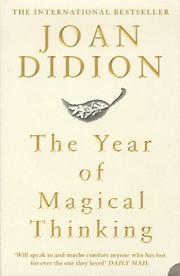
Her National Book Award-winning memoir about the sudden death of her husband John Gregory Dunne is the natural culmination of everything before it: the same cool, analytical prose now turned on unbearable personal grief, making the contrast all the more shattering.

Read last, this memoir about the death of her daughter Quintana completes the diptych of loss and confronts aging and mortality with a rawness that even 'The Year of Magical Thinking' held slightly at bay — the perfect, haunting close to the curriculum.
Discussion
Keep reading
Paths that share books, cover the same subject, or open a related topic.