James Ellroy Reading Order: Where to Start
Ellroy wrote two distinct ordered sequences and they must not be mixed: the L.A. Quartet, four novels covering Los Angeles from 1947 to 1958, and Underworld USA, three novels covering American secret history from 1958 to 1972. Start inside the Quartet, finish it, then move to Underworld USA, whose prose is far more extreme and which begins exactly where the Quartet ends. The early standalones and the memoir come last, because they are only interesting once you know what he built out of them.
Start here: the entry point to the L.A. Quartet
IntermediateMeet Ellroy's Los Angeles and his method — real unsolved crime, invented cops, and an obsessive narrator — in the most accessible book of the four.
▸ Study plan for this stage
Pace: Two to three weeks for 444 pages. The Black Dahlia moves fast once the partnership is established but the first eighty pages are boxing and LAPD politics, so allow a slow start. Forty pages a sitting is comfortable here; it will not be by the end of this path.
- Two warnings before anything else, because both of them lose readers. First: the violence is extreme and often sexual, the crimes are drawn from real mutilations, and Ellroy lingers. Second: period racial slurs are everywhere, in the voices of cops, criminals and narrators, unmarked and uncondemned,
- There are two ordered sequences and they must not be mixed: the L.A. Quartet, four novels covering Los Angeles from 1947 to 1958, and Underworld USA, three novels covering American secret history from 1958 to 1972. This stage begins the first.
- The Ellroy method: take a real unsolved crime, keep the documented facts, and invent the police, the conspiracy and the solution around them. The reader is never told where the record ends and the fiction begins, which is the source of the paranoia.
- The Black Dahlia is by a wide margin the easiest door in, because the prose has not yet compressed. Sentences are still sentences here. By the fourth book they will not be, and starting at the wrong end of the Quartet is the single commonest way people bounce off him.
- Bucky Bleichert and Lee Blanchard are boxers made partners for political reasons, and the novel is at least as much about what the case does to their friendship as about who killed Elizabeth Short.
- Obsession is the actual subject. Ellroy's detectives do not solve crimes so much as get consumed by them, losing their careers, their partners and their judgement in the process. That pattern holds in every book on this path.
- The real Elizabeth Short murder of 1947 was never solved and the case is still open. Knowing that before you start changes how you read the ending Ellroy supplies.
- Ellroy's Los Angeles is a specific and researchable place — real streets, real newspapers, real LAPD divisions and real politicians alongside the invented ones. The density of period detail is part of the pleasure and part of the difficulty.
- Why does the partnership fail, and at what point does the case stop being work for each of them?
- What does Kay Lake see that neither man does?
- How does Ellroy make an unsolved case satisfying without pretending it was solved in reality?
- The Sprague family is entirely invented and the Short murder is not. Where does the seam show, and does it matter?
- What is Bucky actually looking for by the end of the novel, and has it anything left to do with the victim?
- Read the opening thirty pages once for plot and once for the Los Angeles geography. Both matter later — the Quartet reuses the same map for eleven years of fictional time.
- Start a character card file now. This path runs to roughly 5,500 pages with heavy overlap between books, and cops from one novel run whole subplots in another.
- Mark where the prose starts to speed up. It is a gradual compression across the four books and this novel is the baseline you will measure it against.
- Read one contemporary account of the actual Elizabeth Short case after finishing, not before. Doing it in that order preserves the novel's effect and then shows you exactly what he built.
Next up: You have the city, the method and the baseline prose; the next three books escalate all three and depend on each other for their casts.
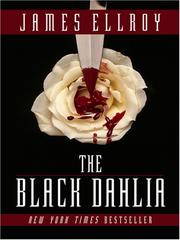
The 1947 Elizabeth Short murder, fictionalised through two LAPD boxers turned partners. The first L.A. Quartet novel and by far the easiest door in: the prose has not yet compressed into the later staccato.
The rest of the L.A. Quartet, in order
IntermediateComplete the four-novel Los Angeles sequence in publication order, watching the style contract book by book until it is almost pure verb.
▸ Study plan for this stage
Pace: Seven to eight weeks for 1,408 pages: The Big Nowhere 496, L.A. Confidential 496, White Jazz 416. The first two read at about 35 pages a sitting. White Jazz is much shorter and takes as long, because its prose has to be decoded rather than read — plan half the daily pages and expect to reread paragr
- These three are strictly in publication order because they share a cast. The Big Nowhere sets up characters L.A. Confidential pays off, and White Jazz assumes both.
- Dudley Smith arrives properly in The Big Nowhere and becomes the closest thing the Quartet has to a presiding intelligence — a charming, murderous Irish lieutenant who reappears across decades and, eventually, across both quartets.
- The Big Nowhere runs three protagonists against a 1950 Red-hunting grand jury and a series of mutilation killings. Its treatment of a closeted detective is central to the plot, is genuinely sympathetic, and is written in the brutal idiom of the men around him.
- L.A. Confidential is the one most readers call his masterpiece: three cops with incompatible methods, the Nite Owl massacre, and a conspiracy that runs from vice to pornography to city politics across seven years.
- The film is very good and is not this book. It compresses several years into months, removes most of the plot, and gives the story an ending Ellroy did not write. If you know the film, expect to be lost for the first hundred pages rather than ahead.
- White Jazz is the Quartet's close and its formal experiment: first person, clipped to fragments, verbs and nouns with the connective tissue removed, narrated by a corrupt lieutenant who is coming apart while he tells it.
- That style is not a mistake and it is not laziness. The narrator's mind is disintegrating and the syntax disintegrates with it. Read a page aloud when you stall — the rhythm resolves it faster than staring does.
- By White Jazz the racial and sexual language is close to relentless, because the narrator is a violent bigot and the book is inside his head with no exit. It is the point at which readers most often stop, and stopping here is a defensible decision.
- Across the four novels the LAPD is portrayed as an organised criminal enterprise with a press office. That is the Quartet's argument, not a subplot.
- What does the grand jury in The Big Nowhere actually want, and who is using it for what?
- Exley, White and Vincennes each have a method and a self-justification. Which one does the novel treat as least dishonest?
- How does Dudley Smith survive across three books? What does his survival say about the institution?
- In White Jazz, what has Klein done that he will not say directly, and where does the prose refuse it?
- Does the Quartet's compression of style track something about its subject, or is it simply an author getting more confident?
- What is the total picture of Los Angeles across 1947 to 1958 that the four books add up to?
- Before L.A. Confidential, write out the surviving cast of The Big Nowhere and where each one ended up. It saves fifty pages of confusion.
- Read the first two pages of White Jazz aloud. If it works aloud, it will work on the page; if it does not, that is a real answer about whether to continue.
- For each of the three books, note the year it opens and closes. The Quartet's chronology is continuous and easy to lose.
- Keep a list of characters who appear in more than one book. It will be longer than you expect and it is what makes the fourth book land.
- After White Jazz, decide honestly whether you want the harder sequence. Underworld USA is more extreme in every direction and the Quartet is a complete work on its own.
Next up: The Quartet ends in 1958 and the next sequence begins in 1958, in a different city, at national scale.
1950, a Red-hunting grand jury and a series of mutilation killings. It introduces Dudley Smith properly and sets up characters L.A. Confidential pays off, so it must come before it.
Three cops, the Nite Owl massacre, and the novel most people consider his masterpiece. Read third, exactly where it belongs — it depends on The Big Nowhere for half its cast.
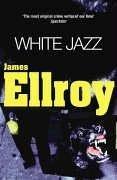
The Quartet's close, narrated in clipped telegraphese by a corrupt lieutenant. It is the hardest prose in the sequence and unreadable as a first Ellroy, which is the whole reason for the order.
Underworld USA, in order
IntermediateMove from the city to the country and follow the three-novel secret history from the Kennedys to Watergate, in the only order it makes sense in.
▸ Study plan for this stage
Pace: Ten to twelve weeks for 1,956 pages: American Tabloid 592, The Cold Six Thousand 688, Blood's a Rover 676. American Tabloid reads faster than its length. The Cold Six Thousand is the hardest book on this path and 25 pages a sitting is a realistic ceiling. Do not take a long break between the first t
- This is American secret history from 1958 to 1972, told through mid-level operators — mob muscle, FBI men, CIA contractors — who work for several masters at once and are never in the room where history is decided, only in the room next door.
- American Tabloid runs from 1958 to Dallas and is, by most readings including Ellroy's own boasting, the best novel he wrote. It begins exactly where the Quartet ends and requires no knowledge of it.
- Its argument is that the Kennedy assassination was the logical output of a system of favours, blackmail and deniable violence, and that no single conspiracy is needed to explain it. The novel refuses the tidy version and is more disturbing for it.
- The Cold Six Thousand picks up in the seconds after the previous book and runs to 1968, taking in Las Vegas, Vietnam, the heroin trade and two more assassinations. Its prose is stripped to three-word declarative sentences for 688 pages.
- That style defeats a great many readers and the complaint is legitimate. It is deliberate — a machine-gun rhythm meant to be relentless — but the effect over nearly seven hundred pages is genuinely punishing, and this is the book on which most Ellroy readers quit.
- The racial and political language in this trilogy is at its most extreme. Hoover's monologues, the cops' internal voice and the free indirect narration all carry slurs continuously, and the books are steeped in the era's racism, homophobia and antisemitism without authorial commentary.
- There is an argument, and it is worth weighing, that Underworld USA is anti-racist in structure — the Klan, the Bureau and the mob are shown as one apparatus and the black radicals are the only characters with a coherent moral position. Whether that survives the sheer volume of the language is a rea
- Blood's a Rover covers 1968 to 1972 — Hughes, Haiti, the Panthers, COINTELPRO — and resolves plot threads laid down two books earlier. It is also the most emotionally open of the three, which surprises people.
- Real people are used throughout as characters, with invented motives and invented crimes, alongside wholly fictional protagonists. Ellroy assumes you can hold that distinction; if you cannot, this trilogy will misinform you.
- In American Tabloid, what does each of the three protagonists want, and which of them is closest to believing in something?
- How does Ellroy make Dallas inevitable without a single controlling conspiracy?
- Does the three-word style in The Cold Six Thousand do anything the previous book's prose could not, or is it a limitation sold as a method?
- Wayne Tedrow's arc runs across two books. What changes him, and does the trilogy think the change is real?
- What position do the black radical characters occupy in Blood's a Rover, and does the trilogy grant them the moral authority it withholds from everyone else?
- Taken together, what does Underworld USA claim about how American power actually operates? State it in one sentence.
- Keep a timeline as you read, marked by real historical dates. The trilogy is anchored to actual events and the plotting only clarifies against them.
- In The Cold Six Thousand, read the document inserts — memos, transcripts, tabloid squibs — attentively rather than skipping them. They carry information the fragmented prose withholds.
- If The Cold Six Thousand stalls you, read it in fifteen-minute bursts rather than long sittings. The style is bearable in short doses and intolerable in long ones.
- After each book, write down which real events were dramatised and which were invented, then check yourself. Doing this is the honest way to read a novelist who fictionalises the historical record this aggressively.
- At the end of Blood's a Rover, go back to the first chapter of American Tabloid. The trilogy is a fourteen-year arc and its opening pages read completely differently once closed.
Next up: With both sequences finished, the remaining books explain where the obsession came from and where he took it afterwards.

1958 to Dallas, told through three men working for the mob, the FBI and the CIA at once. It begins where the Quartet stops, and it is the best novel he wrote.
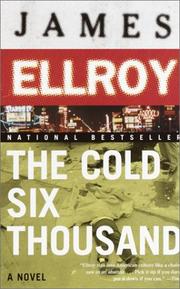
Picks up seconds after American Tabloid ends and runs to 1968. The prose is stripped to three-word sentences — brace for it, and do not attempt it out of sequence.
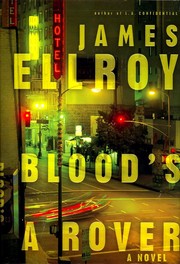
1968 to 1972, Howard Hughes, Haiti and the Panthers. It resolves plot threads laid down two books earlier, so it is strictly last in the trilogy.
The completist tail: before, beside and after
IntermediateFill in the early crime novels, the memoir that explains the obsession, and the later Los Angeles books, and be able to say how the autobiography feeds the fiction.
▸ Study plan for this stage
Pace: Eight to nine weeks for 1,744 pages: Brown's Requiem 256, Clandestine 352, My Dark Places 416, Perfidia 720. The two early novels are short and conventional and go quickly. My Dark Places is non-fiction and reads at normal pace but is emotionally heavy, so do not rush it. Perfidia is the longest thi
- Brown's Requiem is the first novel and is interesting mainly as a baseline. A repo man and ex-cop working a case around a golf caddy — competent, conventional private-eye writing with almost none of the later signature. Reading it after the two sequences shows exactly how far he travelled.
- Clandestine is already circling the material he would spend a career on: a driven young cop in early-1950s Los Angeles and a murdered woman he cannot let go of. It is the clearest early sign of the Quartet, and short.
- My Dark Places is the key to the entire path. Ellroy's mother was murdered in 1958 when he was ten; the case was never solved; and in the 1990s he reopened it with a retired homicide detective and wrote what they found.
- It is a memoir, a true-crime investigation and a self-indictment at once. He is unsparing about his own adolescence — the break-ins, the drinking, the pornography, the fixation on the Black Dahlia case as a substitute for his mother's — and the book does not ask to be liked.
- Read after the fiction, it retroactively explains every obsessive protagonist you have met: the detective destroyed by a dead woman he never knew is not a genre convention in Ellroy's hands, it is autobiography with the names changed.
- The investigation does not succeed. The book's honesty about that failure is what raises it above the true-crime shelf.
- Perfidia opens the Second L.A. Quartet, set in the weeks after Pearl Harbor, with younger versions of characters from the first Quartet and the Japanese-American internment as its subject. It is a prequel to everything above.
- It only works as a finish, not a start. Half its effect is recognition — knowing what these people become — and a reader who meets them here first gets a long, dense wartime novel with no payoff.
- The late style is at full strength in Perfidia: alliteration, tabloid diction, a very large cast, and racial language that is now attached to a specific historical atrocity being carried out by the police force the book is about.
- What is present in Clandestine that is missing from Brown's Requiem, and what does that tell you about what he found in the material?
- In My Dark Places, what does Ellroy admit about his own use of his mother's death, and is the admission itself a kind of use?
- The investigation fails. How does he end the book, and would a solution have made it better or worse?
- Which fictional detective in the two sequences is closest to Ellroy himself, and what evidence does the memoir give?
- In Perfidia, what does the internment allow him to say about the LAPD that the first Quartet could not?
- Across the whole path — thirteen books, roughly 8,000 pages — what is his actual claim about American institutions?
- Read the first chapter of Brown's Requiem and the first chapter of White Jazz on the same day. Ten years apart, the same writer, and the distance is the most instructive thing on this path.
- In My Dark Places, keep the 1958 chronology separate from the 1990s investigation. He interleaves them and the doubling is the design.
- After the memoir, reread twenty pages of The Black Dahlia. It is a different novel once you know what he was writing about.
- In Perfidia, note every character you recognise from the first Quartet and what they later become. That list is the reason this book is placed last.
- Finally, decide whether you want the Second Quartet, which continues past Perfidia. Having read everything above, you now know exactly what you would be signing up for.
Next up: Both major sequences, the origins and the memoir are behind you, so anything remaining can be picked up without a map.
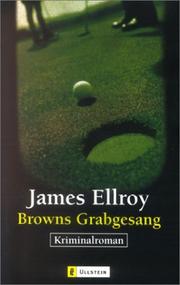
The first novel — a repo man and ex-cop working a case around a golf caddy. Conventional by his later standards, and interesting mainly as a baseline for how far he travelled.
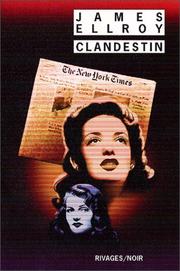
An early Los Angeles novel already circling a murdered woman and a driven young cop. The clearest sign of what he would do with the Quartet, and short.
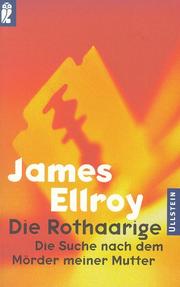
The memoir: his mother's unsolved 1958 murder, and his attempt decades later to solve it with a retired detective. Read after the fiction — it is the key to every obsessive protagonist above.

The opening of the Second L.A. Quartet, set in the weeks after Pearl Harbor with younger versions of characters you already know. It is a prequel to everything, and it only works as a finish, not a start.
Discussion
Keep reading
Paths that share books, cover the same subject, or open a related topic.