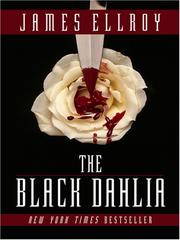
Start with The Black Dahlia. There are two ordered sequences in Ellroy — the L.A. Quartet, four novels covering Los Angeles from 1947 to 1958, and Underworld USA, three novels covering American secret history from 1958 to 1972 — and this is the first book of the first one. It is also by a wide margin the easiest door in, because the prose has not yet compressed. Sentences are still sentences here. By the fourth Quartet novel they will not be, and starting at the wrong end is the commonest way people bounce off him.
Two warnings before anything else, because both lose readers. The violence is extreme and often sexual, the crimes are drawn from real mutilations, and Ellroy lingers. And period racial slurs are everywhere, in the voices of cops, criminals and narrators, unmarked and uncondemned; the later books are far worse than this one. He is writing men who talked that way and he does not step outside them to reassure you. That is what you are choosing when you start.
The L.A. Quartet, in order
The Black Dahlia, then The Big Nowhere, L.A. Confidential, White Jazz. Strictly publication order, because they share a cast: The Big Nowhere sets up characters L.A. Confidential pays off, and White Jazz assumes both. Start a character card file now — this path runs to roughly 5,500 pages with heavy overlap, and cops from one novel run whole subplots in another.
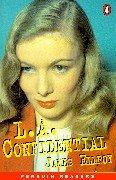
L.A. Confidential is the one most readers call his masterpiece. If you know the film, expect to be lost for the first hundred pages rather than ahead: it compresses years into months, removes most of the plot and supplies an ending Ellroy did not write.
White Jazz is the Quartet's close and its formal experiment — first person, clipped to fragments, narrated by a corrupt lieutenant who is coming apart while he tells it. The style is not laziness; the narrator's mind is disintegrating and the syntax goes with it. Read a page aloud when you stall. It is also where the racial and sexual language becomes close to relentless, because the book is inside a violent bigot's head with no exit, and it is the point at which readers most often stop. Stopping here is a defensible decision, and the Quartet is a complete work on its own.
Underworld USA, in order
American Tabloid, The Cold Six Thousand, Blood's a rover. Ten to twelve weeks for about 1,950 pages, and do not take a long break between the first two — the second opens seconds after the first ends. The argument is that the Kennedy assassination was the logical output of a system of favours, blackmail and deniable violence, and that no single conspiracy is needed to explain it.
The Cold Six Thousand is the hardest book on this path: 688 pages of three-word declarative sentences, and the book on which most Ellroy readers quit. The complaint is legitimate. If it stalls you, read it in fifteen-minute bursts rather than long sittings — the style is bearable in short doses and intolerable in long ones. Real people are used throughout as characters with invented motives and invented crimes, so keep a timeline marked by actual historical dates.
The completist tail
Brown's Requiem is the first novel and is interesting mainly as a baseline — competent, conventional private-eye writing with almost none of the later signature. Clandestine is already circling the material he would spend a career on. My Dark Places is the key to everything: Ellroy's mother was murdered in 1958 when he was ten, the case was never solved, and in the 1990s he reopened it with a retired homicide detective and wrote what they found. The investigation does not succeed, and the book's honesty about that is what raises it above the true-crime shelf. Read after the fiction, it explains every obsessive protagonist you have met. Perfidia opens the Second L.A. Quartet, set in the weeks after Pearl Harbor with younger versions of characters from the first Quartet — it only works as a finish, not a start, because half its effect is recognition.
Where to stop
After White Jazz. That is the real answer for most readers: the Quartet is self-contained, it is the best-written stretch of his career, and Underworld USA is more extreme in every direction. If you go on, go on deliberately. Discover has more ordered routes.
Follow the full ordered path here: James Ellroy Reading Order: Where to Start.