James Bond Reading Order: Publication or Chronological?
Ian Fleming wrote fourteen Bond books in twelve years, and because he wrote them in story order, publication order and chronological order are effectively the same thing — the continuity is loose but it never runs backwards. This path starts with the short, cold first novel, moves through the three that are usually named the best, groups the Blofeld trilogy so its arc reads as one story, and leaves the weaker entries for last rather than letting them stall you early.
Start here: the first three
BeginnerMeet Fleming's Bond — much colder and more fallible than the films — and decide whether the prose suits you before committing to the run.
▸ Study plan for this stage
Pace: Two to three weeks for all three. Fleming's novels are short — roughly 190, 250 and 255 pages — and were written to be read in a couple of sittings each. Casino Royale can be finished in an afternoon. Read them in this order and close together; the first three establish a voice, and spacing them out
- Fleming wrote his fourteen Bond books in twelve years and wrote them in story order, so publication order and chronological order are effectively the same thing — there is no ordering puzzle here, only a quality curve
- Be warned plainly before you start: these novels carry the racism and misogyny of Britain in the 1950s, and it is not incidental. Live and Let Die's treatment of Black Americans and Haitians is sustained and ugly, and casual contempt for women runs through all fourteen
- You can read them as period documents, and most readers do, but you cannot read them without encountering this — better to know now than to be ambushed in chapter four
- Fleming's Bond is much colder, more fallible and more frightened than the films' — he is beaten badly in Casino Royale and never fully recovers from it
- Casino Royale is the correct entry point: it introduces Bond, Vesper and the wound that shapes every later book, and nothing precedes it
- Live and Let Die is a direct continuation in tone rather than plot, and it is where the prose gets its first taste for the exotic-locale set piece
- Moonraker is the most English of the fourteen — half the book is a card game in a London club — and bears almost no relation to the film of the same name
- Fleming's real skill is texture: food, brands, cards, weather, the mechanics of a hotel room. If that pleasure works on you, the series works; if you are here for plot, it will disappoint
- What does the ending of Casino Royale do to Bond, and how does it govern his behaviour in the two books that follow?
- Where does Live and Let Die's racial material sit — in the villain, in the narration, or in both? Be specific.
- Moonraker spends enormous space on a card game. What is Fleming actually writing about in those chapters?
- How much does Fleming's Bond resemble the film character you already know? List three concrete differences.
- Fleming describes meals, clothes and objects in obsessive detail. What is that detail doing for a 1953 British reader that it does not do for you?
- Read Casino Royale in one sitting. It is under two hundred pages and its compression is the whole effect.
- Note the publication year on the copyright page of each book before you start it. Reading these as documents of a specific year makes the offensive material legible without excusing it.
- Mark every passage where Bond is afraid or in pain. There are more than the films would suggest, and they are the character's actual foundation.
- Write one paragraph on whether you want to continue. Three books is enough information, and stopping here is a reasonable outcome.
Next up: You have the voice, the period and the wound; the next three are Fleming working at the top of his ability.
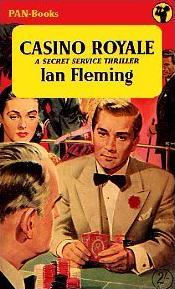
Short, bleak and the correct entry point: it introduces Bond, Vesper and the wound that shapes every later book. Nothing in the series requires reading anything before it.

The second novel and a direct sequel in tone. Be warned that its racial attitudes are of 1954 and are hard going; read it as a period document.
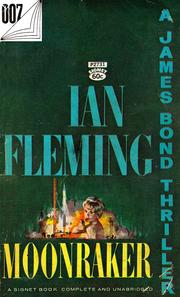
The most English of the books — half of it is a card game — and it bears almost no relation to the film. A good early test of whether you like Fleming for his texture rather than his plots.
The best of the run
BeginnerRead the three novels most often named Fleming's finest, and see the formula reach its most confident form.
▸ Study plan for this stage
Pace: Two to three weeks. From Russia with Love and Goldfinger run around 255 and 295 pages. The third item in this stage is an omnibus of roughly 750 pages collecting three novels, so check its contents before buying — it includes Live and Let Die and Diamonds Are Forever, both of which appear elsewhere
- From Russia with Love is widely considered the best of the fourteen and is structurally the boldest: Bond does not appear for the first third, and the opening belongs entirely to the people planning to kill him
- That structure only works once you know him well enough to feel his absence, which is why it sits fifth rather than first
- It ends on the series' one genuine cliffhanger, and the novel that resolves it must be read immediately afterwards
- Our catalogue's record for that next novel is a three-book omnibus — Live and Let Die, Diamonds Are Forever and Dr. No collected in one volume — so the book you need arrives bundled with two you either have already read or will read later
- Read the Dr. No section of that omnibus at this point and leave the rest; reading straight through it would put Diamonds Are Forever badly out of sequence
- Dr. No is the first full Fleming villain in the mode the films made famous: private island, private army, an elaborate and unnecessary death for the hero
- Goldfinger is the purest expression of that villain type and the closest the novels ever come to the films' register — a good high point to reach before the run gets uneven
- Goldfinger also contains some of the ugliest material in the series in its treatment of its main female character, and it is worth naming rather than sliding past
- From Russia with Love withholds Bond for a third of its length. What does Fleming build in that space, and what does it cost him?
- How does the cliffhanger ending change your reading of the novel that follows it?
- Dr. No's villain has a plan that makes very little sense. Does the book need it to?
- Goldfinger is often called the most film-like of the novels. Which specific elements did the films take, and which did they quietly drop?
- Compare the female characters in these books with Vesper in Casino Royale. Is Fleming capable of more than one mode, and when does he use it?
- Check the omnibus contents list before you buy anything in this stage; duplicate purchases are the commonest practical mistake in reading Fleming.
- Read the first three chapters of From Russia with Love and write down what you have learned about SMERSH before Bond appears. That inventory is the novel's real construction.
- Read Dr. No immediately after finishing From Russia with Love — same week if possible. The continuity is the only genuine serial link in the early books.
- Mark the passages in Goldfinger you would have to explain away if you recommended it to someone. That list is a fair account of what reading Fleming now involves.
Next up: The formula is at its most confident, which is exactly when Fleming abandons the standalone structure for his only real multi-book arc.
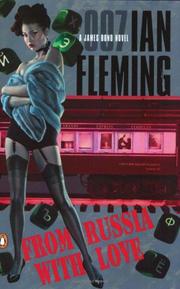
Widely considered the best of the fourteen, and structurally the boldest — Bond does not appear for the first third. Read it fifth, once you know him well enough to feel his absence.
The direct continuation of the cliffhanger that ends From Russia with Love, which is exactly why it belongs immediately after it.
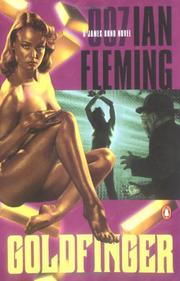
The purest expression of the Fleming villain, and the closest the novels come to the films' register. A good high point to reach before the run gets uneven.
The Blofeld trilogy
IntermediateRead the only three Bond novels that form a continuous story, in the only order that works.
▸ Study plan for this stage
Pace: Two to three weeks for the three — roughly 255, 290 and 225 pages. Read them close together and in this order; they are the only three Bond novels that form a continuous story, and they are the one place in the series where a gap of months between books does real damage. On Her Majesty's Secret Serv
- Thunderball introduces SPECTRE and Blofeld and starts the only genuine multi-book arc Fleming wrote
- On Her Majesty's Secret Service is the emotional centre of the series and the best-written of the late books; its ending is meaningless without Thunderball first
- You Only Live Twice opens with Bond wrecked by the end of the previous novel, which is the strongest structural argument in the whole path for reading in sequence
- You Only Live Twice is the strangest book Fleming wrote — a Japanese travelogue, a poison garden, and a Bond who is barely functioning — and it divides readers sharply
- Its portrayal of Japan is fascinated rather than contemptuous, but it is still an outsider's 1964 account and it generalises freely
- This trilogy is where Fleming's own declining health shows in the writing: the tone darkens, Bond ages visibly, and the professional competence starts failing
- Blofeld is not a consistent character across the three books — his appearance and manner change substantially, which Fleming never explains
- The films scrambled this material badly, so expect the novels' version of these events to contradict whatever you remember
- What does Thunderball establish about SPECTRE that the later two books rely on?
- On Her Majesty's Secret Service is the only Bond novel most readers call moving. What does Fleming do differently, and does he do it deliberately?
- You Only Live Twice begins with a broken man. How does that change what the standard Bond plot machinery can do?
- Blofeld is physically different in each book. Is this carelessness, or is Fleming making a point about the character?
- How does the Japanese setting function — as a real place, as an exotic backdrop, or as a moral landscape for Bond's collapse?
- Read all three within a month. This is the only place in the path where the schedule genuinely matters.
- After On Her Majesty's Secret Service, do not stop. Its ending is designed to be followed immediately, and the pause is what makes readers abandon the series here.
- Track Bond's competence across the three books — successes, failures, and who rescues him. The curve is the arc.
- Write down what you think Fleming believed about his own character by 1964. The trilogy is the best evidence available.
Next up: The one real arc is complete; what remains are the entries most readers skip, and knowing why is the point of finishing.
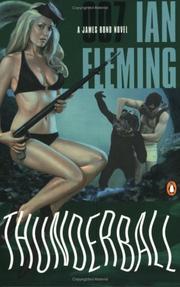
Introduces SPECTRE and Blofeld and begins the one genuine multi-book arc in the series. Read the three that follow together, close in time.
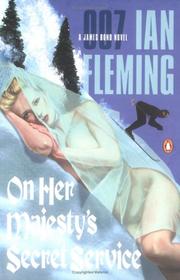
The emotional centre of the whole series and the best-written of the late books. Its ending is meaningless if you have not read Thunderball first.

Opens with Bond wrecked by the end of the previous novel, which is why this trio must be read in sequence. The strangest and most Japanese of the books.
The completist tail
IntermediateFinish the canon knowing which entries are minor, and understand where the continuation novels by other authors sit.
▸ Study plan for this stage
Pace: Two to three weeks — around 245, 240 and 190 pages. None of these needs to be read quickly and none of them builds on the others. For Your Eyes Only is a short-story collection and works well read one story at a time. The Man with the Golden Gun should be read last and read in an evening or two.
- Diamonds Are Forever is chronologically the fourth novel but one of the weakest, which is why it is placed here — skipping it early costs nothing, and it reads better once you already like Fleming
- Its American gangsters are drawn from Fleming's own reporting trip and the result is a novel more interested in Las Vegas and the diamond trade than in its plot
- For Your Eyes Only is five short stories rather than a novel, and several are among Fleming's sharpest work — the compression suits him, and Bond in short form is noticeably less absurd
- The Man with the Golden Gun is Fleming's last novel, published after his death and visibly unfinished: thin, fast, and lacking the texture that makes the good books good
- Read it as an ending rather than as a book; it is the last thing he wrote, and it stops rather than concludes
- Our catalogue does not currently carry Fleming's second short-story collection, which would sit alongside For Your Eyes Only — that is a gap on our side, not a break in the sequence
- The continuation novels by Kingsley Amis, John Gardner, Raymond Benson, Sebastian Faulks and Anthony Horowitz are a separate project written by other hands, and none of them is Fleming
- Having finished the fourteen, you have read the entire original canon — this is a rare series where completion is achievable in a few months
- Why does Diamonds Are Forever read better late than early? Identify what it assumes about your patience with Fleming.
- Which of the stories in For Your Eyes Only is the best, and what does the short form remove from the Bond formula?
- Where is The Man with the Golden Gun visibly unrevised? Point to specific thinness in scene or prose.
- Having read all of Fleming, which three books would you actually recommend, and in what order?
- The continuations are by other authors. What would a successor writer have to reproduce to make a convincing Fleming, and is it reproducible?
- Read For Your Eyes Only one story per sitting. The collection is much better paced that way than read straight through.
- Compare the first chapter of Casino Royale with the first chapter of The Man with the Golden Gun. Eleven years and one unfinished manuscript are both visible.
- Make your own ranking of the fourteen and note where you disagree with the standard one. From Russia with Love and On Her Majesty's Secret Service usually top it, and disagreeing with that is informative.
- Write a short honest paragraph you would give to someone considering these books — including the period content — as if you were recommending them. It is a harder paragraph than it sounds.
Next up: The Fleming canon is finished; anything further is written by other authors and is a different reading project.
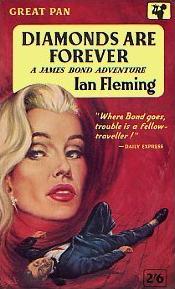
Chronologically the fourth novel but one of the weakest; skipping it early costs you nothing, and it reads better once you already like Fleming.
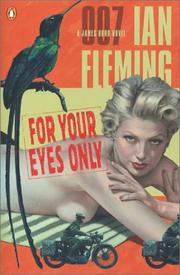
Five short stories rather than a novel, several of them among Fleming's sharpest work. A good palate cleanser late in the run.
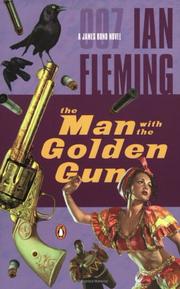
Fleming's last novel, published after his death and visibly unfinished. Read it last, as an ending rather than a book — the many continuation novels by Kingsley Amis, John Gardner, Raymond Benson, Sebastian Faulks and Anthony Horowitz are a separate project entirely.
Discussion
Keep reading
Paths that share books, cover the same subject, or open a related topic.