Ivan Turgenev Reading Order: Where to Start
Turgenev is the shortest and most immediately readable of the great Russians, which makes him the wrong writer to approach through his most historically important book first. This order starts with a novella and the one novel everybody names, then goes back to the sketches and early novels that built his method, then forward to the mature novels and the late outliers. The whole path is around two thousand pages — less than Tolstoy's one big book — and it tracks a single argument about the Russian generations.
Start here
BeginnerRead the two Turgenev works that need no context, and get the measure of his restraint — plots that turn on a hesitation rather than an event.
▸ Study plan for this stage
Pace: Two weeks. First Love is about a hundred pages and can be read in one sitting, though it is better in two — stop at the point the narrator first suspects, and let it sit overnight. Fathers and Sons is short by Russian standards, around 250 pages in most editions, and reads comfortably in a week at 3
- Turgenev is the shortest and most immediately readable of the great Russians. There is no reason to be intimidated: this entire path is roughly two thousand pages, less than one of Tolstoy's novels.
- His plots turn on hesitations rather than events. A declaration not made, a departure taken a day too early, a man who talks himself out of the moment — if you are waiting for something to happen you will misread the book you are holding.
- First Love is framed as a story told by a middle-aged man to friends after dinner, which means the humiliation is being narrated by the person it happened to, decades later and still not resolved. The frame is why it hurts.
- It is also structurally cruel: the reader works out what is happening well before the sixteen-year-old narrator does, and is made to watch him not see it.
- Fathers and Sons gave Russian the word nihilist in its modern sense and gave critics Bazarov to argue about for over a century. It is a novel about a generational quarrel written by a man who could see both generations clearly and refused to award the argument to either.
- Turgenev was attacked from both sides for it — radicals thought Bazarov a slander, conservatives thought him a glorification — and the reception contributed to his long expatriation. That symmetrical hostility is the best evidence of what the book actually does.
- The Russian title means Fathers and Children, and the standard English title narrows it. Worth knowing, because the novel's women are not incidental to the generational argument.
- Note how Turgenev handles a character's death: quickly, physically and without a lesson. It is the opposite of Tolstoy's method and it is the clearest signature of his temperament.
- In First Love, at what point does the reader know what the narrator does not, and how does Turgenev arrange for that gap?
- What does the older narrator of First Love think of his younger self, and does the story endorse his verdict?
- Is Bazarov admirable? Find the passages that support each answer, and note that both sets exist.
- What do Nikolai and Pavel Petrovich each represent, and does the novel take either seriously as an argument rather than as a temperament?
- Anna Odintsova refuses Bazarov. Why, exactly — and is her reason about him or about herself?
- What is nihilism as Bazarov describes it, and does he actually live by it?
- Read the last three pages of First Love twice. The distance between the event and the telling is the whole design.
- In Fathers and Sons, mark every scene in which Bazarov is alone or unobserved. There are few, and they are where the novel undercuts him.
- Note the duel and what tone Turgenev takes with it. Deciding whether it is comic is a fair test of whether you are reading him correctly.
- Read the final chapter at the graveside and decide who the novel gives the last word to. Almost every argument about this book turns on that page.
- Check which translation you have and read the first page of a second one if you can find it online. Turgenev's plainness makes translation differences unusually visible.
Next up: You have the mature Turgenev; the next three books show where the method came from and how early the recurring types were fixed.
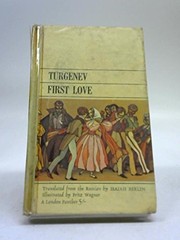
A hundred pages, a summer house, and a humiliation you can see coming and cannot stop. It is the most perfect thing he wrote and the fastest way to find out whether his quietness suits you.

The novel that gave Russia the word nihilist and gave critics Bazarov to argue about for a century. Read it second: after First Love you can hear how carefully Turgenev refuses to take sides.
The core: the sketches and the first novels
IntermediateSee where Turgenev's method came from — the observed serf, the ineffectual gentleman, the woman who is braver than the men around her.
▸ Study plan for this stage
Pace: Four weeks. A Sportsman's Sketches is a collection of two dozen or so linked pieces in full editions — the edition listed here is a short selection, so check what yours contains — and it is best read one or two sketches an evening over ten days rather than straight through. Rudin is around 250 pages
- A Sportsman's Sketches is the fieldwork behind every novel on this path. A landowner walks the Oryol countryside with a gun and a dog and reports what he sees, and the serfs he meets are individuals with judgement, humour and private lives rather than a class.
- Its political effect came from that restraint. Turgenev never argues against serfdom in these pages; he simply declines to write serfs as a category, and the book is traditionally credited with influencing the future Alexander II. Treat that as a claim reported ever since rather than as documented c
- The book appears in English under several titles — sketches, notes, a hunter's album — and the selections differ substantially between editions. Bezhin Meadow, in which the narrator overhears boys telling ghost stories by a fire at night, is the piece to make sure yours includes.
- Rudin is the first novel and the origin of the superfluous man in his purest form: a brilliant talker who can move a room and cannot act, who arrives at a country estate and changes everyone's life without meaning to.
- Every later Turgenev hero descends from Rudin. Reading it third makes Bazarov look different — Bazarov is the anti-Rudin, a man of action with no theory worth the name, invented twenty years later by the same author.
- On the Eve states his recurring claim most directly: the women have the will and the men have the theories. Elena chooses a Bulgarian revolutionary over the cultivated Russians who cannot decide anything, and the novel is unambiguous about why.
- Turgenev's heroines are consistently more decisive than his heroes, and it is a structural argument rather than an idealisation — his point is about what Russian gentry education did to men.
- The title On the Eve means on the eve of something Russia has not yet done. The novel is dated 1859 and the emancipation of the serfs came in 1861; that anticipation is the book's whole nervous energy.
- Pick any two sketches and describe how Turgenev establishes a person in four or five pages. What does he never tell you?
- In Bezhin Meadow, what is the effect of the narrator staying silent while the boys talk?
- Why can Rudin not act? Is it cowardice, circumstance, or the education the novel keeps describing?
- Lezhnyov revises his verdict on Rudin over the course of the book. Which verdict does Turgenev want you to leave with?
- What does Elena see in Insarov that no Russian in the novel possesses?
- Across all three, what is Turgenev's diagnosis of the Russian gentleman, and does he exempt himself?
- Check the contents page of your edition of the Sketches against a full list before starting, so you know whether you have a selection or the whole book.
- Read three sketches, then stop and write down what you now know about serfdom that no character has stated. That is the technique in one exercise.
- Note every time Rudin makes a speech, and what happens immediately afterward. The pattern is the novel.
- Read the epilogue of Rudin knowing it was added later. It changes the book's verdict and knowing it was an afterthought is part of the interest.
- List the men around Elena in On the Eve and what each offers her. The list is the argument.
Next up: The types are fixed and the countryside is mapped; the next three novels take the same characters and make them openly political.

The linked hunting sketches that made serfs into individuals and are said to have influenced Alexander II. Read after Fathers and Sons so you can see the fieldwork behind the novels.

The first novel, and the origin of the superfluous man: a brilliant talker who cannot act. Short, and the direct ancestor of every later Turgenev hero.

Elena chooses a Bulgarian revolutionary over the Russians who cannot decide anything. The clearest version of his recurring claim that the women have the will and the men have the theories.
The mature novels
IntermediateFollow the argument about Russia's future through the three novels where Turgenev is most openly political, including the one that lost him both left and right.
▸ Study plan for this stage
Pace: Five to six weeks. Home of the Gentry is short — around 250 pages — and elegiac rather than eventful, so two weeks at a gentle pace. Smoke is similar in length and much quicker because it is angry. Virgin Soil is the longest thing he wrote, comfortably over 400 pages, and needs three weeks; it is al
- Home of the Gentry was the novel Russians of his own day loved best, and it is the emotional peak of his middle period: a man returns to the family estate believing his marriage is finished, and finds it is not.
- Its subject is renunciation, and Turgenev refuses to make it noble. The ending is quiet, final and completely unconsoling, and it is the closest he comes to writing tragedy.
- The novel appears in English under at least three titles involving nests, gentlefolk and gentry. They are the same book.
- Smoke is the outlier of the three: set among Russian exiles at a German spa town, contemptuous of Slavophiles and Westernisers alike, and structured around a love affair that humiliates its hero twice.
- It offended almost everybody in Russia, which is why it is placed after you know the camps. One character functions as an undisguised mouthpiece for the argument that Russia has contributed nothing and should learn from Europe — an unfair position stated at length, and clearly Turgenev letting himse
- The title image is the point: everything the exiles believe is smoke, and the train's smoke at the end erases the landscape. It is his most openly symbolic novel.
- Virgin Soil is the last and longest, about young populists going to the people — educated radicals trying to raise a peasantry that neither understands nor wants them. Turgenev wrote it from abroad, and the strain shows.
- It contains his most sympathetic conservative figure and his most sympathetic radical, and its argument is that the practical man who quietly builds something will outlast both. That is either wisdom or evasion, and readers have argued it since 1877.
- Read as a sequence, these three trace the generational theme out of the drawing room and into politics: the man who cannot act, the man who despises everyone, and the men who act and get it wrong.
- What exactly does Lavretsky give up in Home of the Gentry, and could he have done otherwise?
- Liza's choice at the end is not explained at length. What has the novel given you to explain it with?
- In Smoke, is the long anti-Russian tirade the novel's position or a position the novel is testing? What evidence is there either way?
- Why does Turgenev set Smoke outside Russia, and what does the spa town let him show?
- In Virgin Soil, why do the populists fail — because of the peasants, the state, or themselves?
- Which figure in Virgin Soil does Turgenev actually back, and what does that reveal about his politics at the end of his life?
- Read the final chapter of Home of the Gentry, then the final chapter of Fathers and Sons, back to back. Both are epilogues about time passing and they are the same writer at two different temperatures.
- In Smoke, separate out everything one character says about Russia and Europe and read it consecutively. It is an essay embedded in a novel and it is worth knowing that.
- While reading Virgin Soil, keep a list of what each young radical actually does, as opposed to intends. The gap is the book.
- Note where Virgin Soil loses control — most readers agree it is in the middle third — and ask what he was trying to do there.
- After all three, write one sentence on Turgenev's politics. Then check it against the fact that both the left and the right attacked nearly every book here.
Next up: The novels are done, and what remains is the late novella that answers the book you started with, and the play that made Chekhov possible.

The most elegiac of the novels and the one Russians of his own day loved best — a return to the estate, a marriage that cannot be undone. It is the emotional peak of the middle period.

Baden-Baden, Russian exiles arguing, and a contemptuous view of both Slavophiles and Westernisers. It offended almost everyone, which is why it repays reading after you know the camps.

The last and longest novel, about young populists going to the people. Read it late: it is the least controlled of the novels but the fullest statement of the generational theme.
The completist tail
IntermediateRound out the body of work with the late novella and the play, and be able to explain Turgenev's influence on the drama that came after him.
▸ Study plan for this stage
Pace: Two weeks. Torrents of Spring is a novella of about 200 pages and reads in three or four sittings. A Month in the Country is a five-act play and takes an evening to read, though it repays a second pass with a pencil. Read the novella first; the play is the right last thing on this path.
- Torrents of Spring is First Love written by an old man. Same frame — a man in late middle age going back through his papers to a summer decades earlier — same trap, and a far harsher verdict on himself.
- Its structure is a young man in Frankfurt who wins the happiness he wants and then, within days, throws it away for something he does not even value. Turgenev is unsparing about how quickly and how stupidly it happens.
- Do not confuse it with Hemingway's novel of the same title, which is a parody of a different writer entirely. Editions also print it as Spring Torrents.
- Read directly against First Love, the pair is the clearest statement of his lifelong subject: not love, but the moment a person fails themselves and knows it afterwards.
- A Month in the Country is the missing link between Turgenev and Chekhov. An estate, a bored intelligent woman, a young tutor, a ward, a friend who says nothing — and almost nothing happens, at enormous emotional cost.
- Everything Chekhov is credited with inventing for the stage is already here: subtext, interruption, comedy and pain in the same line, and characters whose real subject is never the one they are discussing. The play was written decades before Chekhov began.
- It was written in the early 1850s but not staged until much later, and it failed on the page for years because nobody yet knew how to perform a play in which the action is internal. That performance history is part of its interest.
- Ending the path on the play is deliberate: a body of work built on restraint finishes with the form where restraint is hardest, because an actor has to stand there and not say it.
- What does Sanin actually want in Torrents of Spring, and does he know at any point?
- How does the frame — an older man reading his own papers — change what the novella is doing compared with a straight narration?
- Set the two humiliations side by side: is the young narrator of First Love treated more gently than Sanin, and why might that be?
- In A Month in the Country, what does Natalya Petrovna want, and how many scenes pass before she admits it to herself?
- Which lines in the play carry a second meaning, and how would an actor have to deliver them?
- Having read the whole path: what is the single recurring situation Turgenev writes, and why did he keep writing it?
- Read the opening frame of Torrents of Spring and the opening frame of First Love on the same evening. Twelve years apart, the same device, two different men looking back.
- In the play, mark every entrance and exit for one act. The comedy and the cruelty are both in the timing.
- Read one scene of A Month in the Country aloud with someone. It is the fastest way to feel why this is the ancestor of Chekhov.
- Make a list of Turgenev's ineffectual men — Rudin, Lavretsky, Litvinov, Sanin, Rakitin — and one line each on how each fails. The consistency is remarkable and it is the argument the whole path has been tracking.
- Finally, go back to First Love and read the last page again. Ten books later it reads as a summary of everything that follows it.
Next up: With the novels, the sketches, the novellas and the play behind you, the remaining stories and the prose poems can be picked up in any order.

A late novella about a young man ruining his own happiness in Frankfurt. It is First Love written by an old man, and pairs directly with the book you started on.
The play, and the missing link between Turgenev and Chekhov: an estate, a tutor, and nothing much happening at enormous emotional cost. The right endpoint for a path built on restraint.
Discussion
Keep reading
Paths that share books, cover the same subject, or open a related topic.