Isabel Allende Reading Order: Where to Start
Allende has published for four decades and the books split cleanly into three kinds: the Chilean family novels that made her, the historical novels she turned to later, and the memoirs where the same material appears without the fiction. Start with the first novel, because everything afterward is in conversation with it, then follow the sagas forward before reading the life that produced them. Read this way the recurring names and houses stop being coincidences and start being one continuous world.
Start Here: The Chilean Novels
BeginnerMeet the voice, the multigenerational structure and the political backdrop that every later Allende book assumes you already know.
▸ Study plan for this stage
Pace: 6–7 weeks. The House of the Spirits runs about 450 pages and its first hundred are the steepest — the Trueba genealogy arrives fast and the names repeat down the generations. Give it a month at 20 pages a day. Of Love and Shadows is around 300 pages and reads much faster; a fortnight is plenty.
- The four-generation family saga as Allende's default structure: private lives are how national history gets told
- Clara's green hair, the spirits and the prophecies are not decoration — magic in this book runs on the same rules as memory
- Esteban Trueba narrates in the first person while everyone else is narrated in the third, which is how the novel handles a man it will not excuse
- The 1973 coup as the point where the magic stops working and the prose turns documentary
- Repeating names across generations (Clara, Blanca, Alba) as a deliberate signal that the family is one continuous body
- Of Love and Shadows drops the magic entirely and writes the disappearances straight, based on a real mass grave — the same politics without the consolation
- Allende began The House of the Spirits as a letter to her dying grandfather, which is why it sounds spoken rather than composed
- Why is Esteban Trueba the only first-person voice in The House of the Spirits, and what does that do to your judgement of him?
- At what point does the magical realism thin out, and what is happening politically at exactly that point?
- Of Love and Shadows has no ghosts at all. Does that make it more effective as political writing or less effective as a novel?
- The Trueba women each inherit something and refuse something. Trace what passes from Clara to Blanca to Alba.
- The novel never names Chile or Pinochet. Why not, and does the reticence still hold up?
- Draw the Trueba family tree as you read — most readers who stall in the first hundred pages stalled on the genealogy
- Mark the last unambiguously magical event in The House of the Spirits and note the page; you will want it when the tone shifts
- Read a short factual account of the 11 September 1973 coup after finishing the novel, then reread its final fifty pages
- Write down three things Of Love and Shadows can say that The House of the Spirits cannot, and three the other way round
Next up: You now have the voice, the multigenerational shape and the political backdrop that every later Allende novel assumes you already carry, which frees the next book to be about storytelling itself.
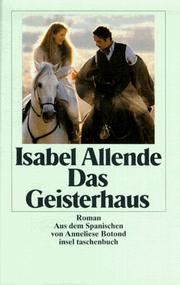
The only correct starting point: the Trueba family across four generations to the 1973 Chilean coup. It began as a letter to her dying grandfather, and every stylistic habit she has is already fully formed here.
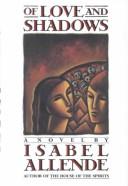
The direct follow-up, set under the dictatorship and based on a real mass grave. Shorter and angrier than the debut, it shows what happens when she drops the magic and writes the politics straight.
The Eva Luna Books
BeginnerSee Allende writing about storytelling itself, and pick up the short fiction that most readers skip entirely.
▸ Study plan for this stage
Pace: 2–3 weeks. Eva Luna is around 290 pages and is the most propulsive book on this path — it is built as a sequence of told tales, so it survives being read in short bursts on a commute better than the family sagas do.
- The picaresque: an orphan moving upward through a stratified society, one episode and one household at a time
- Storytelling as survival and as currency — Eva talks her way out of every situation the plot puts her in
- The unnamed South American country, which lets Allende write the politics of a continent rather than one nation
- Rolf Carlé's parallel European strand and why Allende runs two origin stories toward one meeting
- Allende's declared theory of fiction, stated more openly here than anywhere else in the novels
- The soap-opera ending, chosen deliberately, and what it says about the audience Allende writes for
- Eva narrates her own life and also invents stories inside it. Where can you tell the two apart, and where does Allende make that impossible?
- What does the novel gain from an unnamed country that The House of the Spirits gained from an unnamed Chile — and what does it lose?
- The ending is openly borrowed from melodrama. Is that a failure of nerve or a thesis about what stories are for?
- How does Eva's relationship to the political violence around her differ from Alba's in The House of the Spirits?
- Having read the two Chilean novels first, what did you recognise here as a habit rather than a choice?
- Note every time Eva tells a story inside the novel and who she tells it to — the pattern is the argument
- Compare Eva's narrating voice with Esteban Trueba's; both are first person and they want opposite things from you
- Write the plot of one of Eva's inset tales in two sentences, then in two pages, and see which one sounds more like Allende
Next up: With Allende's theory of storytelling now explicit, the historical novels stop looking like a change of subject and start looking like the same method pointed at researched material.
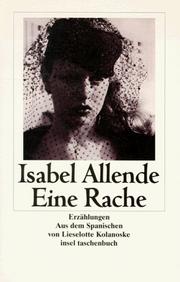
A born storyteller narrates her way out of poverty in an unnamed South American country. The best of her non-Chilean novels and the one that most openly declares what she thinks stories are for.
The Historical Sagas
IntermediateFollow the mid-career turn outward from Chile — California, Haiti, the Spanish Civil War — and watch the family threads reconnect across books.
▸ Study plan for this stage
Pace: 14–16 weeks — this is the longest stage by a wide margin, roughly 1,550 pages. Daughter of Fortune (~420) and Portrait in Sepia (~350) should be read back to back with no gap, because the second depends on the first. Island Beneath the Sea (~455) is the densest and needs a month. A Long Petal of the
- The California Gold Rush strand and Valparaíso as the twin poles of Daughter of Fortune — emigration as the founding Allende subject
- How Portrait in Sepia bridges Daughter of Fortune and The House of the Spirits into an accidental hundred-year arc assembled backwards
- Photography and memory in Portrait in Sepia: an image can be evidence of something the rememberer cannot access
- Island Beneath the Sea and the Haitian revolution — Allende's most heavily researched book and her first sustained first-person narration by an enslaved woman
- The turn from magic to archive: the later novels are history first and romance second
- A Long Petal of the Sea and the Winnipeg, the ship Pablo Neruda chartered to carry Spanish Civil War refugees to Chile
- The refugee as the recurring Allende figure across all four books, arriving somewhere that does not want them
- What exactly does Portrait in Sepia connect, and at what moment did you realise which family you were reading about?
- Allende did not plan this as a trilogy. Where can you see the retrofitting, and does it matter?
- Island Beneath the Sea is narrated in part by Zarité. What does Allende's use of that voice risk, and how does she handle the risk?
- A Long Petal of the Sea ends up roughly where The House of the Spirits began. Is that a closing of the circle or a repetition?
- Across these four books, what has replaced the ghosts as the source of the uncanny?
- Keep one shared timeline across all four novels plus The House of the Spirits — the family links only pay off if you can see them
- Read Daughter of Fortune and Portrait in Sepia in the same fortnight, with no other book in between
- Before Island Beneath the Sea, spend twenty minutes on a basic outline of the Haitian revolution; the novel assumes more than it explains
- After A Long Petal of the Sea, find the Neruda connection in the book and note how Allende handles a real poet inside fiction
- List which of these four you would hand to a reader who has never read Allende, and be ready to defend not choosing The House of the Spirits
Next up: Having watched Allende research other people's histories for four books, you are positioned to see how much of her own she had already been using as raw material.
Valparaíso to the California Gold Rush, and the start of a trilogy that loops back to the Truebas. Read before its sequels or the family connections land as trivia rather than payoff.
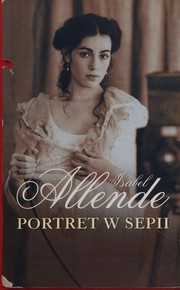
The direct sequel, bridging Daughter of Fortune and The House of the Spirits. Reading it third completes a hundred-year arc that Allende did not plan in advance but assembled backward.

Saint-Domingue, the Haitian revolution and New Orleans, told by an enslaved woman. Her most heavily researched novel and the clearest evidence that the later work is history first, romance second.

Spanish Civil War refugees carried to Chile on a ship chartered by Pablo Neruda. Late Allende at her most controlled, and a natural closing novel because it ends up back where the first book started.
The Memoirs
IntermediateRead the life directly, and recognize how much of the fiction was reportage all along.
▸ Study plan for this stage
Pace: 5–6 weeks, and do not rush Paula. It runs about 385 pages and is written at a daughter's hospital bed; most readers can only manage 15–20 pages at a time. My Invented Country is short, funny and best read within a week of finishing Paula, as the exhale.
- Paula is addressed to an unconscious daughter, which makes the second person a fact of the situation rather than a technique
- The same family history you read as fiction in The House of the Spirits, now presented as fact — including the parts the novel changed
- Allende's uncle Salvador Allende and the 1973 coup as autobiography rather than backdrop
- Exile and nostalgia named directly in My Invented Country, after four decades of being dramatised
- The invented country of the title: Allende's argument that the Chile she writes is a construction she carries, not a place she reports
- What memoir can do that the novels could not, and the two or three places where the fiction was clearly the braver form
- Which episodes of The House of the Spirits turn out to have happened, and which turn out to have been invented? What does that pattern tell you?
- Paula is a book written while its outcome was still unknown. Where can you feel the author not yet knowing?
- My Invented Country claims the Chile of the novels is a construction. Does that reading make the fiction stronger or weaker?
- Why does the memoir come last on this path rather than first, and would you now change that order?
- After the whole shelf, what is the single subject Allende has been writing about since 1982?
- Reread the opening thirty pages of The House of the Spirits immediately after finishing Paula and mark every detail you now recognise as reportage
- Keep a short list while reading Paula of the moments the novels had already told you, in fictional dress
- Write a one-page account of the path you just read as a single continuous story, from the Truebas to the Winnipeg to the hospital room
- Decide, and write down, whether you would send a new reader to Paula before or after the novels — the case for each is real
Next up: This closes the path: the recurring houses, names and returns across four decades now read as one continuous world rather than as coincidences.
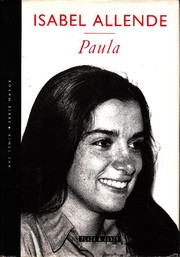
Written at her daughter's hospital bed, it retells the family history of The House of the Spirits as fact. Devastating, and best read only after the novels it silently annotates.
A short, funny memoir of Chile and of exile that works as the closing statement of the whole shelf. It names the nostalgia that drives the novels, which is more useful after you have felt it in them.
Discussion
Keep reading
Paths that share books, cover the same subject, or open a related topic.