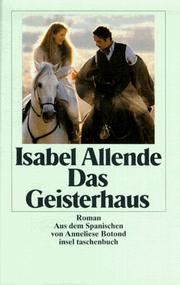
Start with House of the Spirits. It was her first novel, it is the book everything later is measured against, and it establishes the two things a reader needs to have decided about Allende early: whether the multi-generational family saga is a form you enjoy, and whether the matter-of-fact treatment of the supernatural reads to you as enchantment or as evasion. The obvious alternative first choice is one of the later, tighter historical novels such as A Long Petal of the Sea, which is easier — but starting there means meeting a mature technique without the origin that explains it.
Read it published as The House of the Spirits; the catalogue here files it under the shorter form. Once you have finished it, you face the only genuine ordering decision in this author's work.
The order question: the Del Valle books
Three novels follow one extended family, and Allende wrote them out of sequence. House of the Spirits came first in 1982. Daughter of Fortune, published seventeen years later, goes back to the California Gold Rush and to an earlier generation. Portrait in Sepia then fills the gap between them.
The chronological order is Daughter of Fortune, then Portrait in Sepia, then House of the Spirits. The publication order is the reverse.
Recommendation: read them in publication order. House of the Spirits is the strongest of the three and does not depend on the others; the two later books were written as illumination of something the reader already knows, and reading them first drains the recognitions they were built to deliver. The chronological order is worth using only on a reread, where it becomes genuinely rewarding — a second pass through House of the Spirits after the prequels lands differently.
The early novels
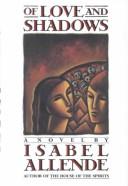
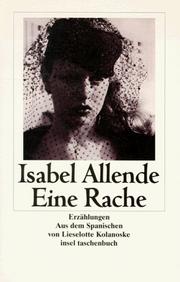
Of Love and Shadows and Eva Luna follow directly from the first book and are the two most often skipped. Of Love and Shadows is the most explicitly political thing she wrote in that period — a journalist and a photographer investigating a disappearance under a dictatorship — and it is the shortest route into what the Chilean material actually is once the magic is stripped out. Eva Luna is a storyteller's novel about a storyteller, looser and warmer, and readers tend to feel strongly in one direction or the other about it. Its companion story collection did not make this path; it is worth finding separately.
The later historical novels
This is where Allende became a different kind of writer: researched, geographically wide, less interested in the marvellous. Island beneath the sea moves through the Haitian revolution to New Orleans. A Long Petal of the Sea follows Spanish Civil War refugees carried to Chile by ship. Both are more disciplined than the early work and less distinctive. If you liked the family-saga machinery of the first book but found the supernatural elements tiresome, start your second stage here rather than with Of Love and Shadows.
The nonfiction
Paula is a memoir addressed to her daughter during a long illness, and it is the book many readers name as her best — the family history of House of the Spirits told without the fictional apparatus. My Invented Country is a shorter, lighter essay on Chile and exile. Read Paula after at least two of the novels: much of its force comes from recognising the raw material.
Where to stop
If the first novel does not hold you, stop. The rest of the work varies the same preoccupations rather than departing from them. If it does hold you, the efficient three-book version of this author is House of the Spirits, Paula, and one late historical novel of your choosing.
Several well-known titles are missing from this path, including the Eva Luna stories, the young-adult adventure novels and the Zorro book — the catalogue coverage is uneven, and their absence is ours rather than a judgement. Nearly all of the English editions here come through the same longtime translator, Margaret Sayers Peden, which is part of why the voice stays so consistent across four decades. The full reading path has the stage-by-stage notes.