How to learn Geopolitics
This curriculum builds a rigorous understanding of geopolitics from the ground up, starting with the foundational concepts and mental maps that shape how states behave, then moving through classical theory, modern great-power dynamics, and finally advanced analytical frameworks. Each stage assumes mastery of the previous one, so the vocabulary and mental models compound as you progress.
Foundations: How the World Is Shaped
BeginnerBuild a basic mental map of the world — how geography, history, and power interact — and develop the core vocabulary of geopolitics.
▸ Study plan for this stage
Pace: 8–10 weeks total: Weeks 1–4 for "Prisoners of Geography" (~25–30 pages/day, reading one regional chapter at a time); Weeks 5–9 for "The Revenge of Geography" (~20–25 pages/day, which is denser — pause after each major section); Week 10 as a consolidation week for review, notes synthesis, and complet
- Geographic determinism: how physical features (mountains, rivers, plains, coastlines) constrain and shape the political choices of nations — the central thesis of both Marshall and Kaplan
- Pivot regions and buffer states: Kaplan's revival of Mackinder's 'Heartland' theory and how landlocked or border regions (e.g., Central Asia, Eastern Europe) become perpetual zones of great-power competition
- The tyranny of the map: Marshall's argument that leaders are 'prisoners' of their geography — that no matter the ideology or era, terrain dictates strategy (Russia's obsession with warm-water ports, China's need to secure its near seas)
- Natural borders vs. artificial borders: how colonially drawn borders in Africa and the Middle East ignore ethnic, tribal, and geographic logic, generating chronic instability
- Spheres of influence: the idea that great powers define and defend a surrounding zone they consider vital to their security (Monroe Doctrine, Russia's 'near abroad', China's Belt and Road)
- Chokepoints and sea lanes: the strategic value of straits, canals, and maritime corridors (Strait of Hormuz, South China Sea, Arctic routes) as levers of global power
- The interplay of geography, history, and culture: Kaplan's argument that geography is not destiny alone — it interacts with historical memory and civilizational identity to produce foreign policy behavior
- Core geopolitical vocabulary: terms such as 'heartland', 'rimland', 'shatterbelt', 'failed state', 'near abroad', 'multipolar world', and 'power projection'
- According to Tim Marshall, why is Russia's foreign policy — from the tsars to Putin — so persistently focused on Ukraine, the Caucasus, and access to warm-water ports? What geographic realities drive this?
- How does Kaplan use Mackinder's Heartland thesis and Spykman's Rimland theory to explain 21st-century competition between the US, China, and Russia? Do the two theories contradict or complement each other?
- Marshall dedicates chapters to Africa and the Middle East arguing that colonial borders are a root cause of conflict. What specific geographic and ethnic mismatches does he identify, and what does he suggest this means for state stability?
- Both authors argue geography shapes policy, yet Kaplan is more cautious about pure determinism. Where do the two authors agree and where do they diverge on how much agency leaders and cultures have over their geographic circumstances?
- What makes the South China Sea so strategically critical, and how does China's geographic situation — as described by Marshall — explain its assertive behavior there?
- After reading both books, how would you define 'geopolitics' in your own words, and what is one real-world event from the past five years that you can now analyze through a geographic lens?
- Map annotation exercise: As you read each regional chapter in 'Prisoners of Geography', print or draw a blank world map and physically label every geographic feature Marshall mentions — mountain ranges, rivers, straits, plains. By the end of the book you should have a richly annotated reference map you built yourself.
- Vocabulary flashcard deck: Each time you encounter a key geopolitical term (heartland, rimland, shatterbelt, buffer state, chokepoint, near abroad, etc.) in either book, write a flashcard: term on one side, definition + the specific example the author used on the other. Aim for 30–40 cards by the end of the stage.
- Chapter summary in one paragraph: After finishing each chapter of both books, write a single paragraph (5–7 sentences) answering: What region? What is the core geographic constraint? What historical or current conflict does it explain? This builds the habit of extracting the geopolitical argument from narrative.
- Comparative author matrix: Create a simple two-column table (Marshall vs. Kaplan). For five shared themes — Russia, China, the Middle East, the role of the sea, and the limits of geography — note each author's key argument. Identify one point of agreement and one point of tension per theme.
- Current-events connection log: Once a week, find one news story (from any reliable outlet) about a country or region covered that week in your reading. Write 3–4 sentences explaining how the geographic logic from Marshall or Kaplan illuminates — or complicates — what is happening. Keep these entries in a running document.
- Final synthesis essay (end of Week 10): Write a 400–600 word essay answering: 'Choose one region of the world. Using evidence from both Prisoners of Geography and The Revenge of Geography, explain how that region's physical geography has shaped its political history and its role in current great-power competition.' This consolidates both books into a single argued response.
Next up: Having built a concrete mental map of how geography constrains power and mastered the core vocabulary of geopolitics, the reader is now ready to move into the next stage — which examines how states actively strategize, compete, and build order within those geographic constraints, exploring grand strategy, alliances, and the architecture of the international system.

The perfect entry point: Marshall explains in plain language how mountains, rivers, and coastlines have determined the fate of nations across every major region. It gives you the geographic intuition everything else depends on.
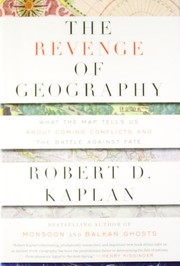
Builds directly on Marshall by introducing classical geopolitical thinkers (Mackinder, Spykman, Mahan) and showing how their ideas still explain today's conflicts. Bridges popular geography and serious theory.
Classical Theory: The Intellectual Pillars
BeginnerUnderstand the canonical theories of international relations and statecraft that underpin all serious geopolitical analysis.
▸ Study plan for this stage
Pace: 5–6 weeks total: Weeks 1–3 for "The Clash of Civilizations" (~25–30 pages/day, including time to annotate civilizational maps and fault-line conflicts); Weeks 4–6 for "The Grand Chessboard" (~20–25 pages/day, with slower reading around strategic pivot-point chapters due to denser geopolitical argume
- Civilizational paradigm: Huntington's replacement of ideology with culture/civilization as the primary lens of post-Cold War conflict
- The 'fault-line conflict': how wars along civilizational borders differ in character, duration, and international escalation from intra-civilizational disputes
- The 'core state' concept: how dominant nations within each civilization (e.g., China for Sinic, the U.S. for Western) act as gravitational anchors and conflict brokers
- The 'West vs. the Rest' dynamic and the thesis that Western universalism is perceived as imperialism by non-Western civilizations
- Brzezinski's 'Eurasian Chessboard': the axiom that control of Eurasia — the world's central 'heartland' — is the decisive factor in global primacy
- Geopolitical pivots vs. geostrategic players: Brzezinski's distinction between states that are important because of their location/vulnerability (pivots) and states that have the will and capacity to project power (players)
- The primacy imperative: Brzezinski's argument that sustaining U.S. global leadership requires active, differentiated engagement across Europe, the Middle East, and East Asia simultaneously
- The danger of a Eurasian 'grand coalition': the scenario Brzezinski identifies as the single greatest threat to American primacy — an anti-U.S. alignment of Russia, China, and Iran
- According to Huntington, why does he argue that the civilizational paradigm is a more reliable predictive model than the ideological or nation-state paradigms that preceded it — and what evidence from the post-Cold War world does he marshal to support this?
- How does Huntington define a 'torn country,' and which examples does he use? What conditions must be met for a country to successfully shift civilizational identity?
- What are Brzezinski's five key geostrategic players and five geopolitical pivots as of the book's writing, and what criteria distinguish one category from the other?
- How do Huntington's and Brzezinski's frameworks agree or conflict on the role of China? Does Huntington's 'Sinic civilization' thesis complement or contradict Brzezinski's treatment of China as a geostrategic player?
- Brzezinski argues that Ukraine is the single most critical geopolitical pivot in Eurasia — what is his reasoning, and how has subsequent history tested that claim?
- Both authors write from an explicitly Western/American vantage point. What are the most significant blind spots or critiques that a non-Western reader might raise against each framework?
- Civilizational mapping exercise: Using Huntington's framework, draw or annotate a world map marking the nine civilizations, their core states, and at least five fault-line conflicts he identifies. Then update the map with two or three contemporary conflicts and assess which civilizational boundary, if any, they fall along.
- Pivot vs. Player audit: Create a two-column table from Brzezinski's framework listing his geostrategic players and geopolitical pivots. For each entry, write one sentence explaining the strategic logic. Then add a third column asking: would this classification still hold today, and why or why not?
- Comparative thesis memo: Write a 400–600 word memo arguing either (a) Huntington's and Brzezinski's frameworks are fundamentally compatible and can be synthesized, or (b) they rest on incompatible assumptions. Use specific passages from both books as evidence.
- Current-events stress test: Choose one ongoing geopolitical situation (e.g., the Russia-Ukraine war, tensions in the South China Sea, or Middle East realignment). Write a one-page analysis applying first Huntington's lens, then Brzezinski's lens, and note where the two analyses converge or diverge.
- Assumption audit: For each book, identify and write down the three most contestable assumptions the author makes in the opening chapters. Research one scholarly critique of each book and summarize whether the critique targets the same assumptions you flagged.
- Socratic dialogue drill: Formulate five 'devil's advocate' questions challenging Huntington's civilizational determinism (e.g., 'Does economic interdependence override civilizational loyalty?') and five challenging Brzezinski's U.S.-centric chessboard logic. Attempt to answer each using evidence from the texts themselves.
Next up: Mastering Huntington's civilizational fault lines and Brzezinski's Eurasian power geometry gives the reader the macro-structural vocabulary needed to engage with more granular, state-level theories of power, deterrence, and alliance formation that intermediate-level geopolitical study demands.

Introduces the idea that culture and civilizational identity — not just states — are the primary drivers of global conflict. A landmark thesis every geopolitics student must grapple with.
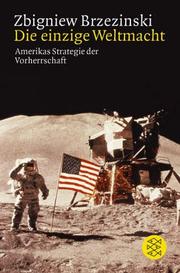
A masterclass in strategic thinking from a former U.S. National Security Advisor, focused on Eurasia as the pivot of global power. Teaches you how statesmen actually think about geography and influence.
Great Powers: Case Studies in Action
IntermediateApply geopolitical frameworks to the real behavior of today's major powers — the US, Russia, and China — and understand their strategic logic.
▸ Study plan for this stage
Pace: 6–8 weeks total: Weeks 1–3 on "The Future of Geography" (~25–30 pages/day, including note-taking pauses); Weeks 4–7 on "Destined for War" (~20–25 pages/day, which is denser with historical case studies); Week 8 reserved for synthesis, review, and completing exercises.
- Space as strategy: Marshall's argument in 'The Future of Geography' that the new geopolitical frontier is outer space and cyberspace, extending classical land/sea power logic upward and inward
- The geography of great-power ambition: How the US, China, and Russia each use physical and technological geography — terrain, satellites, sea lanes, undersea cables — to project power and protect interests
- Thucydides's Trap: Allison's central thesis in 'Destined for War' that when a rising power threatens to displace a ruling power, the resulting structural stress makes war far more likely — illustrated through 16 historical case studies
- The China–US rivalry as the defining case: Allison's application of the Thucydides framework to the contemporary US–China relationship, examining economic, military, and ideological dimensions
- Structural vs. contingent causes of conflict: The distinction Allison draws between deep structural pressures (the Trap itself) and the accidental triggers or miscalculations that actually ignite wars
- The role of domestic politics and nationalism: How internal political pressures in both rising and ruling powers amplify geopolitical competition and constrain leaders' room for maneuver
- Deterrence, accommodation, and off-ramps: The policy options Allison identifies — from cold peace to managed rivalry to institutional bargaining — for escaping the Trap
- Continuity of geographic logic into new domains: The thread connecting Marshall's space/cyber geography to Allison's power-transition theory — that the arenas change but the underlying competition for positional advantage does not
- According to Marshall in 'The Future of Geography,' why does control of space infrastructure (satellites, GPS, low-Earth orbit) now function as a geopolitical chokepoint in the same way that straits and sea lanes did in classical geopolitics — and which powers are best positioned to exploit it?
- What is Thucydides's Trap as defined by Allison, and what does his survey of 16 historical cases reveal about the conditions under which rising-vs-ruling-power rivalries end in war versus peaceful transition?
- How does Allison characterize the specific structural features of the US–China rivalry that make it a 'textbook' case of the Trap, and what distinguishes it from rivalries that were successfully managed?
- Taken together, how do Marshall's geographic analysis and Allison's power-transition framework complement each other in explaining Russian and Chinese strategic behavior — and where do the two authors' emphases diverge?
- What concrete policy prescriptions does Allison offer for avoiding war, and how realistic are they given the domestic political constraints that both he and Marshall describe?
- How does Marshall's treatment of cyber and space geography challenge or extend the land-and-sea-power frameworks you encountered in earlier stages of this curriculum?
- Annotated map exercise (Marshall): After finishing 'The Future of Geography,' draw or annotate a world map marking the key space launch sites, undersea cable routes, and satellite constellations controlled by the US, China, and Russia. Write a one-paragraph strategic assessment of which power holds the strongest positional advantage in each domain and why.
- Thucydides case-study matrix (Allison): Build a table of all 16 historical cases Allison examines. Columns: Rising Power | Ruling Power | Outcome (war/no war) | Key trigger or stabilizer. Identify the two or three variables that most consistently predict whether the Trap was escaped — then apply those variables to the current US–China case.
- Competing strategic logic essay: Write a 600–800 word essay arguing from the perspective of a Chinese, American, or Russian strategic planner. Using evidence from both books, justify your chosen power's current behavior in space, cyber, or the South China Sea as rational and defensive rather than aggressive.
- Policy memo (Allison's off-ramps): Draft a one-page policy memo addressed to a head of government, drawing on Allison's proposed strategies for escaping the Trap. Specify which two recommendations you consider most actionable given the geographic and domestic-political constraints Marshall describes.
- Debate preparation: Formulate the strongest possible argument both FOR and AGAINST the proposition: 'The Thucydides Trap makes a major US–China conflict in the next 30 years more likely than not.' Use specific evidence from both books for each side, then write a short verdict explaining which side you find more persuasive and why.
- Synthesis timeline: Create a visual timeline from 1990 to the present marking the key events both authors cite — China's GDP milestones, space program launches, cyber incidents, US strategic pivots, Russian moves — to see how Marshall's geographic shifts and Allison's power-transition pressures have unfolded in parallel.
Next up: By grounding abstract geopolitical frameworks in the concrete strategic logic of the US, China, and Russia — and by tracing competition into the new domains of space and cyberspace — this stage equips the reader to move from descriptive analysis to normative and forward-looking questions: how international institutions, economic interdependence, and emerging technologies either constrain or accele
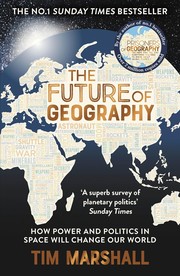
Marshall's follow-up extends geopolitical thinking into space and new domains of competition, showing how the same logic of terrain and access now applies beyond Earth — a crucial update for the modern era.

A former U.S. diplomat provides a comprehensive, region-by-region tour of global issues and power dynamics, giving you the factual scaffolding to contextualize theoretical arguments.

Introduces the 'Thucydides Trap' — the dangerous dynamic when a rising power threatens an established one — using US-China rivalry as the central case. Essential for understanding the defining geopolitical contest of our time.
Advanced Analysis: Strategy, Order, and Disorder
ExpertThink like a strategist — understand the architecture of the international order, how it is being challenged, and how to construct original geopolitical arguments.
▸ Study plan for this stage
Pace: 8–10 weeks total: Weeks 1–5 for "World Order" (~30–35 pages/day, including re-reading dense passages on historical order-systems); Weeks 6–10 for "The Tragedy of Great Power Politics" (~25–30 pages/day, with slower pacing through the offensive realism theory chapters and case-study sections).
- The Westphalian order and its core principles — sovereignty, balance of power, and legitimacy — as Kissinger's foundational framework for understanding how international order is constructed and sustained
- Kissinger's concept of 'legitimacy' vs. 'power': how a stable order requires not just a balance of force but shared acceptance of the system's rules among great powers
- Civilizational pluralism in 'World Order': Kissinger's argument that different regions (Europe, Islam, China, the US) have produced incompatible visions of world order, creating structural friction in the modern era
- The tension between American exceptionalism and realpolitik: Kissinger's critique of Wilsonian idealism and his argument that the US oscillates self-destructively between isolationism and crusading universalism
- Mearsheimer's offensive realism: the structural argument that the anarchic international system compels great powers to maximize relative power as the only reliable path to security
- The 'stopping power of water' and the logic of regional hegemony: why Mearsheimer argues great powers can only achieve hegemony in their own region and must prevent peer competitors from doing the same elsewhere
- Mearsheimer's historical case studies (rise of US hegemony, Wilhelmine Germany, Imperial Japan, Cold War) as empirical tests of offensive realism's predictive power
- The Kissinger–Mearsheimer tension: Kissinger believes skilled diplomacy and institutional design can shape order; Mearsheimer argues structure overwhelmingly determines outcomes — understanding this debate is the stage's central intellectual payoff
- According to Kissinger, what are the two necessary conditions for a stable international order, and which historical order (e.g., Westphalian, Concert of Europe, post-WWII) does he regard as the most successful model — and why?
- How does Kissinger explain the divergence between the Chinese, Islamic, and Western conceptions of world order, and what does this imply for the feasibility of a truly universal order today?
- What is Mearsheimer's core claim about why great powers are 'hardwired' to seek hegemony, and how does the concept of anarchy drive this logic even when states have no aggressive intentions?
- How does the 'stopping power of water' shape Mearsheimer's predictions about US grand strategy, and how well does it explain American behavior in the 20th century as he describes it?
- Where do Kissinger and Mearsheimer most sharply disagree — on the role of agency, diplomacy, and institutions — and whose argument do you find more empirically persuasive after reading both books?
- Using the frameworks from both books, how would you analyze a current great-power rivalry (e.g., US–China)? What would Kissinger prescribe, and what would Mearsheimer predict?
- Construct a 'world order map': after finishing Kissinger, draw a diagram showing the four civilizational order-systems he describes (European/Westphalian, American, Chinese, Islamic), their core principles, and the specific points of incompatibility between them. Update it with Mearsheimer's structural lens after finishing his book.
- Write a 500-word 'order autopsy': choose one historical order collapse Kissinger analyzes (e.g., the breakdown of the Concert of Europe in WWI) and explain it using both Kissinger's legitimacy framework AND Mearsheimer's offensive realism. Note where the two explanations complement or contradict each other.
- Steelman exercise: after finishing Mearsheimer, write the strongest possible one-page rebuttal to offensive realism using only arguments and evidence drawn from Kissinger's 'World Order'. Then write Mearsheimer's counter-rebuttal. This forces active synthesis rather than passive reading.
- Apply the frameworks to a live case: pick a current geopolitical flashpoint (e.g., Taiwan Strait, NATO expansion, South China Sea). Write a structured two-page memo — one paragraph of Kissingerian diagnosis and prescription, one paragraph of Mearsheimer's structural prediction — then a final paragraph stating your own assessed position with justification.
- Track Mearsheimer's case studies: as you read Part II and III of 'The Tragedy of Great Power Politics', maintain a running table with columns for: (1) the rising power, (2) the predicted offensive realist behavior, (3) the actual historical outcome, and (4) whether the case confirms or complicates the theory. Use this as the basis for your final evaluation of the theory's validity.
- Debate prep — argue both sides: formulate the question 'Can diplomacy and institutional design meaningfully shape great-power behavior, or does structure determine outcomes?' Write a 300-word argument for Kissinger's 'yes' and a 300-word argument for Mearsheimer's 'no', then write a 200-word synthesis that represents your own view.
Next up: Mastering the tension between Kissinger's order-by-design and Mearsheimer's structure-driven tragedy equips the reader with the two dominant poles of strategic thought, creating the analytical foundation needed to engage more specialized or contemporary geopolitical literature — whether on economic statecraft, technology competition, regional security architectures, or grand strategy formulation.

Kissinger synthesizes centuries of diplomatic history to explain how different civilizations conceive of 'order' — and why their visions are colliding today. Demands the historical and theoretical grounding built in prior stages.
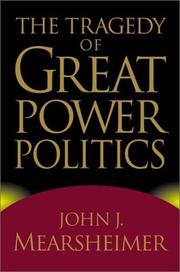
The definitive statement of offensive realism: states are doomed to compete for power because the international system gives them no choice. This rigorous, challenging theory ties together everything learned so far into a single analytical lens.
Discussion
Keep reading
Paths that share books, cover the same subject, or open a related topic.