The history of the United Nations: books to read, in order
The United Nations is simultaneously a bureaucracy you can describe, a set of legal instruments you can read, and a running argument about whether it has ever done what it was built for. This path takes all three. It starts with what the organisation actually is and how it was assembled at San Francisco in 1945, then turns to the revisionist history that traces its parentage to imperial rather than idealist origins, then to human rights and the agencies, then to peacekeeping — where the record includes both the largest humanitarian operations in history and Rwanda and Srebrenica. It ends with three insiders' accounts, because the gap between the Charter and the building is where most of the interesting writing is.
What it is, and how it was made
BeginnerBe able to describe the Security Council, General Assembly, Secretariat, Court and agencies and say what each can and cannot do — and understand that the veto was the price of American and Soviet participation, not an oversight.
▸ Study plan for this stage
Pace: Four weeks for 1,021 pages, and none of it is difficult. Fasulo's An Insider's Guide to the UN is 272 pages of plain orientation — who does what, how a resolution actually passes, how the agencies relate to the centre — and can be read in a week; it deliberately comes first, because most confusion a
- The six principal organs and the division of powers among them: a Security Council that can bind, a General Assembly that can only recommend, a Secretariat that administers, a Court that requires consent to its jurisdiction, and the specialised agencies that are not under the centre's control at all
- The veto as the price of participation. The permanent five would not have joined an organisation that could compel them, and the Charter was drafted knowing that — so a veto is the system working as designed, not a malfunction.
- Chapter VI and Chapter VII as different legal instruments: pacific settlement by consent against enforcement measures, and why almost every argument about a peacekeeping failure turns on which chapter the mandate was written under.
- What San Francisco actually was, on Schlesinger's evidence: American drafting, Soviet demands, small-state resistance to the veto that lost, and surveillance of allied delegations. A negotiated bargain between great powers, in the language of principle.
- The agencies as semi-independent bodies with their own budgets, memberships and governing boards, which is why UN failure and agency failure are frequently confused and why the Secretary-General cannot simply direct them.
- The budget and staffing structure — assessed contributions, voluntary funding, and geographic distribution in appointments — because money and posts are where member-state influence is actually exercised.
- The sequence of the organisation's crises in order, which Meisler supplies and which the argumentative books in the next stages will rearrange for their own purposes.
- For each of the six organs, state one thing it can do and one thing it is routinely blamed for failing to do but has no power to do.
- Explain the veto as a design decision rather than a flaw. What would the organisation have been without it?
- What is the difference between a Chapter VI and a Chapter VII mandate in what it authorises a force to do?
- From Schlesinger, name three provisions of the Charter that were the result of a specific negotiation, and say who wanted what.
- Why can the Secretary-General not direct a specialised agency? Trace the answer through the agency's governance rather than through personality.
- Draw the system as an organogram from Fasulo, with lines showing who appoints, who funds and who reports to whom. Where a line does not exist, note its absence — the missing lines explain more than the present ones.
- Take one Security Council resolution and read it alongside Fasulo's account of how one is drafted. Identify the operative paragraphs, the chapter invoked, and the language that was clearly negotiated.
- Build a timeline from Meisler by secretary-general, with the major crises of each tenure. Keep it: every book in the remaining stages will be arguing about entries on it.
- Using Schlesinger, write a page on what a UN designed by the small states at San Francisco would have looked like, and why they lost.
Next up: With the machinery and the founding conference in view, the next stage takes up two incompatible accounts of what the organisation was actually for.
The practical orientation: who does what, how a resolution is actually passed, what the Secretariat is for, how the agencies relate to the centre. Not a history, and deliberately first — most confusion about the UN's record comes from not knowing which organ was supposed to have acted. Jussi Hanhimaki's Very Short Introduction is a good shorter alternative.
The San Francisco conference of 1945 in narrative detail: the American drafting, the Soviet demands, the small states' resistance to the veto, and the wiretapping of allied delegations. It shows the Charter as a negotiated bargain between great powers rather than a statement of principles.
A journalist's readable chronological history from 1945 through the mid-1990s, secretary-general by secretary-general. Dated at the end and still the most digestible narrative spine; read it to have the sequence of crises in order before the argumentative books rearrange them.
The institution as an argument
IntermediateHold two serious accounts of the UN's origins at once — as the institutional expression of liberal internationalism, and as a reconstruction of imperial order by other means — and be able to say what evidence each rests on.
▸ Study plan for this stage
Pace: Three weeks for 605 pages, and the pairing is the whole stage. Kennedy's The Parliament of Man is 373 pages, organ by organ, honest about the failures and ultimately a defence — read it first over a fortnight at thirty pages a session. Mazower's No Enchanted Palace is 232 pages, the shorter and much
- Kennedy's case: the UN is worth more than its critics allow because the realistic alternative to imperfect coordination is not perfect coordination but none, and the organisation's routine work is invisible precisely because it succeeds.
- Kennedy's method — assessing the institution organ by organ against what each was actually empowered to do — which is why his defence is harder to dismiss than a general one.
- Mazower's revisionist claim: the UN's intellectual parentage includes imperial internationalism, and among its architects was Jan Smuts, who wrote the Charter's preamble and built South African segregation.
- The specific version of the argument, which is stronger than the provocation: the organisation was conceived in part as a way of managing and preserving empire under a new vocabulary, not as an anticolonial project.
- The capture argument: the anticolonial UN of the 1960s, with the General Assembly dominated by newly independent states, was a later takeover of an institution designed for other purposes — which makes its most admired period a departure from its design.
- That the two books rest on different evidence — Kennedy on the institutional record of what the organs did, Mazower on the intellectual biography of the founders — and that this is why they can both be well supported.
- The general methodological point worth carrying off this path: an institution's origins and its subsequent uses are separate questions, and arguments about one are routinely offered as answers to the other.
- State Kennedy's defence in its strongest form. Which organ does his case depend on most, and is that a weakness?
- Set out Mazower's argument about Smuts. What exactly does it establish about the UN, and what does it not?
- Kennedy and Mazower are both serious historians reaching different conclusions. Is the disagreement about facts, about evidence, or about what the question is?
- If the anticolonial UN was a capture rather than a fulfilment, what follows for how we should judge the organisation's record in the 1960s?
- Which of Mazower's claims does Kennedy's evidence actually contest, and which does it leave untouched?
- Write both accounts as numbered propositions, side by side, and mark every pair that directly contradicts. There will be fewer than you expect, and identifying them is the exercise.
- Take three UN actions from your Meisler timeline and ask what Kennedy would say about each and what Mazower would. Where they would say the same thing, note it.
- Read the Charter preamble knowing who drafted it. Write half a page on whether that knowledge changes what the text means, and defend your answer.
- Apply the origins-versus-uses distinction to another institution you know well. One paragraph. It is the most transferable idea in this stage.
Next up: The argument about origins bears directly on the UN's most celebrated single document, which the next stage examines both as it was made and as it was later used.
The SYMPATHETIC standard history by a major historian of great powers: organ by organ, honest about the failures, and ultimately arguing that the UN is worth more than its critics allow because the alternative to imperfect coordination is none. The best single-volume assessment on its own terms.
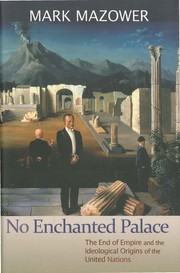
The REVISIONIST case, and a genuine shock after Kennedy. Mazower shows that the UN's founders included Jan Smuts, the architect of South African segregation, and that the organisation was conceived partly to preserve empire in a new form — the anti-colonial UN of the 1960s being a later capture by the newly independent states. His Governing the World sets the same story in a longer history of internationalism.
Human rights: the Declaration and its afterlife
IntermediateKnow how the Universal Declaration was drafted and by whom, and be able to assess the claim that its importance is largely retrospective — that human rights only became the dominant moral language of world politics decades later.
▸ Study plan for this stage
Pace: Three weeks for 523 pages, in two books of very different weight. Glendon's A World Made New is 368 pages of narrative history covering the drafting of the Universal Declaration, and reads easily — ten days to a fortnight. Moyn's Human Rights and the Uses of History is 155 pages, the shortest book o
- Who actually drafted the Declaration: Eleanor Roosevelt chairing, with Charles Malik, P. C. Chang, Rene Cassin and John Humphrey doing much of the substantive work — a text negotiated between genuinely different philosophical traditions rather than exported from one.
- The drafting compromises that made agreement possible, above all the decision to state the rights without agreeing on their foundation, which is why the document does not say where rights come from.
- The inclusion of economic and social rights alongside civil and political ones, and the subsequent split into two separate covenants, which is the Cold War written into the human rights system's architecture.
- That the Declaration is not a treaty and creates no obligations, and that everything about its later force is a claim about how it was used rather than about what it legally is.
- Moyn's thesis: human rights did not become a serious political force until the 1970s, when they filled the space left by the collapse of other utopian projects, and reading 1948 as the founding moment is a story told backwards.
- The evidence Moyn uses — the near-absence of human rights language from the politics of the 1950s and 1960s, and its sudden ubiquity afterwards — and what would count against it.
- Why the timing dispute matters practically: if human rights are a recent political language rather than a postwar consensus, claims about their universality and their inevitability both look different.
- The connection back to Mazower: a founding document produced by an organisation with imperial parentage, whose anticolonial deployment came later, is exactly the pattern the previous stage described.
- Name the principal drafters and say what each contributed. Where did their philosophical traditions actually conflict, and how was the conflict handled?
- Why does the Declaration not state the source of the rights it asserts? Was that evasion or design?
- State Moyn's argument about the 1970s. What evidence supports it, and what is the strongest counter-evidence?
- Glendon and Moyn are not really disagreeing about what happened in 1948. What are they disagreeing about?
- If Moyn is right, what should change in how the Declaration is taught and invoked?
- Read the Declaration itself — it is short — and mark each article as civil-political or economic-social. Then find where the two covenants split the list and note what the split cost.
- Take three articles and trace, using Glendon, which drafter pushed for each and what was traded to get it in.
- Test Moyn empirically in a small way: search a newspaper archive for the phrase human rights by decade and note the shape of the curve. Then say what the curve does and does not establish.
- Write half a page defending the significance of 1948 against Moyn, using only Glendon's evidence. Then mark the sentences you could not support.
Next up: Rights on paper and rights enforced are different subjects, and the next stage is about the missions where the organisation was expected to enforce them.
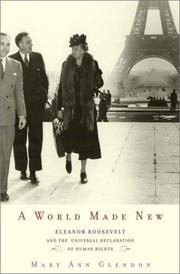
The drafting of the Universal Declaration of Human Rights, centred on Eleanor Roosevelt but properly attentive to Charles Malik, P. C. Chang and Rene Cassin — a document negotiated between genuinely different philosophical traditions rather than exported from one. SYMPATHETIC and the best account of how the text was made.

The SCEPTICAL counterpoint: Moyn argues that human rights did not in fact become a serious political force until the 1970s, and that reading 1948 as the founding moment is a story told backwards. Short essays, sharply argued, and the necessary corrective to Glendon's account of the Declaration's significance.
Peacekeeping, and what the record actually shows
IntermediateDistinguish traditional peacekeeping from peace enforcement and protection of civilians, understand exactly how the mandates failed in Rwanda and Bosnia, and know what the quantitative evidence says about whether peacekeeping works on average.
▸ Study plan for this stage
Pace: The heaviest stage on the path — 1,937 pages across four books — and it needs eight to ten weeks. Dallaire's Shake Hands with the Devil is 562 pages and goes first: the Rwanda force commander's own account of the mission he was given, the warnings he sent, and the refusal to reinforce him. It is a p
- The three generations of mandate: traditional interposition between consenting parties, peace enforcement without consent, and protection of civilians — with very different force requirements and rules of engagement.
- Why the distinction is not academic. In Rwanda the mandate, the troop numbers and the rules of engagement were written for the first kind of mission and the situation was the third, and Dallaire's account is largely about that mismatch.
- The chain of decision in Rwanda: what Dallaire reported, what the Secretariat did with it, and what the Security Council members did and did not authorise. Assign responsibility by node rather than to the organisation as a whole.
- Srebrenica and the safe areas: an enforcement task assigned to a lightly armed force under restrictive rules, and the specific way the arrangement failed.
- Power's pattern, which reframes the whole stage: the recurring feature is not UN incapacity but state unwillingness, and the organisation cannot deploy what members do not provide.
- Shawcross's gap between mandates and means, seen from the inside — Security Council resolutions that authorise objectives without the troops, money or political will to meet them.
- The quantitative finding: mission-level data show that peacekeeping with sufficient troop numbers measurably reduces battlefield and civilian deaths, which is a claim about averages and is compatible with catastrophic individual failures.
- The selection problem the quantitative book exists to correct: a literature built from the famous disasters will misdescribe the average mission, because the disasters are famous precisely for being exceptional.
- Reconstruct the decision chain on Rwanda from Dallaire's account: what he asked for, whom he asked, what he was told, and who had authority to say yes.
- What is the difference between a mission failing and a mission never having been given the means to succeed? Apply the distinction to Rwanda and to Srebrenica separately.
- State Power's pattern of state inaction and name the mechanism she identifies. Is her explanation about incentives, information, or domestic politics?
- Shawcross had access to Boutros-Ghali and Annan. What does that let him show, and what does it make him likely to miss?
- What exactly do Hultman, Kathman and Shannon establish? State the finding with its conditions attached, including what counts as sufficient troops.
- Having read the catastrophes and the averages, what is your honest assessment of whether peacekeeping works? Say what evidence you are weighting and why.
- Write out the Rwanda mandate's rules of engagement as Dallaire describes them, and beside each rule the situation it prevented him from acting on. This is the most concrete thing in the stage.
- Take two of Power's cases and produce, for each, a list of the specific decisions not to act with the decision-maker named. The exercise converts a moral failure into an administrative record.
- Read the quantitative book's methodology section carefully and write a paragraph on what its unit of analysis is and what that unit cannot see.
- Set the quantitative finding against Dallaire's book and write half a page on how both can be true. If you cannot do it, you have not understood one of them.
- Return to your Meisler timeline and annotate every 1990s mission with the mandate type and the outcome. The pattern in the annotations is a finding in itself.
Next up: The failures on the record were produced by an organisation staffed by people, and the last stage is written by three sets of them.
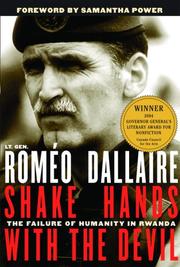
The force commander in Rwanda on the mission he was given, the warnings he sent, and the refusal to act on them. A primary source and a very hard book to read. It goes first in this stage because every argument about UN peacekeeping is conducted in its shadow.
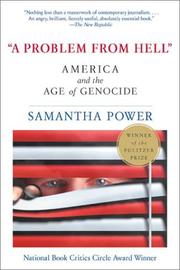
Power's history of American responses to genocide across the twentieth century — Armenia, the Holocaust, Cambodia, Iraq, Bosnia, Rwanda. Not a book about the UN as such, and included because it establishes the pattern of state inaction that UN failure is usually blamed for. Read it against Dallaire.
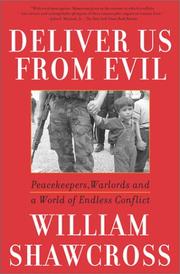
The 1990s missions surveyed from the inside — Bosnia, Somalia, Cambodia, Rwanda — with unusual access to Boutros-Ghali and Annan. Shawcross is sympathetic to the peacekeepers and unsparing about the gap between mandates and means. Dated after 2000, and still the best account of the decade that defined modern peacekeeping.

The QUANTITATIVE answer, and the reason this stage does not end in despair: Hultman, Kathman and Shannon analyse mission-level data and find that peacekeeping with sufficient troops measurably reduces battlefield and civilian deaths. Academic in style; read it as the corrective to a literature naturally dominated by the catastrophes.
From inside the building
IntermediateUnderstand the UN as a workplace and a bureaucracy — appointment politics, member-state pressure, the incentives on a secretary-general — and be able to say which of its failures are structural and which are contingent.
▸ Study plan for this stage
Pace: Five to six weeks for 1,285 pages, all three of them readable. Power's Chasing the Flame is 512 pages, the longest, and is a biography of Sergio Vieira de Mello that doubles as a field history of the organisation — Cambodia, Bosnia, Kosovo, East Timor, and the Baghdad bombing that killed him; a fort
- The UN as a career rather than an idea: appointments, secondments, member-state pressure on senior posts, and the geographic distribution rules that shape who is available for what.
- Vieira de Mello's recurring problem, which is the organisation's: acting as the neutral party while dependent on the states that are party to the conflict, and the compromises that produced in Cambodia, Kosovo and Iraq.
- The distinction between structural failure and contingent failure, which this stage exists to let you draw. Some outcomes follow from the Charter and the funding model; some followed from a particular person's decision on a particular day.
- The field-versus-headquarters gap, which the junior-staff account documents from the bottom: instructions written by people without current information, and improvisation as the normal condition of the work.
- What Emergency Sex records about the personal cost of the missions and the institution's response to the book, which was an attempt to suppress it — itself evidence about the organisation.
- Annan's tenure as a test case: Iraq, oil-for-food, the Responsibility to Protect doctrine, and a reform effort that mostly failed.
- The real question the path ends on, which Traub states directly: what a secretary-general can do when the member states do not want it done, given that he has no army, no revenue of his own and holds office at their pleasure.
- Responsibility to Protect as the doctrinal answer to the previous stage — what it claims, what it authorises, and how little it changed about who has to supply the troops.
- Trace Vieira de Mello's career across four missions and name the recurring tradeoff. Did he resolve it differently in different places?
- Give two UN failures that are structural and two that are contingent, defending each classification with evidence from these books.
- What does the junior-staff account show that neither Power nor Traub can? Be specific about the vantage point, not the tone.
- State what Responsibility to Protect actually commits anyone to. What would have had to be different for it to have altered the Rwanda outcome?
- Traub had extended access to Annan. Name a place where the access clearly improved the book and a place where it might have constrained it.
- After five stages: is the UN's record a verdict on the organisation or on its members? Answer with reference to a specific failure and a specific success.
- Build a career map for Vieira de Mello — post, mission, mandate type, outcome — and set it beside your Meisler timeline. The overlap is a decent short history of UN field operations.
- Take three episodes recounted in Emergency Sex and find the corresponding passages in Power, Traub or Shawcross. Write a line on each about what changes with the vantage point.
- From Traub, list the reforms Annan attempted, with the member states that blocked each. Then say what a secretary-general would need to be given for that list to be shorter.
- Sort every failure discussed on this path into structural and contingent columns. Argue the ambiguous ones both ways before deciding.
- Write a final page answering whether the UN has done what it was built for, with each claim sourced to a specific book here, and with the Charter's own text quoted for what it was built for.
Next up: The path ends on the question the Charter cannot answer for itself — what an organisation of states can do that its states will not.

A biography of Sergio Vieira de Mello, killed in the 2003 Baghdad bombing, and through him a history of what the UN actually does in the field: Cambodia, Bosnia, Kosovo, East Timor. The single best book for understanding the organisation as a career and a set of impossible tradeoffs.

Three junior field staff — a lawyer, a doctor and a social worker — on Cambodia, Somalia, Rwanda, Haiti and Bosnia, written with a bluntness that got the UN to try to suppress it. The view from the bottom of the hierarchy, and the corrective to any account written from headquarters.
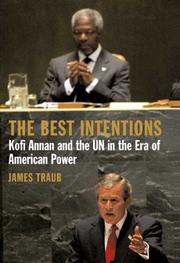
Kofi Annan's tenure at close range: Iraq, oil-for-food, the Responsibility to Protect, the reform effort that mostly failed. Traub had extended access and uses it well, and the book ends the path on the real question — what a secretary-general can do when the members do not want it done.
Discussion
Keep reading
Paths that share books, cover the same subject, or open a related topic.