Best Books on Internal Audit, in Reading Order
This curriculum builds from a solid intermediate grounding in internal audit methodology through to advanced mastery of risk-based planning, controls testing, fraud detection, and audit committee reporting. Because the learner already has baseline knowledge, the path skips introductory theory and moves quickly into practitioner-level frameworks, then sharpens each specialist skill — fraud, evidence, and governance communication — in dedicated later stages.
Risk-Based Audit Foundations
IntermediateEstablish a rigorous risk-based audit planning mindset and understand how to align the audit universe to organizational risk, setting the vocabulary for everything that follows.
▸ Study plan for this stage
Pace: 8–10 weeks, ~40–50 pages/day with 2 review days per week
- Risk-based audit planning: shifting from transaction testing to risk identification and assessment as the foundation of audit scope
- The audit universe: defining, mapping, and prioritizing all auditable activities within an organization based on inherent risk, residual risk, and audit value
- Enterprise risk management (ERM) alignment: understanding how internal audit connects to organizational risk strategy and the three lines of defense model
- Audit risk assessment frameworks: using risk matrices, heat maps, and scoring methodologies to evaluate likelihood and impact of control failures
- Materiality and significance thresholds: establishing quantitative and qualitative criteria for determining what risks warrant audit attention
- Audit strategy and planning documents: developing risk-based audit plans, audit charters, and engagement objectives that flow from organizational priorities
- Stakeholder risk perspectives: recognizing how different stakeholders (board, management, regulators) define and prioritize risk differently
- Control environment assessment: evaluating the tone at the top, governance structures, and control culture as foundational to risk-based planning
- How does a risk-based audit approach differ fundamentally from a transaction-testing or compliance-focused approach, and why is this distinction critical for modern internal audit?
- What components make up the audit universe, and how would you prioritize audit resources across a diverse set of organizational activities using risk assessment?
- Explain the relationship between enterprise risk management (ERM) and internal audit planning. How does understanding the organization's risk appetite inform audit strategy?
- What is the three lines of defense model, and how does internal audit's role within this framework shape the scope and focus of risk-based audit planning?
- How do you develop and use a risk matrix or heat map to assess and communicate audit priorities to the board and management?
- What qualitative and quantitative factors should be considered when setting materiality thresholds and determining which risks warrant dedicated audit resources?
- Map a real or hypothetical organization's audit universe: list all major business processes, functions, and risk areas. Then score each using a risk matrix (likelihood × impact) and justify your top 10 audit priorities.
- Develop a risk-based audit plan for a specific organization or case study (use examples from Moeller or Reding if available). Include audit objectives, scope, timing, and resource allocation tied explicitly to identified risks.
- Conduct a stakeholder risk assessment interview: interview or role-play interviews with a CFO, compliance officer, and operational manager to understand how each views organizational risks. Document differences and reconcile them into a unified audit strategy.
- Create a heat map or risk dashboard showing the audit universe, residual risk levels, and audit coverage. Present it to a peer or mentor and explain your prioritization rationale.
- Analyze a published audit charter or audit plan (from a real organization or case study) and critique it against the risk-based planning principles from Moeller and Reding. Identify gaps and propose improvements.
- Design a control environment assessment framework: outline how you would evaluate tone at the top, governance maturity, and control culture in an organization, and explain how findings would influence audit planning priorities.
Next up: This stage equips you with the vocabulary, frameworks, and strategic mindset to identify and prioritize organizational risks; the next stage will teach you how to execute specific audit engagements and fieldwork techniques that address those prioritized risks with rigor and evidence.
The definitive practitioner reference for internal audit methodology; reading it first anchors risk-based planning, the audit universe, and the IIA Standards in one comprehensive framework.

The IIA's own textbook bridges risk assessment to audit program design, making it the ideal second read to translate Moeller's broad framework into structured, step-by-step planning practice.
Fraud Red Flags & Forensic Awareness
IntermediateDevelop a fraud-aware audit mindset, learn to identify behavioral and financial red flags, and integrate fraud risk assessment into routine audit work.
▸ Study plan for this stage
Pace: 8–10 weeks, ~40–50 pages/day (mix of dense technical chapters and case study review)
- The fraud triangle (pressure, opportunity, rationalization) and how each element manifests in organizational settings
- Classification of fraud types: asset misappropriation, financial statement fraud, and corruption—with detection indicators for each
- Behavioral red flags and psychological profiles of fraudsters (lifestyle changes, unusual stress, control issues, lack of vacation)
- Financial statement red flags: unusual journal entries, related-party transactions, revenue recognition anomalies, and inventory discrepancies
- The role of internal controls and their weaknesses as fraud enablers; segregation of duties and authorization controls
- Interviewing techniques for fraud investigation: establishing rapport, detecting deception, and documenting admissions
- Integrating fraud risk assessment into routine audit procedures without creating audit fatigue
- Documentation standards and evidence preservation for potential legal proceedings
- Describe the three elements of the fraud triangle and explain how an auditor can assess each element during planning and fieldwork.
- What are the key differences between asset misappropriation, financial statement fraud, and corruption? Provide at least two red flags for each.
- How would you identify behavioral red flags in management and staff, and what audit procedures would you modify based on these observations?
- Explain the relationship between weak internal controls and fraud risk. What segregation-of-duties failures create the highest fraud exposure?
- Walk through a realistic scenario: you notice unusual journal entries posted by the CFO late at night with no supporting documentation. What investigative steps would you take?
- How do you balance fraud awareness with audit efficiency? What fraud risk assessment procedures can be embedded into standard audit work without excessive cost?
- Case study analysis: Review 2–3 real fraud cases from the Corporate Fraud Handbook; map each to the fraud triangle and identify the control weaknesses that enabled it.
- Red flag checklist development: Create a customized financial statement and behavioral red flag checklist for a specific industry (e.g., retail, manufacturing, healthcare) based on Albrecht's framework.
- Mock interview: Conduct a practice fraud investigation interview with a peer playing a suspect employee; record observations on verbal and non-verbal cues, then debrief on detection accuracy.
- Control gap audit: Select a process in your organization (e.g., expense reimbursement, journal entry approval); document the current controls, identify segregation-of-duties gaps, and propose mitigations.
- Fraud risk assessment integration: Design a risk assessment questionnaire that incorporates fraud risk factors into your standard audit planning procedures for a hypothetical client.
- Evidence documentation exercise: Take a simulated fraud scenario (e.g., inventory theft, payroll manipulation) and prepare a formal investigation memo with evidence chain-of-custody documentation suitable for legal review.
Next up: This stage equips you with fraud detection tools and a skeptical mindset; the next stage will build on this foundation by teaching you how to design and execute comprehensive fraud investigations, apply forensic data analytics at scale, and navigate the legal and regulatory landscape of fraud reporting.

The leading academic and practitioner text on fraud theory, the fraud triangle, and detection techniques — essential first read before applying fraud concepts inside an audit context.
Written by the founder of the ACFE, this book catalogs occupational fraud schemes and red flags by category, giving auditors a practical pattern-recognition toolkit to deploy during fieldwork.
Advanced Risk, Data & Audit Analytics
ExpertElevate audit planning and testing through data analytics, continuous auditing concepts, and enterprise risk management integration — moving from sample-based to risk-intelligent audit execution.
▸ Study plan for this stage
Pace: 8–10 weeks, ~40–50 pages/day (approximately 2–3 hours daily). Allocate 4–5 weeks to Cascarino's IT Auditing guide, then 3–4 weeks to Lam's Enterprise Risk Management, with 1 week for integration and synthesis.
- IT audit frameworks and controls: understanding how IT systems, data integrity, and security controls underpin audit evidence quality and continuous monitoring capability
- Data analytics in audit execution: leveraging data extraction, analysis, and visualization techniques to move from sample-based testing to population-wide audit procedures
- Continuous auditing and monitoring: designing automated audit routines that detect anomalies, exceptions, and control failures in real-time or near-real-time
- Enterprise risk management (ERM) integration: aligning audit procedures with the organization's risk appetite, risk categories, and strategic objectives to prioritize audit efforts
- Risk-intelligent audit planning: using risk assessments and data insights to design targeted, efficient audit programs that focus on high-impact areas
- IT governance and audit trails: ensuring IT environments produce reliable, auditable data and maintain evidence of transactions and control execution
- Audit technology and tools: selecting and implementing data analytics platforms, continuous auditing software, and visualization tools to enhance audit efficiency and effectiveness
- How do IT controls and data governance frameworks (from Cascarino) enable auditors to rely on system-generated data for analytics-driven audit procedures?
- What are the key differences between sample-based testing and continuous auditing, and when should each approach be applied based on risk and control maturity?
- How does enterprise risk management (from Lam) inform audit planning, and how should auditors prioritize audit procedures based on the organization's risk profile and risk appetite?
- Describe a practical workflow for designing a data analytics audit procedure: from data extraction through analysis to exception investigation and reporting.
- What role do IT audit trails, system logs, and data integrity controls play in supporting continuous auditing and real-time risk monitoring?
- How can auditors integrate ERM frameworks with IT audit findings to provide management with insights on enterprise-wide risk exposure and control effectiveness?
- Map your organization's (or a case study's) IT environment: document key systems, data flows, and control points. Identify which systems produce audit-relevant data and assess data quality and auditability.
- Design a data analytics audit procedure for a high-risk transaction cycle (e.g., revenue, procurement, payroll): specify data sources, extraction method, analytical techniques (e.g., Benford's Law, trend analysis), and exception thresholds.
- Develop a continuous auditing roadmap: select 2–3 control objectives and design automated monitoring rules that would flag exceptions in real-time. Document the technology requirements and expected audit efficiency gains.
- Conduct an ERM-to-audit alignment exercise: review your organization's (or a case study's) risk register and strategic objectives. Map audit procedures to the top 5–7 enterprise risks and explain how audit findings feed back into risk management.
- Build a sample data analytics project: extract a real or realistic dataset (e.g., from a public source or case study), perform exploratory analysis, identify anomalies or patterns, and present findings in a visual dashboard format.
- Create an IT audit checklist based on Cascarino's frameworks: assess IT governance, access controls, change management, and data integrity in a target system. Document control gaps and recommend continuous auditing enhancements.
Next up: This stage equips auditors with the technical and strategic tools to execute risk-intelligent, data-driven audits grounded in enterprise risk management—preparing them to advance into specialized domains (e.g., digital audit, AI/ML governance, or emerging risk areas) where these analytics and ERM foundations become essential for addressing novel audit challenges.

Extends controls-testing skills into IT and data environments, which is now inseparable from risk-based auditing; best read after mastering manual controls testing.
Provides the ERM lens that senior auditors must understand to align the audit plan with the board's risk appetite — bridges operational audit work to strategic risk conversations.
Reporting, Governance & Audit Committee Communication
ExpertCraft compelling audit reports, communicate findings with executive impact, and confidently present risk and assurance conclusions to the audit committee and board.
▸ Study plan for this stage
Pace: 4–5 weeks, ~25–30 pages/day, with 2–3 days per week dedicated to exercises and report drafting practice
- Audit committee composition, charter, and governance responsibilities in modern corporate structures
- Effective communication strategies for translating audit findings into business-relevant risk narratives
- Report structure and content standards that drive executive decision-making and board confidence
- Building credibility and executive presence when presenting complex audit conclusions to C-suite and board members
- Balancing technical audit detail with strategic context to ensure findings resonate with non-technical stakeholders
- Audit committee expectations for assurance, independence, and the auditor's role in organizational governance
- Crafting recommendations that are actionable, prioritized, and aligned with organizational risk appetite and strategy
- What are the key responsibilities of an audit committee, and how should internal auditors structure their communication to support these responsibilities?
- How do you translate technical audit findings into executive-level risk narratives that drive board-level decision-making?
- What elements must an audit report contain to be considered effective by an audit committee, and why does each element matter?
- How should you tailor your presentation style and content when communicating with the audit committee versus operational management?
- What role does the audit committee charter play in defining the scope and expectations for internal audit reporting?
- How do you balance audit independence with the need to build collaborative relationships with audit committee members and executives?
- Draft a complete audit report (findings, root causes, recommendations, risk rating) for a realistic scenario, then critique it against Braiotta's standards for clarity, impact, and actionability
- Prepare and deliver a 10-minute audit committee presentation on a complex finding; record yourself and assess your ability to communicate risk without overwhelming technical jargon
- Analyze 2–3 real audit committee charters (from public company filings or case studies) and map how internal audit reporting should align with each charter's stated expectations
- Create a communication plan for a high-risk audit finding: outline how you would brief management, the audit committee, and the board differently, and justify each approach
- Develop an audit report template or checklist based on Braiotta's guidance; test it by applying it to a past audit report and identifying gaps
- Role-play an audit committee meeting where you present findings and respond to challenging questions; have a peer or mentor play the committee chair and probe your reasoning
Next up: Mastery of audit committee communication and governance reporting establishes you as a trusted strategic advisor; the next stage will build on this foundation by deepening your ability to identify and articulate emerging risks, design audit strategies that address board-level priorities, and lead enterprise-wide risk and assurance initiatives.
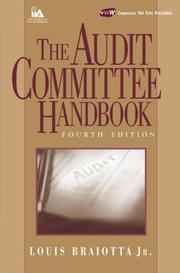
Written from the audit committee's perspective, this book teaches auditors how governance bodies think about risk and oversight, enabling far more effective and credible reporting conversations.
Discussion
Keep reading
Paths that share books, cover the same subject, or open a related topic.