Inspector Lynley Reading Order: Where to Start
Elizabeth George's Inspector Lynley novels are cases you could in theory read in any order, but nobody should: the real subject of the series is the relationship between Thomas Lynley, an earl who joined the Met, and Barbara Havers, a working-class sergeant who resents him, and that arc runs strictly in publication order across every book. This path takes the first twelve, from A Great Deliverance to the pivotal With No One as Witness and its companion volume. The series continues well past that point; this is where a reader stops needing a map.
Start here: the first two
BeginnerMeet Lynley and Havers at the moment they are forced into partnership, and get the shape of a George novel — a long English country crime with far more interiority than plot.
▸ Study plan for this stage
Pace: Three weeks for 704 pages — A Great Deliverance is 320 and Payment in Blood 384. Read them close together; the second opens on consequences from the first and assumes you still have the Lynley-Helen-Deborah situation in your head. About 35 pages a day suits the rhythm, because George alternates inve
- The cases are self-contained but the series is not. Thomas Lynley, an earl working as a detective inspector at New Scotland Yard, and Barbara Havers, a working-class sergeant who resents everything he represents, are the actual subject, and their relationship runs strictly in publication order acros
- A Great Deliverance exists to force the pairing. Both of them are being punished by the assignment, and almost every dynamic the series runs on for the next twenty years is set in this one book.
- George is American and writes English procedure and English class with a researcher's exactness. Some readers find the result slightly too correct; it is a fair criticism and it fades as the books go on.
- These are long crime novels with far more interiority than plot. Expect whole chapters in a suspect's head, and expect the murder to be solved less by evidence than by somebody finally saying what they have been avoiding.
- The supporting cast is load-bearing and arrives immediately: Lady Helen Clyde, the forensic scientist Simon St James, and his wife Deborah. Their history with Lynley — including the accident that left St James disabled — is doled out gradually rather than explained.
- Payment in Blood puts Lynley personally compromised by a witness, and it is where the triangle set up in book one starts costing him professionally. This is why it cannot be read out of order.
- Havers's home life — a decaying house in Acton and parents she cannot cope with — begins here as background and becomes one of the series' two long arcs. Note how little of it she says out loud.
- What is each of them actually being punished for when they are assigned to each other, and does either deserve it?
- Where in A Great Deliverance does Havers become sympathetic rather than merely abrasive? Find the specific scene.
- What does Lynley's title get him in an investigation, and what does it cost him?
- In Payment in Blood, how much of Lynley's judgement is compromised, and does the book let him off?
- George gives long interior sections to people who are not detectives. What does the series gain by that, and what does it lose in pace?
- Keep a page for the recurring cast — Lynley, Havers, Helen, Simon, Deborah, Webberly, Hillier — and add a line whenever a piece of shared history is dropped in. It is never re-explained.
- Mark the closing pages of A Great Deliverance. Where the two of them stand at the end is the baseline everything later is measured against.
- Notice how each book opens: George almost always begins away from the police, with the people the crime will happen to. Reading those openings attentively is how the later structural experiments make sense.
- Decide after these two whether you want a series or a case. If it is the case you want, this is the honest place to stop — the payoff of everything after is cumulative.
Next up: The pairing is established; the next four books fill in where each of them came from and settle the supporting cast around them.
A Yorkshire farmer beheaded and his daughter sitting beside the body. The first book, and the one where Lynley and Havers are assigned to each other against both their wishes — the whole series proceeds from this pairing.
A playwright murdered at a Scottish house party, with Lynley personally compromised by a witness. It develops the Lynley-Helen-Deborah triangle set up in book one, so it must be read second.
The early cases
IntermediateWork through the first stretch of the series, in which Havers's home life and Lynley's inheritance are filled in and the supporting cast settles.
▸ Study plan for this stage
Pace: Seven to eight weeks for about 1,920 pages: Well-Schooled in Murder 464, A Suitable Vengeance 447, For the Sake of Elena 442 and Missing Joseph 567. These are the most evenly-paced books in the series and 40 pages a day works throughout. Missing Joseph is noticeably the longest and slowest; give it
- Well-Schooled in Murder is the first case where Lynley's class background is directly in the way of the investigation, at a public school much like his own. The series' central tension stops being personality and starts being structural.
- A Suitable Vengeance is chronologically a prequel — it takes place before the first three books — but was published fourth and should be read fourth. It answers questions the earlier novels have already made you ask, and reading it first would remove the point of asking them.
- It is also the Cornwall book: Lynley's estate, his mother, his brother, and the family history that explains why a man with that title took a warrant card. Everything unexplained about him in books one to three is dealt with here.
- For the Sake of Elena hands an unusual amount of the book to Havers, and this is the point at which her story stops being colour and starts running in parallel with the cases. The Cambridge setting and the deaf student at its centre also give George her first real go at a victim reconstructed entire
- Missing Joseph advances Simon and Deborah St James rather than the detectives, and George keeps returning to that marriage as her second long arc. If you find yourself impatient with them, the series is not going to stop doing it.
- By the end of this stretch the pattern is fixed: a body in a specific and heavily-researched English place, four or five suspects with fully worked interior lives, and a solution that turns on a family secret rather than on forensics.
- The series is also getting longer, book by book, quite deliberately. A Great Deliverance is 320 pages and Missing Joseph is 567, and that expansion continues sharply in the next stage.
- What does the public school in Well-Schooled in Murder show you about Lynley that he would not have told you?
- Reading A Suitable Vengeance fourth, which earlier scenes does it retroactively change? Name two.
- In For the Sake of Elena, how is the victim's character assembled, and how reliable are the people assembling it?
- What do Simon and Deborah's difficulties in Missing Joseph have to do with the case, if anything, or is George simply running two books at once?
- Across these four, does Havers change, or does the reader simply learn more about her?
- Before A Suitable Vengeance, note the questions you still have about Lynley's family. Check them off as it answers them — it answers nearly all of them.
- Track how many pages each book spends outside the investigation. The proportion climbs steadily and predicts the shape of the middle stretch.
- Keep the Havers thread on its own page across these four. Her domestic situation moves in small increments that are easy to miss inside 1,900 pages.
- At the end of Missing Joseph, write one sentence on what the series is about now. Compare it with what you would have written after book two.
Next up: The cast and the method are settled, which is exactly what George needs before she starts pulling the form apart.
A boy missing from a public school much like the one Lynley attended. The first case that puts his class background directly in the way of the investigation.
Set at Lynley's Cornwall estate, and chronologically a prequel to the first three despite being published fourth. Read it in publication order anyway: it answers questions the earlier books have already made you ask.
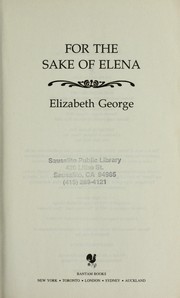
A deaf student killed on a Cambridge run. Notable for how much of the book belongs to Havers, whose arc is now running in parallel with the cases.
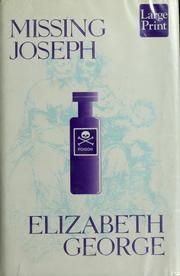
A Lancashire vicar poisoned, with Deborah and Simon St James at the centre. It closes the early run by advancing the secondary couple the series keeps returning to.
The middle stretch
IntermediateFollow the series into its longer, darker novels, where George starts spending whole sections inside the killers and the victims rather than the detectives.
▸ Study plan for this stage
Pace: Nine to ten weeks for about 2,040 pages: Playing for the Ashes 696, In the Presence of the Enemy 625, In Pursuit of the Proper Sinner 718. These are much longer and structurally looser than the early books. Do not try to hold 40 pages a day; 30 is realistic, and each of these is genuinely a month-si
- Playing for the Ashes is the first real structural experiment: a dead cricketer, and half the book delivered as a young woman's confessional journal running alongside the investigation. The journal is not a device to be endured — it contains the solution.
- In the Presence of the Enemy keeps Lynley off the page for long stretches and runs on Simon, Deborah and Helen instead. It is proof the series has a bench, and it is the most conventionally thriller-shaped book here, built on a tabloid editor, an MP and a kidnapped child.
- In Pursuit of the Proper Sinner opens with a serious professional rupture between Lynley and Havers, and the consequences drive several books after it. This is the single most important development in the middle of the series.
- That rupture arises from events in Deception on His Mind, a Havers-centred novel published between In the Presence of the Enemy and In Pursuit of the Proper Sinner that is not on this path. You will not be lost without it — In Pursuit explains what happened — but know that the disciplinary hanging o
- George is now spending whole sections inside killers and victims rather than detectives, which is why the books have nearly doubled in length. The murder plot is increasingly the frame rather than the content.
- Winston Nkata develops into the third significant police character across this stretch, and George uses him to write about race and the Met directly rather than as background.
- The tone darkens noticeably here. The early books have a country-house crime-novel comfort about them; from Playing for the Ashes onward the damage done to people is treated as the actual subject.
- In Playing for the Ashes, when do you realise what the journal is for? Could the same information have been delivered any other way?
- What does In the Presence of the Enemy demonstrate about the series that a Lynley-led book could not?
- What exactly ruptures between Lynley and Havers in In Pursuit of the Proper Sinner, and how much of it is professional versus personal?
- George gives murderers extensive interior lives. Does that produce understanding, sympathy, or neither?
- These three books average over 670 pages. What is the extra length buying, and is it worth it in each case?
- Read the journal sections of Playing for the Ashes consecutively at the end, ignoring the investigation chapters. It is a coherent novella on its own and reading it that way shows what George built.
- In In Pursuit of the Proper Sinner, mark every scene where Lynley and Havers are in a room together. There are fewer than you expect, and the count is the point.
- Keep a note of what Nkata is given to do in each book. His promotion through the series is gradual and deliberate.
- Before starting the next stage, reread the last twenty pages of In Pursuit of the Proper Sinner. The unresolved damage there is what the turn is built on.
Next up: With the partnership fractured and the books at full length, the series is positioned for the two novels that permanently change it.
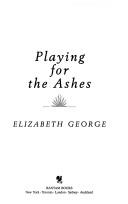
A cricketer dead in a cottage fire, told partly through a young woman's confessional journal. The first real structural experiment in the series.
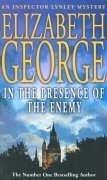
A tabloid editor, an MP and a kidnapped child, with Lynley barely present for long stretches. It proves the series can run on its supporting cast.
Two bodies in the Peak District and a serious professional rupture between Lynley and Havers. The consequences of this one drive several books that follow.
The turn: where the series changes
IntermediateReach the books that permanently alter the series, and know why the companion volume immediately after the turning point is not optional.
▸ Study plan for this stage
Pace: Ten to twelve weeks for about 2,350 pages: A Traitor to Memory 864 — the longest in the series — With No One as Witness 784, and What Came Before He Shot Her 703. A Traitor to Memory is slow by design and is best read at 25 pages a day rather than forced. Read With No One as Witness and its companio
- A Traitor to Memory is the longest and slowest book here and is doing preparatory work: a violin prodigy who can no longer play, a childhood death nobody has ever told the truth about, and the psychological register the late series operates in from now on.
- Its length is the common complaint and it is a fair one. Read it as the book that establishes the emotional register rather than as a thriller that has lost its way, and it becomes far easier to sit with.
- With No One as Witness is the hinge of the entire series, and something happens in it that cannot be undone. Do not read the jacket copy, the reviews, the wiki entry or the later books' descriptions first. Everything that follows in the series is shaped by it, which is exactly why spoiling it costs
- Its case — a serial killer of mixed-race adolescent boys, and a Met that took far too long to notice a pattern — is also the most direct thing George has written about institutional racism, and it is deliberately uncomfortable about the Yard's own conduct.
- What Came Before He Shot Her is not a sequel and barely contains Lynley at all. It tells the story behind the previous book from the other side, following a family in North Kensington, and it exists only because of With No One as Witness.
- The companion novel is the most divisive book in the series: some readers consider it her best work and others resent 700 pages away from the detectives. Both reactions are common and neither is wrong, but it is not optional if you want the turn to mean what it is meant to mean.
- Read together, the two books argue that a crime novel owes something to the world the criminal came out of, and that the genre's usual attention is distributed backwards.
- This is where the path stops, not where the series does. Elizabeth George has continued the Lynley novels well beyond this point, into another ten or more books, and they are still being published. What ends here is the need for a reading order: after these, the arc has been reset and you can simply
- What is A Traitor to Memory actually investigating — the recent death or the old one — and when does the book admit which?
- How does George prepare you for the event in With No One as Witness? Look back afterwards and find the preparation.
- What does With No One as Witness say about how the Met handles victims it does not prioritise, and is the criticism made by the plot or by the characters?
- Does What Came Before He Shot Her change your reading of the previous book, or only extend it?
- Where should sympathy sit at the end of the companion novel, and does George tell you or leave it?
- After twelve books, what has changed most: Lynley, Havers, or the kind of novel George is writing?
- Give A Traitor to Memory a fixed daily page count and stick to it. It is the book most readers abandon, almost always from pace rather than quality.
- Read With No One as Witness in as few sittings as you can manage, and read the last hundred pages in one.
- Start What Came Before He Shot Her within a few days of finishing the previous book. The gap is where readers lose their nerve and skip it.
- Afterwards, go back to the first fifty pages of A Great Deliverance. Twelve books and roughly 7,000 pages later, the distance travelled by both detectives is the reason the series is read in order.
- Then decide whether to continue. The remaining novels are conventional publication order from here, so if you want more, simply take the next one — no map required.
Next up: The arc that required a reading order is complete, and the rest of the series can be read straight through in publication order from the next book on.
A violin prodigy, a buried childhood death and the longest novel in the series. Slow, but it establishes the psychological register the late books work in.
A serial killer of mixed-race boys, and the event that splits the series into before and after. Do not read anything about this book before you read it, and do not read it out of order.
A companion novel with almost no Lynley in it, telling the story behind the previous book from the other side. It only exists because of With No One as Witness, and it is the right place to pause the series.
Discussion
Keep reading
Paths that share books, cover the same subject, or open a related topic.