Stay limber: flexibility for the second half of life
This curriculum takes a beginner adult from zero baseline knowledge to a deep, evidence-based understanding of flexibility and mobility for healthy aging. It starts with accessible, motivating foundations, builds into practical movement and stretching science, then advances into the physiology and longevity research that explains *why* these practices work — empowering the learner to design and sustain their own intelligent movement practice for life.
Foundations: Why Movement Matters as We Age
BeginnerUnderstand the science of aging bodies, why flexibility and mobility decline, and build the motivation and vocabulary to begin a safe, consistent practice.
▸ Study plan for this stage
Pace: 6–8 weeks total: Weeks 1–4 for "Younger Next Year" (~25–30 pages/day, 3–4 days/week), then Weeks 5–8 for "Stretching" (~15–20 pages/day, 3 days/week — slower pace to allow time to physically try each stretch shown).
- The 'decay vs. growth' biological switch: Crowley's core argument that the body reads inactivity as a signal to decay, and that consistent movement sends a 'grow' signal that counteracts age-related decline
- Harry's Rules (especially Rule #1: Exercise six days a week): understanding why frequency — not intensity — is the non-negotiable foundation of healthy aging in 'Younger Next Year'
- The role of C-6 and C-10 cytokines: Crowley's accessible explanation of the inflammatory (C-6) and repair (C-10) chemical messengers, and how exercise tips the balance toward repair and renewal
- Emotional and motivational drivers of change: 'Younger Next Year' frames aging as a choice-driven process, establishing the psychological 'why' that sustains a long-term practice
- Anatomy of a stretch — Anderson's foundational vocabulary: the difference between static, dynamic, and proprioceptive neuromuscular facilitation (PNF) stretching, and why Anderson champions slow, held, pain-free static stretching for general populations
- The 'easy stretch' vs. 'developmental stretch' distinction in Anderson's method: learning to listen to the body's feedback rather than push through discomfort
- Major muscle groups and their functional roles: using Anderson's illustrated routines to map the body — hamstrings, hip flexors, calves, shoulders, chest, and lower back — and understand why each tightens with age and sedentary behavior
- Consistency over intensity: both books converge on the principle that a modest, regular practice outperforms occasional heroic efforts — internalizing this as the stage's central takeaway
- According to Crowley in 'Younger Next Year,' what biological mechanism explains why prolonged inactivity accelerates physical aging, and what does exercise do at the cellular/chemical level to reverse it?
- What are Harry's Rules as presented in 'Younger Next Year,' and why does Crowley argue that exercising six days a week is more important for beginners than exercising hard?
- In Anderson's 'Stretching,' what is the practical difference between an 'easy stretch' and a 'developmental stretch,' and what physical sensation tells you that you have gone too far?
- Using the body-map illustrations in Anderson's 'Stretching,' identify three muscle groups that commonly tighten with age and desk-based lifestyles, and explain the functional consequence of tightness in each (e.g., tight hip flexors and lower-back pain)
- How do the central arguments of both books reinforce each other? In other words, how does Crowley's motivational science case complement Anderson's practical technique guidance?
- What does Anderson recommend regarding breathing during a held static stretch, and why does improper breathing (e.g., holding the breath) undermine the stretch reflex?
- 'Decay-or-Grow' journal entry: After finishing Part 1 of 'Younger Next Year,' write a one-page personal response identifying two specific habits in your current life that send a 'decay' signal and two realistic changes that would send a 'grow' signal — make it concrete and personal, not abstract.
- Harry's Rules commitment contract: Draft a simple weekly movement schedule inspired by Crowley's six-day rule. It does not need to be intense — a 20-minute walk counts. Post it somewhere visible and track compliance for the remaining weeks of this stage.
- Anderson's full-body baseline session: Before finishing 'Stretching,' attempt the beginner full-body routine illustrated in the book. Note (in writing) which three stretches feel the tightest or most uncomfortable — these are your personal priority areas for the rest of the curriculum.
- Breath-and-hold practice: Pick any three stretches from Anderson's lower-body section. Perform each for 30 seconds while focusing exclusively on slow, continuous breathing. Repeat the same three stretches holding your breath. Write two sentences comparing how the muscle responded in each condition.
- Vocabulary flashcards: Create a set of 10–15 index cards (physical or digital) covering key terms from both books — e.g., C-6/C-10 cytokines, static stretch, developmental stretch, stretch reflex, aerobic base, mobility vs. flexibility. Quiz yourself at the start of each reading session.
- Two-week micro-habit experiment: Choose one Anderson routine (e.g., the 'Before and After Exercise' sequence or the 'Everyday Stretches') and perform it every single day for 14 consecutive days. At the end, write three observations about what changed — in your body, your mood, or your motivation — to anchor Crowley's science in lived experience.
Next up: By establishing both the biological 'why' (Crowley) and the foundational 'how' (Anderson), this stage equips the reader with the vocabulary, motivation, and body awareness needed to engage confidently with more structured and progressive mobility programming in the next stage.
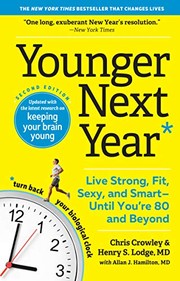
A highly readable, evidence-grounded case for why consistent movement is the single most powerful tool for healthy aging. Sets the motivational and biological context for everything that follows.
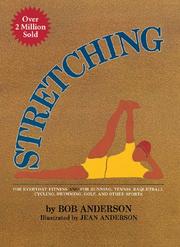
The classic beginner's stretching manual with clear illustrations and routines for every body part. Builds the practical vocabulary of stretches and safe technique before diving into deeper theory.
Building a Mobility Practice
BeginnerLearn the difference between stretching and mobility, develop a daily movement routine, and understand how joints, fascia, and muscles work together.
▸ Study plan for this stage
Pace: 6–8 weeks total: Weeks 1–4 for "Becoming a Supple Leopard" (~25–30 pages/day, focusing on Part 1 foundations and selected movement chapters); Weeks 5–6 for "Designed to Move" (~20–25 pages/day, a lighter read that reinforces daily habit-building). Allow 1–2 rest/review days per week to practice the
- Mobility vs. flexibility: mobility is active, joint-controlled range of motion, while flexibility is passive tissue length — Starrett's central distinction in Becoming a Supple Leopard
- The concept of 'supple' as a functional standard: the body should be able to move through full range under load without compensation or pain
- Joint mechanics and the 'fault' system: Starrett's framework for identifying upstream/downstream movement faults that cause pain and dysfunction
- Fascia as a body-wide connective tissue system: how restrictions in fascia limit joint mobility and how soft-tissue mobilization (smashing, flossing) addresses them
- The 10-minute daily mobility prescription: Starrett's principle that consistent short sessions beat infrequent long ones for lasting change
- Gravity and postural loading: Vernikos's research showing that frequent, low-intensity positional changes (standing up, shifting posture) counteract the degenerative effects of sedentary behavior
- The 'movement snack' model from Designed to Move: breaking up sitting with micro-movements throughout the day as a longevity strategy
- The spine as the central highway: both authors converge on spinal alignment and hip/thoracic mobility as the foundation for whole-body health
- In your own words, what is the difference between stretching and mobility work, and why does Starrett argue that mobility must come before strength and skill?
- What is a 'movement fault' according to Starrett, and how can a fault in one joint create pain or dysfunction in a distant part of the body?
- How does Vernikos's research on gravity and sedentary behavior support the idea that movement frequency matters more than movement intensity for healthy aging?
- What role does fascia play in limiting or enabling joint mobility, and what mobilization techniques does Starrett recommend to address fascial restrictions?
- How would you design a realistic 10-minute daily mobility routine using the principles from Becoming a Supple Leopard, and where in your day could you insert Vernikos's 'movement snacks'?
- Both books argue against the idea that pain and stiffness are inevitable with age. What evidence or reasoning do each author provide to support this claim?
- Baseline mobility audit (Week 1): Using Starrett's movement standards as a checklist, assess your own hip hinge, squat, overhead reach, and spinal rotation. Note where you feel restriction or compensation — this becomes your personal mobility map.
- Daily 10-minute mobility session (ongoing): Pick 2–3 mobilizations from Becoming a Supple Leopard each day (e.g., couch stretch for hip flexors, thoracic spine opener, ankle circles). Log which you did and any changes in range of motion over 4 weeks.
- Sit-to-stand tally (Weeks 5–6): Inspired by Vernikos's gravity research, count how many times you stand up from seated in a normal day. Then deliberately double that number using a phone reminder every 30 minutes, and journal how your energy and stiffness levels change.
- Fault-tracing exercise: Choose one area of chronic tightness (e.g., lower back, tight hamstrings). Use Starrett's upstream/downstream fault model to trace possible contributing joints above and below. Mobilize those neighboring joints for one week and reassess.
- Movement snack design challenge: Using Vernikos's framework, design a written 'movement snack menu' of 5–8 micro-movements (under 2 minutes each) you can do at a desk, in a kitchen, or while watching TV. Practice the full menu daily for two weeks.
- Reflection journal: After finishing both books, write a one-page personal 'mobility manifesto' — your philosophy of daily movement, your biggest insight from each author, and a specific 30-day commitment to one habit change.
Next up: By establishing the foundational vocabulary of joints, fascia, and daily movement habits, this stage equips the reader to engage with more targeted or therapeutic approaches — such as yoga, corrective exercise, or pain-science frameworks — with the mechanical literacy and consistent practice base needed to apply them safely and effectively.
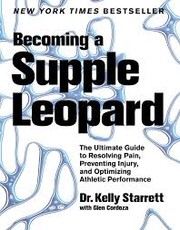
Introduces the concept of mobility as functional movement quality, not just flexibility. Teaches joint mechanics and movement patterns that are directly applicable to everyday aging adults.

A NASA scientist explains how gravity and frequent low-level movement preserve the body with age. Bridges the gap between formal exercise and the importance of daily movement habits.
The Science of Stretching and Fascia
IntermediateUnderstand the physiological mechanisms behind flexibility — including the roles of fascia, the nervous system, and connective tissue — to stretch smarter, not just harder.
▸ Study plan for this stage
Pace: 6–8 weeks total: Weeks 1–4 for "Anatomy Trains" (~20–25 pages/day, including time to study the anatomical diagrams carefully); Weeks 5–7 for "Stretching Scientifically" (~15–20 pages/day, a shorter but denser text requiring re-reading of key sections); Week 8 reserved for review, integration, and co
- Myofascial meridians (Anatomy Trains lines): how fascia connects the body in continuous tensional networks rather than isolated muscles
- Fascia as a body-wide sensory and force-transmission organ — not merely passive wrapping tissue
- Tensegrity: how the body maintains structural integrity through a balance of tension and compression across myofascial lines
- The stretch reflex (myotatic reflex) and the role of muscle spindles in resisting rapid lengthening — and why this must be managed in any stretching practice
- Golgi Tendon Organ (GTO) inhibition: how sustained tension triggers autogenic inhibition, allowing deeper relaxation into a stretch
- Reciprocal inhibition: contracting the antagonist muscle to neurologically release the target muscle, the basis of PNF and relaxed stretching
- The distinction between structural/anatomical limits to flexibility (joint shape, connective tissue) vs. neurological limits (the nervous system's protective tone) — Kurz's central framework
- Specificity of flexibility: why general stretching does not automatically transfer to sport- or movement-specific range of motion, per Kurz's evidence-based critique
- After reading Anatomy Trains, can you trace at least three myofascial meridians (e.g., the Superficial Back Line, the Spiral Line, the Lateral Line) and explain how tension or restriction in one segment can manifest as pain or limitation in a seemingly unrelated body part?
- How does Myers's concept of tensegrity challenge the traditional 'muscle-by-muscle' model of anatomy, and what are the practical implications for how you approach a flexibility restriction?
- According to Kurz, what is the primary limiting factor in most adults' flexibility — structural or neurological — and what evidence does he provide to support this claim?
- What are the three main methods of stretching described by Kurz (ballistic, relaxed/static, and isometric/PNF), and what are the neurophysiological mechanisms that make each one effective or risky?
- How do the stretch reflex and GTO inhibition work in opposition, and how can a practitioner use timing and contraction strategies to work with the nervous system rather than against it?
- How do the frameworks of Myers and Kurz complement each other — specifically, how does understanding fascial continuity (Myers) change the way you apply the neurological stretching principles (Kurz)?
- Myofascial line body-mapping: Using the diagrams in Anatomy Trains, draw or annotate a full-body outline tracing all major Anatomy Trains lines on yourself. Then perform a slow, deliberate movement (e.g., forward fold) and journal which lines you feel engaging sequentially — compare your felt sense to Myers's descriptions.
- Restriction detective drill: Identify one area of personal tightness (e.g., hamstrings, hip flexors). Using Myers's meridian maps, trace the full myofascial line that passes through that area and test mobility at two other points along the same line to see if the restriction is local or systemic.
- Neurological vs. structural flexibility self-test (from Kurz): Perform a passive stretch (partner-assisted or gravity-assisted) and note your end range. Then perform the same stretch after a thorough warm-up and after a strong isometric contraction of the target muscle. Record the difference in range — this directly demonstrates neurological (modifiable) vs. structural (fixed) limits.
- PNF contract-relax protocol practice: Choose one tight muscle group (e.g., hip flexors or hamstrings). Apply Kurz's contract-relax method — hold an isometric contraction for 6–10 seconds, then relax into the stretch — for 3 rounds per session, 4 sessions per week for 2 weeks. Log your range of motion before and after each session.
- Reciprocal inhibition experiment: For the same muscle group used above, try the antagonist-contraction method (actively contracting the opposing muscle to release the target). Compare the depth and quality of release to the contract-relax method and write a short reflection on which neurological mechanism felt more effective for your body.
- Integrated synthesis journal: After finishing both books, write a 1–2 page personal 'stretching philosophy' that integrates at least three concepts from Myers (e.g., fascial continuity, tensegrity, hydration of fascia) with at least three from Kurz (e.g., neurological limits, specificity, isometric stretching). Identify two concrete changes you will make to your current mobility practice based on
Next up: By understanding the 'why' behind flexibility — fascial architecture from Myers and neurological control from Kurz — the reader is now equipped to move from isolated stretching theory into applied, movement-integrated mobility work, where these principles are expressed dynamically in functional patterns and age-specific programming.

Reveals how the body's fascial lines connect muscles across the whole body, explaining why isolated stretching often misses the point. Essential for understanding whole-body mobility.

A concise, research-based guide to the neurological and biomechanical principles of flexibility training. Teaches how to progress safely and effectively using evidence, not guesswork.
Strength, Stability, and Longevity
IntermediateUnderstand that mobility without strength is incomplete — learn how resistance training, balance, and stability work together with flexibility to prevent falls and preserve independence.
▸ Study plan for this stage
Pace: 6–8 weeks total: Weeks 1–3 cover "Starting Strength" (~30–35 pages/day, focusing on the core chapters on the squat, deadlift, press, and programming logic); Weeks 4–7 cover "The Barbell Prescription" (~25–30 pages/day, with slower reading for the aging-specific physiology and clinical chapters); Wee
- The primacy of the big compound barbell movements (squat, deadlift, overhead press, bench press) as the most efficient tools for building whole-body strength — as argued in Starting Strength
- Rippetoe's biomechanical rationale: why correct bar position, stance width, and depth matter for safe, effective loading across the entire kinetic chain
- Linear progression as the foundational programming model — adding small, consistent load increments to drive neuromuscular and skeletal adaptation over time
- The distinction between mobility (range of motion) and stability (active muscular control within that range) — and why strength training trains both simultaneously
- Sullivan's 'Sick Aging Phenotype' vs. the 'Wellderly' model: how sarcopenia, dynapenia, and loss of bone density compound into frailty, and why barbell training directly reverses these processes
- The concept of Minimum Effective Dose (MED) for older adults: how The Barbell Prescription adapts Starting Strength's programming to account for slower recovery, comorbidities, and the higher stakes of training in later life
- Fall prevention as a strength and stability outcome: how improved hip, knee, and ankle strength from loaded movement patterns translates directly to real-world balance and independence
- Risk-benefit recalibration for aging trainees: Sullivan's argument that the risks of NOT training with barbells far outweigh the risks of training carefully with them
- According to Rippetoe in Starting Strength, why is the back squat considered the single most important exercise for developing whole-body strength, and what role does hip drive play in its execution?
- How does Starting Strength define and distinguish between a strength training program and a conditioning program, and why does this distinction matter for longevity-focused training?
- What is the 'Sick Aging Phenotype' as described by Sullivan in The Barbell Prescription, and which specific physiological markers (muscle mass, bone density, metabolic function) does barbell training most directly address?
- How does The Barbell Prescription modify the linear progression model from Starting Strength to suit older or masters-level trainees — what variables are adjusted and why?
- In what ways do the compound barbell lifts described in Starting Strength simultaneously develop flexibility, stability, and strength — and how does this make them superior to isolation exercises or stretching alone for healthy aging?
- Sullivan argues that physicians systematically under-prescribe resistance training for older patients. What evidence and reasoning does he use, and how does this reframe 'exercise as medicine' for the aging population?
- Bodyweight movement screen: Before lifting, assess your own squat depth, hip hinge pattern, and overhead reach. Note where mobility limits your range vs. where instability or weakness is the true limiter — revisit this after 4 weeks of training.
- Follow the Starting Strength novice linear progression for 3–4 weeks using the squat, deadlift, and press: start conservatively light, add weight each session, and log every set. This makes Rippetoe's programming logic visceral and personal.
- Read the chapter on the squat in Starting Strength, then video yourself performing 5 squats from the side. Compare your bar path, depth, and knee tracking to Rippetoe's cues. Identify one technical fault and spend one week correcting it.
- Create a one-page 'Aging Athlete Profile' inspired by The Barbell Prescription: document your current strength baselines (estimated 5-rep maxes), any mobility restrictions, recovery capacity (sleep, soreness), and health considerations. Use this to draft a modified MED program as Sullivan would prescribe.
- Single-leg balance drill progression: Practice standing on one leg for 30 seconds (eyes open, then closed, then on a folded towel). Track improvement weekly. Connect this explicitly to Sullivan's fall-prevention data — note which muscles fatigue first and how they map to the barbell lifts.
- Write a one-page 'prescription letter' to a hypothetical 65-year-old sedentary patient using Sullivan's framework: justify barbell training over walking or stretching alone, address the top 3 objections (injury risk, age, complexity), and outline a 12-week starter program drawing on both books.
Next up: By establishing that loaded, compound strength training is the non-negotiable foundation of physical independence in aging, this stage sets up the next stage to explore how targeted mobility work, corrective movement, and recovery practices are layered on top of — not instead of — that strength base.
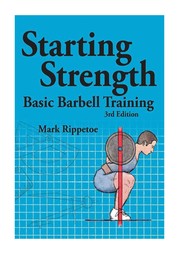
The definitive guide to foundational strength training mechanics. Older adults need strength to support their mobility gains, and this book provides the clearest technical foundation.

Written specifically for aging adults, this book applies strength training science directly to the challenges of older bodies — making it the perfect complement to mobility work for this audience.
Advanced Longevity: The Research Behind Aging Well
ExpertSynthesize everything through the lens of cutting-edge longevity science — understanding how exercise, mobility, and lifestyle interact at a cellular and systemic level to extend healthspan.
▸ Study plan for this stage
Pace: 8–10 weeks total: ~4–5 weeks per book at roughly 25–30 pages/day. Read "Outlive" first (weeks 1–5), then "Lifespan" (weeks 6–10). Reserve the final 3–4 days of each book for review, note synthesis, and reflection journaling before moving on.
- The Four Horsemen of chronic disease (cardiovascular disease, cancer, neurodegenerative disease, metabolic dysfunction) as Attia frames them in Outlive — and how proactive, personalized Medicine 3.0 aims to prevent them decades earlier than conventional medicine acts
- VO2 max and muscular strength as the two most powerful predictors of longevity — Attia's evidence that cardiorespiratory fitness and resistance training are non-negotiable pillars of healthspan, not optional add-ons
- The Centenarian Decathlon: Attia's framework for reverse-engineering the physical capabilities you want at 80–100 and training backward from that goal today — directly linking mobility and flexibility work to long-term functional independence
- Attia's 'Stability' pillar — the role of DNS (Dynamic Neuromuscular Stabilization), zone 2 cardio, and structural balance in injury prevention and longevity, bridging exercise science to the mobility focus of this curriculum
- Sinclair's Information Theory of Aging: the idea that aging is caused by the loss of epigenetic information (the 'epigenome') rather than DNA mutation alone — and that this information can potentially be restored
- The sirtuins, NAD+, mTOR, and AMPK pathways as master regulators of cellular aging — how exercise, caloric restriction, and intermittent fasting activate these pathways to mimic longevity signals at a molecular level
- Hormesis as a unifying principle across both books: the concept that controlled biological stress (exercise, cold, heat, fasting) activates repair and survival pathways (FOXO, NF-κB, PGC-1α) that slow aging and improve resilience
- Healthspan vs. lifespan — both authors' shared argument that the goal is compressing morbidity (the period of decline) and extending the quality years, not merely adding years, with mobility and physical capacity as central metrics of healthspan
- According to Attia in Outlive, why is VO2 max a stronger predictor of all-cause mortality than most clinical biomarkers, and what specific training protocols does he recommend to improve it — and how do those protocols connect to the mobility work covered in earlier stages of this curriculum?
- What is the Centenarian Decathlon, how does Attia use it to set training goals, and what would YOUR personal Centenarian Decathlon look like given your current age, mobility baseline, and lifestyle?
- How does Sinclair's Information Theory of Aging reframe the way we think about exercise and movement — specifically, why does physical stress (like resistance training or stretching under load) serve as an epigenetic signal that helps preserve youthful gene expression patterns?
- Both Attia and Sinclair discuss the role of NAD+ and sirtuins. How does regular aerobic and resistance exercise influence NAD+ levels and sirtuin activity, and what does this mean practically for how you structure your weekly movement routine?
- How do the concepts of hormesis (Sinclair) and Zone 2 training (Attia) complement each other as strategies for activating longevity pathways — and what are the risks of under- or over-dosing on each?
- Synthesizing both books: if you had to design a single weekly lifestyle protocol (exercise type, intensity, recovery, nutrition timing) grounded in the science of both Attia and Sinclair, what would it look like and what would be your top three evidence-based priorities?
- Centenarian Decathlon Blueprint: After finishing Outlive, write out your personal Centenarian Decathlon — list 10 specific physical tasks you want to perform at age 80+. Then audit your current mobility and fitness routine: identify the 2–3 biggest gaps between where you are now and what those future tasks require, and add one targeted exercise to address each gap.
- VO2 Max Benchmark & Zone 2 Block: Estimate your current VO2 max using a validated field test (e.g., the Rockport Walk Test or a 12-minute Cooper Run). Then commit to 3 Zone 2 cardio sessions per week (conversational pace, ~45–60 min each) for the duration of reading Outlive, and log perceived exertion and recovery quality to observe the hormetic adaptation Attia describes.
- Longevity Pathway Activation Log: While reading Lifespan, keep a one-week diary tracking the four key hormetic stressors Sinclair identifies — exercise (type and intensity), fasting window, heat exposure (sauna/hot bath), and cold exposure. At the end of the week, map each entry to the molecular pathway it activates (AMPK, mTOR suppression, sirtuin activation, etc.) using Sinclair's framework.
- Epigenetic Lifestyle Audit: Create a two-column table — 'Aging Accelerators' vs. 'Longevity Signals' — and honestly audit your current daily habits (sleep, nutrition, movement, stress, alcohol, sitting time) against the evidence presented in both books. Prioritize one change from each column to implement immediately and track for two weeks.
- Mobility-as-Medicine Reframe: Revisit one mobility or flexibility routine from an earlier stage of this curriculum (e.g., a hip-opening sequence or thoracic rotation flow). Rewrite a brief 'prescription label' for it using the language of longevity science from these two books — citing the specific pathways, tissues, or aging mechanisms it addresses. This exercise forces integration of earlier pra
- Synthesis Essay — Your Personal Medicine 3.0 Protocol: After completing both books, write a 500–750 word personal protocol document that integrates Attia's Medicine 3.0 framework with Sinclair's hallmarks of aging. It should include: your top biomarkers to track, your weekly exercise structure, one dietary strategy, and one recovery practice — each justified with a specific concept from one of the
Next up: Mastering the cellular and systemic science in these two books transforms the reader from a practitioner of mobility into an architect of their own healthspan — equipping them to critically evaluate new longevity research, personalize any future protocol, and mentor others, which is the foundation for any capstone or applied-practice stage that follows.

A rigorous, evidence-based framework for longevity that places exercise — especially strength and mobility — at the center of a long healthspan. Ties together all prior learning with the latest research.

Explores the biology of aging at the cellular level, giving the advanced learner a deep scientific understanding of *why* movement and lifestyle choices slow the aging process.
Discussion
Keep reading
Paths that share books, cover the same subject, or open a related topic.