Home electrical wiring explained: essential books for safe DIY
This curriculum takes a complete beginner from zero electrical knowledge to confident, code-compliant home wiring and troubleshooting across four tightly sequenced stages. Each stage builds on the last — starting with how electricity actually works, moving through hands-on wiring techniques, then tackling the service panel and full projects, and finally mastering the National Electrical Code that governs it all.
Foundations: How Electricity Works
BeginnerUnderstand the core concepts of voltage, current, resistance, circuits, and basic safety before touching any wire in a home.
▸ Study plan for this stage
Pace: 4–5 weeks, ~25–30 pages/day. Start with "Electricity Demystified" (Weeks 1–2, ~150 pages), then move to the first 6 chapters of "Wiring a House" (Weeks 3–5, ~100 pages). Allow 2–3 days per major concept for review and exercises.
- Voltage as electrical pressure: how it drives electrons through a circuit (from Electricity Demystified)
- Current as the flow of electrons measured in amperes: the actual movement of charge (from Electricity Demystified)
- Resistance as opposition to current flow, measured in ohms, and Ohm's Law (V=IR) as the relationship between voltage, current, and resistance (from Electricity Demystified)
- Series vs. parallel circuits: how components are connected and how voltage/current behaves differently in each (from Electricity Demystified and Wiring a House)
- AC vs. DC current: why homes use alternating current and how it differs from direct current (from Electricity Demystified and Wiring a House)
- Electrical power and energy: watts, kilowatt-hours, and how to calculate power consumption (from Electricity Demystified)
- Grounding and bonding: why neutral and ground wires are essential for safety in residential wiring (from Wiring a House)
- National Electrical Code (NEC) basics: why codes exist and how they protect homeowners (from Wiring a House)
- What is the relationship between voltage, current, and resistance, and how does Ohm's Law express it?
- Why do homes use AC current instead of DC, and what are the practical advantages?
- How do series and parallel circuits differ in how they distribute voltage and current to components?
- What is the purpose of grounding and bonding in residential electrical systems, and why are they critical for safety?
- How do you calculate electrical power consumption in watts, and what does a kilowatt-hour represent?
- What is the National Electrical Code, and why must residential wiring comply with it?
- Work through all practice problems in 'Electricity Demystified' chapters 1–4 on voltage, current, resistance, and Ohm's Law; solve at least 10 problems calculating unknown values using V=IR.
- Build a simple series circuit using a battery, light bulb, and switch (no live wiring); observe how brightness changes when you add a second bulb in series, then compare to parallel configuration.
- Create a visual diagram labeling voltage, current, and resistance for three different household circuits (e.g., a lamp, a refrigerator, a ceiling fan) based on typical home specifications.
- Read and annotate the first 3 chapters of 'Wiring a House' on grounding and bonding; create a one-page summary explaining why neutral and ground wires are separate in modern homes.
- Calculate the power consumption (in watts) and monthly energy cost for 5 common household appliances using their nameplate ratings and your local electricity rate.
- Take a quiz or self-test on AC vs. DC current, series vs. parallel circuits, and basic NEC safety principles; aim for 85% accuracy or higher.
Next up: This stage equips you with the theoretical foundation and safety awareness needed to move into the next stage, where you'll learn to identify and work with actual home wiring components, circuits, and installation practices safely and code-compliant.
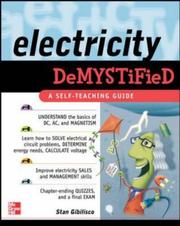
A genuinely beginner-friendly introduction to electrical concepts — voltage, current, Ohm's Law, AC vs. DC — with no assumed background. Reading this first gives you the mental model every later book assumes you already have.
A Taunton Press classic that bridges theory and practice for the home context specifically. Read it here, early, as a broad orientation map — you will return to it later with much deeper comprehension.
Core Skills: Devices, Cables, and Connections
BeginnerLearn to safely work with the physical materials of home wiring — cable types, outlets, switches, boxes, and splices — and make correct, code-aware connections.
▸ Study plan for this stage
Pace: 4–5 weeks, ~25–30 pages/day, with 2–3 days per week dedicated to hands-on exercises and code review
- Cable types (Romex, THHN, armored, conduit) and their gauge, insulation ratings, and appropriate use cases in residential wiring
- Outlet and switch anatomy: terminals, grounding, polarity, and the difference between standard, GFCI, and AFCI devices
- Electrical boxes: sizing, fill calculations, mounting, and code requirements for different box types and locations
- Proper splicing and termination techniques: wire stripping, twisting, wire nuts, solder-free connectors, and code-compliant methods
- Grounding and bonding fundamentals: ground wires, equipment grounding, and why they prevent shock and fire hazards
- National Electrical Code (NEC) basics: how to read code sections relevant to residential wiring, permit requirements, and inspection checkpoints
- Safety practices: de-energizing circuits, testing for live power, personal protective equipment, and recognizing hazardous conditions
- Common connection scenarios: connecting outlets to boxes, wiring switches, making splice connections, and verifying polarity and continuity
- What are the differences between Romex, THHN, and armored cable, and when would you use each type in a residential installation?
- How do you properly strip, twist, and terminate wires using wire nuts, and what does the NEC say about the minimum wire gauge for different applications?
- Explain the difference between a standard outlet, a GFCI outlet, and an AFCI outlet, and describe the correct terminal connections (hot, neutral, ground) for each
- How do you calculate the correct electrical box size for a given location, and what is the NEC fill rule?
- What is the purpose of grounding and bonding, and how do you identify and connect ground wires in a typical residential circuit?
- Walk through the steps to safely de-energize a circuit, test for live power, and verify that a connection is correct before re-energizing
- Strip, twist, and terminate 10–15 practice wire pairs using wire nuts; inspect for proper twist, full insertion, and no exposed copper
- Build a practice electrical box assembly: mount a box, install a cable clamp, run Romex through it, and make outlet connections with correct polarity and grounding
- Study and sketch the internal anatomy of a standard outlet, GFCI, and AFCI device; label all terminals and explain the function of each
- Calculate the correct box fill for 3–4 different scenarios from the book (e.g., a junction box with multiple cables and a switch); verify your answers against NEC Table 314.16
- Practice de-energizing a circuit at the breaker panel, testing for live power with a non-contact tester and multimeter, and re-energizing safely
- Create a reference chart of common cable types, gauges, and insulation ratings; cross-reference each with NEC sections cited in the book
Next up: Mastery of these core materials—safe handling of cables, correct device connections, and code awareness—provides the foundation to move into circuit design and installation, where you will apply these skills to plan and execute complete circuits in a home.
A highly visual, project-based guide from the Black & Decker series that walks beginners through real tasks (adding an outlet, replacing a switch, running cable) with step-by-step photography — ideal for building hands-on confidence.

One of the most comprehensive and widely used DIY wiring references in print, covering outlets, switches, fixtures, GFCI/AFCI, and low-voltage work. Reading it after Warde deepens and systematizes what you just practiced.
Going Deeper: Panels, Circuits, and Full Projects
IntermediateUnderstand the service panel, circuit breakers, grounding, and subpanels, and be able to plan and run new circuits from panel to device.
▸ Study plan for this stage
Pace: 4–5 weeks, ~40–50 pages/day, focusing on Chapters 5–10 (service panels, circuit breakers, grounding, subpanels, and circuit planning)
- Service panel anatomy: main breaker, bus bars, neutral/ground separation, and load distribution
- Circuit breaker types, ratings, and trip mechanisms; single-pole vs. double-pole breakers
- Grounding and bonding: equipment grounding, system grounding, and the role of the ground rod
- Subpanels: when to install, proper sizing, feeder requirements, and grounding/bonding differences from main panels
- Circuit planning: load calculations, wire sizing, breaker selection, and voltage drop considerations
- Running new circuits: conduit routing, wire pulling, connections at panel and device ends, code compliance
- Common panel mistakes and code violations that inspectors catch
- What is the difference between the neutral bus and the ground bus in a service panel, and why must they be bonded only at the main panel?
- How do you calculate the correct breaker size and wire gauge for a new 240V circuit serving a 5000W electric range?
- What are the three main grounding paths in a residential electrical system, and how does a ground rod fit into the overall grounding scheme?
- When is a subpanel required instead of extending circuits from the main panel, and what are the key differences in how you ground and bond a subpanel?
- Walk through the step-by-step process of planning and installing a new 20A, 120V circuit from the panel to a kitchen outlet, including conduit routing and code considerations.
- What causes a circuit breaker to trip, and how do you distinguish between a legitimate overload and a short circuit?
- Draw a detailed diagram of your home's service panel (or a sample panel from the book), labeling the main breaker, bus bars, neutral/ground buses, and at least 6 branch circuits; identify which circuits serve which rooms.
- Perform a load calculation for a hypothetical kitchen renovation: list all planned appliances and outlets, calculate total amperage, and determine how many new circuits you'd need and at what amperage.
- Using the NEC tables in Mullin's book, select the correct wire gauge and breaker size for five different circuits (e.g., 15A lighting, 20A outlet, 30A dryer, 50A range, 240V AC unit); justify each choice.
- Trace the grounding path from a device outlet back to the service panel and then to the ground rod; explain the role of each component (equipment ground, neutral, bonding jumper, ground rod).
- Plan a subpanel installation for a detached garage: determine feeder size, breaker size at main panel, grounding/bonding requirements, and sketch the conduit route from main panel to subpanel.
- Review a real or sample electrical inspection report; identify 3–4 common violations related to panels, circuits, or grounding, and explain what the correct approach should be according to Mullin's guidance.
Next up: This stage equips you with the knowledge to safely design and execute full circuits and understand the backbone of residential electrical systems; the next stage will likely focus on specialized circuits (dedicated appliance circuits, GFCI/AFCI protection, smart wiring) and troubleshooting, building on the solid panel and grounding foundation you've now mastered.
The standard textbook used in vocational and community-college electrical programs for decades. It covers full residential wiring from load calculations to panel schedules at a rigorous, professional level — the right challenge at this stage.
Mastery: Code, Troubleshooting, and Professional Standards
ExpertRead and apply the National Electrical Code to real work, troubleshoot faults systematically, and wire to the standard a licensed electrician would sign off on.
▸ Study plan for this stage
Pace: 10–12 weeks, ~40–50 pages/day, with 2–3 days per week dedicated to hands-on troubleshooting and code reference drills
- National Electrical Code (NEC) structure, article organization, and how to navigate it efficiently for real-world installations
- Code compliance requirements for branch circuits, feeders, grounding, bonding, and overcurrent protection across residential and light commercial applications
- Systematic troubleshooting methodology: using meters, tracing circuits, identifying open/short/ground faults, and documenting findings like a professional
- Appliance electrical systems: motor circuits, heating elements, control circuits, and safety interlocks in major appliances (ranges, water heaters, washers, dryers)
- Common code violations and how to correct them; understanding the intent behind code rules to avoid future mistakes
- Professional standards for workmanship: wire routing, junction box fill, conduit bending, labeling, and documentation that passes inspection
- Grounding and bonding principles in depth: equipment grounding, system grounding, and fault-current paths in both normal and emergency scenarios
- Reading and interpreting electrical schematics, ladder diagrams, and manufacturer wiring diagrams for appliances and control systems
- How do you locate a specific NEC requirement quickly, and what are the key articles you reference most often for residential wiring?
- What are the differences between equipment grounding, system grounding, and bonding, and why does each matter for safety?
- You discover a 20 A circuit protecting a 30 A load; what code articles apply, and how would you correct this violation?
- Walk through a systematic troubleshooting process for a dead outlet: what tests would you perform in order, and what would each result tell you?
- A major appliance (e.g., electric range or water heater) is not heating; how would you diagnose whether the fault is in the supply circuit, the appliance's internal wiring, or a control component?
- What are the professional standards for wire routing, conduit fill, and junction box organization, and why do inspectors enforce them?
- Complete 5–10 NEC code-lookup drills: given a scenario (e.g., 'sizing a feeder for a 200 A service'), find the relevant articles in Ugly's and Miller's guide and document the rule and its section number
- Perform a full circuit audit on your own home or a friend's: map all circuits, verify wire gauges against breaker sizes using NEC Table 310, check grounding continuity, and document any code violations found
- Troubleshoot 3–5 simulated or real appliance faults using Kleinert's guide: diagnose a non-heating element, a motor that won't start, or a control circuit failure; document your test sequence and findings
- Wire a practice circuit (or review photos/videos of one) and inspect it against professional standards: check conduit bending, wire support spacing, junction box fill, and labeling; identify what would pass or fail inspection
- Create a personal NEC quick-reference card or digital bookmark for the 10–15 articles you use most (e.g., Article 210 for branch circuits, Article 250 for grounding, Article 430 for motors); test your speed at finding rules
- Perform a grounding and bonding continuity test on a real installation: measure resistance from the service entrance to equipment grounds and verify it meets code; document your results and explain what you found
Next up: This stage transforms you from a code-aware installer into a code-fluent troubleshooter and inspector, preparing you to either pursue a journeyman electrician license (where you'll apply these rules under a master's supervision) or move into specialized areas like solar installations, energy management, or electrical inspection where deeper code mastery is required.

The pocket reference carried by working electricians everywhere — wire ampacity tables, conduit fill, box fill, grounding rules. At this stage you use it as a fast-lookup companion to the NEC, building the habit of checking code constantly.
Makes the NEC itself approachable by pairing every major rule with a clear diagram and plain-English explanation. Reading this after Mullin lets you map professional practice directly onto the legal code that governs it.
Rounds out the curriculum by teaching systematic electrical fault-finding — using a multimeter, tracing dead circuits, diagnosing breaker trips — skills that complete a home wirer's ability to not just install but also diagnose and fix.
Discussion
Keep reading
Paths that share books, cover the same subject, or open a related topic.