Become an electrician: apprenticeship to license
This curriculum takes a complete beginner from zero electrical knowledge to exam-ready, career-launched electrician across four tightly sequenced stages. Each stage builds on the last — first wiring intuition and safety, then deep code fluency, then licensing exam mastery, and finally the business and career savvy to build a resilient, AI-proof trade career in the physical world.
Foundations — How Electricity Works
BeginnerUnderstand core electrical theory (voltage, current, resistance, circuits, AC/DC) and develop hands-on safety habits before touching any real wiring.
▸ Study plan for this stage
Pace: 8–10 weeks total. Week 1–2: Ugly's Electrical References (~20–30 min/day) — treat it as a living reference, not a cover-to-cover read; focus on the tables, formulas, and code symbols you'll return to constantly. Weeks 3–6: Electricity Demystified (~25–35 pages/day, ~4 days/week) — this is the concep
- Ohm's Law and the relationship between voltage (V), current (I), and resistance (R) — the mathematical backbone of every calculation in Ugly's reference tables and Gibilisco's worked examples
- Series vs. parallel circuits — how resistance, voltage, and current behave differently in each topology, as explained and illustrated throughout Electricity Demystified
- AC vs. DC: what distinguishes alternating from direct current, why household wiring (covered in Wiring a House) is AC, and how frequency and waveform shape matter
- Power and energy: the watt, kilowatt-hour, and how Watt's Law (P = IV) connects to the load calculations Cauldwell uses when sizing circuits in Wiring a House
- Electrical safety fundamentals: shock hazards, grounding, bonding, and GFCI/AFCI protection — introduced conceptually in Gibilisco and applied practically in Cauldwell's house-wiring context
- Reading and using reference tables: wire gauges (AWG), ampacity, conduit fill, and standard voltage levels as tabulated in Ugly's — the skill of looking up rather than memorizing
- Basic circuit components: conductors, insulators, switches, fuses, breakers, and receptacles — their symbols, functions, and how Cauldwell shows them installed in a real house
- The National Electrical Code (NEC) as a safety framework: Ugly's surfaces key NEC tables; Wiring a House translates code requirements into practical installation rules
- Using Ohm's Law and the tables in Ugly's, if a 120 V circuit draws 15 A, what is the resistance of the load and how much power is it consuming?
- After reading Electricity Demystified, can you explain in plain language why adding more resistors in parallel decreases total circuit resistance while adding them in series increases it?
- What is the practical difference between AC and DC, and why does Cauldwell's house wiring exclusively use AC? What frequency does North American residential power run at?
- Ugly's lists ampacity ratings for different wire gauges. Why can't you simply use any gauge wire for any circuit, and what real-world consequence does Cauldwell warn about when wire is undersized?
- Gibilisco introduces grounding as a safety concept. How does Cauldwell translate that concept into the physical three-wire (hot/neutral/ground) system used in a house, and what does a GFCI receptacle add on top of that?
- After finishing Wiring a House, can you trace the path of current from the utility service entrance, through the main panel, along a branch circuit, through a receptacle, and back — identifying each component by name?
- Build an Ugly's Quick-Reference Card: During Week 1, hand-copy the Ohm's Law wheel, the AWG ampacity table, and the standard voltage levels onto a single index card. Keep it at your desk for the rest of the stage — the act of copying cements the layout and trains you to find information fast.
- Ohm's Law drill set (paired with Electricity Demystified chapters 2–4): Write 20 practice problems — given any two of V, I, R, or P, solve for the other two. Check answers using Ugly's formula tables. Aim for zero calculator errors before moving on.
- Draw every circuit Gibilisco describes: As you read Electricity Demystified, sketch each series and parallel circuit by hand using standard schematic symbols (find the symbol legend in Ugly's). Label all voltages, currents, and resistances. Compare your sketch to the book's diagram before turning the page.
- Simulated panel diagram: After finishing Wiring a House, draw a complete (but simple) residential panel from memory — service entrance, main breaker, neutral/ground bus bars, and at least six labeled branch circuits with correct wire gauges pulled from Ugly's ampacity table. Annotate which circuits require AFCI or GFCI protection per Cauldwell's guidance.
- Safety audit walk-through: Walk through your own home (do NOT open panels or touch wiring) and identify, using Cauldwell's descriptions as a guide, every GFCI receptacle, smoke detector location, and panel location. Note any receptacles near water that lack GFCI protection and look up the relevant NEC requirement in Ugly's.
- Teach-back session: At the end of Week 10, explain Ohm's Law, the difference between series and parallel circuits, and why a house uses a grounded three-wire system to someone unfamiliar with electricity (a friend, family member, or recorded voice memo). If you stumble, mark that topic for re-reading.
Next up: ">Mastering the theory in Gibilisco, the code tables in Ugly's, and the whole-house mental model in Cauldwell gives you the vocabulary and safety mindset needed to move confidently into the next stage, where you'll begin working with actual tools, conduit, and panel installations under the NEC.

The pocket-sized field bible every apprentice carries. Reading it first gives you the essential formulas, wire tables, and terminology that all later books assume you already know.
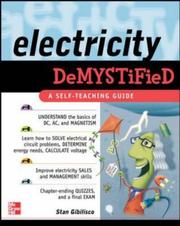
A gentle, math-light walkthrough of electrical theory — Ohm's Law, series/parallel circuits, AC fundamentals — that builds the intuition needed before diving into code or exam material.
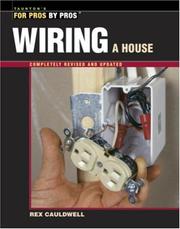
Bridges pure theory into real residential practice; shows how circuits are actually planned and run in a home, making abstract concepts concrete before you enter an apprenticeship.
Code Fluency — The NEC and How to Read It
IntermediateNavigate the National Electrical Code confidently, understand why each rule exists, and apply code logic to real installation scenarios.
▸ Study plan for this stage
Pace: 10–12 weeks total. Weeks 1–6: Read Miller's "Illustrated Guide to the NEC" at ~25–30 pages/day, using the illustrations as active study tools — pause at each diagram and trace the rule back to its code section. Weeks 7–12: Work through the NFPA "National Electrical Code (1975 edition)" at ~20 pages/
- NEC structure and navigation — how Articles, Sections, Exceptions, and Fine Print Notes (FPNs) are organized and how to move between them efficiently
- The 'why' behind code rules — understanding that each NEC requirement traces to a documented fire, shock, or failure event, so rules are reasoned, not arbitrary
- Scope and applicability — knowing which NEC articles apply to which installation types (residential, commercial, industrial) and how to determine jurisdiction
- Wiring methods and materials — the code logic governing conduit types, cable assemblies, conductors, and when each is permitted or prohibited
- Overcurrent protection principles — the relationship between conductor ampacity, breaker/fuse sizing, and the NEC tables (e.g., 310 series) that govern them
- Grounding vs. grounding electrode systems — distinguishing equipment grounding conductors, grounding electrode conductors, and the system neutral, as clarified through Miller's illustrations
- Special occupancies and conditions — how the NEC escalates requirements for hazardous locations, wet/damp environments, and high-density occupancies (Articles 500s, 680, 700s)
- Code edition awareness — recognizing that the 1975 NEC represents foundational code logic and comparing its language to modern editions to understand how and why rules evolved
- Given an installation scenario (e.g., a 20 A kitchen circuit), which NEC articles and sections would you consult, and in what order — and can you locate them in under two minutes using only the code index?
- Why does the NEC require GFCI protection in bathrooms and kitchens? Trace the safety rationale and identify the specific section in the 1975 NEC where this protection first appears.
- A conductor is rated 90 °C but is installed in a conduit with other conductors in an ambient temperature of 40 °C — walk through the full ampacity calculation using the NEC tables as presented in Miller's illustrated guide.
- What is the difference between a grounding electrode conductor and an equipment grounding conductor? Using Miller's diagrams, explain what each is bonded to and why both are required.
- How does the 1975 NEC's language on a specific topic (e.g., service entrance conductors or branch circuit sizing) differ from the modern treatment in Miller's guide, and what does that evolution tell you about code intent?
- A client wants to install a hot tub in a backyard — list every NEC article you must consult, explain the clearance and bonding requirements, and identify which rules existed in the 1975 edition versus which were added later.
- 'Article Scavenger Hunt': Each week, pick five real-world installation questions (e.g., 'Can I use NM cable in a garage?') and race yourself to find the governing NEC section using only the index and table of contents — log your lookup time and aim to cut it in half by week 10.
- Side-by-side comparison journal: For every major topic covered in Miller's illustrated guide, open the 1975 NEC to the corresponding article and write 3–5 sentences on what changed, what stayed the same, and what the change implies about safety history.
- Redraw Miller's diagrams from memory: After studying each illustrated chapter, close the book and sketch the key diagram (e.g., a service entrance, a panel grounding layout) from memory, then compare to the original and annotate every error with the code section it violates.
- Mock inspection walk-through: Using your own home or a willing neighbor's, walk each room with the NEC in hand and identify every visible installation — outlet spacing, panel labeling, GFCI locations — and cite the governing section for each observation.
- Ampacity calculation worksheet: Build a spreadsheet with 10 conductor scenarios (varying wire gauge, temperature rating, conduit fill, and ambient temp) and work through each using the NEC tables from both Miller and the 1975 edition, comparing results and noting any table differences.
- Write a 'code memo' for a non-electrician: Choose one complex rule (e.g., the 6-disconnect rule for services, or kitchen small-appliance circuit requirements) and write a one-page plain-English explanation that cites the exact NEC section — this forces you to fully own the rule before moving on.
Next up: Mastering NEC navigation and code logic here gives the reader the regulatory backbone needed to tackle the next stage — whether that covers load calculations, blueprint reading, or hands-on installation — because every practical skill in electrical work is ultimately validated against the code framework built in this stage.
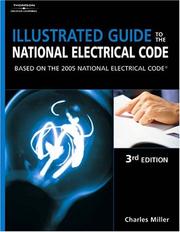
The most widely used plain-English companion to the NEC; diagrams every major code section so you learn the logic of the code, not just its words, before tackling the raw NEC itself.
The authoritative source that all inspectors, contractors, and exams reference — read it after Miller's guide so the dense legal language is already familiar and navigable.
Journeyman Exam Prep — Passing the License
IntermediateMaster the question formats, code-lookup speed, and calculation methods required to pass the Journeyman Electrician licensing exam on the first attempt.
▸ Study plan for this stage
Pace: 10–12 weeks total. Weeks 1–7: Electrician's Exam Study Guide (Keller) — work through one chapter/topic domain per day (~20–30 pages), dedicating the final day of each week to timed practice tests on that week's material. Weeks 8–12: Electrical Wiring, Residential (Mullin) — read ~25–35 pages per day
- NEC code-lookup speed and article navigation — using Keller's practice questions to drill finding answers in the NEC index within 60–90 seconds, as required under timed exam conditions
- Ohm's Law and power formula calculations — mastering P=IE, E=IR, and derived forms as drilled in Keller's calculation chapters, applied to branch-circuit and feeder sizing problems
- Box-fill and conductor calculations — using Keller's step-by-step method and Mullin's residential wiring examples to calculate box-fill per NEC 314.16 accurately and quickly
- Branch-circuit, feeder, and service sizing — applying NEC Tables 310.12/310.16 and demand-factor tables as presented in both Keller's exam breakdowns and Mullin's load-calculation walkthroughs
- Grounding and bonding principles — understanding the distinction between equipment grounding conductors, grounding electrode conductors, and bonding jumpers as tested in Keller and illustrated in Mullin's residential panel diagrams
- Conduit fill and wire-fill calculations — using NEC Chapter 9 tables and Keller's percentage-fill drill problems to determine maximum conductors per raceway
- Residential wiring methods and devices — leveraging Mullin's detailed coverage of cable types (NM, AC, MC), outlet placement rules, AFCI/GFCI requirements, and switch-loop wiring as a real-world anchor for Keller's exam questions
- Exam strategy and question dissection — applying Keller's technique of eliminating distractors, identifying the NEC 'authority' behind each question, and managing time across a 80–100 question exam
- Given a residential load schedule from Mullin, can you perform a complete service-entrance calculation using demand factors and arrive at the correct minimum service size as Keller's exam format expects?
- Using only the NEC index, can you locate the correct article and table to answer a conductor-ampacity question in under 90 seconds, as Keller's timed drills require?
- Can you calculate the correct box-fill for a 4-inch square box containing a specific mix of conductors, devices, and clamps, following the NEC 314.16 method Keller outlines?
- How does Mullin's explanation of AFCI and GFCI placement requirements in residential circuits translate into the 'which rooms require GFCI protection' question type found throughout Keller's practice exams?
- Can you determine the maximum number of a given conductor size permitted in a specific conduit type and size using NEC Chapter 9 tables, as drilled in Keller's conduit-fill problems?
- What is the correct procedure for sizing an equipment grounding conductor for a branch circuit, and how do Mullin's panel wiring diagrams reinforce the NEC table Keller tests on this topic?
- Timed NEC scavenger hunts: Using Keller's end-of-chapter questions, cover the answer choices and race to find the governing NEC article and table from scratch — log your lookup time and aim to reduce it below 90 seconds per question by week 4.
- Full residential load calculation from scratch: Using a blank load schedule modeled on Mullin's residential examples, calculate the total connected load, apply demand factors, and size the service entrance — then check your answer against Mullin's worked examples and Keller's calculation chapter.
- Box-fill drill sheet: Create 10 custom box-fill scenarios (varying conductor counts, device types, and clamp configurations) based on Mullin's device and box descriptions, solve each using NEC 314.16, and verify against Keller's answer-key methodology.
- Weekly timed mock exams: Every Friday, take a 50-question timed practice test drawn from Keller's chapter review banks, simulating real exam pacing (~1.2 minutes per question); track your score by domain (calculations, code lookup, wiring methods) to identify weak areas.
- Conduit-fill worksheet: Pull 8–10 of Keller's conduit-fill practice problems, solve them using NEC Chapter 9 tables, then sketch the corresponding conduit cross-section (as illustrated in Mullin) to build a visual memory anchor for each conductor/conduit combination.
- Residential panel labeling exercise: Using Mullin's residential panel diagrams as a reference, draw and label a 200A service panel from memory — including service conductors, grounding electrode conductor, main bonding jumper, and branch-circuit breakers — then annotate each component with the NEC article Keller identifies as the most-tested reference for that element.
Next up: By internalizing both the exam mechanics from Keller and the real-world residential wiring context from Mullin, the reader is now equipped to move from test-passing knowledge into advanced field application — making the transition to Master Electrician studies, commercial/industrial wiring codes, or on-the-job apprenticeship leadership a natural next step.
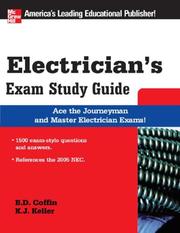
One of the most widely used exam-prep books; organizes NEC topics by exam weight and provides hundreds of practice questions that mirror real test conditions.
The standard textbook used in accredited apprenticeship programs; its end-of-chapter problems and load-calculation walkthroughs directly mirror the math sections of licensing exams.
Career & Business Mastery — Building an AI-Proof Trade
ExpertUnderstand the apprenticeship-to-master pipeline, develop the entrepreneurial and estimating skills to run your own electrical business, and position yourself for long-term career resilience.
▸ Study plan for this stage
Pace: 8–10 weeks total: Weeks 1–5 on "Electrical Estimating Methods" (~25–30 pages/day, including time to work through sample takeoffs and cost exercises); Weeks 6–10 on "The E-Myth Contractor" (~20–25 pages/day, with journaling and business-design sessions built in). Reserve the final 3–4 days of each bo
- Quantity takeoff methodology — systematically measuring and listing every material, labor unit, and assembly from blueprints before a single dollar figure is assigned (Del Pico)
- Labor-unit pricing and burden rates — understanding how raw labor hours are converted into fully-loaded costs including taxes, insurance, and overhead (Del Pico)
- Direct vs. indirect costs and how overhead allocation and profit markup are layered onto a bid to produce a competitive yet profitable price (Del Pico)
- Bid strategy and risk management — reading scope-of-work documents, identifying exclusions, and building contingency into estimates without losing jobs (Del Pico)
- The E-Myth 'Technician Trap' — recognizing that being a skilled electrician does not automatically make someone a capable business owner, and why most contractor businesses fail (Gerber)
- The Entrepreneurial, Managerial, and Technician personalities — balancing all three roles as a sole owner and knowing when each must take the lead (Gerber)
- Systems thinking and the Franchise Prototype mindset — designing repeatable processes (scheduling, invoicing, customer communication, quality checks) so the business can run without the owner doing everything (Gerber)
- The Business Development Program — working ON the business through strategic planning, org-chart design, and documented procedures rather than always working IN it (Gerber)
- Given a simple residential service-upgrade blueprint, can you perform a complete quantity takeoff, apply current labor units, add overhead and profit, and produce a formatted bid — following Del Pico's step-by-step process?
- How do burden rates and indirect costs affect the true hourly cost of an electrician on your payroll, and what happens to your margin if you underestimate them?
- What is the 'Technician Trap' described by Gerber, and what specific warning signs indicate an electrician has fallen into it after going independent?
- How does Gerber's Franchise Prototype concept apply to a two-person electrical contracting firm, and what three systems would you document first?
- How would you reconcile the precision demanded by Del Pico's estimating discipline with Gerber's call for systematized, scalable business processes — and where do the two books reinforce each other?
- What does a healthy org chart look like for a small electrical contractor, and how does filling multiple roles yourself (per Gerber) affect long-term business resilience against automation and market shifts?
- Estimating Live Takeoff: Obtain a free residential or light-commercial electrical plan online (e.g., from a plan-sharing site or your local permit office). Perform a full quantity takeoff using Del Pico's format — list every device, wire run, panel, and fixture. Price it out with current supplier quotes and local labor rates, then add overhead and profit to produce a final bid number.
- Burden Rate Calculator: Build a spreadsheet that calculates the true fully-loaded hourly cost of one journeyman electrician on your hypothetical payroll. Include FICA, workers' comp, general liability insurance, vehicle cost, and tool allowance. Compare this to the 'shop rate' you would need to charge per hour to break even, then to make a 15% net profit.
- Bid vs. Actual Post-Mortem: If you have worked on any electrical job (as an employee or apprentice), reconstruct an estimate for it using Del Pico's methods, then compare your estimated hours and materials to what was actually used. Write a one-page analysis of where the variance came from.
- E-Myth Business Audit: Write a brutally honest one-page assessment of yourself using Gerber's three-personality framework (Entrepreneur / Manager / Technician). Score yourself 1–10 in each role, identify your weakest area, and list three concrete habits or hires that would compensate for it.
- Systems Documentation Sprint: Choose one repeatable process in an electrical business (e.g., the customer call-to-quote workflow, or the job-closeout and punch-list procedure). Document it as a step-by-step Standard Operating Procedure (SOP) of at least 10 steps, written so clearly that a new office hire with no electrical knowledge could follow it — exactly as Gerber prescribes.
- Career Resilience Roadmap: Write a 2-page '5-Year Plan' that integrates both books. Map the path from your current stage (apprentice/journeyman) through licensure to running your own shop. Include estimating milestones (Del Pico) and the first three business systems you will build (Gerber), plus a strategy for why your trade skills and business model will remain valuable as AI and prefabrication r
Next up: By mastering both the financial precision of electrical estimating and the systems-thinking mindset of a true contractor-entrepreneur, you are now equipped to pursue advanced specializations — whether in complex commercial/industrial work, green-energy and EV infrastructure, or leadership roles — that represent the frontier of a future-proof electrical career.

Teaches how to bid jobs, read blueprints for takeoff, and price labor and materials — the core skill that separates a self-employed master electrician from a lifetime employee.
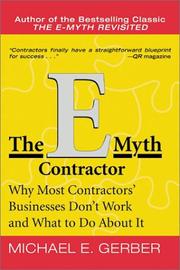
The definitive guide for tradespeople starting their own shop; reframes how to build a business that runs as a system rather than a job — essential reading before hanging your own shingle.
Discussion
Keep reading
Paths that share books, cover the same subject, or open a related topic.