Solar installer & clean-energy trades: the boom jobs
This curriculum takes a complete beginner from zero into job-ready competency in the solar and renewable energy trades. It starts by building electrical and energy literacy, moves through solar-specific theory and code, then prepares the learner for NABCEP certification and the broader climate economy — each stage unlocking the vocabulary and hands-on intuition needed for the next.
Foundations: Electricity & Energy Literacy
BeginnerUnderstand how electricity works — voltage, current, circuits, and basic wiring — so that solar and renewable energy concepts have a concrete, intuitive foundation.
▸ Study plan for this stage
Pace: 8–10 weeks total. Weeks 1–6: "Electricity Demystified" by Stan Gibilisco (~20–25 pages/day, 4–5 days/week). Weeks 7–10: "Wiring a House" by Rex Cauldwell (~15–20 pages/day, 4–5 days/week, slower pace due to technical diagrams and code references). Read with a notebook nearby — sketch every circuit d
- Voltage, current, and resistance — understanding Ohm's Law (V = IR) as the master equation governing all electrical behavior, drawn from Gibilisco's foundational chapters
- Power and energy calculations (P = IV, P = I²R) — how watts, kilowatts, and kilowatt-hours relate to real-world energy consumption, as covered in Gibilisco
- Direct current (DC) vs. alternating current (AC) — their differences, waveforms, and why solar panels produce DC while the grid runs on AC, per Gibilisco's dedicated chapters
- Series and parallel circuits — how components combine, how voltage divides vs. current divides, and why this matters for stringing solar panels together (Gibilisco)
- Basic electrical components — resistors, capacitors, inductors, diodes, and switches — their roles and symbols as introduced by Gibilisco
- Residential wiring fundamentals — service entrance, panels, breakers, grounding, and branch circuits as laid out by Cauldwell in 'Wiring a House'
- National Electrical Code (NEC) basics — understanding code-compliant wiring practices, wire gauges (AWG), ampacity, and safety rules as Cauldwell applies them throughout
- Grounding and bonding — why a proper ground is critical for safety and equipment protection, a theme Cauldwell returns to repeatedly in residential contexts
- Using Ohm's Law from Gibilisco, if a 12V solar panel feeds a load with 4 ohms of resistance, what current flows and how much power is consumed?
- Gibilisco distinguishes DC from AC in detail — explain in your own words why a solar inverter is necessary to connect a solar array to a home's AC panel.
- After reading Gibilisco's chapters on series and parallel circuits, how would wiring solar panels in series differ from wiring them in parallel in terms of voltage and current output?
- Cauldwell explains the role of the main service panel — describe the path electricity takes from the utility line to a household outlet, naming each component along the way.
- Cauldwell emphasizes wire gauge and ampacity throughout 'Wiring a House' — why does using an undersized wire for a given circuit create a fire hazard, and how does the NEC address this?
- Based on both books, explain why proper grounding is essential both for a standard residential circuit (Cauldwell) and for a DC solar system (Gibilisco's principles applied).
- **Ohm's Law drill (Gibilisco-based):** Create a table of 10 hypothetical circuits with two known values (V, I, or R) and calculate the third. Then add a power (P) column. Use real-world examples: a 120V, 10A hair dryer; a 12V, 5A car accessory; a 240V, 30A dryer circuit.
- **Circuit sketching (Gibilisco-based):** Draw a series circuit and a parallel circuit from scratch — label voltage sources, resistors, current paths, and calculate total resistance and current for each. Then sketch a hybrid series-parallel circuit as Gibilisco presents them.
- **AC vs. DC comparison chart:** After finishing Gibilisco's AC/DC chapters, build a two-column reference chart comparing frequency, waveform, typical voltages, generation sources, and conversion methods. Pin it up as a reference for the rest of the curriculum.
- **Panel diagram exercise (Cauldwell-based):** Using Cauldwell's panel diagrams as a model, draw a blank residential panel layout and label: main breaker, hot bus bars, neutral bus, ground bus, and at least six branch circuits with correct wire gauges and breaker sizes per NEC guidelines.
- **Home wiring audit (Cauldwell-based):** Walk through your own home (or a friend's) and identify at least five elements Cauldwell discusses — service entrance location, panel type, GFCI outlets, three-way switches, and grounding electrodes. Photograph and annotate each one.
- **Vocabulary flashcard deck:** As you read both books, build a running deck of at least 40 terms (e.g., ampacity, bonding, conductor, neutral, reactance, service drop). Quiz yourself weekly — these terms will recur constantly in later solar-specific reading.
Next up: Mastering how electrons move through circuits (Gibilisco) and how a compliant residential electrical system is physically built (Cauldwell) gives you the essential "language" of electricity, so that when the curriculum moves into solar-specific technology — PV panels, charge controllers, inverters, and grid-tie systems — you can immediately map those components onto the foundational circuit princi
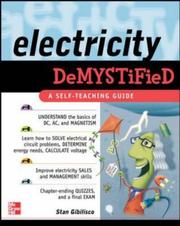
A plain-language, math-light introduction to electrical concepts (voltage, current, resistance, AC/DC) that gives trade beginners the vocabulary they need before touching any equipment or code.
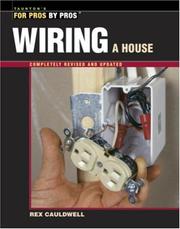
Bridges abstract electrical theory to real residential wiring practice — panels, circuits, grounding, and safety — which is the physical context in which solar systems are installed.
Solar Fundamentals: How PV Systems Work
BeginnerUnderstand photovoltaic principles, system components (panels, inverters, batteries, racking), and how a complete solar installation is designed and sized.
▸ Study plan for this stage
Pace: 8–10 weeks total. Weeks 1–5: "Solar Electricity Handbook" by Michael Boxwell (~20–25 pages/day, including online solar calculator practice). Weeks 6–10: "Power from the Sun" by Dan Chiras (~20–25 pages/day, pausing to sketch system diagrams after each major chapter).
- The photovoltaic effect: how silicon cells convert sunlight into DC electricity (Boxwell Ch. 1–2)
- Key electrical relationships — voltage, current, watts, and watt-hours — as applied to PV output (Boxwell)
- The roles and specs of every major system component: PV panels, charge controllers, inverters, batteries, and racking/mounting hardware (Boxwell + Chiras)
- Series vs. parallel wiring of panels and batteries, and how each configuration affects voltage and current (Boxwell)
- Solar resource assessment: reading sun-hours data, tilt angles, shading analysis, and orientation (Boxwell + Chiras)
- System sizing methodology: calculating load requirements, array size, battery bank capacity, and inverter rating (Boxwell's online calculator + Chiras)
- Grid-tied vs. off-grid vs. hybrid system architectures and when each is appropriate (Chiras)
- Safety fundamentals: DC arc hazards, NEC code basics, grounding, and proper labeling for PV installations (Chiras)
- Using Boxwell's method, how would you calculate the daily watt-hour load for a small home and then size the PV array and battery bank to meet it?
- What is the photovoltaic effect, and why does a standard silicon solar cell produce roughly 0.5–0.6 V regardless of its physical size?
- How does wiring panels in series differ from wiring them in parallel, and what are the practical implications for inverter and charge controller selection?
- What site factors — azimuth, tilt, shading, and local peak sun-hours — must be evaluated before finalizing a system design, and how does Chiras recommend gathering this data?
- Compare the three system architectures covered in 'Power from the Sun': what are the defining components, advantages, and ideal use cases of grid-tied, off-grid, and battery-backup (hybrid) systems?
- What are the primary electrical safety hazards unique to PV systems, and what installation practices does Chiras identify to mitigate them?
- Load calculation worksheet: List every electrical load in your home (or a sample home), record wattage and daily hours of use, and compute total daily watt-hours — then use Boxwell's free online solar calculator to size a matching PV array and battery bank.
- Component identification drill: Obtain spec sheets for one residential solar panel, one string inverter, one MPPT charge controller, and one deep-cycle battery; annotate each sheet with the terms defined in Boxwell (Voc, Vmp, Isc, Imp, DoD, round-trip efficiency).
- Sun-hours mapping exercise: Look up the peak sun-hours for your location (or a chosen city) using a resource like PVWatts, then recalculate the array size from Exercise 1 for two additional cities with very different solar resources — compare and explain the differences.
- Wiring diagram sketch: Draw a complete off-grid system schematic (panels → charge controller → battery bank → inverter → loads) labeling series/parallel strings, wire gauges, fuse/breaker locations, and grounding points, using Chiras's diagrams as a reference.
- Shading impact analysis: Using a compass and a sun-path diagram (or a free app like SunSurveyor), assess a real or hypothetical rooftop for shading obstructions at 9 a.m., noon, and 3 p.m. on the winter solstice; document how shading would affect annual output and propose a mitigation strategy.
- Comparative system design: Using the same load profile from Exercise 1, design both a grid-tied and an off-grid version of the system following Chiras's sizing guidance; present a side-by-side comparison of component lists, estimated costs, and trade-offs.
Next up: Mastering how PV systems are designed and sized in theory sets the essential foundation for the next stage, where that knowledge is applied hands-on through installation techniques, electrical codes (NEC Article 690), conduit work, and real-world commissioning procedures.
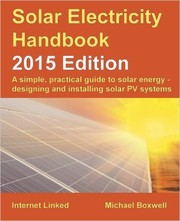
An annually updated, widely used beginner's guide to solar PV that walks through every component and system type with clear diagrams — the ideal first solar-specific read after electrical basics.

Covers both photovoltaic and solar thermal systems in depth, including off-grid and grid-tied design, giving learners a complete picture of real-world solar installations before moving to code and certification.
Code, Safety & Professional Practice
IntermediateRead and apply the National Electrical Code as it pertains to solar PV, understand inspection and permitting processes, and work safely at the professional trade level.
▸ Study plan for this stage
Pace: 8–10 weeks total. Weeks 1–5: National Electrical Code (NEC) — read ~20–25 pages/day, focusing on Articles 690 (Solar PV), 705 (Interconnected Power Sources), 230 (Services), 240 (Overcurrent Protection), and 310 (Conductors). Weeks 6–10: Solar PV Engineering and Installation by Sean White — read ~15
- NEC Article 690: Solar Photovoltaic Systems — scope, definitions, wiring methods, disconnecting means, grounding, and overcurrent protection specific to PV arrays
- NEC Article 705: Interconnected Electric Power Production Sources — rules for grid-tied systems, point of connection, and utility interaction requirements
- Conductor sizing and ampacity calculations for PV source circuits, PV output circuits, and inverter output circuits, including the 125% continuous-load multiplier
- Grounding and bonding requirements for PV systems: equipment grounding conductors (EGC), grounding electrode systems, and rapid shutdown requirements
- Overcurrent protection device (OCPD) selection and placement: fuses, circuit breakers, and combiner box requirements for series and parallel PV strings
- Permitting and inspection workflow: plan sets, single-line diagrams, site plans, AHJ (Authority Having Jurisdiction) submittal requirements, and common inspection checkpoints as detailed in Sean White's installation chapters
- Safe work practices at the trade level: arc flash, working on energized PV circuits (which cannot be de-energized by switching), fall protection on rooftops, and lockout/tagout procedures
- Professional practice standards: reading and producing compliant electrical drawings, labeling requirements mandated by the NEC, and coordinating with utilities for interconnection agreements
- Which NEC article governs solar PV systems, and what are its key sections covering disconnecting means, overcurrent protection, and rapid shutdown — and how does Sean White's installation guidance translate those code sections into field practice?
- How do you calculate the minimum conductor ampacity for a PV source circuit with a given short-circuit current (Isc), accounting for the NEC's 125% continuous-load adjustment and temperature/conduit-fill correction factors?
- What documents must typically be included in a permit submittal package for a residential grid-tied PV system, and what are the most common reasons an AHJ rejects a permit application?
- Why can PV source and output circuits be considered 'always energized,' and what specific safe work practices and PPE requirements does this create compared to conventional AC electrical work?
- What are the NEC labeling requirements for PV systems (disconnects, conduit, combiner boxes, service panels), and where must each label be physically located on the installation?
- How does NEC Article 705 define the maximum allowable backfed current at a residential load-center breaker, and what is the '120% rule' for determining whether a given panel is code-compliant for interconnection?
- NEC Code Hunt Drill: Select any residential PV system diagram from Sean White's book and locate every NEC article or section number referenced in that diagram within the NEC itself. Write a one-sentence plain-English summary of each cited code requirement.
- Conductor Sizing Worksheet: Using a sample PV array specification (e.g., 10 modules, Isc = 9.5 A per string, 2 strings in parallel), perform a full conductor sizing calculation from the array to the inverter — applying the 125% multiplier, a temperature correction factor for a rooftop conduit run, and a conduit-fill adjustment. Verify your wire gauge against NEC Table 310.
- Mock Permit Package: Draft a complete permit submittal for a hypothetical 6 kW residential rooftop system following the checklist in Sean White's permitting chapter. Include a single-line diagram, site plan, equipment spec sheets, and a completed permit application form from your local AHJ's website.
- Inspection Checklist Role-Play: Using Sean White's inspection walkthrough sections, create a 20-point field inspection checklist. Then 'inspect' a friend's or colleague's practice installation (or a photo set of an installation) and document any NEC violations found, citing the specific article and section.
- Labeling Exercise: Print or sketch the electrical layout of a grid-tied PV system (service panel, inverter, disconnect, combiner box, conduit runs). Using NEC Article 690 and Sean White's labeling guidance, mark every required label with its exact required wording and placement location.
- Rapid Shutdown & Safety Scenario: Write a one-page standard operating procedure (SOP) for safely working on an energized rooftop PV source circuit — covering PPE selection, hazard identification, lockout/tagout limitations unique to PV, and emergency response steps — grounded in the safety content from Sean White's professional practice chapters.
Next up: Mastering the NEC framework and professional inspection/safety standards here gives the reader the regulatory and procedural foundation needed to confidently move into advanced system design, energy storage integration, and commercial-scale installations, where code compliance and safety management become significantly more complex.
The legally adopted standard for all electrical and PV installations in the U.S. — Article 690 (Solar PV) is essential reading for any installer seeking permits, inspections, or NABCEP credentials.

Written by a leading NABCEP exam prep instructor, this book maps directly to the NABCEP PV Installation Professional exam domains, covering system design, safety, and code compliance in exam-ready depth.
NABCEP Certification & System Design Mastery
IntermediateBe fully prepared to sit the NABCEP PV Installation Professional exam and design code-compliant, correctly sized solar systems for residential and light commercial clients.
▸ Study plan for this stage
Pace: 12–14 weeks total. Weeks 1–9: "Photovoltaic Systems" by Dunlop (~30–35 pages/day, 5 days/week) — treat this as your primary NABCEP exam reference, reading each chapter alongside the NABCEP Job Task Analysis. Weeks 10–14: "Solar Energy" by Smets (~25–30 pages/day, 5 days/week) — use this to deepen ph
- PV system components and their roles: modules, inverters (string, micro, power optimizers), combiners, disconnects, overcurrent protection, and racking — as systematically catalogued in Dunlop
- NEC Article 690 code compliance: conductor sizing, voltage/current calculations (Isc × 1.25 × 1.25), conduit fill, grounding, and labeling requirements per Dunlop's code-focused chapters
- System sizing methodology: load analysis, array sizing, battery/storage sizing, tilt/azimuth optimization, and shading analysis (including use of the Solar Pathfinder concept) as laid out in Dunlop's design chapters
- Irradiance and solar resource fundamentals: DNI, DHI, GHI, peak sun hours, and the role of air mass — grounded in Smets's treatment of solar radiation physics
- PV cell and module physics: the p-n junction, I-V and P-V curves, fill factor, temperature coefficients, and the effect of irradiance variation — covered rigorously in Smets
- String design calculations: open-circuit voltage temperature correction (Voc × negative temp coefficient), maximum system voltage, minimum operating voltage, and inverter MPPT window matching — a core NABCEP exam domain from Dunlop
- Economic and performance analysis: capacity factor, specific yield (kWh/kWp), simple payback, LCOE, and incentive structures (ITC, SRECs) as discussed across both books
- Safety and commissioning: arc-fault and ground-fault protection, rapid shutdown (NEC 2017/2020 requirements), commissioning checklists, and OSHA fall-protection basics per Dunlop's installation and safety chapters
- Given a residential load profile and local peak sun hours, walk through the complete Dunlop sizing methodology to determine required array kWp, number of modules, and inverter capacity — what are the decision points at each step?
- A string of 10 modules has a Voc of 40.2 V at STC and a temperature coefficient of −0.29%/°C. What is the corrected maximum system voltage at a record low of −10°C, and does it comply with a 600 V system limit? (Apply the NEC 690 method from Dunlop.)
- Using Smets's explanation of the I-V curve, describe what happens to Isc, Voc, and the maximum power point when module temperature rises by 25°C and when irradiance drops by 50% — and why these matter for inverter MPPT design.
- What NEC Article 690 requirements govern conductor ampacity from the array to the inverter on a residential rooftop system? Identify at least four distinct code rules from Dunlop and explain the rationale behind each.
- How do the solar resource concepts in Smets (air mass, diffuse vs. direct radiation, seasonal declination) translate into practical decisions about array tilt angle and orientation when using Dunlop's design worksheets?
- Compare the performance and code-compliance implications of a string inverter system versus a module-level power electronics (MLPE) system for a partially shaded light-commercial roof — drawing on both Dunlop's component chapters and Smets's shading loss analysis.
- Complete every end-of-chapter calculation problem in Dunlop in writing, showing all unit conversions and NEC multipliers; flag any answer that requires you to look up a code table and add that table to a personal quick-reference sheet.
- Design a full residential PV system from scratch: choose a real address, pull TMY irradiance data from NREL's PVWatts, perform the Dunlop load-analysis and string-sizing worksheets by hand, then cross-check your result in PVWatts — reconcile any discrepancy greater than 5%.
- Build a one-page 'I-V curve cheat sheet' using Smets's equations: plot by hand (or in a spreadsheet) the I-V and P-V curves for a sample module at three temperatures (−10°C, 25°C, 50°C) and two irradiance levels (1000 W/m² and 500 W/m²), labeling Isc, Voc, and Pmax on each curve.
- Draft a code-compliance checklist for NEC Article 690 covering at minimum: maximum system voltage, conductor ampacity, OCPD sizing, rapid shutdown zones, grounding/bonding, and required labels — then audit a sample one-line diagram (find one in Dunlop's appendices or a permit set online) against your checklist.
- Simulate a NABCEP exam session: download a free NABCEP practice question set, set a 2-hour timer, and attempt 60 questions under exam conditions; score yourself, map every missed question back to a specific chapter in Dunlop or Smets, and re-read those sections within 48 hours.
- Visit or virtually tour a residential or light-commercial PV installation (contractor job site, a local solar co-op, or a detailed YouTube commissioning walkthrough); document every component you observe, match each to its Dunlop chapter, and note one code or design decision visible in the installation.
Next up: Mastering NABCEP-level system design and NEC compliance here builds the technical credibility and code fluency needed to advance into commercial-scale system design, energy storage integration, and grid interconnection — the domains that define the next stage of the curriculum.

The official textbook of the North American Board of Certified Energy Practitioners (NABCEP) training programs — comprehensive, rigorous, and the single most authoritative study resource for the certification exam.

Adds the engineering depth — irradiance, cell physics, system losses, and performance modeling — that separates a certified installer from a true solar professional capable of advanced design work.
The Climate Economy: Careers, Context & the Future Grid
ExpertUnderstand the macro forces driving the renewable energy boom, position yourself strategically in the climate-economy job market, and see how solar trades connect to storage, wind, and grid modernization.
▸ Study plan for this stage
Pace: 3–4 weeks, ~25–35 pages/day — Electrify is dense with data and policy argument, so budget extra time to annotate charts, re-read key chapters on grid architecture, and complete the exercises below before moving on.
- The 'electrify everything' thesis: why replacing fossil-fuel end uses (heating, transport, industry) with electricity is the central lever of decarbonization, per Griffith's analysis
- War-mobilization framing: Griffith's argument that the scale and speed of the energy transition requires a WWII-style industrial and policy mobilization, not incremental market nudges
- The 'Rewiring America' household math: how Griffith breaks down the average American home's energy flows and calculates the specific electric appliances and solar capacity needed to reach net-zero at the household level
- Grid modernization and the role of distributed energy resources (DERs): how rooftop solar, home batteries, EVs, and smart inverters function as grid assets, not just consumer products
- The jobs and trades multiplier: Griffith's quantification of the installer, electrician, HVAC, and grid-worker jobs created by mass electrification, and how solar trades sit at the center of that workforce surge
- Fossil-fuel incumbency and policy barriers: subsidies, utility rate structures, permitting friction, and financing gaps that slow deployment — and the policy levers Griffith proposes to remove them
- Sector coupling — how solar generation connects to storage (batteries), electric vehicles (V2G), heat pumps, and wind to form an integrated clean-energy system rather than isolated technologies
- Personal and community agency: Griffith's 'what can I actually do?' framework, translating macro policy into household and trade-professional action plans
- According to Griffith, why is electrification — rather than efficiency alone or carbon offsets — the necessary foundation of a net-zero economy, and what data does he use to support that claim?
- How does Griffith's 'war mobilization' analogy reframe the timeline and scale of solar and renewable deployment, and what does that imply for workforce demand in the trades?
- Walk through the 'Rewiring America' household energy audit: what are the five to seven key electric upgrades Griffith identifies, and roughly how much rooftop solar capacity does the average home need to support them?
- How do distributed solar assets (rooftop PV, home batteries, EV chargers) interact with the broader grid in Griffith's model — what grid services can they provide, and why does this matter for an installer's or electrician's career scope?
- What are the main policy and market barriers Griffith identifies that currently slow electrification, and which ones most directly affect solar trade workers on the ground (permitting, net metering, financing, etc.)?
- How does Griffith connect solar to the broader climate economy — storage, wind, EVs, heat pumps — and what career pathways does that interconnection open for someone already working in solar trades?
- Household energy audit (Griffith method): Using your own home or a sample household, list every fossil-fuel end use (gas furnace, gas water heater, gasoline car, etc.), estimate its annual energy consumption, and calculate the solar PV capacity needed to electrify each one — mirror the math Griffith walks through in the book.
- Policy barrier map: Create a one-page diagram or table identifying the top five policy/market barriers Griffith names, then research the current status of each barrier in your own state (net metering rules, permitting timelines, IRA incentives, utility interconnection queues) — note where your state leads or lags.
- Jobs multiplier research brief: Using Griffith's workforce projections as a baseline, find two or three current labor-market data sources (NREL, BLS, Rewiring America's job tracker) and write a one-page brief comparing his estimates to real current job-posting trends in solar, storage, and EV charging installation.
- Sector-coupling diagram: Draw a system diagram showing how a single rooftop solar installation connects outward to a home battery, an EV charger, a heat pump, and the utility grid — label the energy flows, relevant trade licenses or certifications needed at each node, and the grid services each component can provide.
- Career positioning worksheet: Based on Griffith's macro forecast, write a personal 'climate-economy career map' — identify which trade skills you currently have, which adjacent skills (battery storage, EV charging, heat-pump integration) would most expand your market value, and set a 12-month learning goal for each gap.
- Debate the thesis: Write a one-page steelman of the strongest counterargument to Griffith's electrify-everything approach (e.g., green hydrogen, efficiency-first, nuclear-centric paths), then write a one-page rebuttal using evidence from the book — this sharpens critical reading and prepares you for real client and policy conversations.
Next up: Electrify establishes the macro 'why' and 'how big' of the energy transition; the next stage can now build on that foundation by diving into the technical and business specifics — advanced system design, storage integration, grid interconnection, or entrepreneurship — with the confidence that those skills plug into a clearly understood, large-scale economic transformation.

A practical, data-driven roadmap for electrifying homes, vehicles, and industry — written by an engineer — that shows exactly where the hands-on, AI-proof trade jobs are and why they will grow for decades.
Discussion
Keep reading
Paths that share books, cover the same subject, or open a related topic.