Emergency management is the discipline of preparing for, responding to, and recovering from disasters — and the field's central insight is that catastrophes are shaped as much by human systems and decisions as by the hazards themselves. That's why a reading order that starts with how people and institutions behave under crisis, before the formal frameworks, makes the frameworks stick.
This path opens with vivid accounts of survival and failure, moves into the core textbooks and the homeland-security structure, and ends with the systems thinking and resilience concepts that define the modern field. It suits students and practitioners alike. These books complement professional training and exercises rather than replacing them.
Start with the human factor
Begin with The Unthinkable by Amanda Ripley, a gripping investigation of how people actually behave in disasters — and how that knowledge saves lives. Then Disaster by Choice by Ilan Kelman makes the field's core argument: that disasters aren't natural but the product of choices and vulnerabilities. And Five days at Memorial by Sheri Fink is the unforgettable account of a hospital during Hurricane Katrina, a case study in how systems fail under extreme stress.
Learn the frameworks
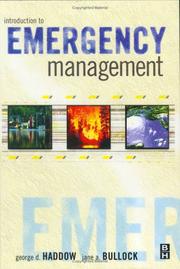
With your intuition primed, turn to the textbooks. Introduction to emergency management by George Haddow is the standard survey of the whole discipline — mitigation, preparedness, response, recovery. Emergency management by William Waugh adds the governance and policy dimension, showing how the pieces fit into public administration.
Understand the security dimension
Modern emergency management is entwined with homeland security. The Department of Homeland Security by James Carafano explains the institution that now shapes much of U.S. disaster policy. Disaster by Christopher Cooper dissects the failures of the Katrina response, and Terrorism and Homeland Security by Jonathan White covers the threat side of the mission.
Think in systems, build resilience
Close with the conceptual core. Normal Accidents by Charles Perrow is the landmark argument that complex, tightly coupled systems make certain failures inevitable — essential for understanding why disasters keep happening. The resilience dividend by Judith Rodin reframes the goal as building systems that bounce forward, not just back. And Principles of Emergency Management and Emergency Operations Centers grounds it all in operational practice.
Read in order, you gain the human, institutional, and systemic views that make a capable emergency manager. Follow the full path to keep it in sequence.
Follow the full reading path →
Ready to learn something deeply?
Build a reading path — free