Haruki Murakami Reading Order: Where to Start
This curriculum guides you from Murakami's most accessible novel through his major literary works, his short fiction, and finally his nonfiction — building your feel for his dreamlike style, recurring themes, and unique voice at each stage before deepening the challenge. Each stage assumes you've absorbed the emotional and stylistic vocabulary of the one before it, so reading in order will make even his most surreal or structurally complex works feel earned and intuitive.
The Perfect Entry Point
BeginnerGet hooked on Murakami's voice — his blend of loneliness, pop culture, jazz, and quiet magic — through his most beloved and readable novel.
▸ Study plan for this stage
Pace: 2–3 weeks, ~20–25 pages per day — a gentle, immersive pace that lets Murakami's melancholic atmosphere sink in; aim to read in quiet, uninterrupted sessions to mirror the novel's contemplative mood
- Murakami's first-person confessional voice: how Toru Watanabe narrates from a distance of 18 years, blending memory, regret, and emotional detachment
- The aesthetics of loneliness and isolation: how Norwegian Wood portrays solitude not as a problem to be solved but as a fundamental condition of young adulthood
- Pop culture as emotional shorthand: the deliberate use of Western music (The Beatles, jazz), literature, and film to evoke mood, character identity, and generational feeling
- Loss, grief, and the inability to move on: the novel's central tension between the pull of the past (Naoko) and the possibility of the present (Midori)
- The 1960s Japanese student movement as backdrop: how political upheaval is conspicuously absent from characters' inner lives, making their private grief feel even more isolated
- Murakami's 'quiet magic' — realism with an undercurrent of the uncanny: Ami Hostel, the meadow, the well — symbols that feel mythic without breaking realism
- Female characters as emotional anchors: contrasting Naoko's fragility and inward collapse with Midori's fierce, life-affirming directness
- The coming-of-age arc: how Toru's journey is less about adventure and more about learning to carry the weight of other people's pain
- How does the framing device — an older Toru hearing 'Norwegian Wood' on an airplane — shape the way you read the entire novel? What does it tell you about memory and storytelling in Murakami's world?
- What does the recurring image of 'the meadow with the well' represent, and how does it function differently for Naoko than it does for Toru?
- How does Murakami use Western music and literature (e.g., the Beatles song, the books characters read) to define who his characters are — and what they are running from?
- In what ways are Naoko and Midori opposites, and what does Toru's attraction to both of them reveal about the novel's central conflict between grief and life?
- Norwegian Wood is set during a period of massive student protest in Japan, yet the characters barely engage with it. Why do you think Murakami made this choice, and what effect does it create?
- By the final page, do you believe Toru has healed — or is he still standing in that meadow? Use specific moments from the text to support your answer.
- **The Soundtrack Journal:** As you read, keep a running list of every song, album, or musician mentioned. After finishing, pick one track (start with 'Norwegian Wood' by The Beatles) and listen to it while re-reading the chapter where it appears. Write a paragraph on how the music changes or deepens your reading.
- **Character Voice Contrast:** Choose one passage spoken or thought by Naoko and one by Midori of roughly equal length. Rewrite each in the other character's voice. Reflect in 200 words on what this exercise reveals about how Murakami differentiates his characters through language and rhythm.
- **The Memory Frame Close-Read:** Re-read only the opening three pages (the airplane scene) after you have finished the whole novel. Annotate every detail that takes on new meaning now that you know the full story. Note how Murakami plants emotional weight before the plot even begins.
- **Loneliness Mapping:** Draw a simple diagram with each major character (Toru, Naoko, Midori, Nagasawa, Reiko) as a node. Draw lines between characters and label each connection with the specific *type* of loneliness or disconnection it represents. Write a one-sentence thesis about what the diagram as a whole argues.
- **Imitation Write:** Write a 300–400 word scene in Murakami's style — first person, past tense, a young narrator doing something mundane (cooking, commuting, cleaning) while a memory of someone lost intrudes. Focus on his hallmarks: understatement, sensory detail, a pop culture reference, and emotional restraint.
- **Reflection Letter:** Write a one-page letter from the 37-year-old Toru (sitting on the plane) to the 20-year-old Toru (in the middle of the novel's events). What would he want his younger self to know? This exercise forces you to synthesize the novel's emotional arc in your own words.
Next up: Norwegian Wood establishes Murakami's emotional core — loneliness, memory, and restrained longing — in a grounded, realistic setting, making it the perfect foundation before the next stage introduces his signature surrealism, where those same feelings begin to crack open the fabric of everyday reality.
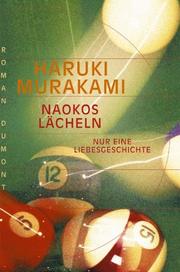
This is Murakami's most straightforwardly realistic and emotionally direct novel — no talking cats or parallel worlds, just grief, love, and memory. It's the ideal first book because it establishes his melancholic tone and introspective narrator without the surrealism that can disorient new readers.
The Major Novels — Core Murakami
BeginnerExperience the full range of Murakami's signature style: surrealism, mystery, jazz, loneliness, and the thin membrane between the ordinary and the otherworldly.
▸ Study plan for this stage
Pace: 8–10 weeks total. Week 1: Read Strecher's "Haruki Murakami's The Wind-up Bird Chronicle" in full (~3–4 chapters/day, ~20–25 pages/day) as a critical lens before tackling the novel itself. Weeks 2–4: Read 1Q84 Book 1 (~30 pages/day). Weeks 5–7: Read 1Q84 Book 2 (~30 pages/day). Weeks 8–10: Read 1Q84
- The 'Murakami World' — the thin, permeable membrane between mundane everyday reality and a surreal, parallel otherworld (most vividly illustrated in 1Q84's dual-moon Tokyo)
- Dual or split narrative structure: Strecher's critical guide introduces the technique of alternating protagonists (Tengo and Aomame in 1Q84) as a formal mirror of Murakami's thematic duality — surface vs. depth, male vs. female, action vs. passivity
- The Well and the Underground: descending into darkness as a psychological and metaphysical motif — Strecher traces this from The Wind-up Bird Chronicle into 1Q84's hidden staircase and the 'Town of Cats' story-within-a-story
- Loneliness and disconnection as existential condition: Murakami's protagonists (Tengo, Aomame) are fundamentally solitary figures whose isolation is both wound and superpower
- Music as emotional architecture: jazz, classical, and Janáček's Sinfonietta in 1Q84 function not as decoration but as structural and emotional signposts — Strecher's analysis of music in the Murakami canon provides the critical vocabulary
- The Little People and systems of control: 1Q84 introduces an ambiguous supernatural force that Strecher's framework helps decode as a metaphor for ideology, cult power, and the unconscious
- Female agency and the 'active heroine': Aomame subverts the passive female archetype common in earlier Murakami — understanding this shift is central to reading 1Q84 maturely
- Intertextuality and literary allusion: 1Q84 in dialogue with Orwell's 1984, Chekhov's gun, and fairy-tale archetypes — Strecher's critical approach models how to spot and interpret these layers
- According to Strecher's critical framework, what is the function of the 'otherworld' in Murakami's fiction, and how does 1Q84's two-moon Tokyo embody that function specifically?
- How does the alternating Tengo/Aomame chapter structure in 1Q84 reinforce the novel's central themes of duality and the search for connection — and what would be lost if the story were told from a single point of view?
- Strecher argues that descending into underground or enclosed spaces is a recurring psychological motif in Murakami. Identify at least two specific scenes in 1Q84 where this motif appears and explain what each descent represents for the character involved.
- What role does Janáček's Sinfonietta play in 1Q84 — both as a plot mechanism and as an emotional/thematic symbol — and how does Strecher's discussion of music in the Murakami canon help you interpret it?
- How does Murakami use the Little People to explore themes of ideology and invisible systems of power? Does 1Q84 ultimately present them as evil, neutral, or something more ambiguous?
- In what ways does Aomame represent a departure from or evolution of Murakami's typical protagonist, and what does her arc suggest about the author's developing view of female agency and self-determination?
- 'Two-Moon Journal': Keep a reading journal divided into two columns — 'Ordinary World' and 'Otherworld' — and log every moment in 1Q84 where reality shifts or the two realms bleed into each other. After finishing, write a one-page reflection on the pattern you notice.
- Strecher Annotation Exercise: Read one chapter of Strecher's guide, then immediately re-read the corresponding passage or scene in 1Q84 with Strecher's argument in mind. Annotate the novel pages with direct references to Strecher's claims — agree, disagree, or extend them in the margins.
- Music Listening + Close Reading: Find a recording of Janáček's Sinfonietta (freely available on YouTube/Spotify). Listen to it once before reading the scene where Aomame first hears it on the taxi radio. Write a paragraph connecting what you heard emotionally to what Murakami describes on the page.
- Character Duality Map: Draw a visual diagram mapping Tengo and Aomame's parallel lives — shared themes, mirrored events, emotional states, and the moments their storylines nearly or actually intersect. Use this map to write a short essay (300–500 words) arguing what Murakami is saying about fate and connection.
- The 'Little People' Essay: Using Strecher's critical vocabulary as a scaffold, write a 400–600 word interpretive essay answering: 'What do the Little People represent?' Draw only on evidence from 1Q84 and Strecher's analytical framework.
- Rewrite a Scene: Choose one scene from 1Q84 told from Tengo's perspective and rewrite it from Aomame's hypothetical point of view (or vice versa). Reflect briefly on what this exercise reveals about Murakami's deliberate use of limited perspective and narrative withholding.
Next up: Mastering the surrealist architecture, dual-narrative technique, and thematic vocabulary of 1Q84 — reinforced by Strecher's critical lens — equips the reader with the analytical tools needed to tackle Murakami's shorter, more experimental, and earlier works, where these same ideas appear in rawer, less fully-developed forms.
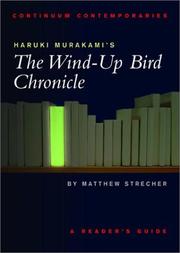
Widely considered his masterpiece, this novel rewards the pattern recognition you've built in the first two books. Its sprawling, labyrinthine structure and dark historical undercurrents represent Murakami at his most ambitious.

His longest and most structurally complex novel, best tackled after you're fluent in his world-building logic. Two moons, parallel realities, and a slow-burn romance — this is the summit of his large-scale fiction.
The Short Stories — Murakami in Miniature
IntermediateUnderstand how Murakami distills his themes into compressed, often stranger and more experimental forms — and see where many of his novel ideas were first born.
▸ Study plan for this stage
Pace: 6–8 weeks total: Weeks 1–3 for The Elephant Vanishes (~4–5 stories per sitting, 3 sittings/week, pausing to journal after each session); Weeks 4–7 for Blind Willow, Sleeping Woman (~3–4 stories per sitting, 3 sittings/week, with one weekly "reflection day"); Week 8 reserved for comparative re-readin
- Compression and distillation: how short fiction forces Murakami to strip themes to their barest, most potent essence — loneliness, disconnection, and the uncanny must land in pages rather than hundreds of them
- The story-as-seed: recognizing motifs, images, and character types in these collections (e.g., mysterious women, jazz, disappearance, memory) that later bloom into full novels
- The mundane uncanny: Murakami's signature technique of grounding surreal or impossible events — a vanishing elephant, a fish raining from the sky — in hyper-ordinary domestic or urban settings without explanation or resolution
- Narrative voice and detachment: the cool, first-person male narrator who observes strangeness with bemused acceptance rather than panic, and what that tonal flatness communicates emotionally
- Incompleteness as form: how both collections deliberately resist closure, using open endings and unresolved mysteries as a structural and thematic choice rather than a flaw
- Intertextuality and cultural collision: the layering of Western pop culture (music, literature, film) onto Japanese everyday life as a marker of alienation and identity
- The female figure as catalyst and enigma: how women in these stories function less as fully realized characters and more as agents of transformation or disruption for the male narrator — and the critical questions this raises
- Experimental form in miniature: stories in Blind Willow, Sleeping Woman in particular that push toward fable, parable, or anti-story, showing Murakami testing the outer limits of narrative
- In The Elephant Vanishes, the title story ends with the narrator unable to explain the elephant's disappearance to others — what does this failure of communication reveal about Murakami's view of shared reality and human connection?
- Both collections feature protagonists who witness or experience something inexplicable and then simply continue their lives. What is the cumulative emotional effect of this repeated pattern, and what does it suggest about modern alienation?
- Choose one story from each collection that you believe contains the 'seed' of a larger Murakami novel or novella. What specific images, character dynamics, or thematic questions feel unfinished at short-story scale?
- How does Murakami use the specific details of consumer culture — brand names, Western music, fast food, apartment layouts — to build atmosphere in these stories, and what would be lost without them?
- Blind Willow, Sleeping Woman was published much later than The Elephant Vanishes and includes stories written across decades. Can you detect an evolution in Murakami's short fiction style between the two books? Where does his voice feel more experimental or more resigned?
- Several stories in both collections feature a moment where the narrator chooses passivity over action at a critical juncture. Is this passivity presented as a flaw, a coping mechanism, or something else entirely?
- The Inventory Exercise: After finishing each collection, make a master list of recurring motifs (wells, ears, music, disappearance, unnamed women, cooking, etc.). Then map which motifs appear in both books — this visual inventory will sharpen your eye for Murakami's obsessions.
- The Seed Hunt: Pick three stories — at least one from each collection — and write a one-paragraph 'novel pitch' for each, imagining how that story's unresolved core could be expanded into a full-length Murakami novel. Compare your pitches to novels you may have already read.
- Tone Transplant: Choose a surreal event from any story (the elephant vanishing, the fish falling, the coma woman) and rewrite the paragraph in which it is first revealed — but this time, give the narrator a panicked or emotionally heightened reaction. Reflect in writing on how the tonal shift changes the story's meaning.
- The Closure Experiment: Select one open-ended story from Blind Willow, Sleeping Woman and write a one-page 'resolved' ending for it. Then write a reflection on why Murakami's original non-ending is more or less effective than yours.
- Cultural Annotation: Read one story from The Elephant Vanishes and annotate every Western cultural reference (musicians, authors, films, brands). Research any you don't recognize. Then write a short paragraph on what this specific constellation of references tells you about that story's narrator and their relationship to Japanese identity.
- Comparative Close Reading: Place the opening paragraph of the first story in The Elephant Vanishes side by side with the opening paragraph of the first story in Blind Willow, Sleeping Woman. Conduct a close reading of both — sentence rhythm, imagery, what is withheld — and write 300 words on what each opening promises the reader and how those promises differ.
Next up: By mastering how Murakami compresses his themes and tests his ideas in short form, the reader is now primed to trace those same seeds — the labyrinthine searches, the dual worlds, the emotionally detached heroes — as they fully unfold in his longer, more architecturally ambitious novels.
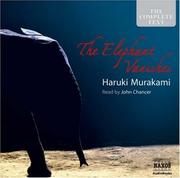
His finest early story collection, showcasing the full spectrum of his short fiction — absurdist, tender, eerie, and funny. Reading it here lets you see the DNA of his novels in concentrated form.

A later, more polished collection that spans his career; several stories feel like deleted scenes from his major novels, making it deeply rewarding at this stage when you know his world well.
The Nonfiction — The Man Behind the Myth
IntermediateUnderstand Murakami as a real person — his creative process, his obsessions, his discipline — and see how his life directly feeds his fiction.
▸ Study plan for this stage
Pace: 4–5 weeks total. Week 1–2: "What I Talk About When I Talk About Running" (~180 pages) at a leisurely 15–20 pages/day — read slowly and annotate. Week 3–5: "Absolutely on Music" (~260 pages) at 15–18 pages/day, pausing after each of the six conversations to reflect before continuing.
- Discipline as creative infrastructure: In 'What I Talk About When I Talk About Running,' Murakami frames his daily running practice not as separate from writing but as structurally identical to it — both require solitude, endurance, and the suppression of ego over long stretches of time.
- The long-distance metaphor: Murakami explicitly compares the novelist's life to that of a marathon runner and ultramarathoner, arguing that talent is less decisive than focus and endurance — a philosophy that explains the sustained, immersive quality of his fiction.
- Obsession as creative fuel: Both books reveal that Murakami's deepest obsessions (running, jazz, classical music) are not hobbies but lenses through which he processes the world — the same obsessive attention he gives to a Coltrane solo or a Seiji Ozawa recording surfaces in the hypnotic repetition
- The writer's body: 'What I Talk About When I Talk About Running' insists on the physical dimension of writing — that maintaining the body is maintaining the instrument. This reframes how readers understand the stamina embedded in his long novels.
- Music as structural model: 'Absolutely on Music,' through six in-depth conversations with conductor Seiji Ozawa, shows Murakami treating music not as background inspiration but as a compositional blueprint — he studies how themes develop, repeat, and resolve in ways that mirror his own narrative arc
- Collaboration and listening: The dialogue format of 'Absolutely on Music' itself enacts a Murakami value — deep, patient listening. His questions to Ozawa model the same quality of attention he brings to his fictional characters.
- Autobiography filtered through indirection: Neither book is a conventional memoir. Murakami reveals himself obliquely — through what he notices about Ozawa's conducting choices or what he feels at mile 20 of a race — teaching readers to read his self-disclosure between the lines.
- The private self vs. the public myth: Together, the two books dismantle the romantic myth of Murakami as a solitary, mysterious genius, replacing it with a portrait of a craftsman defined by routine, humility, and insatiable curiosity.
- In 'What I Talk About When I Talk About Running,' what specific parallels does Murakami draw between the physical demands of long-distance running and the psychological demands of writing a novel — and do you find his argument convincing?
- Murakami describes his three requirements for a writer as talent, focus, and endurance. Based on both books, how does he demonstrate each of these qualities in his own life, and which does he seem to value most?
- In 'Absolutely on Music,' what does Murakami's choice of questions and topics reveal about what he values most in music — and how do those values map onto his fiction?
- How does the conversational structure of 'Absolutely on Music' function as a kind of self-portrait? What does Murakami expose about himself through the act of listening to and questioning Ozawa?
- Both books treat obsession — with running, with music — as something close to a moral commitment rather than mere preference. What does this suggest about the ethical dimension of Murakami's creative philosophy?
- After reading both books, how has your understanding of a specific element of Murakami's fiction (his prose rhythm, his use of repetition, his solitary protagonists) changed or deepened?
- Runner's log parallel: While reading 'What I Talk About When I Talk About Running,' keep a daily log of your own most disciplined habit (exercise, study, cooking — anything). At the end of each entry, write one sentence connecting what you noticed about your own endurance to something Murakami said that day. Review the log when you finish the book.
- Annotate for autobiography: As you read both books, highlight every moment where Murakami reveals something about his inner life indirectly — through an aside about a race, a comment on Ozawa's phrasing, a digression about a record he loves. At the end, compile these into a single 'hidden portrait' document and write a one-paragraph character sketch of Murakami based only on these oblique moments.
- Music listening exercise: Choose one piece of music discussed in 'Absolutely on Music' (e.g., Brahms' Piano Concerto No. 1, Beethoven's 'Emperor' Concerto, or a Mahler symphony referenced in the conversations). Listen to it once before reading the relevant conversation, then again after. Write 200 words on how Murakami and Ozawa's discussion changed what you heard.
- Discipline audit: After finishing 'What I Talk About When I Talk About Running,' write a one-page personal essay in Murakami's reflective, understated style about your own relationship to a long-term discipline. Deliberately imitate his technique of using physical sensation to arrive at psychological insight.
- Structural mapping: Pick one Murakami novel you have already read (from an earlier stage of this curriculum). After finishing 'Absolutely on Music,' re-read its opening chapter and identify at least three moments where musical logic — theme, variation, repetition, resolution — seems to be operating in the prose. Write up your findings in a short analytical note.
- Conversation as self-portrait: Re-read the opening pages of any one of the six conversations in 'Absolutely on Music' and rewrite Murakami's questions as if he were interviewing a fictional character instead of Ozawa. What does the exercise reveal about how Murakami constructs interiority in his fiction?
Next up: Having grounded themselves in Murakami's creative philosophy, daily discipline, and aesthetic obsessions through his own nonfiction voice, readers are now equipped to return to his fiction with a far more informed eye — ready to trace exactly how running's solitude, music's structure, and the craftsman's endurance are encoded in the novels and stories themselves.

His memoir on marathon running doubles as his most candid statement on writing, discipline, and solitude. It's essential nonfiction that recontextualizes everything you've read — you'll recognize the runner's mindset in every one of his protagonists.

A book-length conversation with conductor Seiji Ozawa about classical music, this reveals how deeply music — structure, improvisation, feeling — shapes Murakami's prose. A must for anyone who wants to truly understand his aesthetic.
Going Deeper — The Outliers Worth Reading
ExpertRound out your Murakami education with his most unconventional novel and his most personal short story collection, cementing a complete picture of his range.
▸ Study plan for this stage
Pace: 6–8 weeks total: Weeks 1–4 for "Hard-Boiled Wonderland and the End of the World" (~20–25 pages/day, alternating chapters between the two narrative strands before re-reading key pivot chapters); Weeks 5–8 for "Men Without Women" (~1–2 stories per sitting, 3–4 sittings per week, with journaling time b
- Dual-narrative architecture: how the Hard-Boiled Wonderland (first-person, cyberpunk) and End of the World (third-person, mythic) chapters mirror, echo, and ultimately collapse into each other
- The constructed self vs. the unconscious self: the Calcutec's data-encrypted mind as a metaphor for the divided psyche and the question of whether identity can survive without memory or shadow
- The Wall and the Town as symbolic totality: enclosure, utopia, and the price of a painless existence — what Murakami suggests we sacrifice when we flee suffering
- Unicorns and skulls as recurring objects: how Murakami uses charged, surreal objects to carry emotional and philosophical weight across an entire novel
- The 'Men Without Women' condition: voluntary and involuntary solitude, emotional amputation, and the specific grief of men who have lost women central to their selfhood
- Minimalist interiority in the short story form: how Murakami strips his prose to essentials in 'Men Without Women', letting silence and omission do the heaviest narrative work
- Intertextuality and homage: the Hemingway echo in the collection's title and framing, and how Murakami both honors and subverts that literary inheritance
- The late-career Murakami voice: comparing the maximalist structural ambition of 'Hard-Boiled Wonderland' (an early masterwork) with the restrained, confessional tone of 'Men Without Women' (a late collection) to map his full artistic arc
- How does the alternating chapter structure of 'Hard-Boiled Wonderland and the End of the World' function as a formal argument — what does the structure itself say about the relationship between consciousness and the unconscious?
- The Scientist offers the Calcutec a choice at the novel's climax, yet the Calcutec declines escape. What does this refusal reveal about Murakami's philosophy of selfhood, acceptance, and the seduction of inner worlds?
- Across the stories in 'Men Without Women', what distinguishes the men who achieve a degree of peace or understanding from those who remain utterly lost? Is Murakami optimistic or pessimistic about male emotional capacity?
- The title story 'Men Without Women' closes the collection with a direct, almost essay-like address to the reader. How does this formal choice reframe the stories that came before it, and what does it suggest about Murakami's relationship to his own recurring themes?
- Both books deal with forms of disappearance — of memory, of women, of the self. How does Murakami's treatment of disappearance differ between the novel's grand metaphysical scale and the collection's intimate, domestic scale?
- By the end of this stage, how would you characterize Murakami's complete range as a writer, using 'Hard-Boiled Wonderland' and 'Men Without Women' as the outer poles of that range?
- Strand mapping: Create a two-column reading log — one column for each narrative strand of 'Hard-Boiled Wonderland'. After finishing the novel, draw lines connecting chapters that rhyme thematically or imagistically, and write a one-paragraph thesis about what the map reveals.
- Shadow-self essay: The End of the World chapters hinge on the concept of losing one's shadow (and thus one's pain). Write a 500-word personal essay responding to the question: 'What would you lose if you lost your shadow?' Use the novel's logic as your framework.
- Story-by-story character sketch: For each story in 'Men Without Women', write a single sentence that names the specific variety of aloneness the male protagonist embodies (e.g., 'Kino: the man who mistakes stillness for healing'). At the end, compare the sentences — what pattern emerges?
- Hemingway comparison exercise: Read Hemingway's original 'Men Without Women' table of contents and story summaries (no full re-read required). Write a one-page comparison: where does Murakami's collection converge with Hemingway's vision of masculinity, and where does it decisively break from it?
- Structural imitation: Write a 600–800 word short story in the style of 'Men Without Women' — a man alone, a woman who is absent, told in close third-person with at least one significant detail left deliberately unexplained.
- Synthesis presentation: Prepare a 10-minute spoken or written 'lecture' titled 'The Full Range of Murakami' that uses only 'Hard-Boiled Wonderland and the End of the World' and 'Men Without Women' as evidence. Argue for what these two books, taken together, reveal that no single Murakami book could reveal alone.
Next up: Mastering Murakami's structural extremes — the labyrinthine dual-novel and the spare confessional story cycle — equips the reader with the full critical vocabulary needed to engage with scholarly, comparative, or thematic study of his work as a unified body of literature.

An earlier, structurally daring novel with two completely different narratives alternating chapter by chapter — one cyberpunk, one dreamlike fable. Best saved for last among the novels, as it rewards a reader already fluent in his obsessions.

His most thematically unified story collection, circling obsessively around loss, absence, and masculinity. It reads almost like a novel in stories and is a quietly devastating capstone to the whole curriculum.
Discussion
Keep reading
Paths that share books, cover the same subject, or open a related topic.