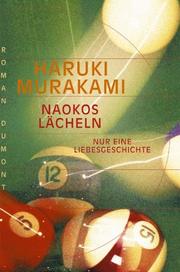
Start with Norwegian Wood. It is the outlier — a straight realist novel with no talking cats, no parallel worlds and no wells — and that is exactly why it works as a first book. If the melancholy, the music, the precise attention to food and weather and unspoken feeling hold you, then the surreal novels will hold you too. If they do not, you have found out in three hundred readable pages instead of a thousand.
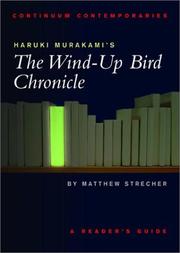
The alternative entry is The Elephant Vanishes, a story collection that gives you the strangeness in small doses. Many readers are pointed instead at The Wind-Up Bird Chronicle, which is arguably his best novel but is also six hundred pages containing a well, a Manchurian war atrocity and a missing cat, all at once. That is a lot to hand someone on day one; this path includes Matthew Strecher's study Haruki Murakami's The Wind-up Bird Chronicle rather than the novel itself, which is worth knowing before you go looking.
The short route in
Norwegian Wood, then The Elephant Vanishes, then End of the World and Hard-Boiled Wonderland.
That third book is the best structural introduction to what Murakami actually does: two narratives in alternating chapters, one a hard-boiled cyberpunk pastiche and one a dreamlike walled town, converging in a way that is genuinely earned. It is the most tightly built of the surreal novels and it does not sprawl.
The long ones
1Q84 is where readers most often stall. It is three volumes, well over a thousand pages, and the common judgement — not universal, but common — is that the third volume repeats material the first two already established and adds a viewpoint character who slows everything down. Read the first two volumes, and if the momentum has gone by the start of the third, feel free to walk away. You are not missing a twist.
The repetition is worth naming generally. Across the novels you will meet: a passive male narrator who cooks simple meals, a woman who disappears, an ear, a cat, a well or a tunnel, and a lot of jazz and classical records. Some readers find this an authorial signature; others find it a formula. Both readings are defensible, and knowing about it in advance stops the fourth book feeling like a cheat.
The stories and the nonfiction
Blind Willow, Sleeping Woman and Men Without Women are the two later collections. Men Without Women is the stronger and the more emotionally direct; one of its stories became the film Drive My Car. Read either after two novels.
What I Talk About When I Talk About Running is a slim memoir about distance running and writing as the same discipline, and it is the most straightforwardly likeable thing on this list. Absolutely on Music is a book of conversations with the conductor Seiji Ozawa — narrow, but the best possible companion if you have noticed how much music is doing in the novels.
The criticism
Strecher's Haruki Murakami's The Wind-up Bird Chronicle is a short academic guide to the novel most often called his masterpiece. Read it after you have read the novel itself, which you will need to find outside this list.
Murakami's handling of female characters has been persistently criticised, including in Japan, and just as persistently defended; it is a live argument rather than a settled charge, and reading two or three books will let you form your own view.
Where to stop
Norwegian Wood, End of the World and Hard-Boiled Wonderland and Men Without Women is a complete and honest sample. Add 1Q84 only if you want the maximal version. Stopping before it is not a failure of nerve.
Build your own sequence with the list builder.
Follow the full ordered path here: Haruki Murakami Reading Order: Where to Start.