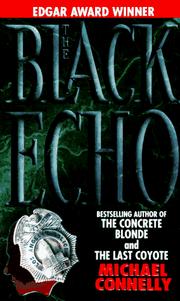
Start with The Black Echo (Harry Bosch), the 1992 first novel. This is unusual advice for a twenty-plus-book series, because most long-running detective series have a weak debut you are told to skip. This one does not. The Black Echo is a properly constructed novel — a tunnel-rat backstory, a bank job, a partner who cannot be trusted — and it establishes the two things that carry the whole series: Bosch's rule that everybody counts or nobody counts, and his permanent war with his own department.
Read in publication order. Connelly lets Bosch age in real time: he starts as a Hollywood homicide detective in his early forties and works through demotion, retirement, cold cases, private work and a body that stops cooperating. Reading out of order does not just spoil plot points, it scrambles a thirty-year character arc that is the actual reason people read the series.
The early LAPD run
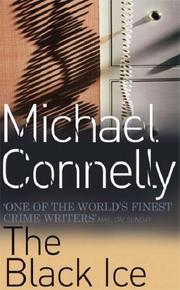
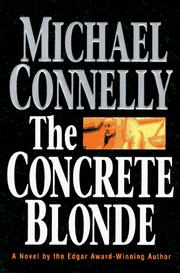
The Black Echo (Harry Bosch), then The black ice, then The concrete blonde, then The Last Coyote.
The concrete blonde is where the series first shows what it can do, putting Bosch on trial for a shooting while the same killer appears to still be working. The Last Coyote is the best of the early books: Bosch suspended, in mandatory therapy, investigating his own mother's unsolved murder. If you are going to fall for this series, it will probably happen here.
The middle books
Trunk Music, Angels flight, City of Bones. Angels flight is the most politically charged, dropping Bosch into a case that could set the city on fire. City of Bones is the one longtime readers most often name as the peak of the series, and it ends on a decision that resets everything after it.
Then The Closers, where Bosch returns to the LAPD in the Open-Unsolved unit, and Nine dragons, which takes him out of Los Angeles entirely and is the most divisive book in the run — the Hong Kong section is either a thrilling change of gear or a Bosch novel that forgot what it was, depending on who you ask.
The Mickey Haller crossovers
Two books on this path are not Bosch novels. The Lincoln Lawyer (Mickey Haller #1) introduces a defence attorney who works out of the back of a car, and it is excellent on its own terms. Read it before The Reversal, which puts Haller and Bosch on the same case, on the same side, for the first time. That is the only ordering constraint in the whole series that people actually get wrong.
The late books
The Burning Room and The Wrong Side of Goodbye are the end of the LAPD era and the beginning of the private-investigator era. Both are strong. The later run has more procedural comfort and less fury than the 1990s books, which some readers prefer.
What this list leaves out
This is a spine, not the complete series. Connelly has written more than twenty Bosch books, and several well-regarded ones — including the Poet books and the middle-period entries between the titles above — are not on this path. You will not be lost without them, but do not mistake this for the full bibliography.
Where to stop
After City of Bones you have a complete, satisfying arc, and quite a few readers stop there. After The Wrong Side of Goodbye you have the transition to late Bosch and a natural exit. Starting anywhere other than book one is defensible if the 1990s procedural texture is not for you — jump in at The Last Coyote or City of Bones — but you will lose the Eleanor Wish thread, which pays off much later.
More series guides are on Discover.
Follow the full ordered path here: Harry Bosch Reading Order: Where to Start.