Start with Vegetariana / the Vegetarian. A woman stops eating meat after a dream, and the novel watches the consequences through three narrators who are not her — her husband, her brother-in-law, her sister. It won the International Booker in 2016, it is under two hundred pages, and it is the book that brought Han Kang into English. Deborah Smith's translation is the one you will find.
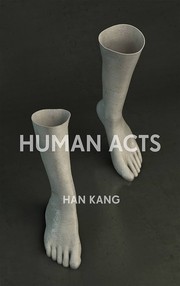
There is a real alternative here, which is Human Acts, and it is arguably the greater book. It is built from the 1980 Gwangju uprising and its aftermath, told through a rotating set of the dead and the surviving. If you want to meet her at full strength and can take a novel about state violence and its long tail, begin there instead. Most readers do better starting with the shorter, stranger first novel and arriving at Gwangju already trusting the writer.
A short path, honestly
Five books is the entirety of Han Kang available in English. That is not a curation decision or a gap in our catalogue — her earlier Korean novels and poetry have not been translated. Anyone promising you a longer English reading order is padding it with anthology appearances.
One catalogue note: the record for the first book carries the title in two languages, which is why it displays oddly. It is the same novel.
The sequence
After Vegetariana / the Vegetarian, read Human Acts. It is the pivot of her work — the point where the interest in bodies under pressure attaches to a specific historical atrocity — and it is unsparing about what was done to people in Gwangju without being gratuitous about it. Content note: torture, the handling of corpses, and the psychological aftermath in survivors, all described directly.
Then The white book, which is the shortest and least novel-like: a sequence of short prose pieces organised around white things, written around the death of an infant sister before the author's birth. It reads as much like poetry as fiction and is the best place to see her sentences uncrowded by plot.
Greek Lessons comes next. A woman who has lost her speech and a man who is losing his sight meet in an Ancient Greek class. It is the quietest book and the one most concerned with language itself, and it rewards slow reading more than any of the others.
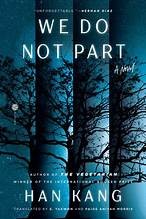
Finish with We do not part, the most recent to reach English. It returns to historical violence — this time the Jeju massacre of 1948 — through a friendship, snow, and a journey that keeps blurring into dream. It pairs directly with Human Acts and is best read after it.
On the translation
Deborah Smith's English versions of the earlier books have been genuinely disputed. Critics have documented departures from the Korean in tone, register and occasionally sense; defenders argue the results are effective English novels and that Han Kang has publicly endorsed them. The dispute is real, it is not resolved, and it is worth knowing about — but it does not give the English reader an alternative, because for most of these titles there is only one translation. The later books involve different translators, which some readers find noticeably changes the texture.
Where to stop
There is no need to stop. Five short books, four of which run under two hundred and fifty pages, is a weekend or two of reading, and each one deepens the others. If you want more in this register, browse the paths for writers working on the same ground.
Follow the full ordered path here: Han Kang Reading Order: Where to Start.