Best Books on the Bosnian War, in Reading Order
The Bosnian war of 1992-95 is well served by books, but they were written from sharply different positions — journalists inside the siege, historians arguing about how far back the causes go, and survivors of Srebrenica — and no single volume covers it honestly. This path starts with two narrative histories of the Yugoslav breakup so you know how Bosnia ended up at war, adds the deep background that the wartime propaganda on all sides distorted, then moves to reporting from the ground, then to Srebrenica, then to the peace and the reckoning that followed. Where the causes of the war are genuinely disputed between Serbian, Croatian and Bosniak historiographies, the books here are chosen to represent the serious positions rather than to settle the question.
How Yugoslavia Came Apart
BeginnerFollow the chain from Tito's death through Slovenia and Croatia to the Bosnian war, and be able to name the republics, leaders and constitutional flashpoints.
▸ Study plan for this stage
Pace: Three to four weeks for about 650 pages. Read The Fall of Yugoslavia (257 pages) first and quickly — it is reportage written as events unfolded and moves at the pace of dispatches. Silber and Little's Yugoslavia, published as Death of a Nation, is 392 pages built from interviews with almost every se
- The 1974 constitution and the rotating federal presidency — the machinery that held the federation together and the machinery whose deadlock in 1991 broke it
- Tito's death in 1980 and the decade of economic collapse, IMF conditionality and hyperinflation that preceded any shooting
- Milošević's route to power through the Kosovo question and the anti-bureaucratic revolution, which Silber and Little treat as a deliberate strategy rather than as a response to nationalist pressure from below
- The sequence of the wars: Slovenia in 1991 lasting ten days, Croatia through 1991 to 1992 including Vukovar and Dubrovnik, then Bosnia from April 1992
- Why Bosnia was the hardest case — no republic-level majority, populations interspersed rather than territorially separated, and a referendum boycotted by one community
- The JNA's transformation from a federal army into an instrument of one republic, and what happened to its weapons and officer corps
- The central historiographical disagreement, visible immediately between these two books: Glenny gives more weight to structural collapse and mutual escalation, Silber and Little to specific decisions by identifiable leaders
- Glenny wrote in 1992 with the outcome unknown, so his judgements are contemporary rather than final — a fact worth holding onto for the rest of the path
- Name the six republics and two autonomous provinces, and say who held power in each in 1990.
- What did the 1974 constitution actually provide for, and how did its provisions become unworkable after 1989?
- How does Milošević acquire power in Silber and Little's account, and at which point do they say the outcome stopped being avoidable?
- Why did Slovenia's war last ten days and Bosnia's three and a half years?
- Where do Glenny and Silber and Little disagree about causation, and how much of the difference is explained by when each was written?
- Draw a timeline from Tito's death in 1980 to April 1992 and mark every event both books treat as a turning point. The events they choose differently are the disagreement.
- Sketch a map of the six republics from memory, then check it. You cannot follow anything in the later stages without knowing where Krajina, Posavina and the Drina valley are.
- Write 200 words stating Glenny's account of the causes and 200 stating Silber and Little's, then mark every sentence that is a fact rather than an interpretation. Most are interpretations.
- For each senior figure interviewed in Death of a Nation, write one line on what that person had an interest in claiming. Reading interview-based history requires this and it takes half an hour.
Next up: Both these books stop short of the deep past, which is exactly the ground the war's propaganda occupied — so the next stage goes back to the Ottoman and Habsburg centuries the combatants claimed to be avenging.

Written by the BBC correspondent as the country disintegrated around him, and still the quickest route into the politics of the breakup. Start here for the shape of the thing; its judgements are contemporary rather than final, which is worth remembering.
Death of a Nation, the book of the BBC documentary series, built on interviews with nearly every senior participant. It puts more weight on deliberate political choices — especially Milošević's — than Glenny does, so reading the two together gives you the central disagreement about causation straight away.
The Background People Fought Over
BeginnerUnderstand Bosnia's Ottoman, Habsburg and Yugoslav history well enough to judge the claims about ancient hatreds that were used to explain — and to excuse — the war.
▸ Study plan for this stage
Pace: Two weeks for 364 pages. Malcolm's Bosnia is a short history that covers roughly eight centuries, which means it moves fast and assumes you will not need everything at once; read it in two-century blocks and slow down markedly for the chapters on the Ottoman period and on 1878 to 1918, which carry t
- The Bosnian Church and the medieval kingdom, and why the origins of Bosnia's Muslim population became a contested political question in the 1990s rather than an antiquarian one
- Ottoman rule as the long formative period: the millet system, conversion patterns, and land tenure — the source of the grievances later mobilised as ancient hatreds
- The Habsburg occupation from 1878 and the invention of Bosnian identity politics in a modern national form
- Malcolm's central thesis: that Bosnia's communities coexisted for centuries and that the wars of the twentieth century were caused by modern politics rather than by inherited hatred
- The Second World War in Bosnia — Ustaša, Četnik and Partisan violence — and why every side in the 1990s reached for that decade for its imagery
- The ancient hatreds thesis as a political instrument: it was used by Western governments to justify non-intervention, which is why refuting it was an urgent rather than academic project in 1994
- Malcolm writes from the Bosnian-state position and has been criticised from Serbian and Croatian scholarly perspectives, particularly on the medieval Bosnian Church and on the Ottoman land question — read him as the strongest statement of one case, not as neutral ground
- What was the Bosnian Church, and why does its character matter to a twentieth-century political argument?
- How did the Ottoman millet system organise religious communities, and what did it not do that a modern national state does?
- State the ancient hatreds thesis in its strongest form. What evidence would confirm it, and what does Malcolm produce against it?
- What happened in Bosnia between 1941 and 1945, and how was that period used rhetorically fifty years later?
- Where can you see Malcolm arguing rather than narrating? Pick three passages and say what he is arguing against.
- Write out the ancient hatreds argument in 200 words as its most serious advocate would put it, before writing Malcolm's rebuttal. The exercise is worthless if you strawman it.
- Mark every chapter of Bosnia where Malcolm addresses a contemporary claim rather than a historical question. The distribution tells you what the book was for.
- Find one specific historical claim in Malcolm that you could check independently, and check it. He states things firmly enough to be testable, which is a virtue.
- Write a paragraph on what a Serbian historian would most object to in this book, based on what Malcolm himself acknowledges he is arguing against.
Next up: With both the immediate politics and the contested deep history in hand, you can read the wartime reporting in the next stage without mistaking a propaganda frame for an explanation.
A short history written in 1994 explicitly to refute the idea that Bosnia's communities had always been at war. It is a polemical book with a case to make and has been criticised from Serbian and Croatian scholarly positions; read it as the strongest statement of the Bosnian-state view, not as neutral ground.
The War on the Ground
BeginnerSee what the siege, the camps and the ethnic cleansing actually looked like to the people inside them, and to the reporters who broke the story.
▸ Study plan for this stage
Pace: Four weeks for about 920 pages, and pace yourself deliberately — this is the stage where the material becomes hard to read. Love Thy Neighbor (320 pages) first, in about ten days. Seasons in Hell (370 pages) next; Vulliamy's camp chapters are the most distressing prose in the path and should not be
- How neighbours came to kill neighbours — Maass's central question, and his answer that it required organisation, propaganda and outside armed men rather than spontaneous hatred
- The Omarska and Trnopolje camps, which Vulliamy reached in August 1992, and the fact that his reporting later became evidence at the International Criminal Tribunal for the former Yugoslavia
- Ethnic cleansing as a method with a procedure: the sequence of shelling, expulsion, detention and destruction of religious buildings, repeated across municipalities
- The siege of Sarajevo as the war's public face, and the gap between what the world saw on television and what the reporting in these books describes
- The equivalence question: Vulliamy argues openly against the journalistic convention of treating all parties as equally responsible, and his position was and remains contested within the profession
- Sacco's use of comics to render geography — how narrow the Goražde enclave was, how completely surrounded, how far the nearest safety — which prose consistently fails to convey
- The eastern enclaves as the war's specific structural problem: Bosniak-majority towns in the Drina valley, cut off, dependent on UN supply, and impossible to defend
- Reporters as participants: all three authors are inside the story, and each handles the resulting compromise differently
- What is Maass's explanation for how ordinary people participated, and how does it differ from the ancient hatreds account you dismantled in the previous stage?
- What did Vulliamy find at Omarska and Trnopolje in August 1992, and what changed internationally once the pictures ran?
- What is Vulliamy's argument against journalistic balance in this war, and what is the strongest case against him?
- What does Safe Area Goražde show you about the enclave that Maass and Vulliamy cannot show in prose?
- In all three books, what were the UN and the Western powers actually doing between 1992 and 1994?
- Read the camp chapters of Seasons in Hell in daylight and in a single sitting, then stop for the day. Slowing down here is a reasonable response to the material rather than a failure of nerve.
- In Safe Area Goražde, find the panels that establish the enclave's size and surroundings, and draw the geography yourself on paper. You will need it in the next stage.
- Write 300 words on Vulliamy's rejection of balance, taking a position. Then write the reply a wire-service editor would give him.
- List every mechanism of ethnic cleansing described across the three books. The list is repetitive across municipalities, which is itself the finding.
Next up: Sacco has put you inside a besieged eastern enclave dependent on a UN safe-area designation, which is exactly the situation that collapsed at Srebrenica in July 1995.

The best short account of what it was like to cover the war, and the clearest explanation of how neighbours came to kill neighbours. Read it first in this stage: it is the emotional and moral orientation for everything that follows.
By the reporter who reached the Omarska and Trnopolje camps in 1992 and whose evidence was later used at The Hague. Vulliamy argues openly against the journalistic convention of treating all sides as equivalent, which is itself part of the war's argument.
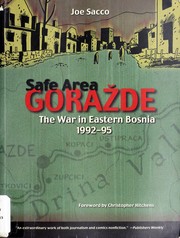
Comics journalism from the eastern enclave, based on long stays with people living under siege. The form lets Sacco show the geography of the war — how narrow, how surrounded — in a way prose cannot, and it sets up Srebrenica exactly.
Srebrenica
IntermediateWork through the July 1995 massacre in detail: how the enclave was created, why the UN did not defend it, and what was done there.
▸ Study plan for this stage
Pace: Four to five weeks for roughly 1,030 pages. Blood and Vengeance (393 pages) first and unhurried, because Sudetic is building generations of family history before the massacre arrives. Endgame (440 pages) is a dense hour-by-hour reconstruction and needs a fortnight and a map. Postcards from the Grave
- The enclave's history: Srebrenica was a Bosniak-majority town in the Drina valley left behind the front line, filled with refugees from surrounding villages, and militarily untenable from the start
- The UN safe area designation of 1993 — what it actually promised, what force was provided to guarantee it, and the gap between the two
- The Dutch battalion's position: lightly armed, dependent on air support that did not come, and the subject of a Dutch state inquiry that eventually brought down a government
- July 1995 in sequence: the VRS advance, the fall of the town, the separation of men and boys at Potočari, the column through the woods, and the executions at Kravica, Orahovac, Branjevo and elsewhere
- Roughly eight thousand men and boys killed, and the secondary mass graves — bodies exhumed and reburied by the perpetrators — which is why identification took decades
- Sudetic's method of following one extended family across generations, which gives the enclave a before and prevents the massacre from reading as an event without history
- Rohde's reporting: he located mass grave sites, was captured while doing so, and the resulting reconstruction is the closest thing to a definitive account of the safe area's collapse
- Suljagić's position as an insider and a UN interpreter, which puts him between the victims and the institution that failed them, and makes his memoir the one book here that cannot be read as reconstruction
- How and when was the Srebrenica enclave created, and why was it never militarily defensible?
- What did the safe area designation commit the UN to do, and what forces were actually assigned to do it?
- Reconstruct the events of 11 to 16 July 1995 in order. Where does responsibility sit at each step?
- What does Sudetic's multi-generational approach reveal about the Drina valley that a straight account of July 1995 would miss?
- What does Suljagić see that Rohde, reconstructing from outside, cannot?
- Build a written timeline of July 1995 from Endgame, hour by hour where Rohde gives hours. Doing it yourself is the only way the sequence stays straight.
- Mark on your Goražde-era map where Srebrenica, Žepa, Potočari, Bratunac and Tuzla sit relative to each other, and trace the route of the column through the woods.
- After Sudetic, write one page on the family he follows — who they were before 1992 and what happened to them. The point of the exercise is to hold particular people in mind before the numbers arrive.
- Read Postcards from the Grave last and write nothing for a day afterwards. Then write 200 words on what the survivor's account changes about the two reconstructions you read first.
Next up: Srebrenica is what finally moved Western policy from containment to intervention, so the last stage picks up at the bombing campaign, the negotiating table, and everything the settlement did and did not resolve.
The eastern Bosnian war traced through one extended family across generations, ending at Srebrenica. Read it first because it gives the enclave a history rather than treating the massacre as an event without a before.

The reconstruction of the fall of Srebrenica by the reporter who was captured while finding the mass graves. The closest thing to a definitive hour-by-hour account of the UN safe area's collapse.

A survivor's memoir by a man who lived in the enclave and worked as a UN interpreter. Placed last in this stage deliberately: after two outside reconstructions, the inside voice lands differently.
The Peace and the Reckoning
IntermediateUnderstand how the war was ended, what Dayton froze in place, and what happened to justice, the missing and the survivors afterwards.
▸ Study plan for this stage
Pace: Four to five weeks for about 1,030 pages, though the weight is uneven. To End a War (409 pages) is a negotiator's memoir and reads briskly. Like Eating a Stone is 112 pages and can be read in one evening, but should not be read alongside anything else. The Key to My Neighbor's House (510 pages) is t
- Operation Deliberate Force and the Croatian and Bosnian ground offensives of autumn 1995 — the military change that made a settlement possible, and the argument about what that implies
- Dayton's architecture: two entities, the Federation and Republika Srpska, a rotating three-member presidency, and a High Representative with executive powers over an ostensibly sovereign state
- What Dayton froze — the wartime front lines converted into internal borders, so the settlement ratified much of what the war had achieved on the ground, which is the standing criticism of it
- Holbrooke as a primary source writing about his own achievement: indispensable for the mechanics of the negotiation and unavoidably self-interested about its merits
- The forensic aftermath in Tochman: exhumation, DNA identification, and women waiting years for enough bone to bury — the war's consequences at their most literal
- The ICTY's record: indictments, the Karadžić and Mladić trials, and the length of time between the crime and any verdict
- Neuffer's comparative question, running Bosnia against Rwanda: what international justice can repair, what it cannot, and whether trials serve survivors or the international community's need to have responded
- Return, or its absence — the demographic outcome of the war largely survived the peace, which is the fact against which any assessment of Dayton has to be made
- What changed militarily in the second half of 1995, and how much of Dayton is explained by that rather than by diplomacy?
- Describe the state Dayton created. Which of its features were meant to be temporary, and which are still in place?
- Where is Holbrooke's account most obviously shaped by his own role? Pick two passages.
- What is the forensic identification process Tochman describes, and why did it take so long?
- Neuffer asks what justice can repair. What is her answer, and do the survivors in her book agree with it?
- Read Holbrooke's account of a single negotiating session and write the same session as one of the other parties might have described it. The gap is the value of reading a memoir as a primary source.
- Draw the Dayton map — the entity line — over your earlier map of prewar population distribution. The comparison is the criticism of the settlement, made visually and in ten minutes.
- After Like Eating a Stone, write 200 words on why Tochman writes so plainly. The restraint is a deliberate choice and worth naming.
- Write a final two-page assessment answering the question the whole path circles: what was supposed to happen after the war, and what actually did. Use at least one book from each stage, and say where your sources disagree rather than smoothing it over.
Next up: This is the end of the path — from the breakup, through the contested past, the reporting, Srebrenica and the settlement — and the natural next step is either the ICTY's own published judgements, which are public and detailed, or the parallel literature on Croatia and Kosovo that this path deliberately left aside.
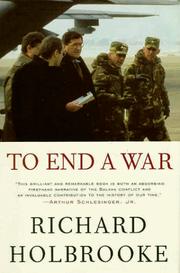
The American negotiator's own account of Dayton — indispensable, and unavoidably self-interested, since Holbrooke is writing about his own achievement. Read it as a primary source on how the settlement was assembled.
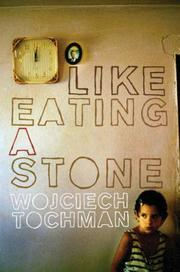
A Polish reporter's spare book about the forensic work of identifying the dead and the women waiting for a body to bury. It is the aftermath at its most literal, and it is very short.
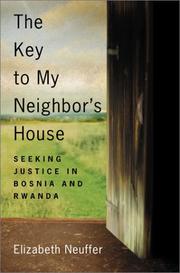
Follows Bosnian and Rwandan survivors through the international tribunals, asking what justice can and cannot repair. The right closing book because it forces the question the whole path has been circling: what is supposed to happen now.
Discussion
Keep reading
Paths that share books, cover the same subject, or open a related topic.