MBA fundamentals: the best books to skip the tuition
This curriculum covers the five pillars of an MBA — strategy, finance, accounting, marketing, and management — across three progressive stages. You start by building business literacy and mental models, then move into the core analytical frameworks taught in top business schools, and finally tackle advanced, integrative thinking that ties all the disciplines together into real-world competitive strategy.
Business Literacy Foundations
BeginnerBuild everyday fluency in how businesses work — how money flows, how decisions get made, and how companies create value — before touching formal frameworks.
▸ Study plan for this stage
Pace: 8–10 weeks, ~40–50 pages/day. Allocate 3–4 weeks per book to allow time for reflection and exercises between titles.
- Core business functions: how money flows through a business via revenue, costs, and profit (The Personal MBA & The Accounting Game)
- Value creation and customer focus: understanding what customers actually want and how businesses solve real problems (The Personal MBA & The Lean Startup)
- Iterative learning and validated experimentation: testing assumptions cheaply before scaling (The Lean Startup)
- Lean principles and waste elimination: building only what's needed, measuring progress, and pivoting based on evidence (The Lean Startup)
- Financial literacy fundamentals: reading and interpreting basic P&L statements, balance sheets, and cash flow (The Accounting Game)
- Decision-making frameworks: how successful businesses make choices under uncertainty using data and feedback loops (all three books)
- Business model thinking: how products, customers, and revenue connect as an integrated system (The Personal MBA & The Lean Startup)
- What are the five core business functions, and how does money flow through each one?
- Why does The Lean Startup emphasize testing assumptions over detailed upfront planning, and what is a minimum viable product (MVP)?
- How do you read a profit and loss statement, and what do the key line items tell you about a business's health?
- What is the difference between vanity metrics and actionable metrics, and why does it matter for decision-making?
- How do the concepts of value creation, customer feedback, and iteration connect across all three books?
- What is a pivot, and under what conditions should a business consider pivoting versus persevering?
- Choose a real business you interact with regularly (coffee shop, app, retailer). Map its five core business functions and trace how money flows through each.
- Identify a problem you face in your daily life. Design a minimal viable product (MVP) to solve it in one page, then list 3–5 assumptions you'd need to test before building it.
- Find the most recent annual report or financial statement for a public company. Extract the P&L statement and explain in plain language what the top three line items tell you about that business.
- Track your own spending for one week and create a simple personal P&L statement. Categorize income and expenses, calculate your net profit/loss, and identify one area of waste.
- Interview a small business owner or manager (15–20 minutes) about how they made a major decision. Map their process to the frameworks in the books—did they test assumptions? Use metrics? Pivot?
- Write a one-page business model canvas for a startup idea: describe the problem, solution, customer, revenue model, and key assumptions to validate.
Next up: This stage equips you with conversational fluency in how businesses operate at ground level—the mental models and vocabulary you'll need to engage with formal MBA frameworks like strategy, finance, and operations in the next stage.
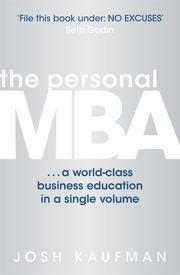
A single-volume tour of every major MBA concept written in plain English — the perfect on-ramp that introduces vocabulary and mental models you will encounter in every later book.
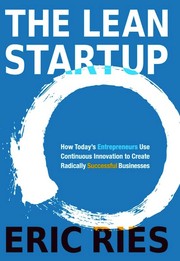
Grounds abstract business ideas in the concrete reality of building and testing a business, teaching hypothesis-driven thinking that underpins both strategy and marketing.

Uses a lemonade-stand story to make debits, credits, income statements, and balance sheets intuitive — essential accounting literacy before tackling finance.
Core MBA Disciplines
IntermediateMaster the canonical frameworks in each MBA discipline — Porter's strategy, Damodaran-style valuation thinking, Kotler's marketing, and Drucker's management — the way a first-year MBA student would.
▸ Study plan for this stage
Pace: 12–14 weeks, ~40–50 pages/day. Allocate 3 weeks per book with 1 week buffer for review and integration. Read Competitive Strategy and Financial Intelligence sequentially (weeks 1–6), then Marketing Management and The Effective Executive (weeks 7–12), with final week for synthesis across all four dis
- Porter's Five Forces framework: how competitive intensity shapes industry profitability and strategic positioning
- Generic strategies (cost leadership, differentiation, focus): the three fundamental ways to compete and their trade-offs
- Value chain analysis: identifying where competitive advantage is built and where costs/differentiation opportunities lie
- Financial literacy fundamentals: understanding P&L, balance sheet, and cash flow as the language of business decisions
- Ratio analysis and financial metrics: using profitability, efficiency, and leverage ratios to diagnose business health
- Kotler's segmentation, targeting, and positioning (STP): how to identify and reach customer groups profitably
- The marketing mix (4 Ps): product, price, place, promotion as levers for creating and communicating value
- Drucker's management by objectives (MBO) and the executive's core work: setting priorities, delegating, and measuring results
- How would you use Porter's Five Forces to analyze the competitive intensity and profit potential of a specific industry?
- What is the difference between cost leadership and differentiation strategies, and why can't a company typically pursue both simultaneously?
- How do you read a company's financial statements to assess whether it is financially healthy, and what red flags would concern you?
- Walk through a segmentation, targeting, and positioning exercise for a product or service: who are you targeting, and how will you differentiate?
- How would you design a value chain for a business, and where would you look for competitive advantage or cost reduction?
- What is management by objectives, and how would you set it up for a team to ensure alignment and accountability?
- Competitive Strategy: Conduct a Five Forces analysis on a real company or industry (e.g., ride-sharing, coffee retail, software). Identify which force is most threatening and sketch a strategic response.
- Competitive Strategy: Map the value chain for a company you know well. Identify 2–3 activities where it has competitive advantage and 2–3 where it is vulnerable.
- Financial Intelligence: Obtain financial statements (10-K, annual report) for a public company. Calculate key ratios (gross margin, ROA, current ratio, debt-to-equity) and write a one-page diagnosis of its financial health.
- Financial Intelligence: Compare the P&L and balance sheet of two competitors in the same industry. What do the differences in margins, asset turnover, and leverage tell you about their strategies?
- Marketing Management: Choose a product category (e.g., smartphones, athletic shoes, coffee). Segment the market, identify a target segment, and design a positioning statement and marketing mix (4 Ps) for a new entrant.
- The Effective Executive: Conduct a time audit on yourself or a colleague for one week. Identify time wasters and non-essential activities. Design a prioritization system using Drucker's principles and test it for one week.
Next up: This stage equips you with the foundational mental models and frameworks that professional managers use daily; the next stage will apply these disciplines to real-world case studies and integrated business problems, where you'll learn to synthesize strategy, finance, marketing, and operations into coherent business decisions.
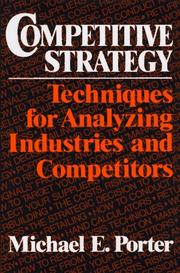
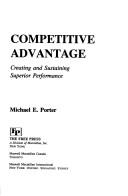
The foundational text for business strategy; introduces the Five Forces and generic strategies that every subsequent strategy conversation references.
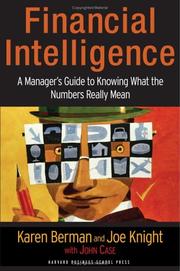
Bridges the gap between basic accounting and managerial finance, teaching managers how to read financial statements critically and understand what the numbers really mean.

The standard MBA marketing textbook worldwide; after Porter sets the competitive context, Kotler shows how to position, price, and promote within it.
Drucker's masterwork on management and decision-making; pairs with the strategy and marketing books by explaining how leaders actually execute on plans.
Integrative & Advanced Thinking
ExpertSynthesize all five disciplines into a unified view of competitive advantage, capital allocation, and organizational leadership — thinking the way a seasoned executive or investor does.
▸ Study plan for this stage
Pace: 8–10 weeks, ~40–50 pages/day with 2–3 days per week for case analysis and synthesis work
- The kernel of strategy: diagnosis, guiding policy, and coherent action—and why most strategies fail on diagnosis alone
- Capital allocation as the primary lever of competitive advantage: how Outsiders CEOs created value through disciplined, counterintuitive allocation decisions
- Game theory and strategic interaction: how to model competitor behavior, anticipate moves, and identify dominant strategies in competitive settings
- The relationship between organizational structure, incentives, and strategic execution: why strategy fails without aligned decision-making systems
- Competitive moats and their sustainability: how to assess whether an advantage is defensible and what erodes it over time
- The executive mindset: moving from functional optimization to portfolio thinking and long-term value creation
- Strategic paradoxes and asymmetries: how to exploit situations where conventional wisdom creates opportunity
- What is the kernel of strategy, and why do most organizations fail at the diagnosis stage? Provide a real example of a company that confused one element for the full strategy.
- How did the Outsiders CEOs use capital allocation differently from their peers, and what specific decisions created shareholder value? Pick two CEOs and compare their approaches.
- Explain a competitive situation using game theory: identify the players, payoff structures, and dominant strategies. How would a rational competitor respond to your move?
- Why does a brilliant strategy often fail in execution? What role do organizational incentives, culture, and decision-making authority play?
- What is a sustainable competitive moat, and how would you assess whether a company's advantage is durable or vulnerable to disruption?
- How would you synthesize insights from strategy, capital allocation, and game theory to advise a CEO on a major strategic decision (e.g., entering a new market, divesting a business, or responding to a disruptor)?
- Read and annotate 'Good Strategy, Bad Strategy' (Weeks 1–3): For each major case study, identify the diagnosis, guiding policy, and coherent actions. Flag where the strategy is weak or incomplete.
- Analyze three Outsiders CEOs from the book (Weeks 3–4): Create a one-page capital allocation playbook for each, showing their core principles, key decisions, and results. Compare and contrast their philosophies.
- Game theory case study (Weeks 5–6): Select a real competitive dynamic (e.g., airline pricing, smartphone market, or streaming wars). Map the players, payoffs, and equilibrium. Predict competitor moves and identify your dominant strategy.
- Strategy diagnosis exercise (Week 4): Take a company facing strategic challenges (e.g., a struggling retailer or tech firm). Write a one-page diagnosis identifying the core problem, then propose a guiding policy and three coherent actions.
- Organizational alignment audit (Week 7): Choose a company where strategy and execution misaligned (e.g., Kodak, Blockbuster, or a recent corporate failure). Identify the strategic intent, then map where incentives, structure, or culture broke the chain.
- Synthesis memo: Executive decision brief (Week 8–9): Write a 3–4 page memo to a CEO on a strategic choice (real or hypothetical). Integrate strategy diagnosis, capital allocation logic, and game-theoretic reasoning. Include a recommendation and key risks.
- Competitive moat assessment (Week 7): Pick a company with a claimed competitive advantage (e.g., Apple, Amazon, or a niche leader). Evaluate the moat's durability using frameworks from all three books. What could erode it in 5–10 years?
- Peer discussion and debate (Weeks 6, 9): In groups of 2–3, debate a strategic decision from one of the books or a real case. One person argues the strategy is sound; another argues it will fail. Use game theory, capital allocation, and organizational logic to support your position.
Next up: This stage equips you to think like a seasoned executive or investor by integrating strategy, capital allocation, and game theory into a unified decision-making framework—preparing you to apply these integrated insights to real-world leadership challenges, board-level decisions, or investment theses in the next stage.
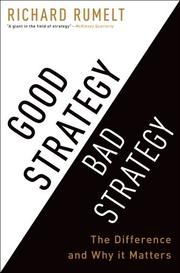
Elevates Porter's frameworks into a practical, critical lens for diagnosing real strategy versus empty mission statements — the capstone for the strategy thread.

Eight CEO case studies that tie together finance, capital allocation, and management into a single powerful argument about what exceptional leadership actually looks like in practice.
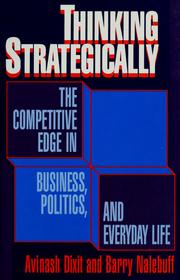
Introduces game theory as applied to business competition, giving you the analytical toolkit to anticipate rivals' moves — the integrative capstone that rewards having read everything before it.
Discussion
Keep reading
Paths that share books, cover the same subject, or open a related topic.