Start a YouTube channel that grows
This curriculum takes a beginner from zero to running a YouTube business in four tightly sequenced stages. It starts by building the creative and storytelling muscles that make great videos, then layers on platform-specific packaging and growth strategy, and finally treats the channel as a real business with diversified revenue. Each stage assumes the vocabulary and mental models built in the one before it.
Foundations: Thinking Like a Creator
BeginnerDevelop a creator mindset, understand what makes ideas worth sharing, and build the habit of consistent output without fear of imperfection.
▸ Study plan for this stage
Pace: 3–4 weeks total (~20–30 min/day): Week 1 — "Steal Like an Artist" (~96 pages, finish in 3–4 sittings); Week 2 — "Show Your Work!" (~208 pages, ~30 pages/day); Weeks 3–4 — "The War of Art" (~165 pages, ~20–25 pages/day, journaling alongside)
- Creativity is combinatorial, not original: all creative work builds on what came before (Kleon, 'Steal Like an Artist')
- Curate your influences deliberately — your 'family tree' of creators shapes your voice and niche
- Sharing process > sharing only finished product: audiences connect with the journey, not just the result ('Show Your Work!')
- Being an 'open amateur' — embracing not-knowing publicly builds community and accelerates learning
- The concept of Resistance (Pressfield): the internal force of procrastination, self-doubt, and fear that blocks creative output
- Turning pro: treating content creation as a discipline with daily commitment, not waiting for inspiration
- Imperfect output shipped consistently beats perfect output delayed indefinitely
- Your unique perspective — the intersection of what you consume and how you think — IS your content
- According to Kleon, why is 'nothing is original' a liberating idea rather than a discouraging one, and how does it apply to choosing your YouTube niche?
- What does 'Show Your Work!' argue is the minimum viable way to share your creative process, and why does sharing incrementally build an audience faster than waiting until something is 'done'?
- How does Pressfield define Resistance, and what are three specific forms it takes that are most likely to stop a beginner YouTube creator from publishing their first videos?
- What is the difference between 'turning pro' and 'being an amateur' in Pressfield's framework, and what daily behaviors mark that transition for a content creator?
- How would you use Kleon's 'influence map' idea to reverse-engineer the style and content strategy of a YouTube channel you want to build?
- How do the three books collectively address the fear of imperfection, and what concrete mental reframe does each one offer?
- Influence Map Exercise (Steal Like an Artist): List 10 YouTube creators, writers, filmmakers, or thinkers you admire. Draw a web connecting their ideas. Identify 2–3 intersections that only YOU occupy — this is your potential niche.
- Swipe File Setup (Steal Like an Artist): Create a dedicated folder (physical or digital) where you collect thumbnails, titles, hooks, and video structures you love. Annotate each with WHY it works.
- Process Log for One Week (Show Your Work!): Document one small creative act every day — a script idea, a rough shot, an edit decision — and post it publicly (Twitter/X, Instagram, or a Discord community). Practice sharing before you feel ready.
- Resistance Journal (The War of Art): Each morning for 14 days, write for 5 minutes answering: 'What is Resistance telling me today, and what is the ONE creative task I will do anyway?' Track patterns in your excuses.
- Publish Something Imperfect: Record and upload a 2–3 minute YouTube video (unlisted is fine) on any topic this week. The only rule: do NOT re-record more than twice. Submit it. The goal is reps, not quality.
- Creator Identity Statement: After finishing all three books, write a single paragraph that answers — Who do I steal from? What process will I share? What does my Resistance look like, and how will I fight it? Pin this where you work.
Next up: Internalizing the creator mindset, influence-mapping, and the discipline to ship imperfect work gives you the psychological foundation to move into the next stage, where you'll apply structured frameworks for ideation, scripting, and channel strategy — tools that only become useful once the fear of starting has been dismantled.
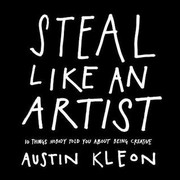
A short, visual primer that destroys the blank-page paralysis every new creator faces — it reframes originality as remixing and gives permission to start before you feel 'ready.'
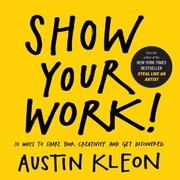
The natural follow-up: where 'Steal' is about input, this is about output and sharing publicly — the exact mindset shift needed to actually post videos consistently.

Identifies 'Resistance' — the internal force that stops creators from shipping — and gives a professional framework for overcoming it; essential before diving into tactics.
Storytelling & Script: Making Videos People Watch
BeginnerMaster the structural principles of compelling storytelling and learn to translate them into video scripts, hooks, and narrative arcs that hold attention.
▸ Study plan for this stage
Pace: 8–10 weeks total: ~3 weeks on "Story" by McKee (~25–30 pages/day, it's dense — treat it like a textbook, re-read key chapters); ~2.5 weeks on "Storyworthy" by Dicks (~20–25 pages/day, more conversational — move steadily); ~2.5 weeks on "Made to Stick" by Heath (~20 pages/day). Reserve the final week
- Story structure & the gap: McKee's principle that story is born when a character's expectation collides with an unexpected reality — the 'gap' — creating the engine of all narrative tension.
- The Spine & Controlling Idea: Every story has a single controlling idea (theme expressed as value + cause) that must govern every scene; for YouTube, this is your video's core promise and payoff.
- Scene construction & turning points: McKee's insistence that every scene must turn — shifting value charge from positive to negative or vice versa — directly maps to keeping viewers from clicking away mid-video.
- The 'Homework for Life' practice (Dicks): The daily habit of mining your own life for 5-second moments of genuine change, building an inexhaustible personal story library for video content.
- The Cinderella / Elephant in the Room story structures (Dicks): Practical, repeatable narrative shapes — especially the 'But & Therefore' connective tissue — that make personal stories feel inevitable and satisfying rather than rambling.
- The SUCCESs framework (Heath): Simple, Unexpected, Concrete, Credible, Emotional, Story — a checklist for making any idea (or video concept) sticky and memorable from the first frame.
- The Curse of Knowledge (Heath): The single biggest enemy of clear communication; understanding why creators assume too much from their audience and how to strip scripts back to what truly lands.
- The Hook as a story gap: Synthesizing all three books — a great YouTube hook is a McKee 'gap' made SUCCESs-sticky and rooted in a Dicks-style moment of genuine human change.
- According to McKee, what is a 'gap' and why is it the fundamental unit of story energy — and how would you engineer one in the first 30 seconds of a YouTube video?
- What does McKee mean by a 'controlling idea,' and how do you distill a 5-minute YouTube video down to a single controlling idea before writing a word of script?
- Describe Matthew Dicks's 'Homework for Life' practice: what exactly do you record, how often, and why does he argue it is the foundation of all good storytelling?
- What structural connective tissue does Dicks recommend replacing 'and then… and then…' with, and why does this change make a story feel driven rather than episodic?
- Name and briefly explain each element of Heath's SUCCESs framework — then identify which element is most commonly missing from beginner YouTube scripts and why.
- How does Heath define the 'Curse of Knowledge,' and what are two concrete techniques from 'Made to Stick' a scriptwriter can use to overcome it when explaining a complex topic on YouTube?
- Homework for Life (ongoing, start Day 1 of Storyworthy): Every evening, write one sentence in a spreadsheet capturing the most story-worthy moment of your day — a moment where something, however small, changed. Do this for the entire remainder of the stage. By the end you'll have a personal story bank to draw from in every future video.
- Gap Audit on 5 YouTube videos: Watch 5 videos in your niche with the sound off for the first 30 seconds. Pause and ask: is there a visible 'gap' — an expectation set up and immediately complicated? Write one paragraph per video diagnosing whether the hook works by McKee's gap principle and how you'd rewrite it if not.
- Scene Value Tracking: Pick any one of your favorite YouTube videos (10+ minutes). Create a two-column table: timestamp | value charge (+/–). Log every moment the emotional or informational value shifts. Does every major segment 'turn'? Where does attention likely drop, and does your chart predict it?
- Controlling Idea Drill: Take 5 video ideas you've been considering. For each, write exactly one sentence in McKee's format: '[Value] is achieved/destroyed through [Cause].' If you can't do it, the idea isn't ready to script. Refine until each sentence is sharp enough to tattoo on the script doc.
- SUCCESs Script Stress-Test: Write a 60-second script for one of your video ideas. Then grade it ruthlessly against Heath's six SUCCESs criteria, giving each a score of 1–3. Any criterion scoring a 1 must be rewritten. Run at least two full revision cycles before considering the hook 'done.'
- But & Therefore Rewrite: Take a rambling story you've told before (a personal anecdote, a past video script, even a voice memo). Write it out as 'and then… and then…' first. Then rewrite it using only 'but' and 'therefore' as connective tissue between beats (Dicks's core technique). Record both versions aloud and compare which holds attention.
Next up: Mastering story structure and scripting gives you the narrative blueprint; the next stage builds on this foundation by teaching you how to translate that blueprint into on-camera performance and visual language — so your well-crafted scripts actually land the way they read on the page.
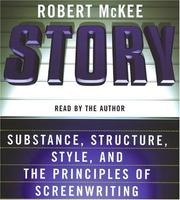
The definitive text on narrative structure — understanding acts, turning points, and character desire gives you the backbone for any video format, from vlogs to documentaries.

Translates high-level story theory into practical, repeatable techniques for finding and telling personal stories — directly applicable to YouTube intros, hooks, and on-camera delivery.
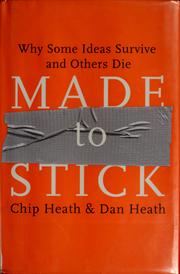
Explains the six principles (SUCCESs) that make ideas memorable and spreadable — the conceptual engine behind writing titles, hooks, and video concepts that viewers can't ignore.
Platform Mastery: Packaging, Algorithm & Growth
IntermediateUnderstand how YouTube's algorithm actually works, how to design titles and thumbnails that earn clicks, and how to engineer a channel for compounding growth.
▸ Study plan for this stage
Pace: 8–10 weeks total: ~2.5–3 weeks per book at 20–25 pages/day. Week 1–3: "Contagious"; Week 4–6: "Hooked"; Week 7–9: "Jab, Jab, Jab, Right Hook". Reserve Week 10 for review, synthesis, and completing capstone exercises.
- STEPPS Framework (Social Currency, Triggers, Emotion, Public, Practical Value, Stories) from 'Contagious' — each principle maps directly to why certain titles, thumbnails, and topics get shared organically
- Trigger design from 'Contagious': linking your content to high-frequency environmental cues so viewers think of your channel habitually, not just once
- The Hook Model from 'Hooked' (Trigger → Action → Variable Reward → Investment): understanding how YouTube itself is engineered as a habit-forming product and how your videos must fit inside that loop
- Variable reward mechanics from 'Hooked': designing video pacing, open loops, and series structures that keep viewers returning for the next 'hit' of reward
- Minimum Viable Action from 'Hooked': reducing friction at every click point — thumbnail clarity, title scannability, and the first 30 seconds — so the viewer's Action step is effortless
- The 'Jab, Jab, Jab, Right Hook' give-first philosophy from Gary Vaynerchuk: building audience trust and goodwill through high-value content before making any ask (subscribe, buy, share)
- Platform-native storytelling from 'Jab, Jab, Jab, Right Hook': every platform has its own 'native language'; YouTube content must be formatted, paced, and packaged for how YouTube users actually consume — not repurposed from elsewhere
- Compounding growth through audience investment: combining Berger's shareability triggers, Eyal's retention loops, and Vaynerchuk's value-first cadence into a repeatable publishing system that builds on itself
- After reading 'Contagious', can you identify which of the six STEPPS principles are present (or absent) in your three best-performing and three worst-performing video titles and thumbnails — and explain the gap?
- From 'Hooked', how does YouTube's own recommendation algorithm mirror the Hook Model's four phases, and what specific choices in your video structure (hook, pacing, end screen, series design) map to each phase?
- Using Vaynerchuk's native-content framework from 'Jab, Jab, Jab, Right Hook', what does a 'jab' look like on YouTube specifically — and how many jabs should precede a 'right hook' ask on your channel given your current subscriber count and trust level?
- How do Berger's 'Triggers' and Eyal's 'External Triggers' (notifications, thumbnails, search results) overlap, and how can you engineer both simultaneously when planning a video title and thumbnail pair?
- What is the difference between content that is merely watched and content that is shared, according to 'Contagious' — and which of your video ideas would cross that threshold and why?
- Synthesizing all three books: what is your repeatable, step-by-step packaging checklist for every video you publish, grounded in at least one principle from each book?
- STEPPS Audit (after 'Contagious'): Pull 10 of your existing or planned video ideas. Score each one 0–2 against all six STEPPS principles. Rewrite the title and redesign the thumbnail concept for the two lowest-scoring videos to inject at least three STEPPS elements each.
- Trigger Mapping (after 'Contagious'): List 10 everyday moments or contexts your target viewer experiences (morning commute, post-gym, Sunday planning). For each, brainstorm one video topic that acts as a natural trigger — then draft a title that embeds that contextual cue.
- Hook Model Video Breakdown (during 'Hooked'): Watch 5 top-performing videos in your niche and timestamp exactly where each phase of the Hook Model occurs (external trigger = thumbnail/title; action = click + first 30 sec; variable reward = the payoff moment; investment = comment/subscribe/playlist). Write a one-page teardown per video.
- Variable Reward Script Outline (after 'Hooked'): Outline one upcoming video using Eyal's variable reward structure — build in at least two 'open loops' that are resolved only near the end, and one 'investment' prompt (a question to answer in comments) that seeds the next video's topic.
- Jab Mapping Content Calendar (after 'Jab, Jab, Jab, Right Hook'): Plan a 30-day, 8-video publishing calendar. Label each video explicitly as a 'jab' (pure value, no ask) or 'right hook' (clear CTA). Ensure a minimum 3:1 jab-to-hook ratio and write a one-sentence 'native YouTube value statement' for each jab explaining why a viewer would share it.
- Capstone Packaging System (Week 10 synthesis): Using all three books, build a one-page 'Video Launch Checklist' with 15–20 items drawn from STEPPS, the Hook Model, and the jab/right-hook ratio. Apply it to your next real upload from ideation through the publish button, then review your click-through rate and average view duration after 72 hours and annotate which checklist items you believe influe
Next up: By internalizing how shareability (Berger), habit loops (Eyal), and value-first platform storytelling (Vaynerchuk) drive clicks and retention, the reader is now ready to move into advanced monetization and audience-to-business conversion — understanding that a loyal, habituated audience is the prerequisite asset for any revenue strategy.

Builds directly on 'Made to Stick' by explaining why people share content — the STEPPS framework maps perfectly onto what makes a video get recommended and passed around.

Decodes the habit-forming product loops that platforms like YouTube are built on; understanding the Hook Model from the inside lets you design videos and series that keep viewers coming back.

Platform-native content strategy: gives a concrete framework for matching content format and 'ask' to the specific context of each platform, with YouTube-relevant lessons on value-first publishing.
Business Layer: Turning Views into Revenue
ExpertBuild a sustainable creator business — diversify beyond AdSense into products, community, and brand deals, and treat the channel as a scalable media company.
▸ Study plan for this stage
Pace: 6–8 weeks total: Weeks 1–3 on "Building A StoryBrand" (~30 pages/day, including reflection time); Weeks 4–6 on "The $100 Startup" (~25 pages/day); Weeks 7–8 reserved for integration exercises, combining frameworks from both books into your channel's business plan.
- The SB7 StoryBrand Framework: positioning your audience as the Hero and your channel/brand as the Guide — not the star
- Clarifying your brand message so that viewers instantly understand what you offer, why it matters to them, and what action to take
- The BrandScript: crafting a one-liner, website/channel-art copy, email sequences, and lead generators rooted in story structure
- Identifying and articulating your audience's external, internal, and philosophical problems to deepen emotional resonance and loyalty
- The 'Value-First' micro-business model from The $100 Startup: launching lean offers (courses, templates, memberships, coaching) with minimal overhead before scaling
- Matching skills + passion + market demand — Guillebeau's 'sweet spot' — to decide which revenue streams to build beyond AdSense
- The One-Page Business Plan (Guillebeau's Instant Business template): rapid validation of a product or service idea tied to your existing audience
- Treating your YouTube channel as a scalable media company: building systems, offers, and community assets that generate revenue independently of the algorithm
- After reading Building A StoryBrand, can you write a clear one-liner for your channel that names your target viewer, the problem they face, and the transformation you provide — without making yourself the hero?
- How does the StoryBrand 'Guide' archetype change the way you write video titles, channel descriptions, community posts, and sponsorship pitches compared to how you wrote them before?
- Using Guillebeau's 'sweet spot' framework, which specific skill or knowledge asset from your channel could become a paid product (e.g., a course, template pack, or live workshop) that your existing audience would pay for right now?
- What does The $100 Startup teach about validating a product idea before investing significant time or money — and how would you apply that validation process to one concrete offer on your channel?
- How would you combine Miller's BrandScript with Guillebeau's One-Page Business Plan to pitch a brand deal or sponsorship in a way that serves your audience's story rather than interrupting it?
- What are the three most important non-AdSense revenue streams you will prioritize for your channel, and how do the principles from both books justify that prioritization?
- BrandScript Sprint: Complete Donald Miller's full BrandScript for your channel (hero, problem, guide, plan, call to action, success, failure). Then rewrite your YouTube channel description, channel trailer script, and 'About' page using only language drawn from that BrandScript.
- One-Liner Stress Test: Write 5 different one-liner versions of your channel's value proposition using the StoryBrand formula. Test each one by sharing it with 3–5 people outside your niche and asking them to explain back what you do — refine until the message lands without explanation.
- Lead Generator Design: Following Miller's advice on lead generators, create a free, high-value resource (checklist, mini-guide, template, or email course) tied directly to your audience's #1 problem. Set up a simple landing page and promote it in one video description to begin building an email list.
- Micro-Offer Validation (The $100 Startup method): Identify one skill or piece of knowledge your channel demonstrates. Design a micro-offer (e.g., a $27–$97 workshop, template bundle, or 30-min coaching call). Before building it, announce it to your email list or community tab with a pre-order option — only build it if you get at least 5 paying commitments.
- One-Page Business Plan: Use Guillebeau's Instant Business template to map out one revenue stream end-to-end: the product/service, the target customer, the transformation promised, the price, the marketing method, and the first 30-day action steps. Pin this document somewhere visible and review it weekly.
- Brand Deal Pitch Deck: Using StoryBrand messaging principles, create a one-page media kit that positions your audience (not your subscriber count) as the asset. Frame the sponsor as a 'tool' that helps your audience-hero succeed. Send this kit to at least two brands relevant to your niche as a cold outreach exercise.
Next up: By internalizing StoryBrand's messaging clarity and The $100 Startup's lean business-building mindset, you will have a functioning creator business framework — making you ready to tackle advanced scaling topics such as team-building, systems automation, and long-term audience growth strategy in the next stage.

Provides a messaging framework (the SB7 framework) that clarifies your channel's value proposition — essential for pitching brand sponsors, writing sales pages, and selling your own products.
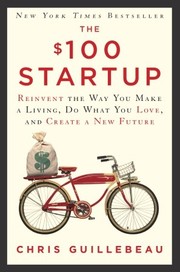
Practical, low-overhead playbook for launching products and services from an existing audience — gives the creator concrete steps to move from ad revenue dependency to a real, diversified business.
Discussion
Keep reading
Paths that share books, cover the same subject, or open a related topic.