Best Books on Green and Sustainable Chemistry
This curriculum builds a rigorous, practice-oriented mastery of green chemistry across four stages. Starting from the foundational principles and the 12 Rules, it progresses through the core technical pillars — atom economy, catalysis, solvents, and feedstocks — before arriving at advanced design frameworks and real-world industrial application. Each stage equips the reader with the vocabulary and conceptual tools needed to absorb the next.
Foundations & The 12 Principles
IntermediateInternalize the 12 Principles of Green Chemistry, understand atom economy and E-factor metrics, and build a shared language for evaluating chemical processes through a sustainability lens.
▸ Study plan for this stage
Pace: 4–5 weeks, ~40–50 pages/day. Week 1–2: Anastas' foundational chapters on the 12 Principles and metrics (atom economy, E-factor). Week 3–4: Cann's real-world case studies applying those principles. Week 5: Review, synthesis, and capstone exercises.
- The 12 Principles of Green Chemistry as a unified framework for designing safer, more sustainable chemical processes
- Atom economy: calculating the percentage of starting materials that end up in the desired product, and why it matters for waste reduction
- E-factor (environmental factor): the ratio of waste to product, and how it reveals the true environmental cost of synthesis
- Prevention vs. remediation: why designing out hazards upfront is more effective than managing them after the fact
- Catalysis and process intensification as tools to improve atom economy and reduce E-factor
- Real-world trade-offs: how the 12 Principles apply across diverse industries (pharmaceuticals, polymers, agrochemicals) with competing constraints
- Metrics and measurement: using atom economy and E-factor to compare and evaluate chemical processes quantitatively
- Designing for safer chemistry: how to select solvents, reagents, and conditions that minimize toxicity and environmental impact from the start
- What are the 12 Principles of Green Chemistry, and why is each one important for sustainable chemical design?
- How do you calculate atom economy for a chemical reaction, and what does a high vs. low atom economy tell you about process efficiency?
- What is the E-factor, how is it calculated, and how does it differ from atom economy in evaluating environmental impact?
- How do catalysts and process intensification help improve the sustainability of a chemical process?
- What are the key trade-offs when applying green chemistry principles in real-world industrial settings, and how do you prioritize competing goals?
- How would you redesign a conventional synthesis (from Cann's case studies) using the 12 Principles to reduce waste and hazard?
- Calculate atom economy and E-factor for 3–4 reactions from Anastas' examples; then repeat for 2 reactions from Cann's case studies to compare conventional vs. green alternatives.
- Create a one-page 'green chemistry audit' of a real industrial process (e.g., aspirin synthesis, polymer production from Cann): identify which Principles are violated and propose specific improvements.
- Map each of the 12 Principles to a case study in Cann's book; write a short paragraph explaining how each Principle applies (or could apply) to that case.
- Design a hypothetical 'greener' synthesis route for a compound discussed in either book: justify your choices using atom economy, E-factor, and at least 3 of the 12 Principles.
- Comparative analysis: select two competing synthesis routes from Cann's cases and score them against the 12 Principles using a rubric; explain which is 'greener' and why.
- Reflection essay: identify one Principle from Anastas that you find most challenging to implement in practice, using a specific example from Cann's cases to illustrate the difficulty.
Next up: This stage equips you with the conceptual toolkit and shared metrics to evaluate any chemical process; the next stage will deepen your ability to apply these principles to specific domains (e.g., catalysis, solvent selection, or life-cycle assessment) and tackle more complex, systems-level sustainability challenges.

The foundational text by the father of green chemistry himself. It introduces the 12 Principles, atom economy, and the philosophical framework that underpins every subsequent topic in this curriculum.

Immediately grounds the abstract principles in documented industrial case studies, helping the reader see how atom economy and waste reduction translate into real synthetic decisions before diving deeper.
Safer Solvents & Reaction Media
IntermediateUnderstand why solvents dominate the environmental footprint of chemistry, evaluate alternatives (water, ionic liquids, supercritical fluids, solvent-free), and apply solvent-selection guides confidently.
▸ Study plan for this stage
Pace: 4–5 weeks, ~40–50 pages/day. Week 1–2: Nelson's "Green Solvents for Chemistry" (foundational principles & solvent impact). Week 3: Transition chapters in Nelson + early chapters of Clark's Handbook. Week 4–5: Clark's Handbook (technology applications, case studies, selection frameworks).
- Solvents account for 80–90% of the mass in chemical manufacturing; understanding their environmental footprint is critical to green chemistry
- Water as a solvent: properties, advantages (abundance, safety, cost), limitations (polarity, miscibility), and strategies to overcome them (surfactants, co-solvents, temperature/pressure tuning)
- Ionic liquids: designer solvents with tunable properties, negligible volatility, potential for reaction selectivity and catalyst recovery—trade-offs in cost and biodegradability
- Supercritical fluids (especially CO₂): unique solvation properties above critical point, applications in extraction and synthesis, scalability challenges
- Solvent-free and solvent-minimization strategies: mechanochemistry, solid-state reactions, and reaction media alternatives (molten salts, deep eutectic solvents)
- Solvent selection frameworks: LCA, hazard assessment, process economics, and regulatory compliance (e.g., REACH, SDS criteria)
- Real-world case studies demonstrating solvent substitution in pharmaceutical, fine chemical, and industrial synthesis
- Trade-offs between greenness, cost, scalability, and reaction efficiency in solvent choice
- Why do solvents dominate the environmental footprint of chemical manufacturing, and what metrics quantify this impact?
- What are the key advantages and limitations of water as a green solvent, and what techniques can overcome its polarity and miscibility constraints?
- How do ionic liquids differ from conventional solvents in terms of design, properties, and environmental profile, and what are their main barriers to adoption?
- Compare supercritical CO₂ and water as alternative reaction media: when is each preferable, and what are the scalability and cost considerations?
- What is a solvent selection guide, and how would you use it to choose between water, ionic liquids, supercritical fluids, and solvent-free approaches for a given synthesis?
- Describe at least two industrial case studies from the readings where solvent substitution improved environmental performance, cost, or both.
- Conduct a mini-LCA: compare the environmental footprint (mass, toxicity, energy) of a conventional organic solvent vs. water or an ionic liquid for a reaction you find in Nelson's text; document assumptions and trade-offs.
- Solvent selection exercise: given a synthetic target (e.g., a pharmaceutical intermediate from Clark's case studies), use a solvent selection guide or decision tree to justify your choice of medium (water, IL, scCO₂, or solvent-free).
- Design a water-based alternative: take a reaction typically run in a volatile organic solvent and propose modifications (surfactants, co-solvents, temperature, pressure) to make it work in water, citing Nelson's strategies.
- Ionic liquid property prediction: select an ionic liquid from the literature, predict its solvation properties for a target reaction based on cation/anion structure, and compare to experimental data if available.
- Case study analysis: choose one industrial example from Clark's Handbook, map the solvent substitution pathway, identify barriers overcome, and estimate the environmental and economic gains.
- Solvent hazard comparison: create a matrix comparing water, ethanol, acetone, an ionic liquid, and supercritical CO₂ across toxicity, volatility, cost, and biodegradability; justify which is greenest for three different reaction types.
Next up: This stage establishes solvent selection as a core competency in green chemistry design, preparing you to integrate solvent choices into multi-step synthetic routes and process intensification strategies in the next stage.

A systematic survey of alternative reaction media — water, supercritical CO₂, ionic liquids, and solvent-free systems — giving the reader both the science and the selection criteria needed to replace hazardous solvents.

A broader reference that places solvent choice within the full green chemistry toolkit; reading it after Nelson deepens understanding of how solvent decisions interact with catalysis, feedstocks, and process design.
Catalysis for Greener Synthesis
IntermediateMaster the role of catalysis — heterogeneous, homogeneous, enzymatic, and organocatalysis — as the primary lever for improving selectivity, reducing waste, and enabling atom-economical transformations.
▸ Study plan for this stage
Pace: 4–5 weeks, ~25–30 pages/day (approximately 600–750 pages total across both books)
- Catalysis as a cornerstone of green chemistry: how catalysts enable reactions with lower activation energy, reduced byproducts, and improved atom economy
- Heterogeneous catalysis: solid catalysts, surface chemistry, and industrial applications in greener synthesis (e.g., fixed-bed reactors, catalyst recycling)
- Homogeneous catalysis: dissolved catalysts, selectivity control, and transition-metal-based systems for fine chemical and pharmaceutical synthesis
- Enzymatic catalysis: biocatalysts and their advantages in specificity, mild conditions, and biodegradability for sustainable transformations
- Organocatalysis: small organic molecules as catalysts, avoiding heavy metals, and enabling asymmetric synthesis without metal coordination
- Atom economy and catalytic efficiency: quantifying waste reduction through catalytic pathways versus stoichiometric alternatives
- Catalyst design principles: selectivity, reusability, cost, and environmental impact as drivers of sustainable catalyst development
- Integration of catalysis with the Ten Commandments of Sustainability: how catalytic strategies address prevention, waste reduction, and energy efficiency
- What is the fundamental role of a catalyst in green chemistry, and how does it reduce waste and improve atom economy compared to stoichiometric reactions?
- Distinguish between heterogeneous, homogeneous, enzymatic, and organocatalytic systems, and provide an example of when each is most appropriate for sustainable synthesis.
- How do surface chemistry and active sites in heterogeneous catalysts determine selectivity and turnover frequency, and what design strategies improve catalyst reusability?
- Explain the advantages and limitations of enzymatic catalysis in industrial green chemistry, including substrate specificity, cofactor requirements, and scalability challenges.
- What are the key principles of organocatalysis, and how does it enable asymmetric synthesis while reducing reliance on toxic metal catalysts?
- How can you calculate and compare atom economy for a catalytic route versus a stoichiometric route, and what role does catalysis play in achieving the 100% atom economy ideal?
- Analyze a case study from Manahan's text on a green synthesis using catalysis; map the reaction to one of the Ten Commandments of Sustainability and identify which type of catalyst (heterogeneous, homogeneous, enzymatic, or organocatalytic) was employed and why.
- Calculate atom economy for a traditional multi-step synthesis versus a catalytic alternative (use examples from Umile or literature); present findings in a one-page comparison showing waste reduction and efficiency gains.
- Design a hypothetical heterogeneous catalytic process for a target transformation: specify the catalyst material, support, active site, reaction conditions, and recycling strategy; justify your choices based on selectivity and sustainability criteria.
- Research and summarize one industrial application of enzymatic catalysis (e.g., enzyme-catalyzed ester hydrolysis, amino acid production); evaluate scalability, cost, and environmental benefits relative to chemical catalysis.
- Conduct a literature search for an organocatalytic asymmetric synthesis (aldol, Diels–Alder, or similar); present the mechanism, compare it to a metal-catalyzed equivalent, and discuss advantages in terms of green chemistry principles.
- Create a comparison matrix of four catalytic systems (heterogeneous, homogeneous, enzymatic, organocatalytic) for a specific functional group transformation (e.g., C–C coupling, oxidation, reduction); evaluate on selectivity, cost, toxicity, and reusability.
Next up: This stage establishes catalysis as the central tool for achieving green synthesis goals; the next stage will likely deepen into specific reaction types (oxidations, reductions, C–C couplings) where these catalytic principles are applied, or explore how catalysis integrates with other green chemistry strategies like solvent selection and process intensification.
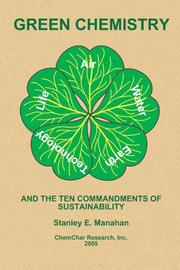
Bridges the principles stage to catalysis by framing sustainability imperatives clearly, making it easier to evaluate catalytic strategies against green metrics before tackling specialist texts.

Focuses specifically on how catalytic design choices — metal catalysts, organocatalysts, biocatalysts — reduce energy use, improve selectivity, and cut byproduct formation, directly applying green metrics introduced earlier.
Renewable Feedstocks & Designing Out Harm
ExpertEvaluate biomass and renewable feedstocks as petrochemical replacements, apply green design to minimize toxicity and hazard at the molecular level, and synthesize all prior knowledge into holistic process design.
▸ Study plan for this stage
Pace: 8–10 weeks, ~40–50 pages/day. Start with Clark's biomass fundamentals (2–3 weeks), transition to Lancaster's green chemistry principles (2–3 weeks), then deep-dive into Anastas's molecular design framework (2–3 weeks), with 1–2 weeks for synthesis and capstone project.
- Biomass as a renewable carbon source: composition, availability, and advantages over fossil fuels as feedstock for chemical production
- Conversion pathways from biomass to platform chemicals: hydrolysis, fermentation, depolymerization, and thermochemical routes
- The 12 Principles of Green Chemistry as a systematic framework for evaluating and designing safer chemical processes
- Molecular-level hazard assessment: toxicity mechanisms, bioaccumulation, and persistence in relation to chemical structure
- Benign-by-design strategies: molecular modification, functional group selection, and structural choices that eliminate hazards before synthesis
- Integration of feedstock sustainability with process safety: ensuring renewable sources don't compromise worker or environmental safety
- Holistic process design: balancing atom economy, catalysis, solvent choice, and end-of-life considerations in a single system
- Case studies linking biomass feedstocks to safer end products: real-world examples of green chemistry in practice
- What are the major biomass feedstocks (cellulose, hemicellulose, lignin, oils, sugars) and what chemical building blocks can each be converted into?
- How do the 12 Principles of Green Chemistry apply specifically to biomass-derived processes, and which principles are most critical when designing from renewable feedstocks?
- Explain the difference between 'end-of-pipe' toxicity reduction and benign-by-design approaches; give an example of each from the texts.
- How can molecular structure be modified to reduce toxicity, persistence, or bioaccumulation while maintaining chemical functionality?
- Design a complete green chemistry process (feedstock → intermediate → product) that incorporates renewable feedstocks, minimizes hazard at the molecular level, and addresses at least 8 of the 12 Principles.
- What are the trade-offs between feedstock renewability and process safety, and how can they be reconciled in industrial practice?
- Feedstock audit: Select three commodity chemicals (e.g., adipic acid, ethylene glycol, caprolactam). For each, map the current petrochemical route and identify a biomass-based alternative from Clark's text; compare atom economy, hazards, and renewable content.
- Principles mapping exercise: Take one complete process from Lancaster's case studies and annotate it against all 12 Principles; identify which principles are well-addressed and which are compromised, then propose redesigns.
- Molecular hazard analysis: Using Anastas's framework, analyze the structure of three chemicals (one petroleum-derived, two bio-derived). For each, identify functional groups that drive toxicity or persistence, then sketch a benign-by-design modification.
- Biomass conversion pathway design: Choose a specific biomass feedstock (e.g., lignin, cellulose, or algae oil). Design a 3–5 step conversion sequence to a target chemical, justifying each step against green chemistry principles.
- Capstone process design: Develop a complete, integrated green chemistry process for a real product (e.g., a biopolymer, pharmaceutical intermediate, or agrochemical). Include feedstock selection, conversion steps, hazard minimization at the molecular level, and a brief life-cycle perspective.
- Literature synthesis: Write a 2–3 page comparative analysis of how Clark, Lancaster, and Anastas each address the challenge of designing safer chemicals from renewable sources; identify convergences and tensions in their approaches.
Next up: This stage equips you with the ability to evaluate and design complete green chemical systems from feedstock to product, integrating sustainability with molecular-level safety—preparing you to tackle advanced topics such as catalysis optimization, life-cycle assessment, and industrial-scale implementation of green chemistry.

The definitive entry point into renewable feedstocks — lignocellulose, sugars, oils — showing how bio-based starting materials reshape retrosynthetic thinking and supply-chain sustainability.

Synthesizes feedstocks, catalysis, solvents, and toxicity reduction into a unified process-design perspective; its worked examples and metrics make it the ideal capstone for integrating everything learned across the curriculum.

Closes the curriculum by focusing on designing intrinsic safety and reduced hazard directly into molecular structure — the most advanced expression of green chemistry philosophy and the frontier of the field.
Discussion
Keep reading
Paths that share books, cover the same subject, or open a related topic.