Green chemistry gets misread as environmental compliance: swap the bad solvent, cut the waste stream, file the paperwork. That framing produces incremental fixes bolted onto an existing route. The field's actual claim is stronger and more interesting — that hazard, waste, and energy use are properties you design into a synthesis at the bench, and that the cheapest place to remove them is before the route exists.
That is why the reading order matters. Start with the design framework, then see it applied to real industrial processes where the trade-offs were genuine, then go deep on the specific levers — solvents, catalysis, feedstocks — that do most of the work.
The framework first
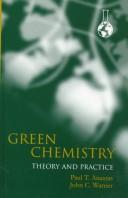
Begin with Green chemistry by Anastas and Warner, the book that codified the twelve principles and gave the field its vocabulary. It is short and it is foundational; almost every later text assumes you have it. Read it for the design logic, not for procedures.
Follow it immediately with Real-world cases in green chemistry, which grounds those principles in specific processes that industry actually changed. Reading the framework and the cases back to back is the single most useful pairing on this path, because the cases show you where the principles conflict with each other and how chemists chose.
For a broader survey with a sustainability frame around the chemistry, Green Chemistry and the Ten Commandments of Sustainability by Manahan situates the discipline inside environmental and industrial ecology. Manahan writes for a course context, so it works well if you want structure and problem sets. Green Chemistry by Lancaster covers similar introductory territory as a textbook with more chemistry detail; pick one of these two rather than both unless you want the reinforcement.
The three big levers
Solvents dominate mass intensity in most syntheses, so Green Solvents for Chemistry earns its early place — supercritical fluids, ionic liquids, water, and the honest limits of each. Then Catalysis for Sustainability covers the other high-leverage move: catalytic routes that cut stoichiometric waste and energy demand, with attention to how catalysis and green design reinforce each other.
Feedstocks are the third lever, and Introduction to Chemicals from Biomass handles it well — platform molecules, biorefinery concepts, and the gap between what is chemically possible and what is economically deployed today. Clark is measured about that gap, which makes the book more useful than the promotional literature around bio-based chemicals.
Reference and the historical record
Handbook of Green Chemistry and Technology is a reference volume, not a read-through — keep it for depth on a specific transformation or technology once you have the framework. And Benign by Design is worth reading late for historical perspective: an early collection that shows what the field looked like as it was forming, and how much of the current agenda was visible from the start.
One honest caveat: much of this literature is optimistic about deployment timelines, and cost, scale-up, and regulation determine what actually reaches production. Read the case studies as evidence of what is possible, not as a report on what is standard. If you want to see how these ideas connect to broader social and material history, the related subject hubs branch out from here.
Work the sequence and green chemistry stops being a compliance checklist and becomes how you plan a route. Follow the full path to keep the books in order.
Follow the full ordered path here: How to Learn Green Chemistry From Books, in Order.