Grafting and Plant Propagation: The Best Books to Read, in Order
Propagation is a craft with a small amount of essential theory behind it, and this path front-loads the theory only as far as it makes the cuts make sense. You start with general propagation — seed, cuttings, layering, division — then move to grafting proper, where timing, scion wood and cambium contact are everything. The third stage covers woody plants at nursery scale, where the failure rates get expensive, and the last stage is the reference shelf plus the two orchard books that show what all of it is actually for.
How a cutting takes
BeginnerUnderstand rooting, dormancy and cambium well enough to know why a technique works, and get a first season of successful cuttings and divisions
▸ Study plan for this stage
Pace: 4-5 weeks of reading (Toogood 294pp and Druse 256pp are heavily photographic and go faster than the page count suggests; Hill is 168pp, Capon 268pp), but the practical half is seasonal — softwood cuttings want early summer, hardwood cuttings late autumn, and stratified seed needs months of cold. Rea
- Adventitious rooting: why a detached stem makes roots at all, and what auxin is doing (Capon's hormone chapters are the explanation Toogood's instructions assume)
- The four propagation families — seed, cuttings, layering, division — and which plants are worth which
- Softwood, semi-ripe and hardwood cuttings as three different bets on wood maturity and season
- Meristem, cambium and apical dominance from Capon, which is the entire theoretical basis of everything in the next stage
- Seed dormancy and its breaking: stratification, scarification, after-ripening — Hill's strongest material
- Humidity, not water, is what kills or saves a cutting: the mist bench, the polythene tent, the closed case
- Clonal versus sexual propagation, and why the seed of a named apple is not that apple
- Why does a cutting need leaves to root, and why do those same leaves kill it if the humidity is wrong?
- Given an unfamiliar shrub, how would you decide between a cutting, a layer and a division — and what in Toogood or the RHS tradition tells you?
- What is the cambium, where is it, and why will nothing in the grafting stage work without it?
- Which of Hill's dormancy-breaking treatments applies to a seed that germinates in nature after a cold wet winter, and how long does it need?
- Why can Druse recommend layering for plants that refuse to root as cuttings — what is the layer getting that the cutting is not?
- Take one batch of softwood cuttings following Toogood's photographed sequence exactly, and a second batch varying one thing only (hormone, node position, or medium). Label both and record the strike rate — this is the baseline every later claim gets measured against.
- Do Druse's simple layering on a shrub you already own and leave it for a full season; separate it the following year. It costs nothing and it demonstrates the point Toogood's cuttings chapter cannot.
- Work Hill's stratification directions for one seed lot that needs cold — bag it, date it, put it in the fridge, and sow it on the day his schedule says. Record germination against his stated percentage.
- Cut a green stem cleanly across and, with Capon's diagrams beside you, identify bark, cambium and pith by eye. Repeat on a woody stem in winter. Do not proceed to grafting until you can find the cambium every time without hesitating.
Next up: Once you can root a cutting deliberately and find the cambium by eye, grafting stops being a mysterious skill and becomes a matter of matching two cambiums and getting the timing right — which is exactly what Garner's book is about.
The right first book: technique by technique, photographed step by step, with no assumed background. Toogood is a working propagator and this is the shortest route from nothing to a tray of rooted cuttings.
The same material written as a pleasure rather than a manual, and the best book here on layering and division. Read it alongside Toogood — where Toogood tells you what to do, Druse explains why a gardener would want to.
The Storey Books classic, strongest on seed handling, stratification and the small practical details that decide whether a batch germinates. Read it third to fill the gaps the two picture books leave.

The theory stage, kept to one book. Meristems, cambium, apical dominance and hormone action — everything a graft depends on, explained for gardeners rather than for students. Read it before touching a knife.
Grafting, hands on
IntermediateChoose a rootstock, collect and store scion wood, and execute whip-and-tongue, cleft and bud grafts at the right time of year
▸ Study plan for this stage
Pace: 2-3 weeks of reading — Garner is 263pp of dense, unillustrated 1940s prose and is the slow one; Lewis and Alexander is 112pp of pictures, Southwick's Storey bulletin is 32pp and takes an evening, MacDonald 228pp. But the practical work is locked to the calendar: collect scion wood in dormancy, graft
- Union formation: callus, cambial contact, and why a graft fails when the two cambiums merely touch instead of matching
- Scion wood — when to cut it, how to store it, and why dormancy of the scion against activity of the rootstock is the whole timing rule
- Whip-and-tongue, cleft, side and rind grafts, and the stock diameters each one suits
- Budding as a separate season and a separate technique: T-budding and chip budding, done on a growing stock
- Graft compatibility and incompatibility — what will take on what, and the delayed failures that show up years later
- Sealing, tying and aftercare: the unglamorous half that decides survival
- Herbaceous and vegetable grafting (MacDonald's distinctive material) — greenhouse tomato and cucurbit work Garner predates entirely
- Why must the scion be dormant and the rootstock waking, and what happens if you reverse that?
- Given a rootstock of pencil thickness and a scion of the same, which graft would Garner and Lewis both point you to, and why not a cleft graft?
- What is chip budding doing differently from T-budding, and in what circumstances does Lewis and Alexander's illustration show it winning?
- How would you recognise delayed graft incompatibility, and how many years might pass before it appears?
- What does MacDonald cover that Garner cannot — and why does that reflect seventy years of change in the industry rather than a defect in Garner?
- Cut and store a bundle of dormant scion wood exactly as Garner specifies — labelled, moist, cold — and check its condition at grafting time. Wood that has dried or broken bud in storage is the commonest first-year failure.
- Make ten practice whip-and-tongue cuts on prunings before touching real scion wood, matching the cuts against Lewis and Alexander's illustrations. Then follow Southwick's bulletin end to end on one fruit tree: it is thirty pages and it produces an actual graft.
- Do a T-bud and a chip bud on the same rootstock species in the same summer week, and compare take rates in autumn. The two books disagree slightly on which is easier; settle it on your own bench.
- Read Garner's account of union formation, then cut open one failed graft and one successful one from your own work. Identify callus, cambial bridge, or the gap where contact never happened.
- Try one of MacDonald's herbaceous grafts — a tomato on a vigorous rootstock — in a greenhouse or on a windowsill. It takes weeks rather than a year and gives you a second, much faster feedback loop.
Next up: With the cuts working on single plants, the next problem is repetition — hundreds of a species, on a schedule, with a failure rate that now costs money, which is the world Toogood's directory and Macdonald's and Dirr's nursery books are written for.
First published 1947 and still the standard work in English — every later grafting book is in conversation with it. Garner covers the physiology of union formation before the cuts, which is why it has outlasted the manuals that only show technique.

A short practical guide built around the actual cuts, and the clearest illustration of chip budding and T-budding on the list. Use it as the bench companion to Garner rather than as a substitute.
The Storey bulletin — thirty-odd pages, fruit trees only, and the fastest possible route to a successful first graft. Read it when you want to stop reading and go outside.

The modern successor to Garner, and much broader: herbaceous and vegetable grafting, greenhouse tomato and cucurbit work, and the commercial techniques Garner predates. Read it last in this stage for the material nobody else covers.
Woody plants at scale
IntermediatePropagate trees and shrubs reliably, species by species, and understand why nursery failure rates behave the way they do
▸ Study plan for this stage
Pace: 6-8 weeks, and none of it read cover to cover. Bruce Macdonald is 665pp and Dirr and Heuser 410pp; both are reference works, so read Macdonald's opening chapters on facilities and economics properly (perhaps 150pp) and then use both by lookup. The RHS directory is a technique section followed by hun
- Species-specific treatment as the real content of the field: there is no general method, only a method per genus
- Mist, fog and bottom heat — what the equipment does physiologically and what it costs to run (Macdonald is unusually honest about this)
- Stratification periods and hormone concentrations as looked-up numbers rather than remembered ones (Dirr and Heuser's core function)
- Batch economics: strike rate, timing, labour and the point at which a species is not worth propagating from cuttings at all
- Stock plant management — why the mother plant's condition determines the cutting's fate
- Seed propagation of woody plants, and where grafting or cuttings are chosen instead and why
- Micropropagation and tissue culture as the boundary of what a small operation can do
- For a genus you have never propagated, what is the lookup sequence — which of the three books do you open first, and what do you expect each to tell you?
- Which of Macdonald's costs would actually bite a hobbyist scaling to a few hundred plants, and which are purely commercial?
- Why do Dirr and Heuser give a stratification period rather than a rule, and what does that tell you about how the numbers were arrived at?
- What does the RHS directory offer that Dirr does not, and vice versa — when is each the right book?
- Name a woody species that is standard practice to graft rather than root, and reconstruct the economic reason.
- Pick five woody genera you want to grow and build a one-page table from Dirr and Heuser and the RHS directory: method, timing, hormone rate, stratification. Where the two books differ, note the difference rather than picking a winner — that is the real state of the knowledge.
- Propagate one genus at a batch size of at least fifty following Dirr and Heuser's stated treatment, and record the actual strike rate against the book's expectation. A twenty-percent gap on fifty plants is the lesson Macdonald's economics chapters are trying to teach.
- Cost out a mist bench or a simple fog setup for your own space using Macdonald's framework, including running cost, and compare it against the retail price of the plants it would produce in a year.
- Manage one stock plant deliberately for a season — hard-prune it, feed it, and take cuttings only from that growth — then compare its cuttings against ones taken from an unmanaged plant of the same species.
Next up: Nursery practice raises questions the practical books answer only by convention — why this stratification period, why this hormone rate — and Hartmann and Kester is where those conventions are traced back to the underlying research.

The big Royal Horticultural Society directory — a technique section, then hundreds of genera with the method that actually works for each. This is the book you look things up in, and the bridge from general technique to specific plants.

Written for commercial growers and honest about economics: what a mist bench costs to run, which species are not worth propagating from cuttings. The best book here on scaling past a few dozen plants.

Dirr and Heuser, seed to tissue culture, organised as a genus-by-genus reference with the specific treatments — stratification periods, hormone concentrations, timing. The most-consulted book on any serious propagator's shelf.
The reference shelf, and the orchard it is for
IntermediateWork from the standard textbook, and apply grafting and propagation to a real fruit planting over its whole life
▸ Study plan for this stage
Pace: Open-ended, and deliberately so. Hartmann and Kester is a 926-page university textbook and nobody reads it through; work the principles chapters in Part One over 6-8 weeks, then keep it for lookup for years. The two orchard books are ordinary reading — Otto 249pp and Phillips 423pp, three to four we
- The research basis behind the practical numbers: why a treatment works, not just that it does (Hartmann and Kester's whole purpose)
- Rootstock choice as the decision that sets tree size, precocity, disease resistance and spacing for the orchard's whole life
- Training and pruning systems, and how they follow from the rootstock chosen years earlier
- Orchard establishment as a biological system rather than a spray programme — Phillips's central argument, and he is an advocate for it
- Plant propagation's cell and tissue biology: polarity, juvenility, phase change and why cuttings from an old tree behave differently from cuttings from a seedling
- Micropropagation, virus indexing and certified stock — where commercial propagation meets plant health regulation
- The gap between a successful graft union and a productive tree fifteen years on
- When Dirr or Macdonald gives a treatment and Hartmann and Kester explains it, which underlying process is usually being invoked — and can you name three?
- How does rootstock choice constrain spacing, training system and expected yield, and where in Otto is that chain laid out?
- What is juvenility, why does it make cuttings from mature trees hard to root, and how do propagators get around it?
- Where does Phillips's account of orchard health differ from conventional fruit-growing advice, and what is he asking you to accept on his authority as a grower rather than on evidence?
- You have grafted fifty apples on three rootstocks. What decisions from Otto do you now have to make in the first two years, and which of them are irreversible?
- Take one number you used in the previous stage — a stratification period, an IBA concentration — and trace it back through Hartmann and Kester to the process it is based on. Do this three times; it converts the reference books from recipes into reasoning.
- Plan a small orchard on paper from Otto: rootstocks, varieties, pollination partners, spacing and training system, sized to land you actually have. Then check the rootstock choices against Hartmann and Kester's chapter on the topic.
- Read Phillips's chapter on establishing grafted trees and identify which of his recommendations are standard horticulture and which are specific to his holistic argument. Keeping the two apart is the skill.
- Graft your own trees for that plan rather than buying them, and keep a record for five years of union quality, vigour and first fruiting by rootstock. This is the only exercise on the path that answers the question the whole path is asking.
Next up: This is the end of the path: from here the reading is species-specific and the learning happens in the propagating bench and the orchard rather than on the page.

The university textbook the whole field is taught from, now Hartmann, Kester, Davies and Geneve. Also catalogued under its original title Plant Propagation: Principles and Practices — the same work. Expensive and worth it once you know what you are looking up.
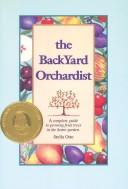
The practical answer to what grafting is for: rootstock choice, spacing, training and pruning for a home fruit planting. Read it before you graft fifty trees you then have to manage.

Phillips on orchard health as a biological system rather than a spray schedule, with a good chapter on establishing grafted trees. The closing book because it changes what you are propagating toward — a living orchard rather than a row of successful unions.
Discussion
Keep reading
Paths that share books, cover the same subject, or open a related topic.