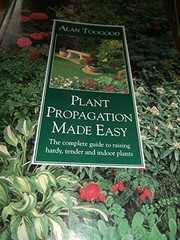
Begin with Alan Toogood's Plant propagation made easy, a photographed technique-by-technique manual that assumes nothing, and get a season of rooted cuttings behind you before you go near a grafting knife. The grafting books all assume you already understand cambium, dormancy and timing, and readers who skip straight to them usually fail at the aftercare rather than at the cut.
That is the one genuine trap in this subject. Grafting looks like a manual skill, so the natural instinct is to buy a knife and copy a diagram. But the union succeeds or fails on things a diagram cannot show you — whether the scion wood was collected dormant and stored properly, whether the rootstock is at the right stage, whether the cambial layers are actually in contact under the tie. A short amount of botany fixes this permanently.
Stage one: how a cutting takes
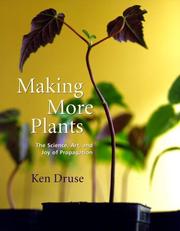
Plant propagation made easy is the shortest route from nothing to a tray of rooted material. Ken Druse's Making More Plants covers the same ground written as a pleasure rather than a manual, and is the best book here on layering and division. Lewis Hill's Secrets of plant propagation is the Storey classic and is strongest on seed: stratification, scarification, and the small handling details that decide whether a batch germinates. Then read one theory book, Brian Capon's Botany for gardeners — meristems, cambium, apical dominance, hormone action, written for gardeners rather than for botany students. Everything a graft depends on is in there.
Stage two: grafting, hands on
R. J. Garner's The grafter's handbook first appeared in 1947 and is still the standard work in English; every later grafting book is in conversation with it. It covers the physiology of union formation before it covers cuts, which is exactly why it has outlasted the manuals that only show technique. Grafting and Budding by W. J. Lewis is a short practical guide organised around the cuts themselves and has the clearest chip-budding and T-budding illustrations on this list — a bench companion to Garner, not a replacement. Larry Southwick's Grafting Fruit Trees is a thirty-odd-page Storey bulletin, fruit trees only, and the fastest way to a successful first graft. Peter MacDonald's The manual of plant grafting is the modern successor to Garner and much broader: herbaceous and vegetable grafting, greenhouse tomato and cucurbit work, and commercial methods Garner predates.
Stage three: woody plants at scale
Alan Toogood's RHS Propagating Plants is the big Royal Horticultural Society directory — a technique section followed by hundreds of genera with the method that actually works for each. It is a lookup book, and the bridge from general technique to specific plants. Bruce Macdonald's Practical woody plant propagation for nursery growers is written for commercial growers and is honest about economics: what a mist bench costs to run, which species are not worth propagating from cuttings at all. Michael Dirr and Charles Heuser's The reference manual of woody plant propagation runs seed to tissue culture, genus by genus, with specific stratification periods and hormone concentrations. It is the most-consulted book on a serious propagator's shelf and the least readable cover to cover.
Stage four: the reference shelf, and the orchard it is for
Hartmann and Kester's Plant Propagation is the university textbook the field is taught from, now by Hartmann, Kester, Davies and Geneve. It is also catalogued under its original title, Plant Propagation: Principles and Practices — the same work, so buy once. It is expensive and worth it once you know what you are looking up.
Two orchard books close the path because they answer what all of this is for. Stella Otto's The Backyard Orchardist covers rootstock choice, spacing, training and pruning for a home fruit planting, and is best read before you graft fifty trees you then have to manage for twenty years. Michael Phillips's The holistic orchard treats orchard health as a biological system rather than a spray schedule and has a good chapter on establishing grafted trees. It changes what you are propagating toward. The full path below sets out the stage goals and study plans; more growing subjects live on Discover.
Follow the full ordered path here: The Best Grafting and Plant Propagation Books to Read First.
Ready to learn something deeply?
Build a reading path — free