The Best Books on Fused Glass Art
This curriculum starts at the intermediate level, assuming the learner has some basic familiarity with glass or crafts, and builds systematically through kiln-forming fundamentals, precise cutting and design, firing science, and finally advanced project work in dishes, jewelry, and sculptural art. Each stage deepens technical knowledge while expanding creative range, so skills compound across the full path.
Kiln-Forming Foundations
IntermediateEstablish a solid working vocabulary for fused glass: understand glass compatibility, basic kiln operation, and the logic of firing schedules before touching a project.
Walker's handbook is a canonical reference covering tools, kiln types, basic schedules, and safety; reading it second cements the practical vocabulary introduced by Aquino.
Glass Cutting & Design Precision
IntermediateMaster accurate glass cutting, scoring, and design layout so that dishes, jewelry pieces, and panels are cut cleanly and assembled with intention.
▸ Study plan for this stage
Pace: 4–5 weeks, ~20–25 pages/day with 2–3 days per week dedicated to hands-on practice
- Glass scoring techniques and tool selection for clean, controlled breaks
- Design layout principles: measuring, marking, and transferring patterns onto glass
- Understanding glass properties (thickness, brittleness, edge behavior) for precision cutting
- Safety protocols and workspace setup for accurate, injury-free cutting work
- Fusing design fundamentals: how cut pieces fit together for successful kiln assembly
- Tool maintenance and calibration to ensure consistent cutting results
- Common cutting errors and troubleshooting strategies for problem pieces
- What are the key differences between scoring techniques for straight cuts versus curved cuts, and when should each be used?
- How do you accurately transfer a design pattern onto glass while accounting for kerf loss and assembly tolerances?
- What safety equipment and workspace conditions are essential for precision glass cutting, and why does each matter?
- How do glass thickness and type affect your scoring pressure and breaking technique?
- What are the most common cutting mistakes in warm glass projects, and how can you prevent or correct them?
- How should cut pieces be organized and labeled to ensure accurate assembly during the fusing stage?
- Score and break 10–15 straight-line cuts on scrap glass, progressively increasing length and complexity; record pressure, angle, and break quality in a log
- Create a full-scale paper template for a simple dish design (8–10 pieces), then transfer it to glass and cut all pieces; compare final assembly fit to original design
- Practice curved cuts on 5–8 pieces using different radii; document which tool angles and scoring pressures yield the cleanest breaks
- Set up and calibrate your cutting tools (glass cutter, straightedge, breaking pliers); measure and document baseline performance
- Cut a complete jewelry piece design (earrings, pendant, or brooch) from start to finish, photographing each step and noting any adjustments made
- Troubleshoot a deliberately flawed cut (incomplete score, uneven pressure) and practice recovery techniques; document what you learn
Next up: Understanding precise cutting and layout techniques prepares you to confidently move into the fusing and firing stage, where your cut pieces must fit together perfectly and withstand kiln temperatures without cracking or distorting.
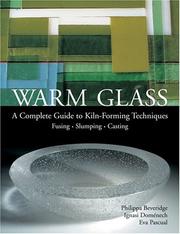
Focuses specifically on warm-glass (fusing and slumping) design principles, bridging cutting accuracy with compositional thinking for dishes and decorative panels.
Firing Schedules & Kiln Science
IntermediateUnderstand the physics of heat-work — annealing, devitrification, bubble control, and slumping — so you can write and troubleshoot your own firing schedules with confidence.
▸ Study plan for this stage
Pace: 4–5 weeks, ~20–25 pages/day, with 2–3 days per week reserved for kiln testing and note-taking
- Glass transition temperature (Tg) and annealing point (Aa) as the foundation for safe cooling schedules
- Heat-work: how time and temperature interact to fuse, slump, and shape glass
- Devitrification mechanisms and practical prevention strategies during firing
- Bubble nucleation, growth, and elimination through controlled heating rates and hold times
- Ramp rates and their effects on thermal stress, glass flow, and final piece integrity
- Slumping physics: gravity, viscosity, and temperature relationships for predictable results
- Reading and modifying firing schedules from Stone's templates to suit your specific kiln and glass type
- Troubleshooting common firing failures (cracks, bubbles, incomplete fusion, devitrification) using thermal principles
- What is the difference between glass transition temperature and annealing point, and why does this distinction matter for your firing schedule?
- How do ramp rates affect both the quality of fusion and the risk of thermal shock, and how would you adjust them for thick vs. thin glass?
- What causes devitrification in fused glass, and what firing techniques can you use to prevent or minimize it?
- Explain the relationship between time, temperature, and viscosity in slumping, and how you would adjust a slump schedule for a deeper bend.
- How do you identify and eliminate bubbles during the firing process, and what is the role of hold times in bubble control?
- Given a firing failure (e.g., incomplete fusion or cracking), how would you use the physics principles from Stone's book to diagnose and fix the problem?
- Create a detailed firing schedule from scratch for a simple fused glass project (e.g., two-layer fuse) using Stone's templates and your kiln's specifications; document ramp rates, hold times, and cooling rates.
- Conduct a controlled kiln test: fire identical glass samples at different ramp rates (e.g., 300°F/hr vs. 600°F/hr) and compare fusion quality and thermal stress; photograph and analyze results.
- Practice reading and interpreting Stone's firing schedules; select three different schedules and annotate them with notes on Tg, Aa, heat-work, and why each parameter is set as it is.
- Design and execute a slumping experiment: fire the same glass shape into molds at three different peak temperatures and hold times; measure and compare slump depth and surface quality.
- Troubleshoot a deliberately flawed firing schedule: identify the errors (e.g., too-fast ramp, insufficient annealing time, wrong peak temperature) and rewrite it correctly with justifications.
- Keep a kiln journal for 3–4 weeks: record every firing with peak temperature, ramp rates, hold times, cooling rates, and observed results (fusion quality, bubbles, devitrification, slump); identify patterns and refine future schedules based on data.
Next up: This stage equips you with the thermal science and troubleshooting confidence to move into advanced topics like multi-layer fusing, color chemistry under heat, and designing custom schedules for specialized techniques.

The single most focused book on firing schedules in print; Stone explains the science of each phase (bubble squeeze, process, anneal, cool) so you stop guessing and start engineering results.
Projects: Dishes, Jewelry & Wearables
IntermediateApply kiln-forming and cutting skills to finished, functional objects — slumped dishes, fused jewelry cabochons, and small wearable pieces — with attention to scale and finishing.
Bridges jewelry and decorative dish work with structured projects and clear instructions for slumping into molds, making it the ideal capstone for this functional-objects stage.
Advanced Art Glass & Personal Voice
ExpertMove beyond technique into expressive, gallery-quality work — sculptural panels, complex layering, and a personal artistic language — by studying master practitioners.
▸ Study plan for this stage
Pace: 4–5 weeks, ~25–30 pages/day, with 2–3 days per week dedicated to studio practice and reflection
- Glass as a material with deep historical and cultural significance—understanding its evolution from functional object to fine art medium
- The relationship between material properties and artistic possibility—how glass's transparency, light-refraction, and thermal behavior enable expressive work
- The role of craft tradition and technical mastery as a foundation for personal artistic voice
- How constraints of the medium (brittleness, thermal stress, optical properties) become creative opportunities rather than limitations
- The cultural and social contexts that shaped glass-making traditions and how contemporary artists build on or subvert these traditions
- The distinction between decorative, functional, and fine art glass—and how advanced practitioners blur these boundaries
- Glass as a vehicle for exploring themes of transparency, fragility, transformation, and permanence in human experience
- How does understanding glass's historical evolution from utilitarian object to fine art medium inform your own artistic intentions?
- What are the key material properties of glass (optical, thermal, structural) that Macfarlane discusses, and how can you leverage these in creating gallery-quality work?
- How do the craft traditions and technical lineages Macfarlane describes provide both constraints and creative possibilities for developing a personal artistic voice?
- What conceptual themes does Macfarlane explore through glass (transparency, fragility, transformation, etc.), and how might these resonate with your own artistic vision?
- How do contemporary glass artists move beyond technical virtuosity to create work with genuine expressive and conceptual depth?
- What role does cultural context play in glass-making traditions, and how can you engage with or challenge these traditions in your own work?
- Create a visual timeline mapping the evolution of glass from functional object to fine art, annotating key shifts in how artists used the medium—then write a 1-page reflection on where your own work fits in this continuum
- Select 3–4 master glass artists discussed or referenced in Macfarlane's work; research their practice and create a one-page analysis of how each artist's personal voice emerges from their relationship with glass's material properties
- Conduct a material study: create 5–6 small experimental panels exploring how light, layering, and color interact in glass—document with photos and written notes on what you discovered about the medium's expressive potential
- Write a 2–3 page artist statement draft that articulates your personal artistic vision for fused glass work, grounding it in specific concepts or themes from Macfarlane's book (e.g., transparency as metaphor, fragility as strength, etc.)
- Design a gallery-quality sculptural panel or series (sketch or maquette) that deliberately plays with one of glass's inherent constraints (thermal stress, brittleness, optical distortion) as a conceptual or aesthetic feature
- Curate a personal reference collection: gather 10–15 images of glass art (from Macfarlane's examples, museum collections, or contemporary artists) that speak to your emerging artistic voice, and write brief annotations explaining why each resonates
Next up: This stage grounds your technical mastery in historical, cultural, and conceptual depth, preparing you to synthesize these insights into a cohesive body of work and develop the critical vocabulary and artistic confidence needed to exhibit and contextualize your practice at a professional level.
Reading the deep history and cultural context of glass at this stage sharpens artistic intention and helps the advanced maker situate their own work within a rich, meaningful tradition.
Discussion
Keep reading
Paths that share books, cover the same subject, or open a related topic.