Learn glassblowing: working with molten glass
This curriculum takes a complete beginner from understanding glass as a material all the way through mastering the core hot-shop techniques needed to make finished vessels and sculptural forms. Each stage builds directly on the last — first developing material intuition and safety awareness, then layering in foundational hand skills, and finally deepening craft through color, form, and artistic vision.
Understanding Glass & the Hot Shop
BeginnerUnderstand what glass is, how it behaves when molten, the vocabulary of the craft, and the essential safety culture of a glassblowing studio before touching a blowpipe.
▸ Study plan for this stage
Pace: 2–3 weeks, ~20–25 pages/day; allow extra time to re-read dense material on glass chemistry and studio layout, and to pause and sketch diagrams as you go
- The material nature of glass: glass as an amorphous solid (not a true crystalline solid), its silica-based composition, and how raw batch materials (silica, soda ash, lime, etc.) combine in the furnace to create molten glass
- Viscosity and heat: how glass moves through a continuous range of working temperatures — from stiff and unworkable to fluid and uncontrollable — and why understanding this gradient is the foundation of every technique
- The glassblowing studio ('hot shop') layout: the roles and relative positions of the furnace (gather source), glory hole (reheating chamber), and annealer (controlled cooling oven), and why each station exists
- Core vocabulary of the craft: blowpipe, punty, gather, marver, jacks, blocks, bit, and the distinction between hot-working and cold-working processes
- The physics of a gather: how molten glass clings to the blowpipe through surface tension and gravity, and why the glassblower must keep the pipe in constant rotation to counteract gravity's pull
- Thermal shock and annealing: why glass must be cooled slowly and uniformly in an annealer to relieve internal stress, and what happens structurally when it is not
- Safety culture as craft culture: the unwritten and written rules of the hot shop — right-of-way near hot equipment, calling out 'hot glass,' protective eyewear (didymium lenses), burn protocols, and why safety is inseparable from artistic practice
- Historical and cultural context of studio glass: how Frantz situates the contemporary studio glass movement within the broader history of glassmaking, distinguishing industrial/factory production from the individual artist-craftsperson model
- What distinguishes glass from a crystalline solid, and why does that molecular structure make it uniquely suited to glassblowing?
- Describe the temperature 'working range' of molten glass: what happens to the material at the low end versus the high end of that range, and why must a glassblower constantly manage this window?
- Name the three primary heat sources in a hot shop, explain the distinct purpose of each, and describe where each sits in the workflow of making a single blown piece.
- What is annealing, why is it physically necessary, and what are the visible or structural consequences of skipping or rushing it?
- List at least five pieces of hot-shop vocabulary introduced in the book and use each correctly in a sentence describing a step in the glassblowing process.
- What safety behaviors does Frantz identify (explicitly or implicitly) as non-negotiable in a working hot shop, and what is the reasoning behind each?
- Vocabulary flashcards: After each reading session, write every new term on one side of an index card and a definition in your own words — not copied from the text — on the other. Quiz yourself daily until all terms are automatic.
- Hot-shop diagram: Without looking at the book, draw and label a bird's-eye-view floor plan of a hot shop showing the furnace, glory hole, annealer, marver table, and tool rack. Add arrows indicating the path a glassblower walks during a single gather-and-blow sequence, then compare it to Frantz's descriptions and correct your drawing.
- Temperature-viscosity timeline: Create a simple hand-drawn chart with temperature on the x-axis and a qualitative description of glass behavior on the y-axis (e.g., 'rigid,' 'stiff but workable,' 'honey-like,' 'too fluid to control'). Annotate it with which operations (marvering, blowing, jacking, punty attachment, annealing) happen at which zone.
- Safety protocol checklist: Write a one-page 'Hot Shop Entry Rules' document as if you were posting it on a studio wall for a new visitor. Base it entirely on principles found in Frantz's text. Read it aloud to someone unfamiliar with glassblowing and see if they can explain back why each rule exists.
- Reflective reading journal: After finishing the book, write a 300–500 word response to this prompt: 'How does Frantz argue that the studio glass movement changed the relationship between the maker and the material? Do you find her argument convincing, and why?' This cements both the historical context and your critical reading of the text.
- Material comparison exercise: Using only household materials, find three substances that approximate different viscosity states of glass (e.g., cold honey, warm syrup, water). Handle each briefly and write a paragraph connecting what you feel to Frantz's descriptions of working glass at different temperatures — noting where the analogy holds and where it breaks down.
Next up: Mastering the vocabulary, material science, and safety logic in Frantz's text gives you the conceptual language and physical intuition needed to understand and safely follow along when the next stage introduces hands-on technique — you will already know *why* every tool movement and reheating decision is made before you are asked to make one yourself.

A broad, accessible introduction to glass as a medium across history and technique — builds the cultural and material vocabulary every beginner needs before entering the hot shop.
Core Techniques & Foundational Skills
BeginnerLearn the fundamental hand skills of glassblowing — gathering, blowing, shaping, and annealing — and be able to produce basic symmetrical forms like cylinders and bubbles.
▸ Study plan for this stage
Pace: 2–3 weeks, ~20–25 pages/day — "The Craft of the Japanese Sword" is a moderately dense illustrated text; read each chapter twice, once for narrative comprehension and once to extract transferable craft principles applicable to glassblowing fundamentals.
- Heat and material relationship: Just as swordsmithing depends on reading the color and behavior of heated steel, glassblowing requires reading the glow and viscosity of molten glass to know when it is workable — Kapp's detailed descriptions of heat stages in metal provide a powerful analogy for unde
- Rhythmic, repetitive hand skill development: Kapp emphasizes that swordsmithing mastery comes from thousands of repeated, deliberate motions (hammering, folding, grinding). Apply this principle directly to glassblowing's core repetitive actions: gathering, blowing, and shaping.
- Symmetry through centered force: The Japanese sword's geometry is achieved by applying controlled, centered force during shaping. Translate this to glassblowing — centering the gather on the blowpipe and applying even rotational pressure are the foundations of producing symmetrical cylinders and bub
- Material memory and working windows: Kapp explains how steel has a narrow temperature window for effective shaping. Glass shares this property — understanding the concept of a 'working window' (too hot = uncontrollable, too cold = cracking) is a foundational safety and technique concept.
- The role of the master-apprentice observation model: Kapp documents how Japanese sword craft is transmitted through close observation and imitation. Use this as a framework for how to watch experienced glassblowers, what details to look for, and how to self-correct.
- Annealing as a non-negotiable finishing step: Kapp dedicates significant attention to the controlled cooling (annealing) of the sword blade to relieve internal stress. This maps directly to the glassblowing annealing oven — understanding *why* slow, controlled cooling prevents cracking is grounded i
- Tool as extension of the hand: The book illustrates how each swordsmithing tool is an extension of the craftsperson's intent. Begin internalizing this mindset for glassblowing tools — jacks, paddles, and blowpipes are not separate from the work but extensions of your body.
- Patience and process over outcome: Kapp's narrative consistently reinforces that rushing any stage of sword-making ruins the piece. Internalize this as a beginner glassblower — the process of gathering, blowing, and shaping cannot be hurried without consequence.
- Based on Kapp's descriptions of heat stages in swordsmithing, what analogous visual and physical cues should a glassblower look for to determine when a gather of glass is at the correct working temperature?
- Kapp describes the annealing of a Japanese sword in detail. How does this metallurgical process directly explain why a finished glass piece must be placed in an annealing oven rather than left to cool at room temperature?
- How does the principle of 'centered, even force' that Kapp illustrates in blade shaping translate to the glassblower's task of producing a symmetrical bubble or cylinder on the blowpipe?
- Kapp frames mastery as the product of deliberate repetition within a narrow set of core motions. What are the equivalent 'core motions' in beginner glassblowing that a student should prioritize repeating above all others?
- How does Kapp's portrayal of the master-apprentice learning model suggest you should structure your observation time in a glassblowing studio — what specifically should you be watching for?
- Kapp emphasizes that each stage of swordsmithing must be fully completed before the next begins. Which stages of the glassblowing process (gathering → blowing → shaping → annealing) carry the greatest risk if rushed or skipped, and why?
- Heat-color journaling: While reading Kapp's heat/temperature sections, create a personal reference chart mapping heat color descriptions (black, red, orange, yellow, white) to their glass equivalents. Post this chart at your workspace before your first studio session.
- Dry-run rotation drill: Using a broomstick or dowel rod as a stand-in blowpipe, practice continuous, smooth rotation of the 'pipe' for 10-minute sessions daily. The goal — drawn directly from Kapp's emphasis on rhythmic repetition — is to make rotation automatic before you ever touch hot glass.
- Symmetry observation exercise: Find video recordings of both Japanese swordsmithing (hammering/shaping) and beginner glassblowing sessions. Watch each for 15 minutes and write down every moment where the craftsperson corrects for asymmetry. Compare your two lists.
- Annealing logic worksheet: After reading Kapp's annealing chapter, write a one-page explanation — in your own words — of why rapid cooling causes internal stress fractures. Then rewrite it substituting 'glass' for 'steel' wherever applicable, noting where the analogy holds and where it breaks down.
- Deliberate repetition log: In your first three studio sessions, commit to producing only one form (a simple bubble). Log each attempt: what went wrong, what heat stage the glass was at, and what adjustment you made — mirroring the iterative, documented refinement Kapp describes in sword craft.
- Tool familiarity sketch: Before your first glassblowing session, draw and label every beginner glassblowing tool (blowpipe, jacks, marver, punty, paddle, annealing oven). Next to each, write its swordsmithing analog from Kapp's book. This builds the 'tool as extension of hand' mindset from day one.
Next up: By internalizing the craft philosophy, heat-material logic, and deliberate repetition framework from Kapp, the reader is now mentally equipped to move into more technically specific glassblowing instruction — where these abstract principles will be given concrete, glass-specific form through direct technique guidance on more complex shapes and tool use.
Though focused on metalwork, this book is widely recommended in hot-material crafts for its deep treatment of how artisans develop tactile sensitivity and read heat — builds the intuition for working with high-temperature materials that transfers directly to glass.
Color, Decoration & Intermediate Forms
IntermediateUnderstand how color glass behaves differently from clear, apply surface decoration techniques (cane, murrine, overlay), and expand your repertoire to include more complex vessel forms.
▸ Study plan for this stage
Pace: 3–4 weeks, ~20–25 pages/day, with dedicated review sessions at the end of each week to revisit chapters on color chemistry and decorative history
- Color chemistry in glass: how metal oxides (cobalt, copper, manganese, iron, gold) produce specific hues and how heat and atmosphere alter them
- Behavior differences between colored and clear glass: viscosity shifts, working temperature windows, compatibility (COE matching), and thermal shock risk
- Historical and cultural lineage of decorative glassmaking traditions (Venetian, Bohemian, Islamic) as traced in Macfarlane's broad survey
- Cane construction and use: pulling, bundling, and incorporating latticino and filigrana canes into vessel walls
- Murrine (millefiori) technique: building, slicing, and applying cross-section pattern canes to gather or flat work
- Overlay and casing: encasing one layer of colored glass within clear or contrasting color to create depth and enable cut or carved decoration
- Intermediate vessel forms: moving beyond the basic cylinder/bubble to shoulder forms, footed vessels, and pieces with applied handles or feet
- The interplay between material science and artistic tradition: how Macfarlane frames glass innovation as a driver of broader cultural and scientific change
- According to Macfarlane's account, how did the Venetian monopoly on glassmaking techniques (including colored and filigree work) shape the spread of decorative traditions across Europe?
- What does Macfarlane identify as the key scientific and material properties of glass that made it uniquely suited to carrying color, compared to ceramics or metals?
- How do metal oxide colorants behave differently under oxidizing versus reducing kiln/flame atmospheres, and why does this matter when planning a colored piece?
- What is the significance of coefficient of expansion (COE) compatibility when combining colored glass with clear, and what failures result from a mismatch?
- How do cane, murrine, and overlay techniques each exploit a different physical property of molten glass (ductility, layering, viscosity) to achieve decoration?
- In what ways does Macfarlane argue that advances in glassmaking — including decorative color work — were preconditions for scientific instruments and, by extension, the Scientific Revolution?
- Metal oxide color chart: gather small test gathers of at least 5 different colored glass rods or frits (cobalt, copper, amber, green, purple); record working temperatures, viscosity feel, and final color under different flame/kiln conditions in a dedicated notebook
- Cane-pulling session: practice pulling a minimum of 10 consistent canes from a colored gather, varying speed and temperature; bundle two contrasting colors and re-pull to create a simple latticino cane, then incorporate a section into a small vessel wall
- Murrine slice application: build or purchase a simple murrine cane, slice it into uniform wafers, and apply them to a flat kiln-formed tile or a blown gather; document how heat affects the pattern integrity
- Overlay exercise: case a core of colored glass (e.g., cobalt) within a layer of clear, then optionally add a second color overlay; focus on even wall thickness and observe how the layering changes apparent color depth
- Intermediate form project: using Macfarlane's historical examples as inspiration, design and execute a footed vessel or a piece with a distinct shoulder transition — sketch the form beforehand and compare the finished piece to the sketch, noting where the material's behavior dictated changes
- Reflective journal entry: after finishing 'Glass,' write a 1–2 page response connecting one specific historical decorative tradition Macfarlane describes (e.g., Venetian filigree, Bohemian overlay cutting) to a technique you practiced this stage — articulating how historical context informs your own material choices
Next up: Mastering how color and decoration transform a vessel's surface and structure sets the foundation for the next stage, where more complex multi-part forms, advanced sculptural work, and refined studio practice demand both the color-handling confidence and the expanded formal vocabulary built here.
Deepens understanding of how different glassmaking traditions — Venetian, Bohemian, American studio — developed distinct color and form vocabularies, giving critical context for the techniques you are now learning.
Artistic Vision & Making Original Work
ExpertMove beyond exercises into intentional design — develop a personal aesthetic, understand how master glass artists conceive and execute original vessels and sculptural forms, and build a body of work.
▸ Study plan for this stage
Pace: 3–4 weeks; "Chihuly" is a large-format monograph dense with visual content — spend 20–30 minutes per session studying 15–25 pages, treating each plate as a primary text. Read all written essays and artist statements carefully, then cycle back through the imagery a second time with your notes in hand
- Personal aesthetic identity: how Chihuly's recurring motifs (Seaforms, Persians, Chandeliers, Baskets) each emerged from a distinct conceptual impulse rather than technical accident
- Scale as a design variable: understanding how Chihuly deliberately pushes scale beyond functional limits to transform glass into pure sculpture and environmental installation
- Series thinking: the discipline of working within a self-imposed visual language across many pieces to deepen rather than dilute an idea
- Color theory in hot glass: how Chihuly orchestrates color relationships — saturation, transparency, layering, and contrast — as a primary compositional tool
- Form vocabulary: the organic, biomorphic language drawn from nature (sea creatures, plant forms, geological structures) and how it is translated into molten glass
- Collaboration and the master's role: Chihuly's model of directing a team while maintaining singular artistic vision — separating ideation from execution
- Site and context: how installation environment (architecture, light, water, landscape) is treated as an active compositional element, not a neutral backdrop
- Artistic risk and iteration: reading the evolution across series to understand how failure, injury, and constraint became generative forces in his development
- Looking at the progression from the Baskets series to the Seaforms and Persians in 'Chihuly,' what specific formal and conceptual shifts can you identify, and what do those shifts reveal about how an artist consciously evolves a body of work?
- Chihuly frequently works at monumental scale — what visual and conceptual arguments does the book make for why scale itself carries meaning in glass art, and how would you apply that logic to your own work?
- How does Chihuly use color not merely decoratively but structurally, and can you identify at least three distinct color strategies across different series shown in the book?
- The book documents Chihuly's shift toward large collaborative installations. What tensions exist between personal artistic vision and team-based fabrication, and how does the work in the book suggest those tensions are resolved?
- After studying the full monograph, how would you describe Chihuly's personal aesthetic in two or three precise sentences — and how does your own emerging aesthetic differ from or relate to it?
- How does Chihuly treat the environment and installation site as a medium in its own right, and what does this suggest about the relationship between a finished glass object and its context?
- Aesthetic audit: Before re-reading, gather 10–15 of your own finished pieces (or photos of them). After completing 'Chihuly,' write a one-page honest comparison — identify where your instincts align with his visual language and, more importantly, where they diverge. That divergence is the seed of your personal aesthetic.
- Series proposal: Inspired by Chihuly's series discipline, draft a written and sketched proposal for your own original series of 5–8 related pieces. Define the unifying formal idea, your color palette, the scale range, and what conceptual territory the series explores. Pin this to your studio wall for the duration of the stage.
- Color study sessions: Choose three distinct color relationships from plates in 'Chihuly' (e.g., a Persian grouping, a Chandelier detail, a Seaform cluster). At the torch or furnace, execute small test pieces that attempt to replicate, then deliberately subvert, each color relationship — document the results photographically.
- Scale maquette exercise: Select one piece from your series proposal and build it first at a small study scale, then push it to the largest scale your current setup allows. Write a short reflection on how scale changed the piece's presence, weight, and meaning — referencing specific observations from the Chihuly monograph.
- Contextual installation sketch: Choose a real space you have access to (a room, a garden, a stairwell) and design a site-specific arrangement of 3–5 pieces from your proposed series. Produce a rough sketch or digital mockup showing how light, architecture, and the glass interact — drawing on Chihuly's installation logic as a reference point.
- Artist statement draft: Write a 200–300 word artist statement for your proposed series. It must articulate your personal aesthetic, your chosen form vocabulary, your use of color, and the conceptual intention behind the work — without referencing Chihuly. Revise it twice, cutting any language that is vague or borrowed.
Next up: Developing a defined personal aesthetic and a proposed original series through this stage gives the reader a concrete body of intentions to test in the real world — the natural next step is engaging with professional practice, critique, exhibition, and the broader glass art community to refine and present that work publicly.
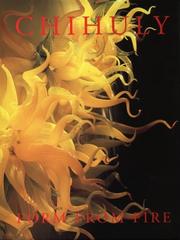
The definitive monograph on the most influential studio glass artist of the modern era — essential for studying how large-scale form, color, and series-based thinking work in glass at the highest level.
Discussion
Keep reading
Paths that share books, cover the same subject, or open a related topic.