French cooking: the best books to master the classics at home
This curriculum takes a home cook from zero French cooking knowledge to confident mastery of classic bistro and refined French cuisine. Each stage builds on the last — starting with foundational technique and vocabulary, moving through iconic recipes and sauce work, and finishing with the refined, nuanced cooking of France's greatest culinary traditions.
Foundations: Technique & French Kitchen Thinking
BeginnerUnderstand the core philosophy, vocabulary, and essential techniques of French cooking — knife skills, stocks, basic sauces, and how the French approach flavor — so every subsequent recipe makes intuitive sense.
▸ Study plan for this stage
Pace: 8–10 weeks, ~40–50 pages/day, with 2–3 days per week dedicated to hands-on practice
- French culinary philosophy: precision, mise en place, and respect for ingredients as the foundation of all cooking
- Essential knife skills: proper grip, claw hand, and cuts (brunoise, julienne, chiffonade) that enable consistent, professional results
- Stocks and broths: how to build deep flavor foundations from bones, aromatics, and time—the backbone of French sauces and soups
- The five mother sauces (béchamel, velouté, espagnole, hollandaise, tomato): their structure, variations, and how they anchor French cuisine
- Flavor development through technique: how cooking method, temperature, and timing transform raw ingredients into balanced, complex dishes
- French kitchen vocabulary and terminology: understanding classical French names and techniques so recipes become transparent and reproducible
- What is mise en place, and why is it central to French cooking practice?
- Describe the proper knife grip and claw hand technique. Why does the French approach to knife skills emphasize precision and safety?
- What are the five mother sauces, and how do they differ in their base (roux, liaison, or emulsion)?
- How do you make a proper stock, and what role does it play in French cooking?
- What is the difference between a velouté and an espagnole, and when would you use each?
- How does the French approach to seasoning and flavor balance differ from other culinary traditions?
- Practice knife skills daily for 10–15 minutes: master the claw hand, then execute brunoise, julienne, and chiffonade cuts on onions, carrots, and celery until they are uniform and consistent
- Make a chicken stock from scratch following Child's method; strain, cool, and taste it over several days to understand how flavor develops and changes
- Prepare all five mother sauces in sequence (béchamel, velouté, espagnole, hollandaise, tomato) and taste each plain, then as variations—document how ratios and technique affect texture and flavor
- Cook a simple French soup (such as French onion soup or a basic velouté) that relies entirely on proper stock and technique, not garnish
- Organize your kitchen workspace using the French mise en place system: gather, prep, and arrange all ingredients before cooking a multi-step recipe
- Re-read one complex recipe from the book (such as Coq au Vin or Beef Bourguignon) and annotate it with the techniques you've learned, identifying the stock, sauce, and knife work involved
Next up: This stage equips you with the technical vocabulary, foundational techniques, and flavor-building principles that make every French recipe in subsequent stages—whether classic bistro dishes, pastry, or regional specialties—intuitive and achievable rather than mysterious.
Julia Child is the definitive gateway for English-speaking home cooks into French cuisine. This distilled reference introduces the French kitchen mindset, essential techniques, and key terms in an approachable, confidence-building way before tackling full recipes.

The canonical starting point for serious French home cooking. Child explains the 'why' behind every technique — from sautéing to braising — giving beginners a structured, deeply educational foundation before moving to more specialized books.
Bistro Classics: Everyday French Cooking
BeginnerCook the beloved, unpretentious dishes of the French bistro — roast chicken, steak frites, onion soup, crêpes, tarts — building real recipe fluency and an instinct for French flavor combinations.
▸ Study plan for this stage
Pace: 4–5 weeks, ~25–30 pages/day, with 2–3 cooking sessions per week
- French bistro cooking as approachable, ingredient-focused cuisine rather than haute cuisine
- Building flavor foundations through proper technique with simple ingredients (butter, garlic, herbs, stock)
- Understanding the French approach to everyday proteins: roasting chicken, searing meat, and achieving proper browning
- Mastering essential bistro preparations: stocks, sauces (beurre blanc, pan sauces), and emulsions
- The role of seasonality and quality ingredients in French home cooking
- Developing palate awareness for classic flavor combinations and when to use them
- Practical kitchen efficiency and mise en place as the foundation of French cooking discipline
- What distinguishes bistro cooking from haute cuisine, and why does Lebovitz emphasize approachability?
- How do French cooks build layers of flavor using simple ingredients like butter, stock, and aromatics?
- What are the key techniques for roasting chicken and searing meat to achieve proper browning and flavor development?
- How do you make a pan sauce or beurre blanc, and when would you use each in a bistro context?
- What role does mise en place play in French cooking, and how does it affect both technique and outcome?
- Can you identify 3–4 classic French flavor combinations from the book and explain when and why they work together?
- Cook at least 3 roasted chicken recipes from the book, varying seasonings and aromatics, and note how each changes the final flavor
- Make a stock (chicken or vegetable) from scratch, then use it to prepare a pan sauce or soup to experience the difference quality stock makes
- Prepare crêpes (savory and sweet) multiple times until you achieve consistent, thin results without hesitation
- Cook steak frites at least twice, focusing on proper searing technique, resting, and achieving the ideal crust and doneness
- Make French onion soup, paying close attention to the caramelization process and how long, slow cooking develops depth
- Prepare a tart (fruit or savory) from the book, mastering pastry handling and understanding how to balance filling flavors
- Taste and compare two versions of the same dish (e.g., with and without proper browning, or with different herbs) to develop palate awareness
Next up: This stage grounds you in the unpretentious, technique-driven foundation of French cooking, preparing you to explore regional French cuisines and more complex preparations that build on these bistro fundamentals.
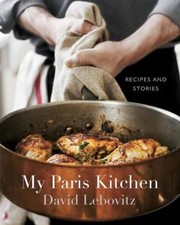
Written by an American living in Paris, this book bridges the gap between French tradition and home-cook reality, adding cultural context and approachable modern bistro recipes that deepen the learner's feel for authentic French taste.
Sauces & the Classical Kitchen
IntermediateMaster the mother sauces and their derivatives — béchamel, velouté, espagnole, hollandaise, and vinaigrettes — and understand how classical French sauce-making underpins the entire cuisine.
▸ Study plan for this stage
Pace: 4–5 weeks, ~25–30 pages/day. Start with Peterson's "Sauces" (weeks 1–3, ~200 pages covering sauce theory and mother sauces), then move to Pépin's "Jacques Pépin New Complete Techniques" (weeks 3–5, focusing on sauce chapters and technique refinement).
- The five mother sauces (béchamel, velouté, espagnole, hollandaise, and vinaigrette) as the foundation of classical French cooking
- Roux as a thickening agent: types (blonde, brown, dark), ratios, and how to avoid lumps and achieve proper consistency
- Stock quality and its critical role in sauce development—light stocks for velouté, dark stocks for espagnole, and how stock choice affects final flavor
- Emulsification principles: how hollandaise and vinaigrettes achieve and maintain emulsion, and troubleshooting broken sauces
- Sauce derivatives and variations—how each mother sauce spawns secondary sauces (e.g., mornay from béchamel, bordelaise from espagnole)
- Seasoning, balancing, and finishing techniques: the role of salt, acid, fat, and aromatics in achieving depth and refinement
- Classical sauce-making as a systematic approach: understanding the 'why' behind each step enables adaptation and creativity
- Pépin's hands-on technique demonstrations: translating theory into muscle memory through precise knife work, heat control, and timing
- What are the five mother sauces, and what is the primary thickening agent or emulsifying method for each?
- How do you make a proper roux, and what are the differences between blonde, brown, and dark roux in terms of color, cooking time, and thickening power?
- Why is stock quality essential to sauce-making, and how does the choice of stock (light vs. dark) affect the flavor profile of velouté versus espagnole?
- What causes a hollandaise or vinaigrette to break, and what are the steps to rescue a broken emulsion?
- Name three derivative sauces from béchamel and three from espagnole, and explain what distinguishes each from its mother sauce.
- How do you finish and balance a sauce using salt, acid, and fat, and why is this final step critical to professional results?
- Make a blonde roux, a brown roux, and a dark roux side by side; observe the color progression and note the cooking time for each. Use each to thicken a simple stock and compare the thickening power and flavor.
- Prepare all five mother sauces in sequence over 2–3 days: béchamel (milk + roux), velouté (light stock + roux), espagnole (dark stock + roux + tomato), hollandaise (egg yolks + butter + acid), and vinaigrette (oil + acid + emulsifier). Taste each and note the flavor profile.
- Make a hollandaise sauce, then deliberately break it by adding cold liquid too quickly. Practice rescuing it by whisking it into a fresh egg yolk or warm water, and document the recovery process.
- Prepare two batches of the same mother sauce (e.g., béchamel); season one minimally and the other with careful additions of salt, lemon juice, and nutmeg. Taste side by side and identify how seasoning and finishing elevate the sauce.
- Create three derivative sauces from one mother sauce (e.g., mornay, soubise, and mustard sauce from béchamel). Document how each variation differs in ingredients and technique.
- Follow Pépin's technique demonstrations for sauce-making in his book: practice his methods for whisking hollandaise, deglazing a pan, and creating pan sauces with precise heat control and timing.
Next up: This stage establishes the technical and flavor foundations of classical French cooking, enabling the next stage to explore how these sauces integrate into complete dishes, regional variations, and modern refinements.
The most thorough and respected English-language guide to French sauces, covering both classical mother sauces and modern variations. Reading this after bistro-level cooking ensures the learner has enough context to understand and apply the techniques.

Pépin's encyclopedic visual guide to French culinary technique — including sauces, stocks, and classical preparations — is the ideal companion at this stage, reinforcing sauce theory with step-by-step photographic instruction.
Regional & Refined: The Depth of French Cuisine
IntermediateExplore the rich regional diversity of France — Provençal, Lyonnaise, Alsatian, and Breton traditions — and begin cooking more refined, composed dishes with greater precision and layered flavor.
▸ Study plan for this stage
Pace: 8–10 weeks, ~40–50 pages/day, with 2–3 cooking sessions per week
- Regional terroir and ingredient sourcing: how geography, climate, and local products define Provençal, Lyonnaise, Alsatian, and Breton cuisines
- The relationship between classical French technique and regional variation—how refinement builds on tradition
- Composed dishes and flavor layering: building complexity through stocks, sauces, aromatics, and sequential cooking steps
- Seasonal eating and market-driven cooking as foundational to French regional practice
- The philosophy of ingredient quality and simplicity as the basis for refined cooking
- Sauce-making and emulsification as core technical skills that elevate regional dishes
- Menu planning and dish pairing: understanding how courses and flavors work together in a meal
- What are the defining characteristics of Provençal, Lyonnaise, Alsatian, and Breton cuisines, and what geographic or historical factors shaped each?
- How does Root's treatment of regional food history in 'The Food of France' inform your understanding of why certain ingredients and techniques dominate specific regions?
- What does Alice Waters mean by 'cooking from the market' in the Chez Panisse philosophy, and how does this relate to seasonal French cooking?
- How do composed dishes differ from simple preparations, and what techniques does Willan emphasize for building layered flavors in refined French regional cooking?
- What role do stocks, emulsions, and mother sauces play in elevating regional French dishes to a more refined level?
- How would you plan a multi-course meal that reflects a single French region's traditions while demonstrating refined technique?
- Read Root's regional chapters and create a detailed flavor and ingredient map for each of the four main regions (Provence, Lyon, Alsace, Brittany), noting signature dishes, key ingredients, and cooking methods
- Prepare 2–3 Chez Panisse recipes that emphasize seasonal ingredients and simple technique; journal about how ingredient quality affected the final dish
- Make a classical French stock (chicken, veal, or fish) from scratch, then use it as the base for two different regional sauces from Willan's recipes—compare how the same stock foundation yields different regional expressions
- Cook one composed dish from each regional tradition (e.g., Provençal bouillabaisse, Lyonnaise quenelles, Alsatian choucroute garnie, Breton sole meunière), documenting the layering of flavors and techniques
- Plan and execute a three-course regional French menu using Chez Panisse and Willan as guides; practice plating, timing, and course progression
- Compare how Root's historical narrative explains the origins of a specific regional dish, then cook it using Willan's refined technique, reflecting on how tradition and refinement intersect
Next up: This stage grounds you in the regional foundations and refined techniques of French cooking, preparing you to explore advanced topics such as modernist reinterpretations of French cuisine, specialized pastry and bread-making, or the business and philosophy of haute cuisine.
A landmark culinary geography of France that gives the learner essential cultural and regional context, explaining why Provençal cooking differs from Burgundian — knowledge that makes every recipe more meaningful and intentional.

Waters was profoundly shaped by French regional cooking and translates its seasonal, ingredient-first philosophy into refined yet accessible menus — a perfect bridge between regional tradition and more composed, elegant cooking.

Willan's authoritative region-by-region tour of France covers the signature dishes, ingredients, and techniques of each area, giving the learner a comprehensive map of the full French culinary landscape.
Mastery: Haute Cuisine & Professional Thinking
ExpertThink and cook like a professional French chef — understanding classical haute cuisine, precision, plating, and the philosophy behind France's greatest culinary tradition, from Escoffier to the modern table.
▸ Study plan for this stage
Pace: 8–10 weeks, ~40–50 pages/day (alternating deep study of Escoffier's techniques with Keller's applied methodology)
- Escoffier's mother sauces and the classical French sauce hierarchy as the foundation of haute cuisine technique
- The mise en place philosophy: absolute precision, organization, and mental discipline as prerequisites for professional cooking
- Classical stock-making, consommé clarification, and the role of foundational preparations in building complex flavors
- Plating as an art form: visual composition, balance, and the presentation of classical dishes with modern sensibility
- The brigade system and kitchen hierarchy: understanding roles, communication, and the structure that enables consistency
- Precision in measurement, timing, and temperature control—the science underlying French technique
- The evolution from Escoffier's classical canon to Keller's refined modern interpretation of French tradition
- Flavor development through reduction, emulsification, and the layering of complementary elements
- What are Escoffier's five mother sauces, and how do they serve as the building blocks for classical French cooking?
- How does the mise en place philosophy differ from casual cooking, and why is it non-negotiable in professional kitchens?
- Explain the process of making a proper consommé and why clarity and purity of flavor matter in haute cuisine
- How does Thomas Keller adapt classical Escoffier techniques to create modern haute cuisine at The French Laundry?
- What role does plating and visual presentation play in the overall dining experience, according to both Escoffier and Keller?
- Describe the brigade system and explain how it ensures consistency and quality in a professional kitchen
- Prepare all five Escoffier mother sauces (béchamel, velouté, espagnole, hollandaise, tomato) from scratch, tasting and adjusting each to understand their distinct flavor profiles and applications
- Execute a complete mise en place for a three-course classical French dinner: organize, measure, and prep all ingredients before cooking begins, noting how this changes your workflow and confidence
- Make a clear consommé from scratch using Escoffier's clarification method; document the process and evaluate clarity, flavor intensity, and the quality of the final product
- Recreate one complete dish from The French Laundry Cookbook, paying close attention to plating technique, timing, and the balance between classical technique and modern presentation
- Set up and practice a simplified brigade system with a partner or group: assign roles (saucier, poissonnier, etc.), cook a multi-course meal, and reflect on communication and consistency
- Study and execute three different plating compositions from Keller's book, photographing each and analyzing the visual balance, color contrast, and negative space
Next up: Mastering Escoffier's classical foundations and Keller's refined execution positions you to explore contemporary French cuisine, regional specialization, and the creative rule-breaking that only becomes possible after internalizing these professional standards.
The foundational text of classical French haute cuisine. At this advanced stage, the learner has the technique and vocabulary to read Escoffier as a living reference — understanding where every classical preparation originates and how the entire system is organized.
Keller's landmark book shows how classical French technique is applied at the highest modern level — precision, restraint, and obsessive attention to detail. Even if every recipe isn't cooked, it reframes the learner's entire approach to quality and refinement.
Discussion
Keep reading
Paths that share books, cover the same subject, or open a related topic.