Chinese cooking: the best books to master the wok and regional dishes
This curriculum takes a home cook from zero to confident Chinese cooking across all major techniques and regional styles. It begins with foundational philosophy and wok mastery, builds through essential technique-driven cookbooks, then dives deep into the regional cuisines of Sichuan and Cantonese cooking — each stage equipping the reader with the vocabulary and skills needed for the next.
Foundations: The Chinese Kitchen Mindset
BeginnerUnderstand the pantry, equipment, and core philosophy of Chinese home cooking before touching a wok.
▸ Study plan for this stage
Pace: 4–5 weeks, ~25–30 pages/day. Read "Every Grain of Rice" (weeks 1–2, ~150 pages), then "The Breath of a Wok" (weeks 3–5, ~200 pages). Allocate 2–3 days per week for pantry exploration and equipment handling between reading sessions.
- The Chinese kitchen philosophy: balance, seasonality, and resourcefulness as foundational principles that shape ingredient selection and cooking methods
- Essential Chinese pantry staples (soy sauce, rice vinegar, sesame oil, dried chilies, star anise, Sichuan peppercorns) and their flavor profiles, origins, and proper storage
- The wok as a multi-functional tool: its history, design principles, and why its shape and heat conductivity are central to Chinese cooking technique
- Mise en place and prep work in Chinese cooking: why ingredients are cut uniformly, prepped in advance, and organized before cooking begins
- Heat control and timing: understanding high-heat stir-frying, the concept of 'wok hei' (breath of the wok), and how temperature management defines Chinese cooking
- Equipment essentials beyond the wok: spatulas, cleavers, cutting boards, and how each tool reflects the logic of Chinese culinary practice
- The relationship between ingredient quality and simplicity: how Chinese home cooking achieves depth through technique rather than complexity
- What are the five core Chinese pantry staples discussed in 'Every Grain of Rice,' and how does each contribute differently to flavor building?
- Why does Fuchsia Dunlop emphasize the importance of understanding Chinese cooking philosophy before learning specific recipes?
- What is 'wok hei' (the breath of the wok) according to Grace Young, and why is it impossible to achieve without the proper wok design and technique?
- How does the wok's curved bottom and sloped sides fundamentally change the way heat is applied and food is moved during cooking?
- What does Grace Young mean by 'the wok is an extension of the cook's hand,' and how does this philosophy differ from Western cooking approaches?
- Describe the role of mise en place in Chinese cooking: why is advance preparation so critical before the actual cooking begins?
- Visit an Asian grocery store and physically locate, examine, and purchase the five core pantry staples from 'Every Grain of Rice' (or their equivalents). Read labels, compare brands, and note differences in color, aroma, and viscosity. Store them properly at home.
- Taste-test each pantry staple individually (soy sauce, rice vinegar, sesame oil, etc.) on plain rice or bread. Document the flavor profile, intensity, and how it changes your perception of the base ingredient.
- If you don't own a wok, visit a cookware store and handle 2–3 different woks (carbon steel, flat-bottomed, round-bottomed). Feel the weight distribution, examine the slope of the sides, and understand why Young emphasizes wok selection as foundational.
- Set up a mock mise en place station for a simple stir-fry: choose 3–4 ingredients, prep them uniformly (as Dunlop and Young describe), arrange them in small bowls in cooking order, and practice the rhythm of grabbing and adding without hesitation.
- Read one complete recipe from 'Every Grain of Rice' and map out every pantry ingredient it uses. Identify which staples appear across multiple recipes and why—this reveals the logic of Chinese flavor building.
- Watch a short video demonstration of wok hei (search 'wok hei' or reference Young's descriptions) while re-reading the relevant section of 'The Breath of a Wok.' Observe the sound, the movement of food, and the visible char—connect the theory to practice.
Next up: This stage equips you with the mental framework and physical tools to understand *why* Chinese cooking works the way it does, preparing you to move into technique-focused stages where you'll learn specific methods (stir-frying, braising, steaming) and apply these foundations to actual recipes with confidence.
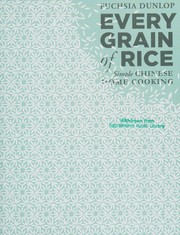
A beautifully accessible introduction to everyday Chinese home cooking, teaching pantry essentials and simple techniques without overwhelming a beginner. Reading this first builds the flavor intuition and ingredient vocabulary that every later book assumes.
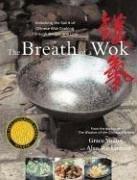
Focuses entirely on wok culture, seasoning, and the concept of 'wok hei' — the essential foundation for all stir-frying. Reading it second cements the single most important piece of equipment knowledge before tackling technique-heavy recipes.
Core Techniques: Stir-Fries, Dumplings & Everyday Dishes
BeginnerExecute the fundamental techniques — stir-frying, steaming, braising, and making dumplings — with confidence and repeatability.
▸ Study plan for this stage
Pace: 6–8 weeks, ~20–30 pages/day, with 2–3 cooking sessions per week
- The wok as a heat-management tool: understanding how to control temperature and use the wok's curved surface for even cooking
- The stir-fry technique: mise en place, proper sequencing of ingredients, and the importance of high heat and constant motion
- Flavor layering through aromatics: how garlic, ginger, scallions, and other aromatics build the foundation of Chinese dishes
- Dumpling dough fundamentals: the science of hydration ratios, gluten development, and how different doughs (wheat, egg, etc.) affect texture
- Dumpling filling and assembly: balancing moisture, seasoning, and technique to create dumplings that hold together and taste balanced
- Steaming and braising as complementary techniques: how these methods differ from stir-frying and when to use each
- Repeatability through measurement and practice: developing muscle memory and intuition while maintaining consistency
- What is the purpose of preheating the wok and how does heat management differ between stir-frying proteins versus vegetables?
- How does Grace Young's approach to seasoning and timing in stir-fries ensure that ingredients cook evenly without becoming mushy or raw?
- What are the key differences between dumpling doughs in Andrea Nguyen's book, and how do hydration levels affect the final texture?
- How do you prevent dumplings from sticking during assembly and cooking, and what are the signs that a dumpling is properly sealed?
- Why is mise en place (preparation before cooking) critical to successful stir-frying, and how does it change your cooking pace?
- How can you adapt a stir-fry or dumpling recipe based on seasonal ingredients while maintaining the core technique?
- Cook 3–4 stir-fries from 'Stir Frying to the Sky's Edge' in sequence, focusing on heat control and ingredient timing; keep notes on what worked and what didn't
- Practice the stir-fry motion with an empty wok to build muscle memory before cooking with ingredients
- Make dumpling dough from 'Asian Dumplings' using different hydration ratios (e.g., 60% vs. 65% water) and compare texture and elasticity
- Assemble and cook at least two batches of dumplings (boiled and steamed), documenting seal quality and cooking times
- Prepare a complete mise en place for a stir-fry recipe, then time yourself cooking it; repeat the same recipe to measure improvement in speed and consistency
- Cook a braised or steamed dish from either book to understand how these techniques complement stir-frying in a full meal
Next up: Mastering these foundational techniques—heat control, timing, and precision in both stir-frying and dumpling-making—prepares you to tackle more complex regional dishes, multi-component meals, and the ability to improvise confidently with unfamiliar ingredients in the next stage.
The definitive wok technique cookbook, building directly on the wok knowledge from Stage 1 with dozens of stir-fry recipes organized by technique. It bridges philosophy and practical execution perfectly.

The most thorough and approachable guide to making dumplings, potstickers, and bao from scratch. Placed here so the reader has solid kitchen confidence before tackling the dough-folding skills this book demands.
Regional Deep Dive: Sichuan
IntermediateMaster the bold, complex flavors of Sichuan cuisine — from ma la spice to classic dishes like mapo tofu and dan dan noodles.
▸ Study plan for this stage
Pace: 4–5 weeks, ~40–50 pages/day, with 2–3 days per week dedicated to cooking practice
- Ma la (numbing-spicy) flavor profile and the role of Sichuan peppercorns vs. chili heat
- The five foundational flavors of Sichuan cuisine: salty, sweet, sour, bitter, and spicy, and how they balance
- Regional variations within Sichuan (river vs. mountain, urban vs. rural cooking traditions)
- Essential aromatics and seasonings: doubanjiang (bean paste), fermented black beans, star anise, and their flavor contributions
- Classic cooking techniques: stir-frying, braising, steaming, and chili oil infusion specific to Sichuan
- The historical and cultural context of Sichuan cuisine and how geography shaped its bold flavors
- Signature dishes and their flavor logic: mapo tofu, dan dan noodles, chongqing chicken, fish in chili broth
- What is ma la and how do Sichuan peppercorns create the numbing sensation distinct from chili heat?
- How do the five foundational flavors balance in a well-executed Sichuan dish, and what role does each play?
- What are the key differences between Sichuan cooking traditions in river regions versus mountain regions, and how do these reflect in ingredient choice?
- Describe the flavor profile and essential technique for preparing mapo tofu and dan dan noodles from 'Land of Plenty'
- What is doubanjiang and how does it function as a flavor foundation in Sichuan cooking?
- How does Sichuan cuisine's bold, complex flavor profile reflect the region's geography, climate, and historical trade routes?
- Make mapo tofu following Dunlop's recipe, tasting and adjusting the balance of numbing, spicy, salty, and savory elements
- Prepare dan dan noodles from scratch, including the sesame paste sauce and chili oil, focusing on achieving the signature flavor balance
- Create a Sichuan chili oil (la you) and use it to dress at least three different dishes, noting how it transforms each one
- Cook Chongqing chicken (la zi ji) and analyze how the cooking technique (dry-frying) differs from wet braising methods in Sichuan cuisine
- Taste a selection of Sichuan peppercorns, dried chilies, and doubanjiang separately, then in combination, to develop sensory awareness of how flavors layer
- Prepare a fish in chili broth (la yu) or similar braise, documenting how aromatics, fermented ingredients, and technique create depth
- Interview or research a Sichuan cook's approach to balancing flavors, then replicate one of their signature dishes
Next up: This stage equips you with mastery of Sichuan's bold, layered flavor system and core techniques, preparing you to explore how other Chinese regional cuisines (Hunan, Yunnan, Guangdong) adapt or contrast with these principles, or to deepen your understanding of Chinese cooking philosophy across regions.
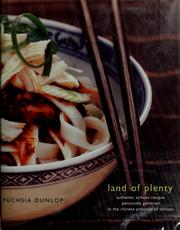
The landmark English-language book on Sichuan cooking, written after Dunlop trained at the Sichuan Institute of Higher Cuisine. It introduces the 23 official Sichuan flavor profiles systematically, making it the ideal first regional deep-dive.
An expanded, updated successor to Land of Plenty with more recipes and stunning photography. Reading it after Land of Plenty reinforces and broadens Sichuan knowledge, filling in dishes and techniques the earlier book introduced.
Regional Deep Dive: Cantonese & Beyond
IntermediateUnderstand the elegance and restraint of Cantonese cooking — dim sum, roasting, and steaming — and gain a broader map of China's other regional cuisines.
▸ Study plan for this stage
Pace: 8–10 weeks, ~25–30 pages/day (with cooking practice interspersed)
- The philosophical foundations of Cantonese cooking: restraint, balance, and respect for ingredient quality
- Dim sum as both a culinary technique and social tradition—steaming, folding, and flavor layering
- Roasting and char techniques in Cantonese cuisine (soy sauce chicken, roasted meats, char siu)
- Steaming as a signature Cantonese method and its role in preserving delicate flavors
- Regional flavor profiles across China's 35 cuisines: spice, acid, umami, and heat preferences by region
- How geography, climate, and available ingredients shape distinct regional identities (Sichuan, Hunan, Yunnan, etc.)
- The interplay between technique, ingredient selection, and cultural values in regional Chinese cooking
- Building a mental map of China's culinary regions and recognizing signature dishes as cultural markers
- What are the core principles of Cantonese cooking, and how do they differ from other major Chinese regional cuisines?
- Explain the role of steaming in Cantonese cuisine and why it is considered a signature technique.
- What is dim sum, and how do the folding, filling, and cooking methods reflect Cantonese culinary philosophy?
- Describe the techniques and flavor profiles of Cantonese roasting (char siu, soy sauce chicken). What makes them distinctive?
- How do geography and available ingredients influence the flavor profiles and techniques of at least three other Chinese regional cuisines beyond Cantonese?
- What cultural and historical factors explain why certain regions favor spice, fermentation, or umami-forward cooking?
- Make at least 3 dim sum items from the book (e.g., har gow, siu mai, char siu bao) and document the folding techniques and steam times; compare your results to the book's descriptions
- Prepare a Cantonese roasted chicken or char siu following Phillips' recipe; analyze how the marinade, roasting temperature, and resting time affect the final flavor and texture
- Steam a whole fish or vegetable dish using Cantonese steaming methods; note how the technique preserves delicate flavors compared to other cooking methods you've tried
- Select recipes from three different regional cuisines in the book (e.g., Sichuan, Hunan, Yunnan) and cook one dish from each; taste and compare their spice levels, acid balance, and umami intensity
- Create a visual or written map of China's regions with 2–3 signature dishes and flavor characteristics for each; use Phillips' regional sections as your source material
- Host a dim sum tasting or regional Chinese cooking comparison meal for friends; explain the techniques and regional philosophies behind each dish you've prepared
Next up: This stage equips you with both hands-on mastery of Cantonese technique and a broad conceptual framework for understanding China's regional cuisines, preparing you to explore deeper specialization in a specific region or to develop your own fusion cooking informed by authentic regional principles.
A science-driven, comprehensive guide to wok cooking that covers Cantonese and broader Chinese techniques with rigorous explanations of why things work. At this stage the reader can fully appreciate the depth of its technical reasoning.

A sweeping, encyclopedic tour of all 35 regional Chinese cuisines, including Cantonese, Shanghainese, Hakka, and more. Placed last, it rewards the reader's accumulated knowledge with context, history, and hundreds of authentic recipes.
Discussion
Keep reading
Paths that share books, cover the same subject, or open a related topic.