The Best Books on Forgiveness, in Order
This curriculum moves from accessible, story-driven introductions to forgiveness, through the psychology of resentment and grief, and finally into the deeper philosophical and spiritual dimensions of letting go. Each stage builds the emotional vocabulary and conceptual tools needed for the next, so that by the end the reader has both practical skills and a profound understanding of why forgiveness is ultimately an act of self-liberation.
Foundations: What Forgiveness Really Is
BeginnerUnderstand what forgiveness is (and is not), dissolve common myths, and feel emotionally safe enough to begin the journey through real stories and gentle frameworks.
▸ Study plan for this stage
Pace: 4–5 weeks, ~25–30 pages/day. Week 1–2: "Forgive for Good" (approximately 240 pages); Week 3–4: "The Book of Forgiving" (approximately 200 pages); Week 5: Review, reflection, and integration exercises.
- Forgiveness is a choice and a skill, not a feeling or a requirement to reconcile with the offender (Luskin's core thesis)
- The HEAL method: Hope, Educate, Affirm, Long for peace—a practical framework for processing hurt (Luskin)
- Grievances are stories we tell ourselves; changing the narrative changes our emotional experience (Luskin)
- The four-stage Fogiving Circle: Telling the Story, Naming the Hurt, Granting Forgiveness, Renewing or Releasing the Relationship (Tutu)
- Forgiveness is an act of self-compassion and liberation, not excusing the harm or absolving the offender (both authors)
- Emotional safety and self-protection are prerequisites for genuine forgiveness work (Tutu's emphasis on creating safe spaces)
- Forgiveness is a process, not a single moment—it unfolds over time with patience and practice
- What is the difference between forgiveness and reconciliation, and why does this distinction matter?
- How does Luskin's concept of a 'grievance' relate to your own experience of holding onto hurt?
- What is the HEAL method, and how can you apply it to a specific hurt in your life?
- Describe the four stages of the Forgiving Circle. At which stage do you typically get stuck?
- Why does Tutu emphasize emotional safety as a foundation for forgiveness work?
- How does changing the 'story' you tell about an offense help you forgive, according to Luskin?
- Map your grievance: Choose one hurt you're holding. Write out the story you tell about it—who wronged you, what they did, and how it affected you. Then rewrite it from a more neutral perspective, removing blame language. Notice what shifts.
- Practice the HEAL method: Take the same hurt and work through each step: What hope do you have for moving forward? What do you need to educate yourself about? How can you affirm your own worth despite the hurt? What peace are you longing for?
- Forgiving Circle dialogue (written or spoken): Work through Tutu's four stages with a trusted friend, journal, or therapist. Tell your story fully, name the specific hurt without minimizing it, explore what granting forgiveness might look like for you, and decide whether you want to renew or release the relationship.
- Grievance inventory: List 3–5 grievances you're currently carrying. For each, identify the story you're telling (e.g., 'They don't respect me,' 'I'm unlovable'). Challenge one story this week by gathering evidence against it.
- Emotional safety check-in: Before beginning deeper forgiveness work, journal on Tutu's question: What would help you feel safe enough to forgive? What boundaries or support do you need? Create a concrete plan.
- Forgiveness myth-busting: After reading both books, write down 3 myths about forgiveness you previously believed. For each, write the truth you've learned and one way this new understanding changes how you approach a current hurt.
Next up: This stage establishes that forgiveness is a learnable skill grounded in self-compassion and practical frameworks, preparing you to move into the next stage where you'll deepen your practice through specific scenarios, relational work, and sustained emotional integration.
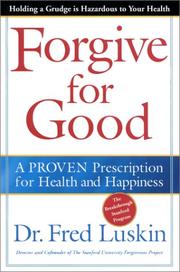
Written by Stanford's forgiveness researcher, this is the most accessible science-backed starting point — it defines forgiveness clearly, separates it from condoning harm, and gives concrete first steps.

Co-written by the architect of South Africa's Truth and Reconciliation Commission, this book grounds forgiveness in lived human experience and introduces a four-step cycle that feels emotionally honest rather than preachy.
The Psychology of Hurt: Why We Hold On
BeginnerUnderstand the psychological mechanics of resentment, grudges, and emotional wounds — why the mind clings to old pain and what that costs us in body and spirit.
▸ Study plan for this stage
Pace: 4–5 weeks, ~25–30 pages/day. Week 1–2: "Forgiveness Is a Choice" (approximately 200 pages). Week 3–5: "Radical Acceptance" (approximately 300 pages), with overlap time for reflection and integration.
- Resentment as a psychological choice: Enright's model of how we actively construct and maintain grudges rather than passively experiencing them
- The neurobiology of holding on: how chronic resentment becomes embedded in the nervous system, affecting physical health and emotional regulation
- The paradox of emotional wounds: how our mind protects us through grudges while simultaneously imprisoning us in the past
- Radical acceptance as a foundation: Brach's concept of RAIN (Recognize, Allow, Investigate, Non-identification) as a pathway to releasing resistance to pain
- The cost of unforgiveness: understanding what resentment costs us in relationships, health, mental clarity, and spiritual well-being
- The distinction between forgiveness and condoning: recognizing that letting go does not mean approving of harm or abandoning boundaries
- Shame and self-blame cycles: how we internalize hurt and turn it inward, creating additional layers of suffering beyond the original wound
- What does Enright mean by forgiveness as a 'choice,' and how does this framework differ from viewing forgiveness as something that happens to us?
- According to Brach's RAIN practice, what are the four steps to working with difficult emotions, and how does each step help us release our grip on old pain?
- How do resentment and grudges function as psychological protection mechanisms, and what are the hidden costs of this protection?
- What is the relationship between acceptance (as Brach describes it) and forgiveness (as Enright describes it)? Are they the same thing or different stages?
- How does chronic resentment affect the body and nervous system, according to the material in these books?
- What does it mean to 'let go' of a grudge without condoning the harm that was done to you?
- Resentment inventory: List 3–5 grudges or resentments you currently hold. For each, write down what specific hurt or betrayal triggered it, and what 'story' you tell yourself about it. Notice patterns in how you've constructed these narratives.
- RAIN practice with a specific hurt: Choose one emotional wound and spend 10–15 minutes daily for one week practicing Brach's RAIN technique (Recognize the emotion, Allow it to be present, Investigate it with curiosity, Non-identify with it). Journal what shifts.
- Cost-benefit analysis: For one grudge, write two columns: what you 'gain' by holding onto it (protection, identity, justification) and what it costs you (energy, relationships, peace, health). Be brutally honest.
- Enright's forgiveness process: Select one person who has hurt you and work through Enright's phases of forgiveness (uncovering, decision, work, deepening). Write reflections at each phase—this may take 2–3 weeks.
- Body scan with resentment: Sit quietly and bring to mind a grudge. Notice where you feel it in your body (chest tightness, jaw clenching, stomach tension). Practice Brach's acceptance approach: breathe into it, soften around it, observe without judgment.
- Dialogue with your resentment: Write an imaginary conversation between yourself and your resentment, as if it were a separate entity. Ask it: 'What are you protecting me from?' and 'What would happen if I let you go?' Write its responses without censoring.
Next up: This stage establishes the psychological and emotional foundation for understanding why we hold pain, preparing you to move into the next stage where you'll learn specific practices and pathways for actively releasing it and rebuilding trust—both in others and in yourself.
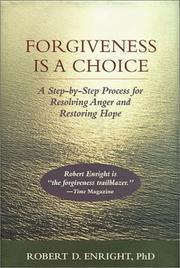
Enright is the pioneer of forgiveness psychology; this book explains the research on how resentment works neurologically and emotionally, making it the ideal bridge from inspiration to science.

Introduces the concept of accepting painful reality without judgment — a prerequisite skill for genuine letting go — using mindfulness and compassion practices that complement the forgiveness work.
Healing the Self: Grief, Shame, and Self-Forgiveness
IntermediateTurn the lens inward — heal the shame and self-blame that block forgiveness of others, and learn to extend the same compassion to yourself that you are learning to extend outward.
▸ Study plan for this stage
Pace: 8–10 weeks, ~40–50 pages/day (alternating between the two books to allow integration time)
- Self-compassion as a practice: the three pillars of self-kindness, common humanity, and mindfulness, and how they counteract shame and self-blame
- The neurobiology of trauma and how the body stores unprocessed grief and shame, making self-forgiveness physiologically difficult
- The distinction between self-pity and self-compassion, and why self-compassion is not self-indulgence but a path to resilience
- How unhealed trauma and shame create barriers to forgiving others, and why inner healing must precede outer forgiveness
- Somatic and embodied practices (yoga, breathing, movement) as tools to help the nervous system process grief and release shame
- The role of self-directed compassion in breaking cycles of perfectionism, inner criticism, and shame-based behavior
- How recognizing shared human suffering (common humanity) dissolves the isolation that shame creates and enables self-forgiveness
- What are the three pillars of self-compassion according to Neff, and how does each one specifically address shame and self-blame?
- How does trauma become stored in the body, and why does this make self-forgiveness a somatic as well as a psychological process?
- What is the difference between self-pity and self-compassion, and why is this distinction crucial for genuine healing?
- How does unhealed shame and grief in yourself create barriers to forgiving others, and what must shift internally for forgiveness to become possible?
- What are three somatic or embodied practices from van der Kolk's work that can help you process grief and release shame, and how would you apply them to your own experience?
- How does recognizing common humanity (that suffering is part of the human condition) help dissolve the isolation of shame and enable self-forgiveness?
- Self-compassion break practice: When you notice self-criticism or shame, pause and practice Neff's three-step self-compassion break (acknowledge suffering, recognize common humanity, offer yourself kind words). Do this daily for 2 weeks and journal the shifts you notice.
- Body scan meditation with grief awareness: Using van der Kolk's insights on somatic processing, spend 10–15 minutes daily scanning your body for areas of tension, numbness, or held emotion. Notice without judgment where grief or shame may be stored, and breathe into those spaces.
- Shame inventory and reframing: List 3–5 core shame beliefs about yourself (e.g., 'I am unforgivable,' 'I am broken'). For each, write a self-compassionate reframe grounded in Neff's framework and van der Kolk's understanding of trauma as a neurobiological response, not a character flaw.
- Somatic release practice: Choose one embodied practice from van der Kolk (yoga, dance, progressive muscle relaxation, or cold water immersion) and practice it 3–4 times per week for 4 weeks. Track how it affects your nervous system regulation and your ability to access self-compassion.
- Compassionate letter to yourself: Write a letter from the perspective of an unconditionally loving witness to your past self during a time of shame or grief. Ground it in Neff's self-kindness pillar and van der Kolk's understanding of how trauma dysregulates the nervous system.
- Common humanity mapping: Identify a shame story you carry. Research or reflect on how this experience is shared by others (through reading, conversation, or support groups). Write about how recognizing this shared humanity shifts your relationship to your own pain and shame.
Next up: By healing the shame and grief within yourself and learning to extend genuine self-compassion, you will have dismantled the internal barriers that prevent forgiveness of others—preparing you to move forward into the next stage with a clearer, more compassionate lens through which to understand and forgive those who have harmed you.

Self-forgiveness is impossible without self-compassion; Neff's research-grounded framework directly addresses the inner critic and shame that keep old wounds alive.

Explains how unresolved hurt and trauma are stored physically in the body — essential reading for understanding why intellectual forgiveness alone is often not enough to produce real release.
Going Deeper: Letting Go as a Way of Life
IntermediateMove beyond forgiveness as a one-time act toward letting go as an ongoing practice — releasing attachment to stories, identities, and grievances that no longer serve you.
▸ Study plan for this stage
Pace: 8–10 weeks, ~40–50 pages/day. Start with "Letting Go" (4–5 weeks), then move to "The Untethered Soul" (4–5 weeks). Allow 1–2 weeks for integration and reflection between books.
- The Map of Consciousness and calibration levels: understanding how different emotional states and belief systems correspond to different frequencies of consciousness (Hawkins' foundational framework)
- Letting go as a surrender technique: releasing resistance to what is rather than forcing change, and recognizing that suppression differs fundamentally from true letting go
- The role of the witness consciousness: observing thoughts, emotions, and attachments without identification, as the pathway to freedom from reactive patterns
- Attachment to stories and identity: how the ego constructs narratives around grievances and past hurts, and why releasing these stories is essential for genuine liberation
- The inner observer and the inner dialogue: recognizing the constant mental commentary that keeps you bound to suffering, and learning to create space between awareness and thought
- Energy and frequency: understanding how holding onto grievances, resentment, and victimhood keeps you energetically locked in lower states, and how letting go raises your vibrational frequency
- The difference between intellectual understanding and embodied practice: knowing about letting go intellectually versus actually experiencing the felt sense of release in daily life
- Transcendence of the personal self: moving beyond ego-driven identity and grievance-based narratives toward a more expansive, impersonal awareness
- What is the Map of Consciousness in Hawkins' framework, and how do different emotional states (shame, guilt, anger, fear, neutrality, willingness, acceptance, love) correspond to different calibration levels?
- How does Hawkins distinguish between suppression and true letting go, and why is this distinction critical for genuine emotional release?
- What is the witness consciousness, and how does cultivating it help you release attachment to thoughts and emotions without trying to change or control them?
- According to Singer, what is the inner dialogue, and how does it perpetuate suffering and attachment to identity? How can you create distance from it?
- How do attachment to stories, identities, and grievances keep you energetically bound, and what shifts when you release these attachments?
- What does it mean to let go 'as a way of life' rather than as a one-time act, and how do you practice this continuously in daily situations?
- Daily letting-go practice (10–15 min): When an emotion or thought arises, practice the Hawkins technique of observing it without resistance, asking 'Can I let this go?' and noticing what happens when you release rather than suppress.
- Map of Consciousness self-assessment: Identify a current grievance or attachment, then honestly assess what calibration level it corresponds to (shame, guilt, anger, fear, etc.). Notice what it feels like energetically at that level, then practice moving toward acceptance or higher states.
- Witness consciousness meditation (15–20 min, 3–4x/week): Sit quietly and observe thoughts, emotions, and bodily sensations as if you are watching clouds pass in the sky. Practice the distinction between the observer and what is being observed.
- Inner dialogue journaling: For 3–5 days, write down the constant mental commentary you notice throughout the day—the stories, judgments, and narratives your mind creates. Then identify which ones are tied to old grievances or identity, and consciously choose to release them.
- Story deconstruction exercise: Take one grievance or identity you're holding (e.g., 'I am the person who was wronged' or 'I can't trust people'). Write out the full story, then systematically question each part: Is this absolutely true? Who would I be without this story? What would it feel like to let it go?
- Real-time letting-go practice: In moments of frustration, irritation, or emotional reactivity during the day, pause and practice the Hawkins letting-go technique in real time. Notice the shift in your energy and emotional state.
Next up: This stage establishes letting go as a foundational practice and reveals how releasing attachment to stories and identity raises your consciousness; the next stage will likely explore how this sustained inner freedom enables you to engage with others and the world from a place of authenticity, compassion, and genuine connection rather than reactivity and grievance.

Presents a comprehensive map of emotional release — from shame and guilt up through courage and acceptance — giving the reader a lifelong technique for surrendering negative feelings as they arise.

Explores the deeper question of why we hold on at all — the nature of the inner narrator and the contracted self — making it the natural capstone to the psychological work done in earlier stages.
Mastery: Philosophical and Transformative Perspectives
ExpertIntegrate forgiveness into a complete worldview — drawing on philosophy, neuroscience, and contemplative wisdom to understand how releasing the past transforms not just relationships but identity itself.
▸ Study plan for this stage
Pace: 8–10 weeks, ~25–30 pages/day, with 2–3 reflection days per week built in. Frankl's work (~150 pages) over 5–6 weeks, then Williamson (~400 pages) over 4–5 weeks.
- Meaning-making as the antidote to resentment: Frankl's logotherapy shows how finding purpose in suffering dissolves the grip of grievance and victimhood
- Freedom of attitude in unfree circumstances: The core insight that we cannot always control what happens, but we can always choose our response—the foundation of genuine forgiveness
- Love as the highest form of consciousness: Williamson's teaching that forgiveness is ultimately an act of recognizing the divine in ourselves and others, not a moral obligation
- The ego's role in unforgiveness: Understanding how the separate self clings to grievance as identity, and how forgiveness dissolves the false self
- Forgiveness as identity transformation: Releasing the past is not about absolving the other person—it's about reclaiming your own wholeness and rewriting your internal narrative
- Miracles as shifts in perception: Williamson's framework that true transformation happens when we choose love-based thinking over fear-based thinking in every moment
- The interconnection of personal and collective healing: How individual forgiveness work ripples outward and contributes to healing in relationships and systems
- How does Frankl's concept of 'meaning-making' directly challenge the narrative of victimhood that unforgiveness creates? What is the relationship between finding purpose in suffering and releasing resentment?
- According to Frankl, what is the one freedom that can never be taken away, and how does this freedom form the basis for forgiveness in any circumstance?
- In Williamson's framework, what is the difference between forgiveness as a moral duty and forgiveness as a recognition of shared divinity? How does this distinction change your approach to letting go?
- How does Williamson define the ego, and what role does the ego play in keeping us attached to grievances? What happens to identity when we forgive?
- What does Williamson mean by 'miracles,' and how are they connected to forgiveness and shifts in perception? Can you give a concrete example from your own life?
- How do both Frankl and Williamson suggest that personal forgiveness work has implications beyond the individual—for relationships, communities, or the world?
- Meaning-mapping exercise: Identify a past hurt or grievance. Using Frankl's logotherapy framework, write a 1–2 page reflection on what meaning or growth this experience has offered you, or could offer. How does naming that meaning shift your relationship to the hurt?
- Attitude inventory: For one week, notice moments when you feel resentful, defensive, or stuck. Pause and ask: 'What is the one thing I can control here—my attitude or response?' Journal the difference between what you cannot control and what you can. Practice choosing your attitude consciously.
- Love-based vs. fear-based thinking audit: Choose one ongoing conflict or grievance. For 3 days, notice when you think about it from fear (judgment, self-protection, blame) vs. love (curiosity, compassion, connection). Write down specific thoughts in each category. What shifts when you consciously choose love-based thinking?
- Ego-identification exercise: Sit quietly and notice: 'What story about myself am I telling based on this grievance? Who would I be without this story?' Write freely for 15–20 minutes. Then rewrite the story from a place of wholeness rather than victimhood.
- Miracle practice: Each day for one week, identify one moment where you chose a loving response instead of a fearful one—no matter how small. Write it down. Notice how these 'miracles' accumulate and reshape your sense of possibility.
- Forgiveness letter (not to send): Write a letter to someone you haven't forgiven, using both Frankl's language of meaning and Williamson's language of shared divinity. You are not absolving them—you are reclaiming your own freedom. Burn or safely destroy it afterward as a symbolic release.
Next up: This stage anchors forgiveness in both existential meaning-making and spiritual consciousness, preparing you to move into the final stage where you will integrate these philosophical and transformative insights into sustainable practices and community-based healing work.
![Man's Search for Meaning adapted for Young Adults [adaptation]](https://covers.openlibrary.org/b/id/11203708-M.jpg)
The ultimate test case for forgiveness under extreme suffering — Frankl's account of finding meaning in a Nazi concentration camp reframes letting go as an act of profound human freedom and dignity.
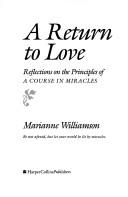
Synthesizes forgiveness as a spiritual practice and a fundamental shift in perception, offering a philosophical framework that ties together every psychological and emotional thread from the earlier stages.
Discussion
Keep reading
Paths that share books, cover the same subject, or open a related topic.