Hannibal Lecter Reading Order: Where to Start with Thomas Harris
There are only four Hannibal Lecter novels, and they should be read as published rather than chronologically. Hannibal Rising is the prequel, and reading it first destroys the thing the first three books are built on: Lecter works because he is inexplicable, and the prequel's whole project is to explain him. This path takes the four in order, adds Thomas Harris's two non-Lecter novels, and then turns to the FBI behavioural science that Harris researched directly — Douglas and Ressler are the men Jack Crawford is built from, and reading them shows exactly how much Harris invented and how much he simply transcribed.
The four novels, in publication order
BeginnerRead the Lecter sequence as it was written, and understand why publication order is not merely traditional but structurally necessary
▸ Study plan for this stage
Pace: 7-8 weeks. Red Dragon 373pp, The Silence of the Lambs 352pp, Hannibal 514pp and Hannibal Rising 341pp — about 1,580 pages, and the first two are propulsive enough to go in a week apiece. Hannibal is the long one and the slowest, and it changes register partway through. All four novels centre on seri
- The procedural structure Harris invented: an investigator, a profile, and a killer whose interior life the novel gives us in parallel
- Lecter as resource rather than antagonist in the first two books — offstage, in a cell, and dangerous mainly through conversation
- Francis Dolarhyde as Red Dragon's actual subject, and how much of the novel is his
- Will Graham and Clarice Starling as two solutions to the same problem: the investigator who has to think like the killer
- The withheld explanation — Lecter works because he is not accounted for, which is the load Hannibal Rising deliberately removes
- Hannibal's shift from procedural to something closer to grand guignol and the choice Harris makes about Starling, which divided readers permanently
- Why publication order is structurally rather than merely traditionally correct
- How much of Red Dragon is Lecter actually in, and how does Harris make him dominate a book he is barely present in?
- What does Starling have that Graham does not, and how does Silence use the difference?
- What exactly does Hannibal do to Starling, and can the ending be defended on the novel's own terms?
- What does Hannibal Rising supply, and name three specific things the earlier novels lose once it has been supplied
- Where does Harris's prose change between 1981 and 1999 — is the shift in Hannibal a decline, a deliberate move, or both?
- Count the pages Lecter appears on in Red Dragon. The number is small and knowing it changes how you read the character's later promotion to the centre of the books.
- Read the Lecter-Starling interview scenes in Silence consecutively, skipping everything between. They form a complete second novel inside the first, and reading them isolated shows how carefully the exchange is structured.
- Track Harris's use of physical detail in Red Dragon versus Hannibal — the tooth impressions and the mirror shards versus the Florence and Muskrat Farm material. The research-driven concreteness is constant; what it is applied to is not.
- After Hannibal Rising, go back to Lecter's first appearance in Red Dragon and reread it with the origin in mind. This is the cleanest available demonstration of the path's central claim about reading order.
- Reader judgement worth forming for yourself: the later two novels are widely considered much weaker than the first two. Write a paragraph on whether you agree and on what grounds, before reading anyone else's.
Next up: Having read the sequence, the obvious question is what Harris's method looks like when there is no Lecter to carry it — which the two standalones answer directly.
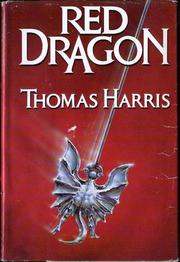
1981, and the book that invented the modern serial-killer procedural. Lecter is offstage for most of it — a resource in a cell — and Francis Dolarhyde is the actual subject. Start here; everything after is a response to this book.
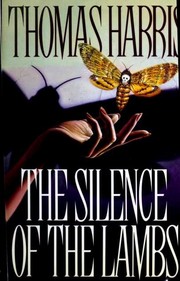
The same structure with Clarice Starling in place of Will Graham, and Lecter promoted to co-lead. Read it second: its power depends entirely on the reader already knowing what Lecter is from Red Dragon.

1999, and the novel that divides readers permanently — Lecter moves from the cell to the centre of the book, and Harris makes a choice about Starling that many never forgave. Read it and decide; it is a stranger and more literary novel than its reputation.
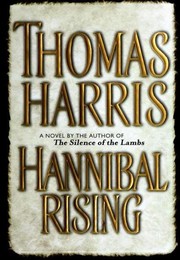
The prequel, and last for a reason. It supplies a wartime origin for Lecter, which is precisely the explanation the earlier books withhold. Read it fourth or not at all — read first, it defuses three novels.
The rest of Thomas Harris
IntermediateSee the two novels outside the sequence, and what Harris's method looks like without Lecter
▸ Study plan for this stage
Pace: 2-3 weeks. Black Sunday and Cari Mora are both 320pp and both read fast. Black Sunday concerns a terrorist attack planned against a packed stadium and works through the preparation in procedural detail; Cari Mora involves cartel violence and a villain in the Lecter mould without the intelligence tha
- The research-heavy procedural style fully formed in 1975, six years before Red Dragon
- Harris as crime reporter, and how that training shows in the handling of technical and institutional detail
- The damaged perpetrator given interiority — Michael Lander in Black Sunday is the template Dolarhyde refines
- Dual-track structure: the plot advancing from both the investigators' and the perpetrator's side
- Cari Mora's villain built on the Lecter template, and what is missing when the intelligence is removed
- A thirteen-year gap and what it did — Cari Mora is much slighter than the Lecter books and divided reviewers
- What in Black Sunday's construction shows up again, almost unchanged, in Red Dragon?
- How does Harris make Lander comprehensible without excusing him, and is the technique the same one used on Dolarhyde?
- What does Cari Mora's antagonist lack that Lecter has, and is that a failure or a different design?
- Where does Harris's reporter background show most clearly — which kinds of detail is he unable to leave vague?
- Read against the Lecter novels, what is Harris's actual subject across all six books?
- Read Black Sunday's opening chapter and Red Dragon's opening chapter back to back. Six years apart, and the method is visibly the same; identify three shared moves.
- Chart the alternation between investigator chapters and perpetrator chapters in Black Sunday, then do the same for Red Dragon. The rhythm is one of Harris's most consistent tools.
- In Cari Mora, mark every passage that reads as a deliberate echo of the Lecter books, then ask what each echo is for.
- Take one technical set piece from Black Sunday and one from Silence and compare how much research is on the page versus implied behind it.
Next up: Harris built Jack Crawford out of real people he met at Quantico, and the next three books are those people writing about the same work in their own voices.
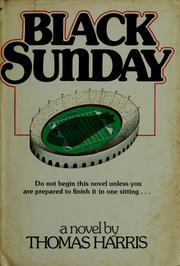
His 1975 debut — a terrorist plot against the Super Bowl, written when he was a crime reporter. The research-heavy, procedural style is fully formed here, six years before Red Dragon, which is the point of reading it.

His 2019 return after thirteen years, set in Miami around a buried cartel fortune. Divisive and much slighter than the Lecter books, but it is the only other place to see what he does with a villain built on the same template.
The profilers Harris shadowed
IntermediateMeet the real FBI Behavioral Science Unit that Harris visited at Quantico, and see how much of Jack Crawford is reportage
▸ Study plan for this stage
Pace: 5-6 weeks. Mindhunter 397pp, Whoever Fights Monsters 279pp, The Cases That Haunt Us 384pp. These are memoirs by working investigators rather than academic writing, and they read at popular-nonfiction pace — a fortnight for the first, a week each for the others. All three describe real murders, inclu
- Criminal profiling as it was actually assembled: prison interviews with convicted offenders, generalised into typologies
- The FBI Behavioral Science Unit at Quantico, which Harris visited, and how directly Jack Crawford derives from Douglas
- The organised/disorganised distinction and how it functions as an investigative heuristic
- Two founders with two accounts — Douglas and Ressler differ in emphasis and occasionally in fact, and the origin story has more than one author
- Retrospective profiling in The Cases That Haunt Us, applied to Jack the Ripper, the Lindbergh kidnapping and JonBenet Ramsey, which is where the method's reach and its limits are both clearest
- The gap between an investigative tool and a predictive science, and how carefully or otherwise each author states it
- How was the original interview data gathered, and what are the obvious selection problems with a sample of offenders who were caught?
- Where do Douglas and Ressler's accounts differ, and how would you decide between them?
- How much of Jack Crawford is Douglas? Point at specific passages in Mindhunter that Harris clearly drew on.
- In The Cases That Haunt Us, which retrospective profile is most convincing and which is weakest — and what makes the difference?
- Both authors are advocates for profiling. Where does that show, and what would a sceptical reader want to see that these books do not supply?
- Read Douglas's account of a case in Mindhunter and Ressler's account of the same or a similar case in Whoever Fights Monsters, and list the discrepancies. This is more instructive than either book alone.
- Take one scene from Silence — the Quantico briefing, the prison visit protocol — and find its counterpart in Mindhunter. Harris transcribed more than he invented, and locating it is startling.
- For one case in The Cases That Haunt Us, write your own list of what the profile actually predicts versus what it merely describes after the fact. The distinction is the whole methodological argument.
- Note every point at which Douglas or Ressler describes the personal cost of the work. Both books are also occupational memoirs, and that thread runs under Harris's Crawford as well.
Next up: The memoirs tell the story in narrative; the next stage is the source document underneath them, plus the novel Harris was reading before any of it.
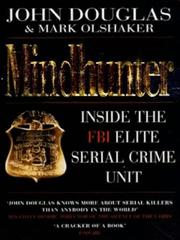
Douglas is the principal model for Jack Crawford, and this is his account of building criminal profiling out of prison interviews. Read it first of the three — it is the most readable and the closest to the novels' texture.
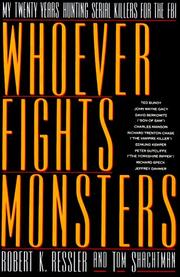
Ressler coined the term serial killer and worked the same unit. His account differs from Douglas's in emphasis and occasionally in fact, which is instructive: the profiling origin story has more than one author.
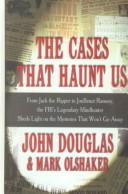
Douglas applying profiling retrospectively to Jack the Ripper, the Lindbergh kidnapping and JonBenet Ramsey. Read it third, as the best available demonstration of both the method's reach and its limits.
The apparatus and the ancestor
IntermediateRead the technical literature behind the fiction, and the novel that established the captivity plot Harris inherited
▸ Study plan for this stage
Pace: 5-6 weeks. Sexual Homicide is 234pp of clinical academic monograph and is much slower going than its length suggests — read it at 10-15pp a day. The Anatomy of Motive is 320pp of popular nonfiction and reads quickly. The Collector is 288pp of literary fiction and should be read last, in one or two s
- The monograph behind the memoirs: Ressler, Burgess and Douglas's typology laid out as research rather than anecdote (the catalogue record here credits Douglas first)
- Crime-scene analysis as inference — what physical evidence is taken to say about the offender
- Motive as an organising category in The Anatomy of Motive, running from arson to assassination, and what it explains that offender typology does not
- The clinical register and why it reads so differently from the same authors' popular books
- The Collector as the direct literary ancestor of the captivity plot: the collector's mentality, the two-voice structure, the basement
- Fowles's split narration and how it forces the reader inside the captor's self-justification
- The line from a 1963 literary novel through 1980s FBI research to a 1988 bestseller
- What is the evidential basis of the organised/disorganised typology as Sexual Homicide presents it, and how large is the sample?
- How does the clinical version of a case differ from Douglas's narrative version of the same material, and which is more useful?
- What does organising by motive rather than by offender type let The Anatomy of Motive do?
- How does Fowles's split narration make Clegg comprehensible, and how is that different from what Harris does with Dolarhyde?
- Having read all four stages, how much of the Lecter novels is invention and how much is transcription — and does the answer change what you think of the books?
- Read the typology chapter of Sexual Homicide and then reread Harris's description of a crime scene in Red Dragon. The vocabulary maps almost word for word, and seeing it is the point of the stage.
- In The Collector, read Clegg's section and Miranda's section as two separate books, then in the intended alternation. The structure is doing work that the content alone does not.
- List every element of Buffalo Bill's basement in Silence that appears first in The Collector. The debt is specific and considerable.
- Pick one case Douglas analyses in The Anatomy of Motive and reconstruct which parts of the reasoning come from the Sexual Homicide framework and which are his own judgement. The two are not always separated in the text.
Next up: This is the end of the path: the fiction, the men behind it, the research underneath and the novel it descends from are all in place, and any further reading is now a matter of choosing between the criminology and the crime writing.
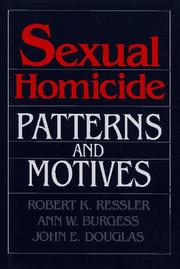
The actual academic monograph — Ressler, Burgess and Douglas on the organised and disorganised typology, drawn from the original prison interviews. Dry, clinical and the source document for a whole genre's vocabulary. Note that the record credits Douglas first.
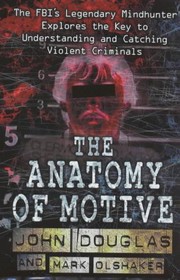
Douglas on why rather than who, running from arsonists to assassins. The most analytical of his books and the closest thing to a theory of the material the novels dramatise.

Fowles's 1963 novel of a butterfly collector who abducts a woman, told half in his voice and half in hers. The direct literary ancestor of Buffalo Bill's basement and of the whole captivity plot — read it last and Harris's debts become very clear.
Discussion
Keep reading
Paths that share books, cover the same subject, or open a related topic.