Food Forests: The Best Books on Forest Gardening and Permaculture
This curriculum starts at the intermediate level, assuming the learner already has basic gardening knowledge, and builds systematically from permaculture design principles through hands-on food forest practice to advanced ecological and design mastery. Each stage deepens the previous one — first establishing the philosophical and ecological framework, then moving into practical design and planting, and finally refining long-term management and creative integration of complex systems.
Permaculture Foundations for Food Forests
IntermediateUnderstand the permaculture design principles and ecological thinking that underpin all food forest work, so later practical books make immediate sense.
▸ Study plan for this stage
Pace: 8–10 weeks, ~25–30 pages/day (alternating between both books; start with "Gaia's Garden" for 3–4 weeks, then "Introduction to Permaculture" for 4–6 weeks)
- Permaculture as a design system based on observing natural ecosystems and applying their patterns to human food production
- The three ethics of permaculture: care for the earth, care for people, and fair share/return of surplus
- Zones and sectors: organizing a food forest by proximity to the home and by natural forces (sun, wind, water)
- Stacking functions: designing elements so each component serves multiple purposes (e.g., a tree provides food, shelter, and nitrogen fixation)
- Succession and edge effects: understanding how ecosystems develop over time and how boundaries between different zones create productivity
- Soil building and mycorrhizal networks: the living foundation beneath a food forest that determines long-term health
- Polycultures and guilds: growing complementary plants together to reduce inputs and increase resilience
- Observation and patience: the permaculture principle that good design emerges from understanding your specific site before intervening
- What are the three ethics of permaculture, and how do they apply specifically to food forest design?
- Explain the concept of zones and sectors in permaculture. How would you apply these to your own property or a hypothetical site?
- What does 'stacking functions' mean, and give three examples of how this principle appears in 'Gaia's Garden'?
- How do soil organisms and mycorrhizal networks relate to the long-term success of a food forest, according to Mollison and Hemenway?
- Describe what a plant guild is and explain how companion planting differs from traditional monoculture agriculture in terms of permaculture thinking.
- Why does permaculture emphasize observation and patience before design? What risks does rushing into implementation create?
- Map your own property (or a local site) using the zones and sectors framework from 'Introduction to Permaculture.' Identify zone 0 (home), zones 1–5, and mark prevailing winds, water flow, and sun exposure.
- Create a plant guild design on paper: select 5–7 plants that could grow together in your climate, research their companion relationships, and explain how each plant serves multiple functions (food, nitrogen fixation, pest management, etc.).
- Conduct a soil observation exercise: collect soil samples from different areas of your property (or a local garden), examine them for life (earthworms, fungi, insects), and relate your findings to Hemenway's and Mollison's discussions of soil health.
- Read and annotate one chapter from 'Gaia's Garden' focused on a specific plant or technique, then visit a local garden or natural area and identify examples of the principles Hemenway describes in action.
- Design a small food forest 'corner' (4m × 4m or similar) using stacking functions: sketch the vertical layers (canopy, understory, shrub, herb, ground cover, root), assign plants to each layer, and justify why each plant is placed there.
- Keep a two-week observation journal of your site (or a nearby natural area): note sun patterns, water movement, existing plants, insects, and microclimates. Reflect on how this observation informs permaculture design choices.
Next up: This stage builds the conceptual and ecological foundation—understanding *why* permaculture works—so the next stage can focus on *how* to implement specific food forest techniques, plant selections, and management practices with confidence and adaptability.

The ideal entry point for intermediate learners: it translates permaculture principles into home-scale edible landscapes with clarity and enthusiasm, building the vocabulary (guilds, layers, succession) used throughout the rest of the curriculum.
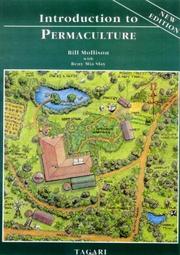
Mollison is the co-originator of permaculture, and this concise volume lays out the core design ethics and principles directly from the source, grounding the learner before diving into forest-specific texts.
Core Food Forest Design
IntermediateLearn the specific theory, structure, and design methodology of food forests and forest gardens, from canopy to ground layer, including plant selection and guild assembly.
▸ Study plan for this stage
Pace: 8–10 weeks, ~40–50 pages/day. Start with Hart's foundational text (2–3 weeks), move to Crawford's practical guide (3–4 weeks), then Osentowski's greenhouse integration (2–3 weeks). Allow 1 week for overlap and consolidation.
- The seven-layer structure of food forests: canopy, understory, shrub, herbaceous, ground cover, root, and vine layers, and how each contributes to the system's productivity and resilience
- Plant guilds and polycultures: selecting complementary species that support each other through nitrogen fixation, pest management, nutrient cycling, and structural diversity
- Succession and forest ecology principles applied to garden design: working with natural plant communities and ecological succession to reduce maintenance over time
- Site analysis and assessment: evaluating soil, microclimate, aspect, water availability, and existing vegetation to inform design decisions
- Canopy and understory tree selection: choosing appropriate species for your climate and guild, understanding their roles in shading, nutrient cycling, and yield
- Herbaceous and ground layer design: integrating perennial vegetables, herbs, nitrogen-fixers, and dynamic accumulators to maximize productivity in the understory
- The forest garden greenhouse model: extending the food forest concept into controlled environments to overcome climate limitations and intensify production
- Design methodology: translating ecological principles into practical garden layouts that balance yield, resilience, and long-term sustainability
- What are the seven layers of a food forest, and what role does each layer play in the overall system's function and productivity?
- How do you select plants for a guild, and what characteristics make species compatible in a polyculture system?
- What site factors (soil, aspect, water, microclimate) must you assess before designing a food forest, and how do they influence your plant choices?
- How does ecological succession inform food forest design, and why does understanding natural plant communities reduce long-term maintenance?
- What are the key differences between Hart's foundational approach, Crawford's practical methodology, and Osentowski's greenhouse adaptation?
- How can you adapt food forest principles to a greenhouse or controlled environment, and what advantages and trade-offs does this approach offer?
- Conduct a detailed site assessment of a real or hypothetical location: map aspect, soil type, water sources, existing vegetation, and microclimates; document findings in a site plan.
- Design a complete seven-layer food forest layout for a specific climate zone and site, including canopy, understory, shrub, herbaceous, ground cover, root, and vine layers with named species.
- Create 3–5 plant guilds (e.g., nitrogen-fixing guild, pest-management guild, nutrient-accumulator guild) with 4–6 species each, documenting the ecological relationships between members.
- Compare and contrast the design approaches in Hart, Crawford, and Osentowski by creating a side-by-side table of their principles, methodologies, and recommended species.
- Sketch a detailed planting plan for a 1,000 sq ft food forest, including spacing, succession timing, and maintenance schedules for years 1–5.
- Research and compile a regional plant list for your climate zone, organized by layer and function (yield, nitrogen fixation, pest management, structure), with notes on guild compatibility.
Next up: This stage equips you with the design theory and practical methodology to plan and establish a food forest; the next stage will focus on implementation, establishment techniques, and long-term management to bring these designs to life in the ground.
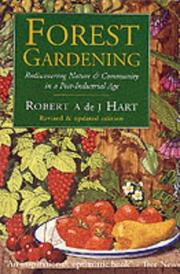
Hart pioneered the modern forest garden concept in the temperate West; reading his foundational work first gives historical context and the essential seven-layer model that every subsequent author builds upon.
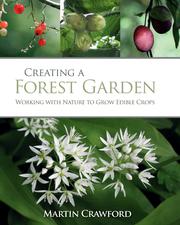
Crawford's book is the definitive practical manual on temperate food forests, covering site assessment, design, hundreds of plant profiles, and establishment — it is the single most important book in this curriculum and rewards reading after Hart's conceptual groundwork.

Extends food forest thinking into controlled and cold climates, broadening design intuition and introducing microclimate manipulation — a natural next step after mastering open-site design with Crawford.
Plants, Ecology & Species Selection
IntermediateBuild a deep, species-level plant palette and understand the ecological relationships — nitrogen fixers, dynamic accumulators, pest predators — that make a food forest self-sustaining.
▸ Study plan for this stage
Pace: 6–8 weeks, ~40–50 pages/day, with 2–3 days per week dedicated to species research and note-taking
- Ecological functions and roles: nitrogen fixers, dynamic accumulators, pest predators, and other functional groups that drive forest garden self-sufficiency
- Species selection criteria: hardiness, yield, ecological niche, and compatibility within polyculture systems
- Plant guilds and functional relationships: how plants support each other through nutrient cycling, pest management, and microhabitat creation
- Succession and temporal dynamics: understanding how plant communities change over time and designing for long-term stability
- Soil ecology and nutrient cycling: the role of mycorrhizal networks, decomposers, and deep-rooting plants in building fertility
- Biodiversity as resilience: how diverse species assemblies buffer against pests, diseases, and environmental stress
- Regional and bioregional plant palettes: matching species to local climate, soil, and existing ecosystems
- What are the primary ecological functions (nitrogen fixation, dynamic accumulation, pest predation, etc.) and how do you identify plants that fill each role?
- How do you select appropriate species for a food forest based on hardiness, yield, and ecological compatibility with your site and climate?
- What is a plant guild, and how do you design one that creates self-reinforcing ecological relationships?
- How does succession influence food forest design, and what strategies help maintain productivity as the system matures?
- What role do soil organisms and nutrient cycling play in reducing the need for external inputs?
- How does species diversity contribute to pest and disease resilience in a food forest system?
- Create a functional species inventory for your bioregion: research and list 20–30 candidate species, categorizing each by ecological function (nitrogen fixer, dynamic accumulator, pest predator, etc.) and hardiness zone
- Design a plant guild for a specific niche in your site (e.g., nitrogen-fixing understory, pest-predator layer): map out 5–8 species, their relationships, and how they support each other over time
- Conduct a soil ecology audit of your site: identify existing soil organisms, test for mycorrhizal presence, and document decomposer activity to understand baseline fertility dynamics
- Build a succession timeline for your food forest: sketch how your planned species composition will shift over 5, 10, and 20 years, and adjust species selection to maintain productivity
- Research and compare 3–5 regional food forest case studies: document their species palettes, ecological functions, and how they adapted Jacke's principles to local conditions
- Create species data sheets for your top 15 candidate plants: record hardiness, yield, ecological role, pest/disease resistance, and compatibility with other species in your design
Next up: Mastering species selection and ecological relationships equips you to move into the next stage—site assessment and design—where you'll apply this plant knowledge to your specific landscape, soil, and microclimate conditions.
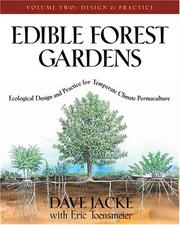
The companion practice volume provides exhaustive plant lists, guild recipes, and step-by-step design tools — it must follow Vol. 1 because the species data only makes sense within the ecological framework established there.
Advanced Integration & Long-Term Management
ExpertMaster the long-term stewardship, succession management, and whole-farm or community-scale integration of food forests, including agroforestry economics and soil ecology.
▸ Study plan for this stage
Pace: 8–10 weeks, ~40–50 pages/day, with 1–2 weeks between books for integration and reflection
- Intensive market garden design and profitability models for small-scale food production
- Soil building and fertility management as the foundation of long-term productivity
- Perennial polyculture and restoration agriculture principles for self-renewing ecosystems
- Succession management and species integration in multi-layered agroforestry systems
- Whole-farm economic analysis: calculating yields, labor, and profitability at scale
- Agroforestry as a regenerative alternative to conventional agriculture and monoculture
- Long-term soil ecology: mycorrhizal networks, microbial communities, and carbon sequestration
- Integration of annual and perennial systems for resilience and year-round production
- How does Fortier's market garden model balance intensive production with soil health, and what makes it economically viable at small scale?
- What are the key differences between annual vegetable production and perennial polyculture systems, and when is each approach appropriate?
- How does Mark Shepard define restoration agriculture, and what role do perennial crops and livestock play in regenerating degraded land?
- What succession patterns occur in food forests and agroforestry systems, and how should a manager intervene to guide them toward desired outcomes?
- How can you calculate the economic return on a food forest or agroforestry system over 5–20 years, accounting for establishment costs and long-term yields?
- What soil biological processes (mycorrhizal associations, nutrient cycling, carbon storage) are essential to understand for managing food forests sustainably?
- Create a detailed market garden production plan for a 1-acre plot: choose 8–10 crops, calculate planting dates, labor requirements, and projected revenue using Fortier's methods
- Design a 5-year soil-building protocol for degraded land, specifying cover crops, amendments, and monitoring metrics from both books
- Map a multi-layer food forest succession plan for a 0.5-acre site: identify pioneer species, mid-successional perennials, and climax species appropriate to your region
- Conduct a whole-farm economic analysis: project 20-year cash flows for a 5-acre agroforestry system, including establishment, maintenance, and harvest costs
- Perform a soil biology audit on a real or hypothetical site: assess mycorrhizal potential, organic matter, and microbial activity; propose interventions based on Shepard's principles
- Interview or research a local market gardener or agroforester; document their succession management decisions, economic model, and long-term soil management strategy
- Create a species matrix for a food forest: list 15–20 perennial species with their functions (nitrogen fixation, wildlife support, human food), spacing, and successional roles
Next up: This stage equips you with both the intensive production and economic literacy of market gardening and the long-term regenerative vision of restoration agriculture, preparing you to design and manage integrated food systems at landscape or community scale in the next stage.

Bridges the gap between subsistence food forest design and productive, low-input growing systems, sharpening the learner's thinking about yield, efficiency, and economic viability at scale.
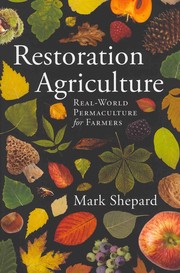
Shepard's account of running a large-scale perennial polyculture farm applies food forest logic to landscape and farm scale, addressing succession, water management, and long-term profitability — the ideal capstone for a learner ready to think beyond the garden.
Discussion
Keep reading
Paths that share books, cover the same subject, or open a related topic.