Tax Havens and Offshore Finance: The Best Books, in Order
Offshore is not a place but a service: a jurisdiction sells secrecy and a zero rate, and an industry of lawyers, accountants and company formation agents assembles the structures that use it. This path starts with how the system works and how it was deliberately built, then moves to the professionals who operate it, then to the one firm whose entire internal archive leaked and can therefore be read as documented fact, then to the economists trying to measure what is hidden, and finally to the kleptocratic money that offshore exists to receive. Most of this literature is investigative journalism naming real people and companies; where a book is a polemic rather than a documented account, the note says so.
How the system works, and who built it
BeginnerLearn the basic architecture: secrecy jurisdictions, shell companies, trusts, transfer pricing and the difference between avoidance and evasion. The key insight to leave with is that offshore is a product built by onshore states and firms — the City of London and Delaware matter more than any palm-fringed island — and not a loophole that regulators forgot to close.
▸ Study plan for this stage
Pace: About five weeks for 918 pages, and the three are deliberately different in kind. Shaxson's Treasure islands (344pp) first, two weeks: it is campaigning journalism with a clear thesis and a substantial documentary base — an argument rather than a survey — so read it for the map and hold its stronger
- Secrecy jurisdiction as a service offering rather than a geographical accident
- The shell company, the trust and the foundation as three distinct instruments with different legal effects
- Transfer pricing, and how a profit is relocated without anything physical moving
- Avoidance and evasion: the legal line, and why the industry sits deliberately close to it
- Onshore centres as the system's core — the point that most changes a reader's mental picture
- State competition as the origin of havens, which is Palan's account against a loophole story
- Reading a campaigning book: what it documents, what it infers, and what it asserts
- What does a secrecy jurisdiction actually sell, and to whom?
- Distinguish a shell company from a trust in terms of who owns what and who can find out.
- Explain transfer pricing with a concrete example and say what makes it lawful.
- What is Shaxson's central thesis, and which parts of it does he document rather than argue?
- On Palan's account, why did havens emerge, and what does that explain that a loophole story does not?
- Which claims in Treasure islands would you want checked before repeating them?
- Draw a simple offshore structure — beneficial owner, holding company, trust, operating company — and label who knows what at each layer.
- Take one case from Moneyland and list every professional who had to act for the money to move.
- Mark ten claims in Shaxson as documented, inferred or asserted, and carry the asserted list forward to stage four.
- Write half a page contrasting Palan's explanation of why havens exist with Shaxson's.
Next up: Jurisdictions do not build structures; people do, and the next stage is the profession that assembles them.

The book that made offshore a public subject, tracing the British network of dependencies and arguing that the City of London is the system's centre. Campaigning journalism with a clear thesis and a substantial documentary base; start here for the map, then check its stronger claims against the scholarship in stage four.

The most readable account of how a stolen fortune actually moves — passports, shell layers, London property, private schools — told through specific cases and named intermediaries. The best demonstration that the technical machinery in Shaxson has identifiable customers.

Palan, Murphy and Chavagneux's scholarly account of how havens emerged as a product of twentieth-century state competition — the sober counterpart to the journalism. Published as Tax Havens: How Globalization Really Works, and the right book to read before any argument about how much money is offshore.
The professionals who assemble the structures
IntermediateMove from jurisdictions to the people. Offshore requires wealth managers, trustees, company agents and a legal profession willing to construct arrangements that are individually lawful and collectively a secrecy system. Understand the trust as the core instrument and why professional ethics and client confidentiality do so much work here.
▸ Study plan for this stage
Pace: Four to five weeks. Harrington's Capital Without Borders — the catalogue displays the title in capitals — has no page count in our record, so budget a fortnight on difficulty: it is academic, scrupulous, and written by a sociologist who qualified as a wealth manager and interviewed practitioners acr
- The trust as the profession's core instrument, and what separating legal from beneficial ownership achieves
- Fiduciary duty and client confidentiality as professional norms doing structural work
- Individually lawful acts composing a collectively opaque system
- The wealth manager's self-understanding: service, discretion, and the family as client
- Jurisdiction shopping — choosing the law that will govern an arrangement
- How professional bodies and reputational sanction substitute for regulation
- The national infrastructure a service industry needs: registries, courts, visas, and a favourable libel regime
- What does a trust do that a company cannot, and why does that matter offshore?
- How do the practitioners Harrington interviewed describe their own work, and where does that description differ from a critic's?
- Which parts of the profession's ethics function as barriers to disclosure?
- What specific national services does Bullough identify, and which is hardest to replace?
- Where does Bullough's framing outrun his evidence, and where is the evidence unusually specific?
- Write the job description of a wealth manager from Harrington's interviews, in the practitioners' own terms.
- For one structure described in stage one, list every professional role required and the qualification each holds.
- Take three services Bullough names and check what public registry information exists for each today.
- Write a page on whether the profession could function if any single one of its norms were removed.
Next up: Everything so far is reconstructed from outside; the next stage is the one case where the firm's own archive became public.
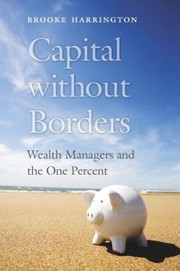
A sociologist who qualified as a wealth manager and interviewed practitioners in eighteen countries — the only account written from inside the profession rather than about it. Academic, scrupulous, and the most valuable book on the path because it explains the practitioners' own view of what they do. The catalogue displays the title in capitals; her later book Offshore extends the argument.

Bullough's argument that after empire Britain reinvented itself as a service provider to the world's dirty money — shipping registries, Scottish limited partnerships, libel law, golden visas. Polemical in framing and specific in its evidence; read it as the national case study of the profession Harrington describes.
One firm, documented
IntermediateRead the single best-evidenced case in the field. The Mossack Fonseca leak of 11.5 million documents turned inference into record: you can see which structures were built, for whom, and how the firm responded when clients turned out to be sanctioned or criminal. Note that both books are by journalists who worked the leak, which gives them the access and the interest.
▸ Study plan for this stage
Pace: Four weeks for 718 pages, and the order is method then findings. Obermayer's Panama papers (366pp) first, two weeks: written with Frederik Obermaier, it is as much about receiving a leak of millions of documents and running an enormous cross-border journalistic collaboration as about what was found,
- A document leak as an evidence base, and the verification work required before publication
- Cross-border collaborative journalism: shared documents, staggered publication, and why it was necessary
- Company formation agency as a business — volume, pricing and the role of intermediaries
- Nominee directors and bearer instruments as concealment devices
- Know-your-customer obligations, and what the archive shows about how they were satisfied
- The gap between what a firm's compliance file records and what it knew
- Source protection and the ethics of publishing from stolen documents
- How were the documents verified before publication, and what could not be verified?
- What did the archive show about how the firm handled a client who turned out to be sanctioned?
- What role did intermediary banks and law firms play in generating the firm's business?
- Which findings from the leak confirm claims made in stage one, and which complicate them?
- What are the ethical objections to publishing from leaked documents, and how do the authors answer them?
- Reconstruct one client structure from the documents as the books describe it, layer by layer.
- List the verification steps the journalists took and mark which could be applied to a smaller leak.
- Take three claims from Treasure islands that you flagged in stage one and check whether the archive supports them.
- Write half a page on what the leak establishes about the industry generally, and what it establishes only about one firm.
Next up: One firm's archive is a sample; the next stage is the attempt to say what the whole system amounts to and who bears the cost.

Obermayer and Obermaier of Süddeutsche Zeitung on receiving the leak and running the largest cross-border journalistic collaboration ever attempted. As much about method as about findings, which is why it goes first — it tells you how the evidence in the next book was produced.

The Pulitzer-winning reporter's account of what the documents actually showed about Mossack Fonseca's clients and practices. Note that this book was reissued as The Laundromat as a film tie-in and the catalogue holds both records — they are the same work, so read one.
How much is hidden, and who pays instead
IntermediateTurn to measurement and policy, which is where the field is genuinely contested. Estimates of offshore wealth vary by an order of magnitude depending on method, and honest ones state their uncertainty. Finish able to say how the leading estimate is constructed, why domestic tax codes produce most of the same result legally, and why the small jurisdictions have so far outlasted every international campaign against them.
▸ Study plan for this stage
Pace: Six weeks. Three lengths are recorded — Zucman's The hidden wealth of nations at 165pp, Johnston's Perfectly Legal at 345pp and Sharman's Havens in a Storm at 218pp, 728 pages between them — while Brooks's The Great Tax Robbery has no page count in our catalogue; allow it about ten days. Zucman firs
- How offshore wealth is estimated from the global asset-liability anomaly, and what the method assumes
- Why estimates vary by an order of magnitude, and what distinguishes an honest one
- Domestic tax law producing much of the same distributional result entirely legally
- Institutional capture of a revenue authority, described by a former inspector
- Sovereignty as a winning rhetorical position for a small jurisdiction
- Why an international campaign against havens has repeatedly failed
- Distinguishing a measurement claim from a policy proposal in the same book
- Reconstruct Zucman's method in your own words. What does it miss, and does he say so?
- Why do published estimates of offshore wealth differ so widely?
- What does Johnston show a tax code can do without any offshore structure at all?
- What form did institutional capture take, on Brooks's account, and what was his vantage point?
- How did small states defeat the international initiative Sharman studies, and what was the winning argument?
- Which numbers from stage one survive contact with this stage?
- Work through Zucman's calculation with his own figures and identify each assumption it rests on.
- Take three widely quoted offshore-wealth numbers, find their source, and record the method behind each.
- For one of Brooks's named settlements, write what was negotiated, by whom, and what would be public today.
- Write a page on why reform campaigns fail, using Sharman's mechanism and one example from the Panama material.
- Return to your stage-one list of asserted claims and mark each as supported, unsupported, or still untested.
Next up: Measurement answers how much; the last stage asks where the money came from and who was willing to receive it.
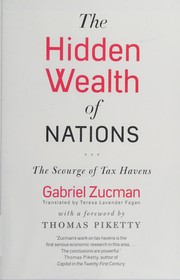
The economist's attempt to actually measure offshore wealth, using the anomaly between global reported assets and liabilities, plus a concrete enforcement proposal. Short, technical, and the citation behind most numbers you will see quoted — read his method rather than only his total.

The Pulitzer-winning reporter on how the American tax code itself, without any offshore involvement, shifts the burden downward. The essential corrective to treating havens as the whole story; now historical on specific provisions, since the code has been rewritten twice since 2003.
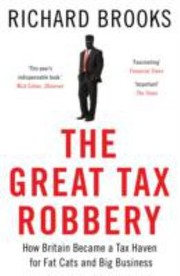
A former HM Revenue and Customs tax inspector on how British corporate tax avoidance is actually negotiated, naming firms and settlements. Written from inside the enforcement side, which is rare, and specific to the UK — its details on particular cases have dated, its account of institutional capture has not.
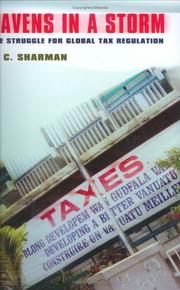
A political scientist's study of how small haven states defeated the OECD's harmful-tax-competition initiative by winning the rhetorical argument about sovereignty. The most surprising book here and the best explanation of why reform campaigns keep failing.
What the money is running from
IntermediateClose on the demand side. Much of what offshore handles is not tax planning but the proceeds of state capture, and the receiving economies have their own incentives to take it. Also confront the argument that the finance sector's growth is itself the harm, which is the most contested claim in the subject.
▸ Study plan for this stage
Pace: Seven weeks for 1,185 pages, and all three are arguments rather than surveys, which the reading should keep in view. Burgis's Kleptopia (464pp) first, two and a half weeks: a financial investigator following money out of several states into Western banks and courts, naming the institutions. It is he
- State capture as the source of much of what offshore actually handles
- The receiving economy's incentives — professional fees, property prices, political donations
- Correspondent banking and the point at which foreign money enters a regulated system
- Litigation and reputation management as instruments used against investigators
- The finance-curse mechanism as stated, and the specific economic objections to it
- Advocacy with a policy agenda: what it makes visible and what it is not obliged to weigh
- Distinguishing a documented allegation from an argued interpretation of the same facts
- Trace one flow in Kleptopia from its origin to a Western institution and name every intermediary.
- What makes a book like this defensible in court, and what does that constrain in how it is written?
- What is Michel's central claim, and what evidence does he give that the receiving jurisdiction is now the largest?
- State the finance-curse mechanism precisely. What is the strongest economic objection to it?
- Where do Burgis, Michel and Shaxson agree on the facts and differ only on the conclusion?
- Which of these three books is a survey of anything? If none, say what that means for how you cite them.
- For one Kleptopia case, list the allegations and mark, for each, whether it rests on a court record, a document, or a source.
- Check Michel's claims about one domestic secrecy vehicle against its current public registry rules.
- Take the finance-curse thesis and write the strongest case against it using evidence from Palan and Zucman.
- Write 1,000 words tracing one hypothetical fortune through every stage of this path — jurisdiction, professional, structure, measurement, and destination — citing at least five books and marking each claim as documented or argued.
Next up: You can now read an offshore story and separate its three layers: the mechanism, which is well documented, the measurement, which is contested, and the verdict, which is the author's.

A Financial Times investigator following money out of Kazakhstan, Zimbabwe and Russia into Western banks and courts, naming the institutions. Heavily lawyered and successfully defended against a libel action, which is the relevant credential for a book this specific.

The argument that the United States — South Dakota trusts, Delaware and Nevada shells, anonymous real estate — is now the world's largest secrecy jurisdiction. Advocacy journalism with a policy agenda, and the necessary counter to any account that treats offshore as somewhere else.

Shaxson and Christensen's claim that an oversized financial sector damages its host economy the way a resource boom does. The most theoretically ambitious and most disputed argument on the path — economists contest both the mechanism and the cross-country evidence — so read it last, as a thesis to test against everything before it.
Discussion
Keep reading
Paths that share books, cover the same subject, or open a related topic.