Number theory: books on primes, proofs, and integers
This curriculum builds a deep, proof-driven mastery of number theory across four stages, starting from a solid intermediate foundation and ascending to graduate-level depth. Each stage sharpens the tools of the previous one — divisibility and modular arithmetic first, then primes and analytic methods, then Diophantine equations and algebraic structures, and finally the elegant classical and modern proofs that reveal number theory's historic soul.
Core Foundations
IntermediateMaster the essential language of number theory: divisibility, GCDs, modular arithmetic, congruences, and the Chinese Remainder Theorem — with rigorous proofs from the start.
▸ Study plan for this stage
Pace: 8–10 weeks, ~40–50 pages/day (Niven: 4–5 weeks on Chapters 1–4; Andrews: 4–5 weeks on Chapters 1–3)
- Divisibility: definition, properties, and the division algorithm as the foundation for all subsequent theory
- Greatest Common Divisors (GCDs): Euclidean algorithm, Bézout's identity, and their computational and theoretical significance
- Prime numbers and fundamental theorem of arithmetic: unique factorization and its role in number-theoretic proofs
- Modular arithmetic: congruences, properties of congruence relations, and modular arithmetic as an equivalence system
- Chinese Remainder Theorem: statement, proof, and applications to solving systems of linear congruences
- Fermat's Little Theorem and Euler's theorem: proofs via group theory and applications to modular exponentiation
- Rigorous proof techniques: induction, contradiction, and constructive proofs in the context of number theory
- State and prove the division algorithm. Why is it fundamental to number theory?
- What is Bézout's identity, and how does the Euclidean algorithm prove its existence?
- Define congruence modulo n and prove that it is an equivalence relation. What are the key properties of congruences?
- State and prove the Chinese Remainder Theorem. When can a system of linear congruences be solved, and is the solution unique?
- Prove Fermat's Little Theorem and Euler's theorem. How do they relate to the structure of the multiplicative group modulo n?
- What is the fundamental theorem of arithmetic, and why does unique factorization fail in some number systems?
- Compute GCD(1071, 462) using the Euclidean algorithm, then express the GCD as a linear combination of the two numbers using the extended Euclidean algorithm
- Solve the system of congruences: x ≡ 2 (mod 5), x ≡ 3 (mod 7), x ≡ 4 (mod 11) using the Chinese Remainder Theorem
- Prove that if gcd(a, n) = 1, then a^φ(n) ≡ 1 (mod n), where φ is Euler's totient function
- Determine all solutions to 3x ≡ 7 (mod 11) and verify your answer by substitution
- Prove that if p is prime and p | ab, then p | a or p | b. Use this to prove unique factorization
- Write out the complete proof that congruence modulo n is an equivalence relation, verifying reflexivity, symmetry, and transitivity
Next up: Mastery of divisibility, congruences, and the Chinese Remainder Theorem provides the algebraic and computational machinery needed to explore multiplicative structures (primitive roots, quadratic residues, and quadratic reciprocity) in the next stage.
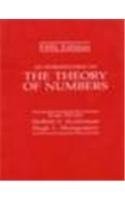
The canonical undergraduate entry point — systematic, proof-based, and covers divisibility, congruences, quadratic reciprocity, and arithmetic functions in one authoritative volume. Start here to build the full vocabulary.
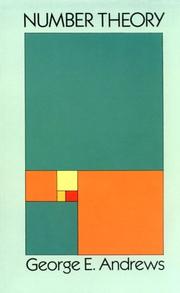
Andrews' concise Dover text reinforces the same core topics with a complementary style and excellent problem sets, solidifying intuition before moving to harder material.
Primes, Arithmetic Functions & Classical Results
IntermediateDevelop a deep understanding of the distribution of primes, multiplicative functions, and the classical theorems — Fermat, Euler, Wilson — that form number theory's historic core.
▸ Study plan for this stage
Pace: 8–10 weeks, ~40–50 pages/day (Ireland: 4–5 weeks; Ingham: 4–5 weeks)
- Fermat's Little Theorem and Euler's Theorem as foundational results on modular exponentiation
- Multiplicative functions (completely multiplicative vs. multiplicative) and their properties via Dirichlet convolution
- The Prime Number Theorem and its connection to the Riemann zeta function
- Wilson's Theorem and its role in primality testing and algebraic number theory
- The Möbius function, Euler's totient function, and their inversion formulas
- Dirichlet characters and L-functions as tools for studying primes in arithmetic progressions
- Classical bounds and estimates on the distribution of primes (Chebyshev, Mertens)
- The analytic continuation and functional equation of the zeta function as a bridge to analytic methods
- State and prove Fermat's Little Theorem and Euler's Theorem; explain why they are central to number theory.
- Define multiplicative and completely multiplicative functions; give examples and explain how Dirichlet convolution preserves multiplicativity.
- What is the Prime Number Theorem, and how does it relate to the zeros of the Riemann zeta function?
- Prove Wilson's Theorem and explain its applications to primality testing and quadratic residues.
- State and apply the Möbius inversion formula; compute the Möbius function and totient function for specific integers.
- Explain how Dirichlet characters and L-functions extend the study of primes to arithmetic progressions.
- What are Chebyshev's bounds on π(x), and how do they compare to the Prime Number Theorem?
- Describe the functional equation of the zeta function and explain why analytic properties of ζ(s) control prime distribution.
- Work through Ireland's proofs of Fermat's Little Theorem and Euler's Theorem; verify them for small primes and composite moduli.
- Compute μ(n), φ(n), σ(n), and τ(n) for n = 1 to 100; identify patterns and verify multiplicativity.
- Prove that if f is multiplicative, then its Dirichlet convolution with any multiplicative function is multiplicative.
- Apply Möbius inversion to derive φ(n) from the identity Σ_{d|n} φ(d) = n.
- Verify Wilson's Theorem for primes p ≤ 23; use it to determine quadratic residues modulo small primes.
- Compute partial sums Σ_{p ≤ x} 1 and Σ_{p ≤ x} log(p) for x = 10, 50, 100, 500; compare to Chebyshev bounds and π(x) estimates.
- Work through Ingham's derivation of the Prime Number Theorem from the non-vanishing of ζ(1 + it); identify the key analytic steps.
- Construct Dirichlet characters modulo small integers (4, 5, 8, 12); compute their L-functions and verify orthogonality relations.
Next up: This stage equips you with the classical theorems and multiplicative structure of number theory, preparing you to advance into analytic techniques (complex analysis applied to ζ and L-functions), sieve methods, and deeper results on prime gaps and distribution in special sequences.
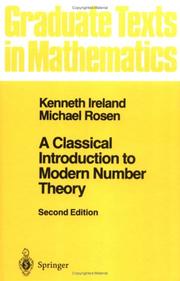
Ireland and Rosen bridge elementary and algebraic number theory beautifully, covering Gauss sums, quadratic reciprocity, and Dirichlet characters with full proofs — the ideal next step up in rigor.
A focused, rigorous treatment of the prime number theorem and the Riemann zeta function's role in prime distribution, giving analytic depth that purely algebraic texts skip.
Diophantine Equations & Algebraic Methods
ExpertTackle Diophantine equations systematically — linear, quadratic, and beyond — and understand how algebraic structures (rings of integers, quadratic fields) are the natural tools for solving them.
▸ Study plan for this stage
Pace: 8–10 weeks, ~40–50 pages/day (Cassels first 3–4 weeks, Stewart 4–5 weeks, overlap and review 1–2 weeks)
- Geometry of numbers: lattices, Minkowski's theorem, and how geometric intuition solves Diophantine problems
- Linear Diophantine equations: existence conditions, general solutions, and parametrization via lattice points
- Quadratic Diophantine equations: reduction to Pell's equation, continued fractions, and fundamental solutions
- Algebraic integers and rings of integers in number fields, especially quadratic fields
- Unique factorization: when it holds and fails; ideals as the remedy in algebraic number theory
- Norm and trace maps: tools for relating equations in number fields back to the rationals
- Class groups and units: understanding the structure of rings of integers and solvability of Diophantine equations
- Applications to solving Diophantine equations via algebraic number fields (e.g., x² + 2y² = p)
- State Minkowski's theorem and explain how it guarantees the existence of non-trivial lattice points in a convex symmetric body. What is its role in proving finiteness results for class numbers?
- Describe the complete solution set to a linear Diophantine equation ax + by = c. When does it have integer solutions, and how do you parametrize all solutions?
- Explain how Pell's equation x² − Dy² = 1 arises from the geometry of numbers and continued fractions. How do you find the fundamental solution and generate all others?
- Define the ring of integers in a quadratic field Q(√d). What is the discriminant, and why does it matter for unique factorization?
- What is the class group of a number field, and how does its finiteness (Minkowski bound) relate to solving Diophantine equations?
- Compare unique factorization in Z versus in rings of integers of number fields. How do ideals resolve the failure of unique factorization?
- Work through Cassels' examples of lattice point counting in 2D and 3D regions; compute explicit bounds using Minkowski's theorem and verify them numerically
- Solve 5–10 linear Diophantine equations by hand (e.g., 3x + 7y = 11, 15x − 10y = 5); parametrize all solutions and interpret geometrically as lattice points on a line
- Solve Pell's equation x² − 2y² = 1, x² − 5y² = 1, and x² − 13y² = 1 using continued fractions; find the fundamental solution and the next 2–3 solutions
- For quadratic fields Q(√2), Q(√5), Q(√−1), Q(√−3): compute the ring of integers, determine the discriminant, and factor a few small primes to see when unique factorization fails
- Compute the class group of Q(√−5) by hand; verify that 6 = 2·3 = (1+√−5)(1−√−5) shows non-unique factorization, and understand how ideals resolve this
- Use norm and trace maps to solve a Diophantine equation in a quadratic field (e.g., find all integer solutions to x² + 2y² = p for small primes p by working in Z[√−2])
Next up: This stage equips you with the algebraic machinery and geometric intuition to tackle more advanced topics—such as elliptic curves, higher-degree Diophantine equations, and deeper results in algebraic number theory—where rings of integers, ideals, and norm forms become indispensable tools.
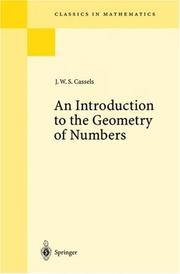
Cassels introduces the geometry-of-numbers approach — lattices, Minkowski's theorem — which is indispensable for understanding which Diophantine equations have solutions and why.
Stewart's accessible graduate text introduces rings of integers, ideals, and unique factorization in number fields — the algebraic machinery needed to attack general Diophantine problems.
Elegant Proofs & the Historic Core
ExpertEncounter number theory as mathematicians across history have — through celebrated proofs, open problems, and the aesthetic unity that makes the subject timeless.
▸ Study plan for this stage
Pace: 8–10 weeks, ~25–30 pages/day (with proof-working time)
- The aesthetic and historical narrative of number theory proofs—why certain proofs are considered 'from the book'
- Foundational proof techniques in number theory: contradiction, induction, pigeonhole principle, and constructive methods
- Prime numbers, divisibility, and the Fundamental Theorem of Arithmetic as organizing principles
- Diophantine equations and their geometric and algebraic interpretations
- Modular arithmetic and its power in solving classical problems (quadratic residues, Fermat's Little Theorem)
- The interplay between elementary and advanced methods—how simple ideas yield deep results
- Historical context: how mathematicians like Euclid, Fermat, Euler, and Gauss approached timeless problems
- What makes a proof 'from the book' according to Aigner's philosophy, and can you identify the hallmarks of such proofs in the text?
- Explain the Fundamental Theorem of Arithmetic and reconstruct at least two different proofs of it from the book
- How does modular arithmetic simplify the analysis of Diophantine equations? Work through a concrete example from the text
- Describe the historical evolution of a major result (e.g., on primes or perfect numbers) as presented in the book—what changed in how mathematicians understood it?
- Take a celebrated proof from the book and identify its key insight—what is the 'aha moment' that makes it elegant?
- How do pigeonhole principle and induction appear across different chapters, and what unifies their application?
- Reconstruct from memory (without the book) three proofs of major results; compare your version to Aigner's and note where elegance was lost or gained
- Select one proof from the book and rewrite it in your own words, then present it to another person—refine based on where clarity breaks down
- Work through all exercises and problems embedded in the chapters; keep a 'proof journal' noting which techniques appear repeatedly
- Choose a Diophantine equation from the book and solve a variant of it using the same method—test whether the technique generalizes
- Create a visual or conceptual map showing how different chapters connect (e.g., how results on primes feed into results on Diophantine equations)
- For each major chapter, write a one-paragraph 'historical narrative' explaining why that result mattered to mathematicians of its era
Next up: This stage grounds you in the canonical proofs and aesthetic principles that define number theory; the next stage will likely extend these tools to more specialized domains (analytic methods, algebraic structures, or computational approaches) or deepen the theory by exploring open problems and modern research directions.
Collects the most elegant known proofs across number theory (and beyond), including multiple proofs of the infinitude of primes and quadratic reciprocity — essential for appreciating the subject's beauty.
Discussion
Keep reading
Paths that share books, cover the same subject, or open a related topic.