Learn to write mathematical proofs: books in order
This curriculum takes a beginner from zero proof experience to genuine fluency in reading and writing rigorous mathematics. It starts by building logical intuition and proof vocabulary, then moves through core techniques like induction and contradiction, and finally applies those skills inside real higher-math courses so the transition feels natural and confident.
Foundations: Logic, Sets & Mathematical Language
BeginnerUnderstand how mathematical statements are constructed, what a proof actually is, and how logic and set theory form the bedrock of all higher mathematics.
▸ Study plan for this stage
Pace: 6–8 weeks, ~25–30 pages/day (approximately 40–50 pages per reading session, 4–5 sessions per week)
- Propositional logic: truth tables, logical connectives (AND, OR, NOT, implication, biconditional), and logical equivalence
- Quantifiers (universal and existential) and how to negate statements with quantifiers
- Set theory fundamentals: set notation, operations (union, intersection, complement, difference), subsets, power sets, and Cartesian products
- Proof techniques: direct proof, proof by contrapositive, proof by contradiction, and proof by cases
- Mathematical language and notation: how to read, write, and interpret mathematical statements precisely
- Induction and recursion: weak and strong induction, and their role in proving statements about natural numbers
- Relations and functions: definitions, properties (injective, surjective, bijective), and how they connect to set theory
- What is the difference between a statement being true and a statement being provable, and why does this distinction matter?
- How do you negate a statement involving quantifiers, and why is getting this right essential for proof by contradiction?
- What are the main proof techniques covered, and when should you choose one over another for a given problem?
- How do sets, functions, and relations form the formal foundation for mathematical reasoning?
- What does it mean for a proof to be rigorous, and what common logical errors should you avoid?
- How can you use mathematical induction to prove statements about all natural numbers, and what must you verify?
- Work through all truth table exercises in Velleman's Chapter 1–2; create your own truth tables for complex compound statements
- Negate 10–15 statements involving quantifiers (both universal and existential) and verify your negations with examples
- Prove 5–10 basic set identities (e.g., De Morgan's laws, distributive properties) using both element-chasing and Venn diagrams
- Write direct proofs for 8–12 simple statements about integers, divisibility, or basic number properties from Hammack's exercises
- Construct 4–6 proofs by contrapositive and 4–6 proofs by contradiction, explicitly identifying the logical structure in each
- Prove 5–8 statements using mathematical induction, including at least two that require strong induction
- Create a 'proof portfolio': write up 3–5 complete, polished proofs (one of each major technique) with clear justification of each step
Next up: This stage equips you with the logical vocabulary and proof toolkit needed to tackle more advanced proof techniques and mathematical structures—you'll now be ready to apply these foundations to specific mathematical domains (such as number theory, real analysis, or abstract algebra) where these tools become indispensable.
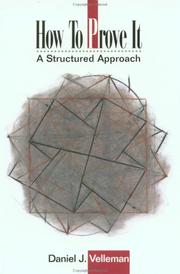
The single most recommended transition-to-proofs book. It systematically covers logic, sets, quantifiers, and every major proof strategy before asking you to write anything difficult — exactly the right starting point.

A freely available, crystal-clear companion that reinforces the same ideas with slightly different examples and exercises; reading it alongside or just after Velleman cements the fundamentals without redundancy.
Core Techniques: Induction, Contradiction & Structure
BeginnerMaster the workhorse proof techniques — direct proof, contrapositive, contradiction, and mathematical induction — and develop the habit of writing clear, well-structured arguments.
▸ Study plan for this stage
Pace: 4–5 weeks, ~25–30 pages/day, with 2–3 days per week dedicated to proof writing and review
- Direct proof: constructing a logical chain from hypotheses to conclusion using definitions and known theorems
- Proof by contrapositive: proving ¬Q → ¬P to establish P → Q, and recognizing when this approach simplifies the argument
- Proof by contradiction: assuming the negation of the goal and deriving a logical impossibility to establish truth
- Mathematical induction: mastering the base case, inductive step, and inductive hypothesis to prove statements about all natural numbers
- Proof structure and clarity: organizing arguments with clear statements, logical flow, and explicit justification of each step
- Recognizing proof techniques in context: identifying which method is most efficient for a given problem
- Writing conventions: proper use of quantifiers, logical connectives, and mathematical notation in formal arguments
- What are the essential components of a direct proof, and how do you organize a logical chain from hypotheses to conclusion?
- When is proof by contrapositive preferable to direct proof, and how do you construct a contrapositive argument?
- How does proof by contradiction work, and what is the logical principle that makes it valid?
- What are the two critical parts of a mathematical induction proof, and why must both be established?
- How do you identify which proof technique (direct, contrapositive, contradiction, or induction) is most appropriate for a given statement?
- What makes a proof 'clear' and 'well-structured,' and what common mistakes undermine the clarity of mathematical arguments?
- Write 3–4 direct proofs of basic number-theoretic or algebraic statements (e.g., properties of even/odd numbers, divisibility), ensuring each step is justified
- Convert a direct proof into a proof by contrapositive and compare the two approaches; identify which is more natural for the problem
- Construct 2–3 proofs by contradiction, explicitly stating the assumption and the contradiction derived
- Complete 4–5 mathematical induction proofs covering different types (summation formulas, inequalities, divisibility), with careful attention to base case and inductive step
- Peer-review or self-review 2–3 of your own proofs using a checklist: Are all steps justified? Is notation consistent? Is the logical flow clear?
- Solve mixed-technique problems where you must choose the most efficient proof method and justify your choice
- Write a 'proof portfolio' of 6–8 polished proofs demonstrating mastery of all four core techniques
Next up: Mastery of these foundational techniques equips you to tackle more specialized proof strategies (such as combinatorial proofs, existence proofs, and uniqueness arguments) and to apply them confidently in advanced mathematics courses.

Bridges the gap between the first stage and real math courses by drilling every technique with graded exercises; its chapter on induction is especially thorough and well-paced for beginners.
Proof in Practice: Number Theory & Discrete Math
IntermediateApply proof techniques inside a concrete mathematical domain — elementary number theory and combinatorics — where the objects are familiar but the rigor is real.
▸ Study plan for this stage
Pace: 8–10 weeks, ~40–50 pages/day (alternating focus: 3–4 weeks on Burton, then 4–5 weeks on Rosen, with 1–2 weeks overlap for integration)
- Divisibility, the Division Algorithm, and the Euclidean Algorithm as foundational proof patterns in number theory
- Prime numbers, the Fundamental Theorem of Arithmetic, and proof by contradiction/induction in number-theoretic contexts
- Modular arithmetic and congruences as a tool for structuring proofs about integer properties
- Mathematical induction and strong induction as rigorous proof techniques applied to discrete structures
- Counting principles (permutations, combinations, pigeonhole principle) and combinatorial proofs
- Graph theory basics and proof techniques for properties of graphs and trees
- Recurrence relations and their role in discrete mathematics proofs
- The interplay between constructive and non-constructive proofs in concrete domains
- How does the Euclidean Algorithm prove that gcd(a,b) divides any linear combination of a and b? Why is this foundational?
- State and prove the Fundamental Theorem of Arithmetic. What makes the proof by strong induction necessary here?
- Prove that there are infinitely many primes. What proof technique does Euclid's argument use, and why is it elegant?
- Given a modular arithmetic problem (e.g., solving ax ≡ b (mod n)), how do you structure a proof of existence and uniqueness of solutions?
- Prove a combinatorial identity (e.g., the binomial theorem or a sum identity) both algebraically and via a counting argument. What does each approach reveal?
- For a recurrence relation like T(n) = 2T(n-1) + 1, prove a closed form using induction. How does the inductive hypothesis guide your proof?
- Work through Burton's proofs of divisibility properties (Ch. 1–2) line by line, then write your own proof of a related statement without consulting the text.
- Prove the Euclidean Algorithm terminates and produces gcd(a,b); then implement it and verify on 5–10 concrete pairs (a,b).
- Prove at least 3 properties of congruences (e.g., if a ≡ b (mod n) and c ≡ d (mod n), then a+c ≡ b+d (mod n)) and apply them to solve a system of linear congruences.
- Prove the Fundamental Theorem of Arithmetic by strong induction; then factor 3–4 moderately large integers and verify uniqueness.
- Prove 3 combinatorial identities from Rosen (e.g., Pascal's identity, the hockey stick identity) both combinatorially and algebraically.
- Solve 5–6 counting problems from Rosen that require the pigeonhole principle; write out the proof structure clearly.
- Prove a property of a simple graph or tree (e.g., a tree on n vertices has n-1 edges) by induction on the number of vertices.
- Set up and solve a recurrence relation from Rosen (e.g., a Fibonacci-like or Tower of Hanoi problem); prove the closed form by induction.
Next up: This stage grounds proof techniques in concrete, computable domains (integers, finite sets, graphs), building confidence and intuition that will transfer to abstract structures—the next stage will apply these same proof patterns to algebra, real analysis, and topology, where the objects are less tangible but the logical structure is identical.
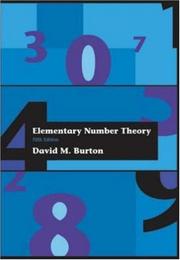
Number theory is the ideal first 'real' math subject: the statements are easy to understand but the proofs require genuine technique. Burton's classic exposition is rigorous yet accessible.
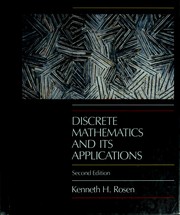
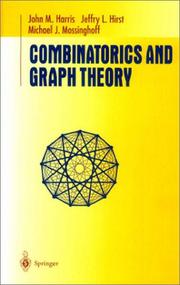
Broadens proof practice into combinatorics, graph theory, and algorithms — domains where induction and contradiction appear constantly — solidifying versatility before tackling pure analysis.
Transition to Higher Mathematics: Analysis & Algebra
IntermediateRead and write epsilon-delta and algebraic proofs at the level expected in a first real analysis or abstract algebra course, completing the transition to university-level pure mathematics.
▸ Study plan for this stage
Pace: 12–14 weeks, ~40–50 pages/day (Abbott: 6–7 weeks, ~30 pages/day for ~280 pages; Pinter: 6–7 weeks, ~40 pages/day for ~280 pages)
- Epsilon-delta definitions of limits, continuity, and convergence (Abbott Ch. 2–4): the foundation of rigorous real analysis
- Logical structure of proofs by contradiction, contrapositive, and direct argument; how to read and construct formal proofs
- Completeness of the real numbers and its consequences: nested intervals, Bolzano-Weierstrass, uniform continuity (Abbott Ch. 3)
- Groups, rings, and fields as abstract algebraic structures; homomorphisms and isomorphisms as structure-preserving maps (Pinter Ch. 1–7)
- Quotient structures and the fundamental homomorphism theorem; how algebraic proofs exploit structural properties rather than computation (Pinter Ch. 8–11)
- Proof techniques specific to algebra: using group/ring axioms, induction on structure, and element-chasing in diagrams
- How epsilon-delta reasoning and algebraic abstraction both demand precision: naming unknowns, working backward from the goal, and verifying every logical step
- Given a function f and a point a, write out the epsilon-delta definition of 'f is continuous at a' and explain what each quantifier means; then prove or disprove continuity for a specific function like f(x) = x² or f(x) = 1/x.
- State the Bolzano-Weierstrass theorem and explain why completeness of ℝ is essential for its proof; how does this differ from ℚ?
- Define a group, ring, and field; give an example of each and explain why a given structure (e.g., ℤ under addition and multiplication) does or does not satisfy the axioms.
- What is a homomorphism between groups (or rings)? Prove that the kernel of a group homomorphism is a normal subgroup, or state and apply the first isomorphism theorem.
- Write a proof by contradiction and a proof by contrapositive for the same statement; explain when each is more natural and how they differ logically.
- Given a quotient group G/N or quotient ring R/I, explain why the quotient structure is well-defined (i.e., why the operation does not depend on the choice of coset representative).
- Abbott Ch. 2–3: For each epsilon-delta definition (limit, continuity, uniform continuity), write the definition in your own words, then work through 3–4 textbook examples, writing out the proof structure before reading Abbott's solution.
- Abbott Ch. 4: Prove that if (aₙ) is a convergent sequence, then it is bounded; then prove the converse is false by constructing a counterexample. Repeat this pattern for 2–3 theorems in the chapter.
- Abbott Ch. 3: State the nested interval property and use it to prove the Bolzano-Weierstrass theorem; then write a short paragraph explaining why this proof fails in ℚ.
- Pinter Ch. 1–3: For each group/ring/field definition, construct a Cayley table or addition/multiplication table for a small example (e.g., ℤ/4ℤ, S₃); verify closure and associativity by hand.
- Pinter Ch. 5–7: Prove that the set of even integers is a subgroup of (ℤ, +); prove that the set of 2×2 matrices with determinant 1 is a group under multiplication. Write out every step of the subgroup criterion.
- Pinter Ch. 8–11: For a quotient group like ℤ/nℤ or a quotient ring like ℤ[x]/(p(x)), verify that the quotient operation is well-defined by checking that if a ≡ a' (mod the ideal/normal subgroup), then a ⊕ b ≡ a' ⊕ b.
- Proof-writing workshop: Take 2–3 theorems from Abbott and 2–3 from Pinter; for each, write a proof outline (goal, key steps, why each step works), then write the full proof, then compare with the textbook.
- Epsilon-delta challenge: Prove that if f is continuous at a and g is continuous at f(a), then g ∘ f is continuous at a; write the proof in full epsilon-delta notation.
Next up: Mastery of epsilon-delta proofs and algebraic abstraction equips you to tackle advanced topics—such as metric spaces and topology (generalizing continuity), or Galois theory and representation theory (extending group/ring structure)—where the same proof techniques apply to increasingly abstract settings.

The most beginner-friendly introduction to real analysis; Abbott motivates every definition and theorem narratively before proving it, making the leap to rigorous calculus feel achievable rather than terrifying.

Introduces groups, rings, and fields with an emphasis on proof-writing over computation; its gentle pace and rich exercise sets make it the perfect algebraic counterpart to Abbott's analysis.
Proof Mastery: Elegance, Strategy & Mathematical Maturity
ExpertDevelop mathematical taste — the ability to find elegant proofs, spot deep structure, and think like a research mathematician rather than just a student following templates.
▸ Study plan for this stage
Pace: 8–10 weeks, ~25–30 pages/day (with 2–3 days per week for deep reflection and proof reconstruction)
- Heuristic problem-solving: working backward from the goal, examining special cases, and recognizing analogies to transform unfamiliar problems into solvable ones
- The anatomy of elegant proofs: identifying the 'key insight' that makes a proof work and understanding why some proofs are more beautiful than others
- Proof strategies and tactics: direct proof, contradiction, induction, and when to choose each based on problem structure
- Mathematical taste and aesthetic judgment: learning to distinguish between brute-force solutions and proofs that reveal deep structure
- The 'Book' perspective: understanding that many theorems have a canonical, most natural proof that illuminates the underlying mathematics
- Proof reconstruction and reverse-engineering: taking apart elegant proofs to understand the creative choices and insights that led to them
- Generalization and abstraction: recognizing when a proof technique applies beyond its original context and how to lift insights to higher levels
- What is Pólya's four-step method for problem-solving, and how does each step help you approach an unfamiliar proof problem?
- How do you distinguish between a 'correct' proof and an 'elegant' proof, and what makes a proof worthy of the Book?
- When faced with a theorem, what heuristics from Pólya would you use to discover a proof rather than just verify one?
- What is the relationship between proof strategy (direct, contradiction, induction) and the underlying structure of the problem?
- How do the proofs in Aigner's selection illustrate the principle that the 'right' proof often reveals something deeper about the mathematics?
- Can you identify the key insight in a given elegant proof and explain why removing it would make the proof fail or become inelegant?
- Work through Pólya's four-step method on 5–7 challenging problems from your previous study, documenting each step and the heuristics that helped you move forward
- Select 3 proofs from 'Proofs from the Book' and reconstruct them from scratch without looking at the text; compare your approach to Aigner's and identify where your proof diverged
- Take a theorem with multiple known proofs (e.g., the infinitude of primes) and compare 2–3 different approaches; write a short reflection on which is most elegant and why
- For 4–5 proofs from Aigner, identify the single 'key insight' that makes the proof work, then rewrite the proof to emphasize that insight
- Attempt to generalize a proof from 'Proofs from the Book' to a related but harder problem; document where the original proof's elegance breaks down and what new ideas are needed
- Create a 'proof strategy decision tree': given a theorem statement, what questions would you ask to decide between direct proof, contradiction, induction, or other approaches?
- Write a short essay (2–3 pages) comparing Pólya's heuristic approach with the aesthetic philosophy implicit in 'Proofs from the Book': how do they complement each other?
Next up: This stage transforms you from a solver of templated problems into a mathematician who can recognize elegant structure and make creative choices in proof design—preparing you to engage with original research, read advanced texts critically, and eventually contribute your own insights to mathematics.

A timeless classic on mathematical problem-solving and heuristic thinking; reading it at this stage reframes everything learned so far into a strategic, creative process rather than a mechanical one.

A curated collection of the most beautiful proofs in mathematics across number theory, geometry, and combinatorics — the ideal capstone for appreciating what mastery of proof actually looks like.
Discussion
Keep reading
Paths that share books, cover the same subject, or open a related topic.