Best Books on Eye Health and Vision, in Order
This curriculum takes a beginner from the fundamental biology of how the eye works, through the most common vision threats of modern life (myopia, screen strain), and into the serious clinical conditions (cataracts, glaucoma, macular degeneration) before finishing with an integrative, proactive approach to lifelong eye protection. Each stage builds the vocabulary and conceptual framework needed to get full value from the next, so reading in order is strongly recommended.
Foundations: How the Eye Works
BeginnerUnderstand the basic anatomy and physiology of the eye, how light becomes vision, and what can go wrong at a fundamental level — establishing the vocabulary for everything that follows.
▸ Study plan for this stage
Pace: 2–3 weeks, ~20–25 pages/day (total ~150–170 pages)
- The path of light through the eye: cornea, lens, and retina as a refractive system that focuses light onto the retina
- Photoreceptor cells (rods and cones) and how they convert light energy into neural signals through photochemistry
- The role of the retina in processing visual information before it reaches the brain, including center-surround receptive fields
- How the brain interprets neural signals from the eye to construct visual perception and the concept of the visual cortex
- Common refractive errors (myopia, hyperopia, astigmatism) as deviations from normal optical focus
- The evolutionary and comparative perspective: how different animal eyes solve the problem of vision differently
- The distinction between the optical properties of the eye and the neural processing that creates vision
- Describe the path light takes through the eye, naming the key structures it passes through and explaining how each contributes to focusing the image on the retina.
- How do rods and cones differ in their structure, light sensitivity, and role in vision, and why are these differences important for seeing in different lighting conditions?
- Explain how the retina processes visual information before sending it to the brain. What is a receptive field, and why is center-surround organization important?
- What is a refractive error, and how do myopia and hyperopia differ in terms of where light focuses relative to the retina?
- Why do different animals have different eye designs (e.g., compound eyes in insects vs. camera eyes in vertebrates), and what does this reveal about the relationship between an organism's lifestyle and its visual system?
- Describe the role of the brain in vision. How does the eye's output become the visual experience you consciously perceive?
- Draw a cross-section diagram of the human eye, labeling the cornea, aqueous humor, lens, vitreous humor, retina, optic nerve, and fovea. Trace the path of light through each structure.
- Create a comparison chart of rods vs. cones, including their distribution across the retina, sensitivity to light, role in color vision, and function in low-light vs. bright conditions.
- Use a simple optical model (e.g., a magnifying glass and a screen, or a pinhole camera) to demonstrate how a lens focuses light and inverts an image, then relate this to how the eye's lens works.
- Sketch and explain the concept of a receptive field: draw a small area of the retina and show how a center-surround receptive field responds to light in the center vs. the surround.
- Research and summarize one animal eye design different from humans (e.g., eagle eyes, mantis shrimp, octopus, or nocturnal predators). Write a one-page explanation of how its eye structure matches its ecological niche.
- Perform a simple vision experiment: cover one eye and notice your depth perception, then look at an optical illusion and reflect on how your brain interprets ambiguous visual information. Document what this reveals about the brain's role in vision.
Next up: This foundation in eye anatomy, optics, and basic neural processing equips you with the vocabulary and conceptual framework to explore specific eye conditions, diseases, and how they disrupt these normal mechanisms in the next stage.

A concise, authoritative primer by a leading vision scientist that explains how eyes evolved and how they function — the perfect first read to build core vocabulary without overwhelming detail.
Common Eye Diseases: Cataracts, Glaucoma & Macular Degeneration
IntermediateGain a solid understanding of the three leading causes of vision loss — how each disease develops, how it is diagnosed, and what medical and surgical options exist.
▸ Study plan for this stage
Pace: 8–10 weeks, ~40–50 pages/day (approximately 2–3 weeks per book, allowing time for review and integration)
- The pathophysiology of macular degeneration: how drusen formation and photoreceptor loss lead to central vision loss in dry and wet forms
- Glaucoma as a progressive optic neuropathy: the role of intraocular pressure, optic nerve damage, and visual field defects in disease progression
- Cataract formation and lens opacity: how protein aggregation and oxidative stress develop over time and affect visual quality
- Diagnostic techniques specific to each disease: OCT and fundus imaging for macular degeneration, tonometry and perimetry for glaucoma, slit-lamp examination for cataracts
- Medical management strategies: anti-VEGF injections and antioxidants for macular degeneration, prostaglandin analogs and other medications for glaucoma, and when pharmacotherapy is insufficient
- Surgical and laser interventions: photodynamic therapy and thermal ablation for wet AMD, laser trabeculoplasty and filtration surgery for glaucoma, phacoemulsification for cataracts
- Risk factors and prevention: age, genetics, smoking, and UV exposure as modifiable and non-modifiable contributors across all three diseases
- Patient counseling and quality of life: how to communicate prognosis, manage expectations, and support functional vision in each condition
- What is the difference between dry and wet macular degeneration, and why does wet AMD typically progress more rapidly?
- How does elevated intraocular pressure lead to optic nerve damage in glaucoma, and why is early detection critical?
- Describe the process of cataract formation at the molecular level and explain why it is often age-related
- What are the primary diagnostic tools for each disease, and what specific information does each provide about disease stage and severity?
- Compare and contrast the medical treatment options for macular degeneration and glaucoma—why do different drugs target different pathways?
- When is surgical intervention indicated for each disease, and what are the expected outcomes and potential complications?
- Create a comparative chart mapping the pathophysiology, risk factors, diagnostic findings, and treatment algorithms for all three diseases side-by-side
- Review 3–5 case studies (from the books or supplementary clinical materials) and practice determining disease stage, recommending diagnostic tests, and proposing a treatment plan for each
- Practice interpreting fundus photographs, OCT images, and visual field plots specific to each disease; identify hallmark findings that distinguish one disease from another
- Write a patient-friendly explanation (1–2 pages) for each disease that covers what causes it, how it is detected, and what treatment options exist—as if counseling a newly diagnosed patient
- Conduct a literature or textbook search to identify 2–3 emerging therapies (e.g., gene therapy, novel drug classes) for each disease and summarize their mechanism and current clinical status
- Role-play clinical scenarios: practice discussing prognosis, treatment trade-offs, and lifestyle modifications with a peer playing the role of a patient with each condition
Next up: This stage establishes the clinical foundation for recognizing, diagnosing, and managing the three most common vision-threatening diseases, preparing you to integrate this knowledge with other ocular conditions, systemic disease associations, and comprehensive patient care strategies in the next stage.
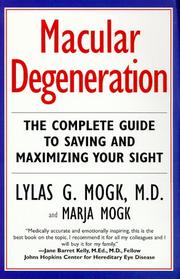
Written by a leading low-vision specialist, this is the most comprehensive patient guide to AMD — a natural starting point because macular degeneration is the most common cause of central vision loss in older adults.
A respected ophthalmologist's clear explanation of glaucoma types, intraocular pressure, optic nerve damage, and treatment — reads logically after AMD because it covers a different but equally important disease mechanism.

Written by one of the world's foremost cataract surgeons, this guide demystifies lens clouding, surgical options, and intraocular lens choices, completing the trio of major eye conditions.
Protecting and Optimizing Sight for Life
IntermediateSynthesize everything learned into a proactive, evidence-based personal strategy — covering nutrition, lifestyle, preventive care, and integrative approaches to maintaining healthy vision across a lifetime.
▸ Study plan for this stage
Pace: 4–5 weeks, ~25–30 pages/day, with 2–3 days per week dedicated to reflection and exercise implementation
- The role of antioxidants, vitamins (A, C, E), minerals (zinc, lutein, zeaxanthin), and omega-3 fatty acids in protecting retinal health and preventing age-related macular degeneration and cataracts
- How lifestyle factors—sleep quality, stress management, physical activity, and UV protection—directly impact long-term vision health and disease prevention
- The importance of regular eye exams, early detection of conditions like glaucoma and diabetic retinopathy, and when to seek specialist care
- Evidence-based nutritional protocols and dietary patterns (Mediterranean diet, whole foods) that support ocular health across the lifespan
- The connection between systemic health conditions (diabetes, hypertension, inflammation) and eye disease, and how managing these prevents vision loss
- Practical strategies for reducing digital eye strain and protecting vision in modern screen-heavy environments
- How to evaluate and integrate complementary approaches (herbal supplements, acupuncture, vision therapy) alongside conventional eye care
- What are the key nutrients Abel identifies as essential for eye health, and what specific conditions does each help prevent?
- How does Abel's approach to eye care differ from conventional ophthalmology, and what evidence does he present for his recommendations?
- What lifestyle modifications does Abel recommend as foundational to a proactive vision strategy, and why does he prioritize them?
- How can you assess your personal risk factors for common eye diseases, and what preventive steps should you take based on your individual profile?
- What role does nutrition play in managing or preventing age-related eye conditions, and how would you design a personal nutritional protocol based on Abel's framework?
- How would you integrate Abel's recommendations into a realistic, sustainable daily and weekly routine that supports long-term eye health?
- Conduct a personal eye health audit: document your current diet, lifestyle habits, screen time, sleep patterns, and UV exposure; identify gaps against Abel's recommendations
- Design a 30-day nutrition plan incorporating the key nutrients Abel emphasizes (lutein, zeaxanthin, omega-3s, vitamins C and E, zinc); track compliance and note any changes in eye comfort or clarity
- Create a written personal vision strategy document that outlines your baseline eye health status, identified risk factors, specific preventive actions, and a 12-month timeline for implementation
- Implement and track one major lifestyle change from Abel's recommendations (e.g., 20-20-20 rule for screen time, daily outdoor time, sleep optimization) for 2 weeks; journal observations
- Research and schedule a comprehensive eye exam with your optometrist or ophthalmologist; prepare questions based on Abel's framework about your specific risk profile and preventive options
- Develop a weekly meal prep system featuring 3–4 eye-health-supporting recipes; prepare and photograph one week of meals to establish a sustainable pattern
Next up: This stage equips you with a comprehensive, personalized framework for lifelong vision protection; the next stage will likely deepen your ability to troubleshoot specific eye conditions, manage existing vision challenges, or explore advanced integrative techniques for optimizing vision beyond basic prevention.
A deeper dive into complementary and conventional approaches to eye health — diet, supplements, stress, and toxins — providing a comprehensive capstone that ties together the entire curriculum.
Discussion
Keep reading
Paths that share books, cover the same subject, or open a related topic.