Oral health has an unusual popular literature. Alongside sensible books about plaque chemistry and prevention sit books arguing that cavities can be reversed by diet, that root canals cause systemic disease, and that modern jaws are shrinking because of what we eat. Some of those claims are mainstream, some are partially supported, and some are rejected by the dental profession and by the available evidence.
None of these books replaces a dentist. Cavities and periodontal disease are diagnosed by examination and radiograph, not by reading, and delaying treatment on the strength of a book is how a small filling becomes a root canal. The reason to read at all is to understand prevention well enough to have a better conversation at your next appointment. This path is ordered from the most conventional to the most contested, with the disagreements labelled.
Start with prevention you can act on
Kiss your dentist goodbye by Ellie Phillips, a practicing dentist, is the most practical starting point: a specific routine built around controlling the oral biofilm and the pH swings that let decay-causing bacteria dominate. The mechanism she describes — that decay is an ecological problem in the mouth rather than simply a hygiene failure — is well supported, and the routine is low-risk even where individual product recommendations are debatable.
Follow with The Dental Diet by Steven Lin, also a dentist, which covers nutrition's role in oral health: fat-soluble vitamins, the effect of frequent sugar exposure rather than total quantity, and the connection between diet and jaw development. Lin makes some strong claims that outrun the evidence, particularly around remineralization, but the core message that eating frequency matters as much as what you eat is sound.
The mouth in the rest of the body
The mouth-body connection by Gerald Curatola covers the growing research linking periodontal disease to cardiovascular disease, diabetes and inflammation more broadly. This association is real and taken seriously in the literature; whether the relationship is causal in both directions remains genuinely unsettled, so read the association chapters with more confidence than the intervention ones.
Breath by James Nestor is a journalist's book about nasal versus mouth breathing, with substantial material on how mouth breathing affects dental arches, dry mouth and decay risk. It is engaging and heavily anecdotal; the sections on nasal breathing and sleep are the strongest, and the more sweeping claims deserve scepticism.
Jaws by Sandra Kahn and Paul Ehrlich argues that industrialized diets and soft foods have narrowed human jaws over generations, causing crowding, impacted wisdom teeth and airway problems. The observation about changing craniofacial dimensions is interesting; the causal story and the proposed interventions are contested within orthodontics rather than settled.
The contested end of the shelf
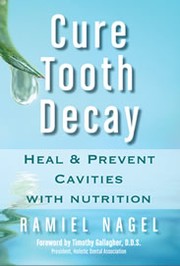
Two books belong here with explicit warnings. Cure tooth decay by Ramiel Nagel argues that established cavities can be reversed through diet, drawing on the work covered in Nutrition and physical degeneration by Weston A. Price. Price's 1930s fieldwork documenting the dental health of populations eating traditional diets is a genuine historical document and worth reading as such, but modern nutrition science does not support the conclusions Nagel builds on it. Early demineralization can remineralize; a cavitated lesion through the enamel does not close on its own. Treating a diagnosed cavity with diet instead of restoration risks pain, infection and tooth loss.
The toxic tooth by Robert Kulacz and Thomas Levy argues that root-canal-treated teeth harbour bacteria that cause systemic illness. This revives the focal infection theory, which was investigated and rejected by the twentieth century, and the American Association of Endodontists rejects it. It is included on this path because you will encounter the argument online and should understand what is being claimed and why the profession disagrees, not as a treatment recommendation.
For adjacent everyday health reading, the eye health hub follows a similar prevention-first shape.
Read in this order, keep your check-ups, and use the books to ask better questions.
Follow the full ordered path here: Best Books on Dental and Oral Health, in Reading Order.