Eric Hobsbawm Reading Order: Where to Start
Hobsbawm's work has one ordered sequence at its centre — the four Age volumes covering 1789 to 1991 — and everything else is standalone. Read the quartet first and in order, because the later books argue with terms the quartet defines. Then take the writing on nationalism and historical method, then the labour and bandit histories that made his academic reputation, and finally the late essays and the memoir, which is also his account of a life spent in the Communist Party.
Start here: the Age quartet, in order
IntermediateRead the four-volume history of the modern world in sequence and be able to state Hobsbawm's central thesis — the dual revolution of 1789 and the making and unmaking of bourgeois Europe.
▸ Study plan for this stage
Pace: Four to five months if you are reading around a job — roughly a month per volume at 15 to 20 pages a day. The Age of Revolution and The Age of Capital are around 350 pages each, The Age of Empire similar, and The Age of Extremes is over 600. This is thematic history, not narrative: each volume is or
- The dual revolution. Hobsbawm's founding claim in The Age of Revolution is that the French political revolution and the British industrial revolution were one event with two faces, and everything in the next three volumes is measured against it
- The long nineteenth century, 1789 to 1914, and the short twentieth, 1914 to 1991. These are Hobsbawm's periodisations and they have entered general use; know that they are arguments, not neutral dates
- Hobsbawm wrote as a Marxist and was a member of the Communist Party of Great Britain from 1936 until it dissolved in 1991. That is a stated fact about the author, not a hidden agenda: class is his primary analytical category and the books say so openly. Read them knowing the frame so you can weigh i
- The bourgeoisie as a historical actor with a rise, a triumph and a crisis — the through-line that makes the four volumes one book
- Thematic organisation as method. Each volume moves through economy, politics, war, science, religion and the arts, and the argument is that these move together. Watch him make the connections rather than assert them
- The Age of Empire's account of why imperialism and the road to 1914 are the same subject, which is the hinge between the two centuries
- The Age of Extremes is written by a participant. Hobsbawm was born in 1917 and lived nearly all of the short century he is describing, and the tone changes accordingly
- State the dual revolution thesis in two sentences without using the word revolution twice. What does it explain that a purely political account does not?
- Why does Hobsbawm end the nineteenth century in 1914 rather than 1900, and what would a different date cost the argument?
- Where in the quartet does Hobsbawm's Marxism do analytical work you find persuasive, and where does it constrain what he will consider?
- The Age of Empire argues that imperial expansion was driven by the internal dynamics of industrial capitalism. What is the strongest counter-argument, and does Hobsbawm engage it?
- How does the tone of The Age of Extremes differ from the first three volumes, and how much of that is the author having lived through it?
- Which volume is the best history and which is the best argument? They are not the same answer
- Keep a one-page glossary from volume one onward: dual revolution, bourgeois society, the world market, the general crisis. The later books use these as settled terms and will not redefine them
- At the end of each volume, write the thesis in three sentences before reading the next. The quartet is cumulative and the summary is what carries forward
- Pick one country you know something about and track it through all four volumes. Hobsbawm writes at the European and world scale, and a single national thread keeps the abstraction honest
- Read a hostile review of The Age of Extremes alongside the book. It is the most contested of the four, particularly on the Soviet Union, and reading the objections while the text is fresh is more useful than reading them later
Next up: The quartet spends two hundred years watching nations get built; the conceptual books next explain how Hobsbawm thinks that building was done.

1789 to 1848, and the argument that the French and industrial revolutions were one event. The foundation of everything else he wrote, and the only correct starting point.

1848 to 1875, the triumph of liberal bourgeois society. It picks up precisely where the first volume stops and assumes its framework throughout.

1875 to 1914, imperialism and the road to the catastrophe. The most elegant volume, and the hinge between the nineteenth century and the twentieth.
1914 to 1991, the short twentieth century, written by someone who lived nearly all of it. The most read of the four, but far richer once the previous three have supplied the long arc.
Nations, tradition and the craft
BeginnerMove from narrative history to Hobsbawm's conceptual work, and be able to use invented tradition and modernist nationalism as analytical tools rather than slogans.
▸ Study plan for this stage
Pace: About six weeks. Nations and Nationalism since 1780 is short — around 200 pages — and dense enough to reward two weeks. The Invention of Tradition is an edited collection of essays by different hands, so it can be read in pieces. On History is a collection too, and you should read selectively rather
- The modernist case: nations are made by states, movements and print, not discovered. Nationalism produces nations, not the other way round — this is the single sentence Nations and Nationalism is built to defend
- Hobsbawm's stages of nationalism, from small-group cultural agitation through political campaigning to mass movement, and why the timing matters more than the content
- Invented tradition as a working concept: practices that claim antiquity and are demonstrably recent. Highland kilts, British royal ceremonial and colonial African chieftaincy are the famous case studies
- The Invention of Tradition is a collection Hobsbawm co-edited with Terence Ranger, so the individual chapters are by other historians. Read his introduction and conclusion as the argument, and the case studies as evidence
- On History is his defence of history as an evidence-based discipline against postmodern scepticism about facts, and it doubles as an account of what he thought he was doing in the quartet
- The distinction between what people believe about their national past and what happened, and Hobsbawm's insistence that a historian's job is to keep the two apart
- How the modernist position sits against its critics — those who argue for older ethnic continuities beneath modern nations. Hobsbawm states his side plainly; know that there is a live debate
- What is the difference between a nation and a state in Hobsbawm's usage, and why does he insist on it?
- Take one invented tradition from the collection and reconstruct the evidence for its recency. How strong is it?
- How would a critic who believes in older ethnic continuities respond to Nations and Nationalism, and what evidence would that argument need?
- In On History, what exactly is Hobsbawm defending, and against whom? Name the position he is arguing with
- Apply invented tradition to something in your own country that is treated as ancient. Does the concept hold up under a real test?
- Read Hobsbawm's own chapters in The Invention of Tradition first, then choose two case studies by other contributors that interest you. Reading all of it front to back is not the efficient use of the book
- Write a 500-word application of the invented-tradition concept to a specific practice you can research. This is the fastest way to find out whether you have actually absorbed it or only enjoyed it
- Cross-reference: find the passages in The Age of Empire where nation-building is happening, and reread them after Nations and Nationalism. The conceptual book is a key to the narrative one
- From On History, extract Hobsbawm's own working rules for evidence and keep them. You will use them on his more contested claims later in this path
Next up: With the concepts in hand you can read the specialist monographs as demonstrations rather than as detours.
The concise statement of the modernist case: nations are made by states and movements, not the other way round. Read it straight after the quartet, whose century of nation-building it explains.

The collection he edited with Terence Ranger, on Highland kilts, royal ceremony and colonial Africa. It supplies the case studies that Nations and Nationalism argues from.
Essays on what history is for and against postmodern scepticism about facts. The methodological backbone, best read once you have seen the method applied at length.
The deeper cuts: labour, rebels and industry
BeginnerRead the specialist work that built Hobsbawm's academic reputation, including the history-from-below books that shaped a generation of social historians.
▸ Study plan for this stage
Pace: Six to eight weeks. Primitive Rebels is short, around 200 pages, and Bandits shorter still and the most enjoyable book in the path. Industry and Empire is the heaviest of the three at around 350 pages of economic history and is the one to allocate real time to.
- History from below. Primitive Rebels takes millenarian peasants, mafia, city mobs and secret societies seriously as political actors rather than as disorder, which was a genuinely new move when it appeared in 1959
- The pre-political — Hobsbawm's term for forms of protest that have not yet found modern organisational shape. Whether the word primitive is doing fair work is a reasonable thing to argue with
- The social bandit thesis in Bandits: outlaws who are criminals to the state and heroes to the peasantry, from Robin Hood to Pancho Villa. It is the most contested of his concepts and the most fun to read
- The main objection to social banditry, made most sharply by Anton Blok, is that real bandits preyed on peasants at least as often as they defended them. Read the thesis knowing that the argument continued
- Industry and Empire is the British national case study underneath the whole quartet: the economic history from 1750 to the present, including the long decline
- These books built Hobsbawm's academic reputation before the quartet made him famous, and they show the archival historian rather than the synthesiser
- The methodological pattern: take a group historians have treated as background noise, find the evidence that they had politics, and make the case
- What does Hobsbawm mean by pre-political, and is the term descriptive or condescending? Argue both sides
- What evidence would falsify the social bandit thesis, and does Bandits engage with cases that do not fit?
- How does Industry and Empire explain British economic decline, and how much of the explanation depends on his Marxism?
- Primitive Rebels was published in 1959 and Bandits in 1969. What changed in his method between them?
- Which of these three books would you hand to someone who thought Marxist history meant ignoring the evidence, and why?
- Read Bandits first even though Primitive Rebels came first. It is the more enjoyable book and the concepts are the same, which makes the earlier book easier
- Find one bandit figure from your own region's history and test the thesis against what is actually documented about them
- Take the chapter of Industry and Empire on the decline of British industry and set it beside the corresponding sections of The Age of Empire. The national and the global versions of the same argument are instructive together
- List the concepts from this stage that you would use in your own writing and the ones you would not. Being specific about the disagreement is the point of reading a committed historian
Next up: You have now seen the framework built and applied, which is the only position from which his late audit of it means anything.

Millenarian peasants, mafia, city mobs — pre-political forms of protest taken seriously as politics. The book that opened up history from below, and short.
The social bandit thesis, from Robin Hood to Pancho Villa. It extends Primitive Rebels globally and is the most enjoyable thing he wrote.
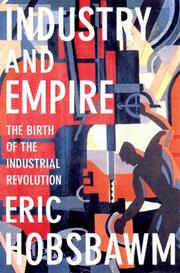
The economic history of Britain since 1750, and the national case study underneath the whole quartet. Read it here, once the general argument is familiar.
The completist tail: the late work and the life
BeginnerFinish with Hobsbawm's late reckonings and be able to weigh his lifelong Communist commitment against the histories it produced.
▸ Study plan for this stage
Pace: Six weeks. How to Change the World is a collection of essays written across decades and gathered after 1991 — read the introductory and closing pieces and then choose. Interesting Times is a full autobiography, around 400 pages, and it reads faster than anything else in this path.
- How to Change the World is Hobsbawm auditing his own framework after the collapse of the Soviet bloc: what in Marx survives 1991, and what does not. He is explicit that this is a personal accounting
- The distinction he insists on between Marx as an analyst of capitalism and Marxism as a twentieth-century state practice. Whether that distinction holds is the question the book leaves open
- Interesting Times covers Vienna, Berlin in 1933 as the Nazis took power, Cambridge, the Communist Party, and sixty years of public life. It is the primary source for everything about his politics
- Hobsbawm remained in the Communist Party after 1956, when the Soviet invasion of Hungary caused most of his British contemporaries to leave. He addresses this directly in the memoir; his answer has not satisfied his critics and he knew it
- The 1994 television interview in which he was asked whether the deaths under Soviet communism would have been justified by a successful communist future, and answered yes, is the single most quoted thing against him. The memoir is where he sets out his own case
- Reading the life alongside the work is the point of putting it last. The question is not whether he was a Communist — he was, and said so — but which parts of the history that commitment sharpened and which parts it shadowed
- Hobsbawm on the historian's obligation to facts he dislikes, which he asserted in On History and which is the standard his own critics hold him to
- In How to Change the World, what specifically does Hobsbawm say survives 1991 and what does he concede is finished?
- Does the separation of Marx from Soviet practice hold up, or does it let too much go? Make the strongest version of each case
- What account does Interesting Times give of staying in the Party after 1956, and what does it leave out?
- Having read the quartet, where would you say his commitment made the history sharper, and where would you say it made him incurious?
- How should a reader use a historian whose politics they do not share? Answer with reference to a specific passage rather than in general
- Reread the sections of The Age of Extremes on the Soviet Union immediately after finishing the memoir. The two texts change each other
- Write a page assessing one contested claim of his against the evidence he supplies, using the rules he set out in On History. Holding him to his own standard is more useful than agreeing or dismissing
- Read one substantial critic — Tony Judt's essays on him are the usual starting point — and one substantial defender, then decide where you land
- Return to the one-page glossary you started in stage one and mark which terms you would still use. That list is what you actually took from Hobsbawm
Next up: This is the end of the path: you have the sequence, the concepts, the monographs and the man, and any further Hobsbawm is a standalone choice.

Essays on Marx and Marxism written after 1991, assessing what survives. It is his own audit of the framework the earlier books used.

The autobiography: Vienna, Berlin in 1933, Cambridge, and sixty years in the Party. The right closing book, because the questions it refuses to settle are the ones his critics press hardest.
Discussion
Keep reading
Paths that share books, cover the same subject, or open a related topic.