Elizabeth Strout Reading Order: Where to Start
Elizabeth Strout's books are not a series, but they are not independent either: two sequences — the Olive Kitteridge books set in Crosby, Maine, and the Lucy Barton books set in Amgash, Illinois and New York — run in parallel for years and then, in the late novels, walk into each other. Read one book from each sequence first to find out which voice you want to live in, then take the Amgash books in strict order because they are a single continuing narrative, then the second Olive book, then the novels where the two worlds merge. The early standalone novels are best left until last, when you can see how much of the later method was already there.
Start Here: One Book From Each Sequence
BeginnerMeet Strout's two great characters and learn her structural trick — a novel built from linked stories that only resolves in retrospect.
▸ Study plan for this stage
Pace: 2 weeks. Olive Kitteridge is 288 pages of thirteen linked stories — read one story a sitting rather than continuously, because each is designed to end and the cumulative effect depends on the gaps. My Name Is Lucy Barton is 208 pages and can be read in one long evening, which is close to how it shou
- Strout does not write series, but she does not write standalones either: two sequences — Olive Kitteridge in Crosby, Maine, and Lucy Barton in Amgash, Illinois and New York — run in parallel for fifteen years and then merge
- This stage exists to let you sample both voices before committing, because they are genuinely different books and readers usually prefer one
- Olive Kitteridge is thirteen linked stories in which the retired maths teacher is sometimes the subject and sometimes glimpsed through a window — the form is the point, and the novel resolves only in retrospect
- Olive is deliberately hard to like: blunt to the point of cruelty, and the book's bet is that thirteen partial views produce sympathy that a single perspective could not
- My Name Is Lucy Barton is the opposite instrument: first person, spare, and built almost entirely on what a mother and daughter decline to say across five days
- Lucy's poverty and the specifics of her childhood are withheld and released in fragments — that withholding is the sequence's engine and the next three books keep releasing more
- Both books are about people whose emotional vocabulary is smaller than their feelings, which is the Strout subject in one sentence
- In which of the thirteen Olive Kitteridge stories is Olive barely present, and what do those stories add that a story about her could not?
- What has actually happened by the end of Olive Kitteridge, and why does the form make that hard to answer?
- In My Name Is Lucy Barton, what is the mother refusing to say, and how does Strout make a refusal legible on the page?
- Lucy narrates from years later. Where does the older Lucy interrupt the younger one, and why there?
- Which voice do you want more of — Crosby or Amgash? Your answer decides how much of the rest of this path you will enjoy.
- After Olive Kitteridge, list the thirteen stories and mark Olive's role in each: subject, participant, or mention. The pattern is the design.
- Write down everything My Name Is Lucy Barton tells you about Lucy's childhood. It is a short list, and the next three books are built on lengthening it.
- Read the Olive Kitteridge story A Different Road twice. It is the one where liking her becomes hardest, and it is doing deliberate work.
- Note the page count difference between the two books and how long each took you. The Amgash books are short and slow; the Olive books are longer and faster.
Next up: You have met both women; the Amgash books are the one part of the path that must be read in strict order, so they come next.
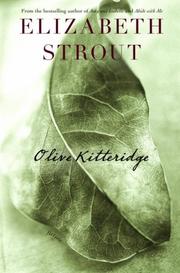
Thirteen linked stories in a small Maine town, in some of which the retired maths teacher is barely present. Her Pulitzer winner and the best possible entry: if the form works on you, everything else will.
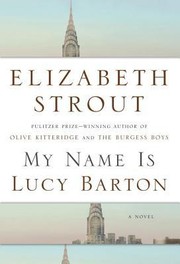
A woman in a hospital bed, her estranged mother in the chair beside her, five days of not-quite-saying-it. Short and the opening move of the Amgash sequence, which the next three books continue directly.
The Amgash Sequence, in Order
BeginnerFollow Lucy Barton, her brother and sister, and her first husband William across four books that must be read in publication order.
▸ Study plan for this stage
Pace: 4–5 weeks. Anything Is Possible is 280 pages, Oh William! 256 and Lucy by the Sea 288 — none is long and all three read quickly. Read them consecutively and in exactly this order, immediately after My Name Is Lucy Barton. Anything Is Possible is a story collection again, so take it a story at a time
- The four Amgash books are one continuing narrative: My Name Is Lucy Barton, then Anything Is Possible, then Oh William!, then Lucy by the Sea. Publication order is reading order and there is no flexibility here
- Anything Is Possible is the answering half of the first book — the people of Amgash, including the ones Lucy wrote about and the ones she left behind, telling their side
- It contains the material Lucy would not say directly, which is why reading it before My Name Is Lucy Barton removes the point of both
- Lucy's brother Pete and sister Vicky are the sequence's moral weight, and their resentment of her escape is treated as legitimate rather than as an obstacle
- Oh William! moves to Lucy and her first husband William in late middle age, driving into his mother's hidden history — it assumes you already know that marriage from inside
- Lucy by the Sea is a direct continuation, with Lucy and William locked down on the Maine coast in 2020, and it is the book that physically relocates Lucy into Olive Kitteridge's territory
- That relocation is not incidental — it is the structural move that makes the convergence in the next stage possible
- The Lucy voice becomes more mannered as the sequence goes on (the short declaratives, the repeated 'I say this because'), and whether that is intimacy or tic is the live critical argument about these books
- Which Amgash characters does Anything Is Possible give you that Lucy's own book made invisible, and what does their version correct?
- What is Vicky's grievance against Lucy, and does the sequence ultimately side with either of them?
- Oh William! is narrated by an ex-wife about an ex-husband. What can that vantage see that a marriage novel could not?
- How does Lucy by the Sea use the pandemic — as subject, as setting, or as a device for locking two people in a house?
- Track Lucy's prose tics across the four books. Are they characterisation or authorial habit?
- Draw the Barton family and note who appears in which of the four books. Several characters cross between them with almost no signposting.
- After Anything Is Possible, reread the first twenty pages of My Name Is Lucy Barton. Half the hospital conversation now has a second meaning.
- Mark the exact point in Lucy by the Sea where the geography moves to Maine. It is the hinge of the whole path.
- Write one paragraph in Lucy's voice about an ordinary event. It is the fastest way to see what her style is doing and refusing to do.
Next up: Lucy is now in Maine and the two worlds share a map, which is the condition the convergence novels were waiting for.

The people of Amgash, Illinois — the ones Lucy wrote about and the ones she left behind. It is the answering half of My Name Is Lucy Barton and loses most of its force if read before it.

Lucy and her ex-husband take a road trip into his mother's hidden history. Read third: it assumes you already know Lucy's marriage from the inside.

Lucy and William locked down in coastal Maine in 2020. Read fourth because it is a direct continuation of Oh William!, and because it is the book that physically moves Lucy into Olive Kitteridge's territory.
Where the Books Converge
IntermediateRead the second Olive book and the novel where Strout's separate worlds are finally shown to be one, plus the Maine novel that connects them.
▸ Study plan for this stage
Pace: 6–7 weeks. Olive, Again is 304 pages of linked stories, The Burgess Boys 368, and Tell Me Everything 500 — the longest book Strout has written. Read Olive, Again a story at a time as before, The Burgess Boys as a conventional novel over a fortnight, and save Tell Me Everything for when you have the
- The order here is deliberately not chronological by publication: Olive, Again is read after the Amgash books because Lucy by the Sea has to establish the geography first
- Olive, Again returns to the linked-story form with Olive in her seventies and eighties — remarriage, decline, and the late-life self-knowledge the first book denied her
- It is the more forgiving of the two Olive books, and readers who found her intolerable in the first often turn here
- The Burgess Boys is usually shelved as a standalone: two lawyer brothers dragged back to Shirley Falls, Maine by their nephew's crime against the town's Somali community
- It belongs in this stage rather than with the early novels because Bob Burgess becomes a major character later, and Tell Me Everything assumes you have met him
- Tell Me Everything puts Olive, Lucy and Bob in the same book, telling each other other people's stories — the two sequences and the standalone finally shown to be one map
- It works, and it works only if you have read all three strands; the pleasure is almost entirely recognition, which is why nothing about it can be sampled
- Strout's whole structural argument arrives here: a person is knowable only through the accounts other people give of them, which is what the linked-story form has been claiming since Olive Kitteridge
- What has changed in Olive by Olive, Again — has she changed, or has the book's attitude to her changed?
- The Burgess Boys is her most directly political novel. How does it handle Shirley Falls' Somali community, and where does its attention actually sit?
- Why does Bob Burgess work as the third voice in Tell Me Everything rather than an Amgash or Crosby character?
- In Tell Me Everything, what does the act of telling someone else's story do for the teller? That is the novel's real subject.
- Was the convergence earned, or is it a late structural trick? Argue both sides before deciding.
- Build a single map of Crosby, Shirley Falls and the coastal town from Lucy by the Sea. Strout's Maine is smaller than it looks.
- List every character in Tell Me Everything and which earlier book they come from. The list is the argument for reading the path in this order.
- Read the last Olive, Again story and the last Olive Kitteridge story back to back and describe what twelve years did.
- Note where Tell Me Everything explains a character for new readers, and ask how much those passages cost a reader who did not need them.
Next up: With the interlocking finished, the two early novels can be read for what they are — the method before it found its form.

Olive in her seventies and eighties, in the same linked-story form. Read after the Amgash books rather than immediately after Olive Kitteridge, because Lucy by the Sea sets up the geography the last novel needs.
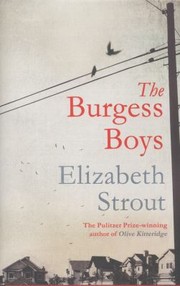
Two brothers, both lawyers, dragged back to Shirley Falls, Maine by their nephew's crime. Often read as a standalone, but Bob Burgess becomes a major character later, which is why it belongs here rather than with the early novels.

Olive, Lucy and Bob Burgess in the same book, telling each other stories. It only works — and it works very well — if you have read all three of their sequences first.
The Early Novels
IntermediateGo back to the two conventional novels she wrote before the linked-story form, and see the method taking shape.
▸ Study plan for this stage
Pace: 3–4 weeks. Amy and Isabelle is 384 pages and Abide with Me 312. Both are conventional novels and read at conventional speed — about ten days each. Read them last on purpose: coming to them after Tell Me Everything, you can see every Strout preoccupation already present in an ordinary novel shape, wh
- Amy and Isabelle is her first novel: a mother and daughter in a New England mill town after the daughter's affair with a teacher, told in close third person across one hot summer
- Everything the later books do is here — small-town surveillance, class shame, a mother who cannot say the thing — but delivered through a single continuous plot rather than linked fragments
- Reading it last shows you what the linked-story form actually bought her: the ability to hold a whole town's worth of judgement without a plot to hang it on
- Abide with Me is the least-read of her books: a widowed minister in 1950s Maine losing his congregation while a rumour spreads
- It is her most openly religious novel and the closest she comes to writing about grace directly rather than by implication
- Both books have endings that resolve more firmly than anything in the later work, which is itself evidence of how her sense of an ending changed
- This stage is a completist's stage, honestly labelled: neither book is required, and both are rewarding once you have the rest
- What does the single continuous plot of Amy and Isabelle achieve that a linked-story version could not, and what does it lose?
- How does the mill town's collective judgement operate in Amy and Isabelle, and where does Crosby do the same thing later?
- Abide with Me is about a man losing a congregation's belief in him. Is the novel interested in the faith or in the losing?
- Both early novels end more conclusively than her later work. What changed in her sense of what an ending is for?
- Having now read ten books, what is the Strout subject in one sentence — and does it hold for all ten?
- List the preoccupations you can name from the later books, then tick them off as they appear in Amy and Isabelle. Almost all of them will.
- Compare the mother in Amy and Isabelle with Lucy Barton's mother. They are attempting the same silence with different means.
- Read one chapter of Abide with Me aloud. The rhythm is closer to the linked stories than the novel form suggests.
- Write a short recommended order for a friend, and justify every place where you would depart from the one you just followed.
Next up: That is the whole body of work, with both sequences and both standalones in place and the connections visible from either direction.

Her first novel: a mother and daughter in a mill town after an affair with a teacher. Every Strout preoccupation is here in an ordinary novel shape, which is what makes it interesting last rather than first.

A widowed minister in 1950s Maine losing his congregation. The least-read of her books and the most openly religious; a completist's stop, and best appreciated once you know how far she travelled from it.
Discussion
Keep reading
Paths that share books, cover the same subject, or open a related topic.