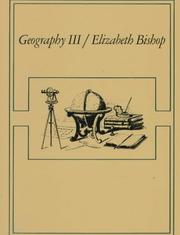
Start with Geography III. That is unusual advice for a poet — it is her last collection, published three years before her death — but it is the right one. It holds nine poems in about fifty pages, including the three everybody quotes, and it is the most emotionally direct thing she wrote. Because it is direct, it earns the reticence of the earlier books: once you have heard what the restraint was protecting, the cool surfaces of the first collection stop looking like coldness.
The alternative is to buy a collected volume and read forward from 1946. That is how most people meet her and it is why many of them decide she is a chilly describer of fish and maps. Her whole method is to extend description until the withheld feeling becomes the only possible explanation for the amount of attention being paid, and that method is hard to hear until you have heard it succeed.
How long this takes, and why page counts lie
Bishop published roughly a hundred poems across four thin books. The reading order is therefore short in pages and long in hours, and the reading rate is the technique. One poem a day, read aloud, twice, with the day allowed to pass before the next one. A Bishop poem read in four minutes has not been read.
Start here: the late book, then the Brazil book
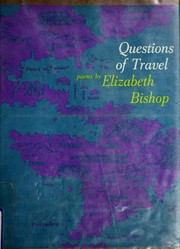
Geography III first. Then Questions of travel, the Brazil collection, at ninety-five pages and three weeks. Its subject is a tourist's eye turning permanently uncertain — where anyone belongs, and what a traveller has the right to describe. It also contains a prose piece about her childhood village, and you should read that inside the collection rather than skipping past it, because several of the poems are its verse counterparts.
The early books, and an edition note
Poems: North & south is her first book, and the poems that established her reputation as a describer are all in it. Read after Geography III, the surfaces resolve into a decision rather than a temperament.
Here is the practical part. Her second collection, A Cold Spring, is slim enough that it is almost never printed alone: most in-print volumes pair it with the first book, so a single purchase usually covers both. Our catalogue holds the paired volume rather than separate records, which is why the list looks a poem-collection shorter than her bibliography. The same is true in the other direction for the collected editions — The Complete Poems, 1927-1979 gathers everything she published plus translations and juvenilia, and Edgar Allan Poe and the Juke-Box collects unfinished drafts assembled after her death, the publication of which caused a real scholarly argument, since Bishop was the most ruthless self-editor of her generation. Neither is currently in our catalogue as its own record. Buy the collected volume after the individual books, when you can see what each collection deliberately excluded.
The prose and the letters
This is where the scale changes, and where most readers end up living. Read at prose speed, in long sittings.
One Art is fifty years of her correspondence, selected by Robert Giroux and named after the poem. It is the best single companion to the poems: she is gossipy, funny and far less guarded here, and its central pleasure is watching an image spend a decade migrating from a letter into a finished stanza. It also supplies the biography the poems refuse.
Words in Air is the complete thirty-year correspondence with Robert Lowell, and at 928 pages it is a correspondence to live inside rather than a book to finish. The two poets edit each other constantly and disagree in public and in private, and her objection to his use of a real person's letters in his own poems is the clearest statement of an ethics of writing she ever made. Reading it as a two-voice book matters: he writes fast and revises in public, she slowly and in private.
Poems, prose, and letters gathers the stories, memoirs and essays, including her memoir of Marianne Moore. The prose covers the childhood the poems only ever glance at, which is why it is the right place to stop.
Where to stop
If you want only the verse, stop after the early books; that is the whole published poet in perhaps 250 pages. If Bishop has taken hold, the letters are the reason people become obsessives. The ordered list is in the Elizabeth Bishop reading path.